In 2013, following an AOM workshop on "Social Entrepreneurship and Broader Theories," we published essays challenging dominant economic, business, and entrepreneurship concepts. We revisit them to reflect on the field's evolution and remaining gaps. Two essays take a macro perspective, exploring adaptive societies and the tragedy of the commons. Two examine the managerial level, discussing limited practical impact and the need for stronger blended performance metrics. Two focus on entrepreneurship, examining a shift toward community-venture paradigms and critiquing traditional business model tools. Together, they invite a rethinking of the when, why, what, and how of social entrepreneurship research and practice.
Simultaneously pursuing social and economic value, social entrepreneurship (SE) builds on hybrid organisations that need to align competing institutional logics. But what influences this alignment? Despite digitalisation’s growing importance, there is no systematic analysis of how digitalisation influences SE’s hybridity, that is, its social and economic logic and their compatibility. To address this gap, we first operationalise SE’s digital orientation as a matter of digital depth and digital breadth. We then briefly illustrate the positive and negative effects of digitalisation on social and economic value creation. Our findings then identify nine specific forms of how digitisation can affect SE’s logic compatibility in positive, negative, and neutral ways. For future research, our discussion presents initial suggestions for measuring SE’s digital orientation, provides a Weberian ideal type definition of digital social entrepreneurship, and invites investigating the institutional implications of digitising SE.
The concept of corporate sustainability strategy (CSS) suffers from considerable definitional ambiguity. Rather than attempting to create a universally acceptable CSS definition, this study scrutinizes the various uses of different existing definitions. Our two-step methodology began with a systematic literature review to identify different topical perspectives on CSS. Next, a purposeful sampling approach allowed for a more detailed review of each perspective. As a result, we identified and discussed eight topical perspectives: means-and-ends, hierarchical, materiality, geographic-scope, management-approach, maturity, actor-and-process, and contingency perspectives. These were then compared and integrated into a shared conceptual CSS framework. We found the means-and-ends perspective to be most fundamental, as it frames how sustainability shapes the purpose and constraints of strategizing. We refine this perspective by distinguishing among indifferent, instrumental, intrinsic, and integrated CSSs. We conclude with discussions on limitations, suggestions for future research, and managerial implications.
The purpose of this research is to consolidate and extend the current literature on employee outcomes of CSR (referred to as micro-level outcomes). The authors use a systematic review of the literature as a method to summarize and synthesise the different effects of CSR activities on employees based on 270 journal articles. The contribution of this paper is that it provides a comprehensive list of employee outcomes classified into different categories and a conceptual framework that maps desirable and undesirable outcomes of CSR activities on employees. The results show that various dimensions of CSR have different effects on employee outcomes. In addition, we explain mediators of CSR-employee outcomes relationships and moderators that could strengthen or weaken this relationship. The review reveals important gaps and offers a research agenda for the future. We have found only a few studies dealing with the negative impacts of CSR on employees as well as only a few studies that explain how different dimensions of CSR affect employees differently. The study has also practical implications for companies, as understanding different effects of CSR on employees helps organizations to design and implement CSR strategies and policies that foster employees’ positive attitudes and behaviours as well as prevent or reduce the negative effects, and hence create a business value and sustainable growth for the company.
Purpose - The European Union (EU) and European companies are striving for net-zero carbon targets by 2050 and are therefore focused on urgent decarbonization efforts. Manufacturing contributes to 20% of European carbon emissions, although the primary challenge lies in supply chain (SC) emissions, which highlights the field's need to transform. Amid the dissonance between public and private net-zero commitments and persistent carbon emissions, uncertainties surround the development of net-zero carbon supply chains (NZCSCs). This paper aims to address this lack of knowledge by presenting an exploration of the development of NZCSCs within the EU through 2050. Design/methodology/approach - Using a real-time Delphi methodology and tool from durvey.org, this study involves a multiphase panel discussion process with 67 SC and sustainability experts. Twelve prospective theses for NZCSC development in the EU were formulated through desk research, interviews and an expert workshop. The panel assessed these theses in terms of impact, desirability and anticipated occurrence year and provided justification for their evaluations. Findings - The study identifies three clusters that influence NZCSC development, comprising 68 implications that scholars, managers and policymakers should consider during this transition. Originality/value - This study contributes to the available information regarding NZCSCs by offering insights from a multilevel perspective into the influences on NZCSC development in the EU's manufacturing sector.
AbstractThe Road to Net Zero starts from the Paris Agreement, which sets a global goal to limit global warming to well below 2 °C above pre-industrial levels, and an ambition to limit warming to 1.5 °C. The Agreement represents a turning point in the approach to tackling climate change, moving from a mitigation logic focused on reducing carbon emissions to an exit logic focused on full decarbonisation. The challenge is to translate the ambitious goals of the Paris Agreement into practical and achievable action plans that can be implemented at national and local levels. This will require a coordinated and joint effort by governments, businesses, and civil society to mobilise resources, build capacity, and put in place the necessary policies and regulations to support the transition to a low-carbon future. After discussing basic climate science foundations in Sect. 2.2 and the global climate policy ‘Road to Paris’, as well as the implications of the Paris Agreement in Sect. 2.3, national policy frameworks and governance mechanisms that can be implemented at the national level to meet the Nationally Determined Contributions (NDCs) are reviewed in Sect. 2.4. While the expert discussion between Prof. Grimm, Dr Becker, and Oliver Zipse in Sect. 2.5 is dedicated to the balancing act between technology openness and energy policy control mechanisms, Sect. 2.6 gives an outlook on how the goals of the Paris Agreement can be broken down to the company level. In this context, future research questions for the evaluation of legitimised measurement and target-setting frameworks for the private sector are discussed.
A transition toward a more sustainable economy requires substantial innovations. To this end, sustainability innovators need not only ideas but also financial resources. Yet, especially nascent sustainability innovators suffer from trust issues and other barriers to funding through traditional financing. In this regard, crowdfunding (CF) offers a promising approach but also creates additional challenges, such as how to phrase campaign descriptions in order to credibly communicate sustainability intentions. As CF involves complex choices, it is far from obvious how sustainability innovators can best utilize it. To address this gap, in this article, we describe a systematic literature review (SLR) that analyzed 78 relevant publications. The results of the SLR show that innovation's sustainability orientation influences the dynamics in the components of the CF system through the two key mechanisms of information asymmetries and motivational effects. Building upon this, the article presents and analyzes critical choice parameters for sustainability innovators who tap into CF, which in particular concerns the choice of CF platform, CF type, and campaign communication. Furthermore, related propositions and a research agenda on CF and sustainability are provided.
AbstractCompanies are increasingly integrating sustainability into their strategies. The main drivers include changing societal expectations, regulatory policies, financial market pressures, and changing customer behavior. The generic business benefits of sustainability include securing the license to operate, managing risk, reducing costs, and increasing revenues through improved innovation and future market opportunities. How companies realize these generic benefits depends on their specific position and the maturity of their sustainability strategy. Strategies with high maturity do not treat sustainability as a separate add-on, but instead integrate it into how the company creates value. Moreover, sustainability strategies that aim at real life cycle improvements, such as in the case of climate-oriented strategies, need not only to integrate firm operations, but also to consider the entire value chain. This integrated approach to sustainability changes the entire strategy process. Its first step, environmental scanning, needs to consider a richer set of factors and stakeholders. Regarding strategy formulation, the strategy’s effectiveness and credibility depend on reliable target setting, such as in the case of Science-Based Targets for climate action. Strategy implementation requires an integrated approach to management that also engages relevant value chain partners. Finally, strategy evaluation and control must produce reliable data that can inform integrated reporting. Integrating sustainability throughout the full strategy process adds complexity while significantly increasing the potential for long-term sustainability and business benefits.
Digital technologies can elevate product-service systems (PSS) to smart PSS, which focus on performance rather than ownership and are considered a means for dematerialization. However, transitioning to smart PSS does not guarantee sustainability. To understand the impact of smart PSS holistically, we take a two-pronged approach. First, we use the theory of change to conceptualize the causal link between sustainable smart PSS and their ultimate impact. We develop a three-step causal logic framework consisting of design, causation, and impact. Within this framework, we identify the business model properties of sustainable smart PSS as design characteristics and categorize the eventual impacts based on the triple bottom line. We introduce the term multi-causal pathway to describe the causation processes underlining the possibility of non-linearity and multi-causality. Second, we conduct a systematic literature review to investigate the mechanisms linking design and impact. Based on an analysis of 63 publications, we identify 17 specific mechanisms and group them into four types: information, resource, empowerment, and adverse mechanisms. Visualizing our results, we develop a morphological box as a toolkit for managers to develop their own impact-oriented logic model by identifying and activating the multi-causal pathway that fosters the desired sustainability effects. Moreover, discussing our framework, we develop research propositions and managerial questions for impact design. By linking the theory of change with the business model impact, we contribute toward a conceptual synthesis for understanding the impact of (sustainable) smart PSS.
Small and medium-sized enterprises (SMEs) play an important role for growth and sustainable development, particularly for rural areas in which MNCs are absent. Despite this link, there is little systematic research that investigates how SMEs address the particularities, opportunities, and challenges of rural areas based on their strengths and weaknesses. To fill this gap, this article uses a systematic literature review (SLR) that analyses 228 articles published between 2003 and October 2020. Our descriptive analysis shows that research on this topic has increased over time. Based on our thematic results, we juxtapose typical strengths and weaknesses of SMEs (enterprise perspective) and the opportunities and challenges of rural areas (spatial perspective). A key finding is that SMEs use relation-based collaboration as a meta-strategy to respond to these specific conditions. Wedding the theoretical perspectives of the RBV and transaction cost economics, we develop a conceptual model that explains why rural SMEs are in a particular need and position to use collaboration as a tool to innovate and access critical resources in otherwise resource-scarce rural areas. We then discuss how digitalization impacts our results regarding SMEs in rural space.
Chemie Ingenieur TechnikVolume 93, Issue 1-2 p. 327-327 VorschauFree Access Vorschau: Chem. Ing. Tech. 3/2021 First published: 21 January 2021 https://doi.org/10.1002/cite.202170106AboutPDF ToolsRequest permissionExport citationAdd to favoritesTrack citation ShareShare Give accessShare full text accessShare full-text accessPlease review our Terms and Conditions of Use and check box below to share full-text version of article.I have read and accept the Wiley Online Library Terms and Conditions of UseShareable LinkUse the link below to share a full-text version of this article with your friends and colleagues. Learn more.Copy URL Share a linkShare onEmailFacebookTwitterLinked InRedditWechat No abstract is available for this article. Volume93, Issue1-2Special Issue: Herrn Professor Dr.‐Ing. Matthias Kraume zum 65. Geburtstag gewidmetJanuary/February 2021Pages 327-327 RelatedInformation
Sustainable development is about meeting the needs of current and future generations while operating in the safe ecological space of planetary boundaries. Against this background, companies can contribute to sustainability in both positive and negative ways. In a world of scarce resources, the positive contribution of businesses is to create value for diverse stakeholders (i.e., goods in the actual sense of good services and things with value) without social shortfalls or ecological overshooting with regard to planetary boundaries. Yet, when value-creation processes cause negative social or ecological externalities, companies create disvalue for current or future stakeholders, thus undermining sustainable development. Sustainability in business therefore aims at the integrative management of value creation and disvalue mitigation. Various institutions, such as sustainability laws as well as quasi-regulatory and voluntary sustainability standards, aim at providing an enabling environment in this regard yet are often insufficient. Corporate sustainability therefore calls for proactive management. Neither value nor disvalue fall from heaven but are rather co-created or caused through the interaction with stakeholders. Transforming from unsustainability to sustainability thus requires transforming the underlying relational arrangements. Here, market and non-market stakeholder relations need to be distinguished. In markets, companies transact with customers, employees, suppliers, and financiers who typically have voluntary exchange relationships with the firm. As a result, stakeholders can use the exit option when the relationship causes them harm. Companies therefore need to know and respect their value-creation partners, their potential contributions, and above all their needs. Sustainability can influence these market relationships in two ways. First, as sustainability addresses environmental, social, and ethical issues that are otherwise often overlooked, sustainability can relate to specific goals and motivations that stakeholders pursue when they care about these matters. Second, sustainability can be linked to transaction-specific particularities. This can be the case when sustainability features lead to information asymmetries, higher transaction costs, or resource dependencies. Non-market relationships, however, can differ in that stakeholders are involuntarily affected by the firm. In many cases, such as environmental pollution, stakeholders like local communities experience disvalue but cannot simply walk away. From a sustainability perspective, giving voice to non-market stakeholders through dialogue and participation is therefore crucial to identify early-on potential issues where companies cause disvalue. Such a proactive dialogue does not necessarily present a constraint that limits value creation in the market. Giving a voice to non-market stakeholders can also help create innovations and mobilize valuable resources such as knowledge, legitimacy, and partnership. The key idea is to find solutions that create value not only for market stakeholders but also for a larger circle, including non-market stakeholders as well. Such stakeholder business cases for sustainability aim at the synergistic integration of value creation and disvalue mitigation.
With crises like climate change and degradation of the earth’s natural habitats, human consumption needs to become more sustainable to decrease humanity’s environmental footprint. Fostering sustainable consumer behavior by enabling consumers to make an informed choice for sustainable products is vital in changing human consumption for the better. To optimize consumers’ perception of sustainable products, companies can establish partnerships with environmental non-governmental organizations (NGOs). In practice, retailers and NGOs can engage in NGO–firm co-branding of sustainable products. Yet, little is known about the impact of this NGO–firm co-branding on consumer perception. We fill this gap based on a 2 × 2 × 2 experimental study. We test consumers’ trust, product and brand perception of co-branded sustainable products. Our study finds that NGO–firm co-branding has a significant positive effect on all the above. The effect is moderated by familiarity with the co-branding partnership and consumer attitudes. We discuss how those NGO–firm partnerships can be a useful tool to guide customers to more sustainable consumption choices. The results are discussed in light of sustainability communication and cross-sector partnership theory. We offer important insights for consumer perspectives on sustainability communication, business engagement of NGO–firm partnerships and develop future research ideas for consumer behaviour.
We investigate how the selection of assurance topics and the format of their communication influence the credibility perception of sustainability report readers. This is important because misleading communication may discredit ethical sustainability assurance practices. Based on signaling theory and using an experimental approach, we are the first to examine false credibility signals in the context of sustainability assurance. We find that two variables related to sustainability assurance, reference explicitness and assurance depth, jointly influence the assurance signal and the perceived credibility of a sustainability report. Our findings indicate that readers are not at risk of false signaling but can make incorrect interpretations of the assurance signal and might respond negatively to well-intentioned signals. The main implications of our findings are that firms should refrain from increasing reference explicitness and should select only the most material topics. Taken together, our results provide new insights on the unethical practice of false signaling and provide an example of an incorrect signal interpretation by readers.
Purpose The paper investigates how the alignment of two corporate functions, sustainable supply chain management (SSCM) and trade compliance (TC) can help companies to take corporate value chain responsibility (VCR). In particular, the authors investigate how evolutionary system theory can explain the coevolution of two distinct VCR functions (SSCM and TC) and the potential and challenges for their future alignment. Design/methodology/approach The authors introduce evolutionary system theory as a powerful explanatory perspective to the field of VCR, SSCM and TC. By applying evolutionary system theory to the VCR debate, the authors analyze the potential for aligning both functions. They further analyze the inherent challenges of such an alignment by discussing the concept of organizational path dependencies. Findings The paper spells out a research agenda and formulates testable propositions for further investigating the interplay of environment and system as well as the structural options for a functional alignment of SSCM and TC. Originality/value The corporate function of TC has been widely overlooked by supply chain and sustainability scholars. This paper adds the function of TC to the wider discussion on SSCM and corporate VCR. Furthermore, the paper develops a research agenda for a pioneer topic and triggers discussion in academia and corporate practice.
To address global sustainability challenges, adequate governance solutions are needed. Yet, sustainability governance is typically fragmented. This fragmentation poses a key challenge for practitioners and researchers and receives growing scholarly attention in different academic disciplines. So far, however, these research streams are missing a comprehensive mapping of the scholarly work on fragmented sustainability governance. While this lack of knowledge consolidation inhibits further academic learning, it also fails to provide corporate actors with practical guidance about the interplay between firms and fragmented sustainability governance. To address these gaps, we apply a mixed-method approach consisting of a systematic literature review and a citation network analysis to derive the following contributions. First, we elaborate on the composition and development of the research field on fragmented sustainability governance, including a citation network analysis. Second, we introduce a conceptual framework of overarching types of fragmentation regarding the ends, means, context, and outcomes of sustainability governance. Third, we introduce three types of managing fragmentation: coordination, convergence and integration, and meta governance. Fourth, we derive implications for future research regarding the role of business in fragmented sustainability governance.
 Ingo Pies合作论文数School of Law, Business and Economics, Martin-Luther-University Halle-Wittenberg29
 anica zeyen合作论文数Leuphana Univ Luneburg, Ctr Sustainabil Management, Social Entrepreneurship, Luneburg, Germany21
 Stefan Hielscher合作论文数School of Law, Business and Economics, Martin-Luther-University Halle-Wittenberg21
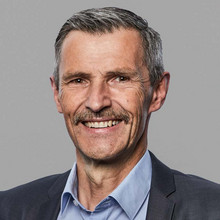 Stefan Schaltegger合作论文数Centre for Sustainability Management, Leuphana University Lüneburg10
 Peter Wehnert合作论文数6
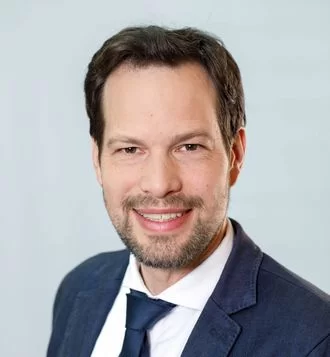 Erik G. Hansen合作论文数Institute for Integrated Quality Design, Johannes Kepler University Linz;Institute for Manufacturing, University of Cambridge5
 Jens Heidingsfelder合作论文数4
 Roya Akhavan合作论文数3Steven Ney合作论文数3
 Patrick J. Murphy合作论文数3
 Norris F. Krueger合作论文数Boise State University3
 Andrew L. Zacharakis合作论文数Babson College3Oliver Zipse合作论文数2
 Lena Ries合作论文数2Thomas Becker合作论文数2rastislava mirkovic合作论文数2stella wolters合作论文数2
 Carolin Baier合作论文数2
 Michael Garkisch合作论文数School of Business, Economics and Society, Friedrich-Alexander-University Erlangen-Nuremberg2
 Susan Mueller合作论文数Bern University of Applied Sciences Bern2
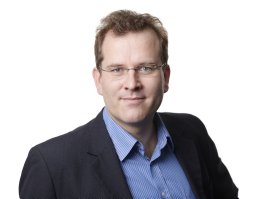 Kai Hockerts合作论文数Institut für Wirtschaft und Ökologie2
 Filipe M. Santos合作论文数Entrepreneurship and Family Enterprise Area, INSEAD2
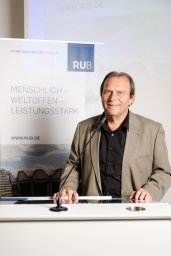 Rolf G. Heinze合作论文数Allgemeine Soziologie und Arbeits- und Wirtschaftssoziologie, an der Ruhr-Universität2
 Jennifer M. Walske合作论文数School of Management2
 Dmitry Khanin合作论文数University of Maryland2
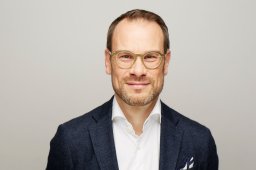 Stephan A. Jansen合作论文数Zeppelin University Friedrichshafen2Mariarosa Scarlata合作论文数School of Economics and Political Science, London2J. Gregory Dees合作论文数2
 Dirk Holtbrugge合作论文数Dept Int Management, Univ Erlangen Nurnberg2M Gru ̈newald合作论文数1Zwickau Satz合作论文数1Westermann Druck合作论文数1Sven Graf合作论文数1
 Andrea Ohle合作论文数1Walther L. Bernecker合作论文数1
 Gregor Zoettl合作论文数1Frank Graf合作论文数1Jost H. Brinkmann合作论文数1Simon Unz合作论文数1
 Christian Baccarella合作论文数1Aron Knoblich合作论文数1
 Rieke Schuees合作论文数1Anne-Christin Kropp合作论文数1Yue Xiao合作论文数1
 Felix Endriss合作论文数1Rajat Bhardwaj合作论文数1Laura Therese Heinl合作论文数1
 Christopher Muench合作论文数Dept Supply Chain Management, Friedrich Alexander Univ Erlangen Nurnberg1




