Neural networks have proven to be efficient for a number of practical applications ranging from image recognition to identifying phase transitions in quantum physics models. In this paper, we investigate the application of neural networks to state classification in a single-shot quantum measurement. We use dispersive readout of a superconducting transmon circuit to demonstrate an increase in assignment fidelity for both two and three state classifications. More importantly, our method is ready for on-the-fly data processing without overhead or need for large data transfer to a hard drive. In addition, we demonstrate the capacity of neural networks to be trained against experimental imperfections, such as phase drift of a local oscillator in a heterodyne detection scheme.
Quantum mechanics postulates that measuring the qubit's wave function results in its collapse, with the recorded discrete outcome designating the particular eigenstate that the qubit collapsed into. We show that this picture breaks down when the qubit is strongly driven during measurement. More specifically, for a fast evolving qubit the measurement returns the time-averaged expectation value of the measurement operator, erasing information about the initial state of the qubit, while completely suppressing the measurement back-action. We call this regime `quantum rifling', as the fast spinning of the Bloch vector protects it from deflection into either of its eigenstates. We study this phenomenon with two superconducting qubits coupled to the same probe field and demonstrate that quantum rifling allows us to measure either one of the qubits on demand while protecting the state of the other from measurement back-action. Our results allow for the implementation of selective read out multiplexing of several qubits, contributing to the efficient scaling up of quantum processors for future quantum technologies.
Nonreciprocal devices are fundamental for signal routing and noise isolation, however, they are bulky and inherently lossy. Here, we experimentally realize a minimal, passive nonreciprocal device by embedding two superconducting artificial atoms in a waveguide.
We propose and experimentally realize a technique to measure the transfer function of a control line in the frequency domain using a qubit as a vector network analyzer. Our method requires coupling the line under test to the longitudinal component of the Hamiltonian of the qubit and the ability to induce Rabi oscillations through simultaneous driving of the transverse component. The method can be used to increase the fidelity of entangling gates in a quantum processor. We have demonstrated that by characterizing the "flux" control line of a superconducting transmon qubit in the range from 1 to 450 MHz and using this characterization to improve the fidelity of an entangling cphase gate between two transmon qubits.
Nonreciprocal devices are a key element for signal routing and noise isolation. Rapid development of quantum technologies has boosted the demand for a new generation of miniaturized and low-loss nonreciprocal components. Here, we use a pair of tunable superconducting artificial atoms in a 1D waveguide to experimentally realize a minimal passive nonreciprocal device. Taking advantage of the quantum nonlinear behavior of artificial atoms, we achieve nonreciprocal transmission through the waveguide in a wide range of powers. Our results are consistent with theoretical modeling showing that nonreciprocity is associated with the population of the two-qubit nonlocal entangled quasidark state, which responds asymmetrically to incident fields from opposing directions. Our experiment highlights the role of quantum correlations in enabling nonreciprocal behavior and opens a path to building passive quantum nonreciprocal devices without magnetic fields.
Random numbers are required for a variety of applications from secure communications to Monte-Carlo simulation. Yet randomness is an asymptotic property and no output string generated by a physical device can be strictly proven to be random. We report an experimental realization of a quantum random number generator (QRNG) with randomness certified by quantum contextuality and the Kochen-Specker theorem. The certification is not performed in a device-independent way but through a rigorous theoretical proof of each outcome being value-indefinite even in the presence of experimental imperfections. The analysis of the generated data confirms the incomputable nature of our QRNG.
Binary-outcome measurements allow to determine whether a multi-level quantum system is in a certain state while preserving quantum coherence between all orthogonal states. In this paper, we explore different regimes of the dispersive readout of a three-level superconducting quantum system coupled to a microwave cavity in order to implement binary-outcome measurements. By designing identical cavity frequency shifts for the first and second excited states of the system, we realize strong projective binary-outcome measurements onto its ground state with a fidelity of $94.3\%$. Complemented with standard microwave control and low-noise parametric amplification, this scheme enables the quantum non-demolition detection of leakage errors and can be used to create sets of compatible measurements to reveal the contextual nature of superconducting circuits.
Classical realism demands that system properties exist independently of whether they are measured, while noncontextuality demands that the results of measurements do not depend on what other measurements are performed in conjunction with them. The Bell-Kochen-Specker theorem states that noncontextual realism cannot reproduce the measurement statistics of a single three-level quantum system (qutrit). Noncontextual realistic models may thus be tested using a single qutrit without relying on the notion of quantum entanglement in contrast to Bell inequality tests. It is challenging to refute such models experimentally, since imperfections may introduce loopholes that enable a realist interpretation. Here we use a superconducting qutrit with deterministic, binary-outcome readouts to violate a noncontextuality inequality while addressing the detection, individual-existence and compatibility loopholes. This evidence of state-dependent contextuality also demonstrates the fitness of superconducting quantum circuits for fault-tolerant quantum computation in surface-code architectures, currently the most promising route to scalable quantum computing.
Three-dimensional (3D) microwave cavities have been extensively used for coupling and interacting with superconducting quantum bits (qubits), providing a versatile platform for quantum control experiments and for realizing hybrid quantum systems. While having high quality factors (>10 6 ) superconducting cavities do not permit magnetic field control of qubits. In contrast, cavities made of normal metals are transparent to magnetic fields, but experience lower quality factors (∼10 4 ). We have created a hybrid cavity which is primarily composed of aluminium but also contains a small copper insert reaching the internal quality factor of ≃10 5 , an order of magnitude improvement over all previously tested normal metal cavities. In order to demonstrate precise magnetic control, we performed spectroscopy of three superconducting qubits, where individual control of each qubit’s frequency was exerted with small external wire coils. An improvement in quality factor and magnetic field control makes this 3D hybrid cavity an attractive new element for circuit quantum electrodynamics experiments.
 Arkady Fedorov合作论文数School of Mathematics and Physics, Faculty of Science, The University of Queensland15
 Andres Rosario Hamann合作论文数ARC Ctr Excellence Engn Quantum Syst, Univ Queensland5
 Maximilian Zanner合作论文数Inst Expt Phys, Univ Innsbruck4
 Anatoly Kulikov合作论文数4
 Tom Stace合作论文数School of Mathematics and Physics, Faculty of Science, The University of Queensland4
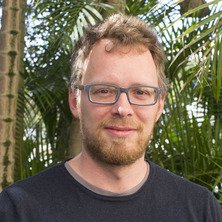 Clemens Mueller合作论文数4
 Joshua Combes合作论文数Centre for Quantum Computer Technology;Centre for Quantum Dynamics;Griffith University;Centre for Quantum Dynamics, Griffith University4Martin Weides合作论文数James Watt School of Engineering, University of Glasgow;James Watt Nanofabrication Centre, University of Glasgow4
 Yarema Reshitnyk合作论文数4
 Mikhail Pletyukhov合作论文数3Kristinn Juliusson合作论文数3
 Andreas Wallraff合作论文数Department of Physics, Eidgenossische Technische Hochschule Zurich3
 Anton Potočnik合作论文数Imec3Zénon Vasselin合作论文数2Markus Oppliger合作论文数2Tyler Jones合作论文数2Kenneth Goodenough合作论文数2
 Mintu Mondal合作论文数2
 S.D.C. Wehner合作论文数Quantum & Computer Engineering Department, Faculty of Electrical Engineering, Mathematics and Computer Science, Delft University of Technology;Delft Networks2
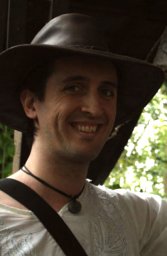 Nathan K. Langford合作论文数Centre for Quantum Computer Technology;School of Physical Sciences;University of Queensland;School of Physical Sciences, University of Queensland2Tina Moghaddam合作论文数1Alejandro Gomez Frieiro合作论文数Sch Math & Phys, Univ Queensland1
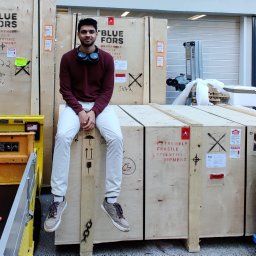 Rohit Navarathna合作论文数ARC Ctr Engn Quantum Syst, Univ Queensland1Prasanna Pakkiam合作论文数Univ New South Wales, Sch Phys, Australian Res Council, Ctr Excellence Quantum Computat & Commun Technol, Sydney, NSW 2052, Australia1
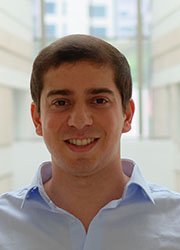 Alexandre Roulet合作论文数École Polytechnique Fédérale de Lausanne (EPFL),1
 Szombati Daniel B合作论文数1Pascal Macha合作论文数1




