A bioeconomy that delivers environmental, economic, and social benefits requires a coordinated regulatory framework.
BIOFUTURES novel, and/or complex biotechnology products
This article provides an overview of the U.S. bioeconomy, discussing how its definition has evolved and been formalized over time. The first attempts to conceptualize and define the U.S. bioeconomy began in the early 1990s. This was followed by a series of government and private efforts to develop methods to understand and evaluate it and to develop programs to promote it. These efforts culminated in the 2020 release of the National Academies of Science, Engineering, and Medicine (NASEM), Safeguarding the Bioeconomy report. The report recommended a formal definition of the U.S. bioeconomy, providing the rationale for that particular definition in the U.S. context. Formally adopting a comprehensive definition of the U.S. bioeconomy would enable the U.S. government to better assess the bioeconomy's current state, to develop strategies to support its growth, and to promote strategies to safeguard it. Along with this recommendation, the NASEM Safeguarding report also discussed defining the "bioeconomy landscape," which involves more precise determination and quantification of which economic activities are part of and external to the U.S. economy. Defining this landscape could guide metric development and data collection needed to track the bioeconomy's growth, conduct economic assessments, and enable policy makers to keep abreast of advances that could potentially pose new national or economic security challenges. The report also includes an analysis of the broad range national bioeconomy strategies, identification of the four drivers of the U.S. bioeconomy, and the first of its kind, comprehensive estimate of the size and scope of the U.S. bioeconomy of USD 959B (valued in 2016 constant USD ).
To harness the potential of microbiome science across the broad range of relevant disciplines, new approaches to data infrastructure and transdisciplinary collaboration are necessary. The National Microbiome Data Collaborative (NMDC) is a new initiative to support microbiome data exploration and discovery through a collaborative, integrative data science ecosystem. To harness the potential of microbiome science across the broad range of relevant disciplines, new approaches to data infrastructure and transdisciplinary collaboration are necessary. The National Microbiome Data Collaborative is a new initiative to support microbiome data exploration and discovery through a collaborative, integrative data science ecosystem.
A PhD in a scientific or engineering discipline can lead to a multitude of interesting positions, spanning from research in academia and industry to grant-making for a philanthropic organization to science policy positions in state and federal governments. I know because my career path has given me opportunities in all of them, and in each position my skill set grew in new and unexpected, positive ways.
Next week on 14 April, the March for Science will once again demonstrate the widespread public support for science around the world. Nowhere is this message more needed than in Washington, D.C., where the federal government continues to ignore the value of independent science advice to inform decision-making. Given this lack of expertise at the national level, it is critical to bolster the role of science in policy-making at the state government level. Here, California can lead by example.
Science and technology (S&T) are increasingly integrated with all aspects of society. As a result, the ability to evaluate scientific information becomes ever more critical for policy and governing decisions. But such information is complex, and it can be misunderstood, distorted, or mischaracterized. The scientific community can help ensure that sound science informs public policy debates, but finding an effective, robust, and reliable means of doing so is a challenging task. Scientists participating in the California Science & Technology Fellows Program help state lawmakers in Sacramento create evidence-based policies. The model can and should be replicated elsewhere, argue the authors. Image courtesy of Shutterstock/Steven Frame. A well-tested vehicle is the California Science & Technology Policy Fellows Program, now accepting applications for its 10th yearly class of fellows. Here we present evidence that this program has had a substantial impact on policy at the state level, and we argue that other states of all political stripes would be wise to consider similar efforts to further the public good for their respective citizenry. For more than 40 years, the American Association for the Advancement of Science (AAAS) Science & Technology Policy Fellowships program has placed scientists and engineers with advanced degrees in positions in the US government in Washington, DC, large numbers of whom have subsequently taken on permanent policy roles (1⇓–3). Inspired by the AAAS example, a program for placing S&T fellows in state legislatures was conceived and seed-funded by the Gordon and Betty Moore Foundation (https://www.moore.org). This program was further supported by a 2007 convocation held at the National Academies to survey the status of state S&T policy advising, which concluded that “almost all legislators and their staffs need help in dealing with science and technology policy issues” (4), and that “A mechanism for sharing best practices … [↵][1]1To whom correspondence should be addressed. Email: balberts{at}ucsf.edu. [1]: #xref-corresp-1-1
 Enriqueta C. Bond合作论文数21Lana Skirboll合作论文数21
 James P. Collins合作论文数School of Life Sciences, Arizona State University21
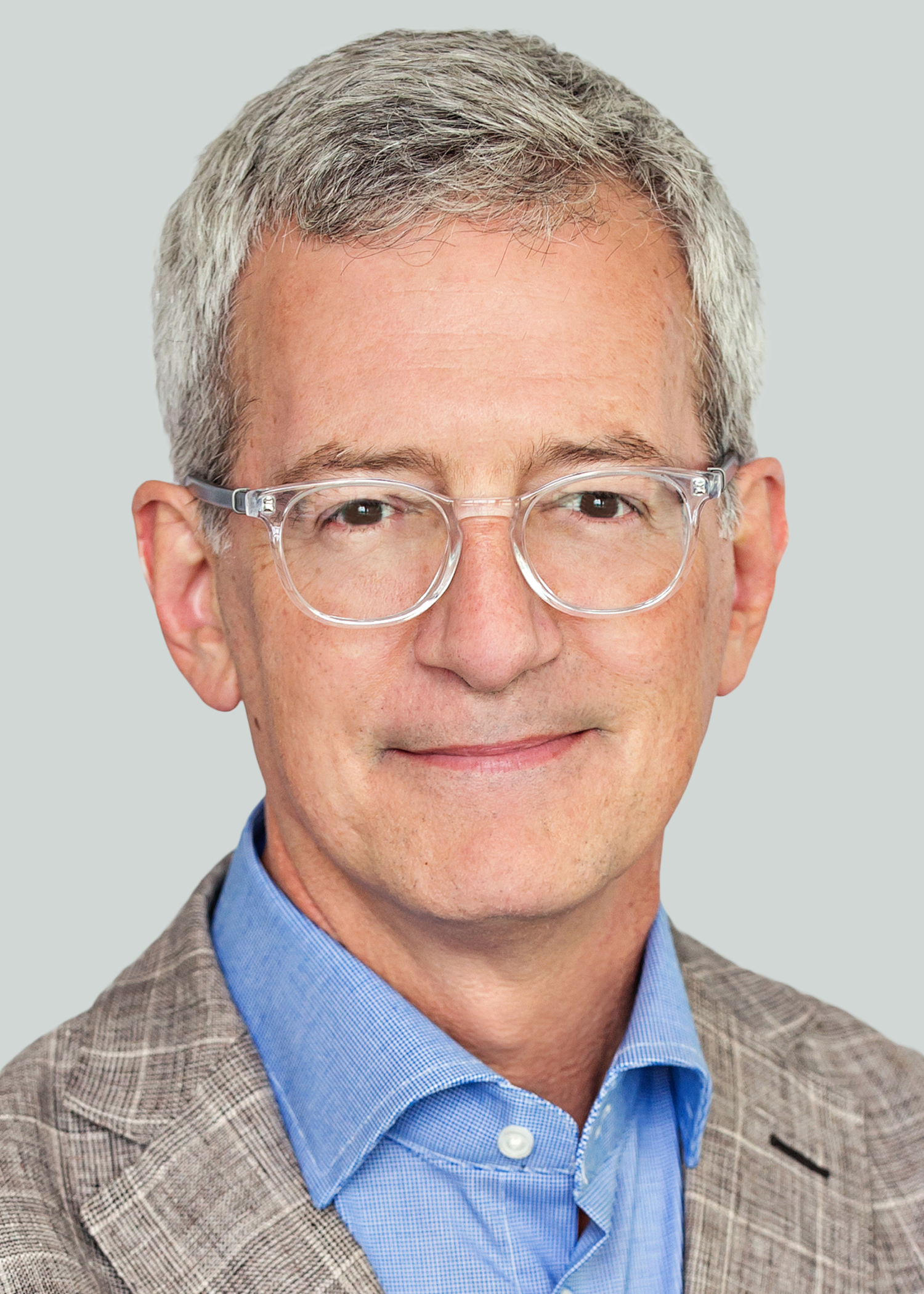 Roger Cone合作论文数Life Sciences Institute, University of Michigan;Medical School, University of Michigan21
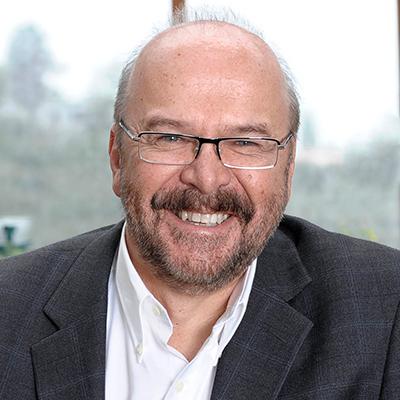 Joseph Ecker合作论文数Howard Hughes Medical Institute;The Salk Institute for Biological Studies21
 Elizabeth Heitman合作论文数Division of Ethics, University of Texas Southwestern Medical Center;Department of Psychiatry, University of Texas Southwestern Medical Center;Vanderbilt Institute for Global Health, Vanderbilt University Medical Center;Tougaloo College21Claire Pomeroy合作论文数14
 Sarah C. R. Elgin合作论文数Department of Biology, Washington University in St. Louis;Howard Hughes Medical Institute14
 Robert Full合作论文数Department of Integrative Biology, University of California, Berkeley;Department of Electrical Engineering and Computer Science, University of California, Berkeley;Essig Museum of Entomology, University of California, Berkeley14
 Judith Kimble合作论文数Department of Biochemistry, College of Agricultural and Life Sciences, University of Wisconsin-Madison14
 Karen E. Nelson合作论文数Thermo Fisher Scientific14
 A. Alonso Aguirre合作论文数Wildlife Trust, Columbia University14
 Scott V. Edwards合作论文数Department of Organismic and Evolutionary Biology, Faculty of Arts and Sciences, Harvard University;Museum of Comparative Zoology, Harvard University14
 Mary Eleanor Power合作论文数Department of Integrative Biology, College of Letters & Science, University of California, Berkeley;California Biodiversity Center14
 Nancy D. Connell合作论文数Division of Infectious Disease, Department of Medicine, Rutgers, The State University of New Jersey8Ruth M. Perry合作论文数7Margaret Riley合作论文数7Grace Kubin合作论文数7Reed V. Tuckson合作论文数7M. Allen Northrup合作论文数7Samuel Kacew合作论文数7Robert S. Winokur合作论文数7Ken Anthony合作论文数7Thomas R. Chance合作论文数7Richard Spinrad合作论文数7R. Craig Postlewaite合作论文数7Robert M. Sussman合作论文数7Robert Perciasepe合作论文数7Pamela Shubat合作论文数7Anthony Macdonald合作论文数7Margaret Spring合作论文数7Susan Rundell Singer合作论文数7Janis Weeks合作论文数7Patricia A. King合作论文数7Sean M. Decatur合作论文数7David R. Franz合作论文数7E. William Colglazier合作论文数7Lewis R. Goldfrank合作论文数7Georges C. Benjamin合作论文数7Stephen J. O'Brien合作论文数7Steven E. Hyman合作论文数7Dominic Ditoro合作论文数7
 Patrick Heimbach合作论文数Department of Geological Sciences, Jackson School of Geosciences, University of Texas at Austin7William H. Farland合作论文数7Robert Newman合作论文数Biol Dept, Univ North Dakota7Tom Slezak合作论文数Lawrence Livermore Natl Lab, Global Secur Program, Livermore, CA 94550 USA7Richard A Johnson合作论文数7
 John Franklin Rawls合作论文数Department of Medicine, School of Medicine, Duke University School of Medicine7




