AI is rapidly transforming journalism, but the extent of its use in published newspaper articles remains unclear. We address this gap by auditing a large-scale dataset of 186K articles from online editions of 1.5K American newspapers published in the summer of 2025. Using Pangram, a state-of-the-art AI detector, we discover that approximately 9% of newly-published articles are either partially or fully AI-generated. This AI use is unevenly distributed, appearing more frequently in smaller, local outlets, in specific topics such as weather and technology, and within certain ownership groups. We also analyze 45K opinion pieces from Washington Post, New York Times, and Wall Street Journal, finding that they are 6.4 times more likely to contain AI-generated content than news articles from the same publications, with many AI-flagged op-eds authored by prominent public figures. Despite this prevalence, we find that AI use is rarely disclosed: a manual audit of 100 AI-flagged articles found only five disclosures of AI use. A factuality analysis shows AI-generated articles are 8.2 times more likely to contain hallucinated claims than human-written news. Overall, our audit highlights the immediate need for greater transparency and updated editorial standards regarding the use of AI in journalism to maintain public trust.
AI translation of literary works is increasingly common. While the content may be rendered adequately, we do not know enough about how readers experience it in terms of immersiveness and literary effect-aspects poorly captured by automatic metrics or human evaluation targeting fluency and adequacy. We ask 15 avid readers to compare recently published human translations (HT) to machine translations (MT) generated with an agentic language model-based pipeline, for 15 recent novels in French, Polish, and Japanese translated into English. Readers evaluated approximately 8K-word excerpts in two conditions: immersive reading of the whole excerpt (30 comparisons) and close reading of 386 aligned HT-MT chunk pairs (772 comparisons), with two readers per book. Overall, readers find MT "fine", but prefer HT (descriptively at the excerpt level, 19/30, and significantly at the chunk level, 522/772) for its ease, clarity, and immersive nature. Readers' highlights show that MT's quality varies more within one book than HT's does. Crucially, readers cannot reliably tell the two apart (17/30 guess correctly) and tend to prefer the version they believe to be human. Automatic metrics, including LLM-as-a-judge approaches, fail to recover reader preferences and favor MT. We release LAIT (Literary AI Translation), a reader-centered evaluation dataset with 1K reader comments, 2K judgments and preference ratings, and 7.2K span-level annotations, along with our evaluation protocol and supporting interface.
We present ONERULER, a multilingual benchmark designed to evaluate long-context language models across 26 languages. ONERULER adapts the English-only RULER benchmark (Hsieh et al., 2024) by including seven synthetic tasks that test both retrieval and aggregation, including new variations of the "needle-in-a-haystack" task that allow for the possibility of a nonexistent needle. We create ONERULER through a two-step process, first writing English instructions for each task and then collaborating with native speakers to translate them into 25 additional languages. Experiments with both open-weight and closed LLMs reveal a widening performance gap between low- and high-resource languages as context length increases from 8K to 128K tokens. Surprisingly, English is not the top-performing language on long-context tasks (ranked 6th out of 26), with Polish emerging as the top language. Our experiments also show that many LLMs (particularly OpenAI's o3-mini-high) incorrectly predict the absence of an answer, even in high-resource languages. Finally, in cross-lingual scenarios where instructions and context appear in different languages, performance can fluctuate by up to 20
Machine Translation (MT) tools are widely used today, often in contexts where professional translators are not present. Despite progress in MT technology, a gap persists between system development and real-world usage, particularly for non-expert users who may struggle to assess translation reliability. This paper advocates for a human-centered approach to MT, emphasizing the alignment of system design with diverse communicative goals and contexts of use. We survey the literature in Translation Studies and Human-Computer Interaction to recontextualize MT evaluation and design to address the diverse real-world scenarios in which MT is used today.
We present the preliminary ranking of the WMT25 General Machine Translation Shared Task, in which MT systems have been evaluated using automatic metrics. As this ranking is based on automatic evaluations, it may be biased in favor of systems that employ re-ranking techniques, such as Quality Estimation re-ranking or Minimum Bayes Risk decoding. The official WMT25 ranking will be based on human evaluation, which is more reliable and will supersede the automatic ranking. The purpose of this report is not to present the final findings of the General MT task, but rather to share preliminary results with task participants, which may be useful when preparing their system submission papers.
This paper presents the results of the General Machine Translation Task organized as part of the 2025 Conference on Machine Translation (WMT). Participants were invited to build systems for any of the 30 language pairs. For half of these pairs, we conducted a human evaluation on test sets spanning four to five different domains. We evaluated 60 systems in total: 36 submitted by participants and 24 consisting of translations we collected from large language models (LLMs) and popular online translation providers. This year, we focused on creating challenging test sets by developing a difficulty sampling technique and using more complex source data. We evaluated system outputs with professional annotators using the Error Span Annotation (ESA) protocol, except for two language pairs, for which we used Multi-dimensional Quality Metrics (MQM) instead. We continued the trend of increasingly shifting towards document-level translation, providing the source texts as whole documents containing multiple paragraphs.
In this paper, we study how well humans can detect text generated by commercial LLMs (GPT-4o, Claude, o1). We hire annotators to read 300 non-fiction English articles, label them as either human-written or AI-generated, and provide paragraph-length explanations for their decisions. Our experiments show that annotators who frequently use LLMs for writing tasks excel at detecting AI-generated text, even without any specialized training or feedback. In fact, the majority vote among five such "expert" annotators misclassifies only 1 of 300 articles, significantly outperforming most commercial and open-source detectors we evaluated even in the presence of evasion tactics like paraphrasing and humanization. Qualitative analysis of the experts' free-form explanations shows that while they rely heavily on specific lexical clues ('AI vocabulary'), they also pick up on more complex phenomena within the text (e.g., formality, originality, clarity) that are challenging to assess for automatic detectors. We release our annotated dataset and code to spur future research into both human and automated detection of AI-generated text.
Large language models (LLMs) now support context windows exceeding 128K tokens, but this comes with significant memory requirements and high inference latency. Quantization can mitigate these costs, but may degrade performance. In this work, we present the first systematic evaluation of quantized LLMs on tasks with long inputs (≥64K tokens) and long-form outputs. Our evaluation spans 9.7K test examples, five quantization methods (FP8, GPTQ-int8, AWQ-int4, GPTQ-int4, BNB-nf4), and five models (Llama-3.1 8B and 70B; Qwen-2.5 7B, 32B, and 72B). We find that, on average, 8-bit quantization preserves accuracy (~0.8% drop), whereas 4-bit methods lead to substantial losses, especially for tasks involving long-context inputs (drops of up to 59%). This degradation tends to worsen when the input is in a language other than English. Crucially, the effects of quantization depend heavily on the quantization method, model, and task. For instance, while Qwen-2.5 72B remains robust under BNB-nf4, Llama-3.1 70B experiences a 32% performance drop on the same task. These findings highlight the importance of a careful, task-specific evaluation before deploying quantized LLMs, particularly in long-context scenarios and for languages other than English.
Large language models (LLMs) are known to memorize and recall English text from their pretraining data. However, the extent to which this ability generalizes to non-English languages or transfers across languages remains unclear. This paper investigates multilingual and cross-lingual memorization in LLMs, probing if memorized content in one language (e.g., English) can be recalled when presented in translation. To do so, we introduce , a dataset of **31.5K** aligned excerpts from 20 books in ten languages, including English originals, official translations (Vietnamese, Spanish, Turkish), and new translations in six low-resource languages (Sesotho, Yoruba, Maithili, Malagasy, Setswana, Tahitian). We evaluate memorization across model families and sizes through three tasks: (1) **direct probing**, which asks the model to identify a book’s title and author; (2) **name cloze**, which requires predicting masked character names; and (3) **prefix probing**, which involves generating continuations. We find that some LLMs consistently recall content across languages, even for texts without existing translation. GPT-4o, for example, identifies authors and titles 69.4% of the time and masked entities 6.3% of the time in newly translated excerpts. While perturbations (e.g., masking characters, shuffling words) reduce accuracy, the model’s performance remains above chance level. Our results highlight the extent of cross-lingual memorization and provide insights on the differences between the models.
Despite rising global usage of large language models (LLMs), their ability to generate *long-form* answers to *culturally specific* questions remains unexplored in many languages. To fill this gap, we perform the first study of textual multilingual long-form QA by creating CaLMQA, a dataset of **51.7K** culturally specific questions across **23** different languages. We define culturally specific questions as those that refer to concepts unique to one or a few cultures, or have different answers depending on the cultural or regional context. We obtain these questions by crawling naturally-occurring questions from community web forums in high-resource languages, and by hiring native speakers to write questions in under-resourced, rarely-studied languages such as Fijian and Kirundi. Our data collection methodologies are translation-free, enabling the collection of culturally unique questions like “Kuber iki umwami wa mbere w’uburundi yitwa Ntare?” (Kirundi; English translation: “Why was the first king of Burundi called Ntare (Lion)?”). We evaluate factuality, relevance and surface-level quality of LLM-generated long-form answers, finding that (1) for many languages, even the best models make critical surface-level errors (e.g., answering in the wrong language, repetition), especially for low-resource languages; and (2) answers to culturally specific questions contain more factual errors than answers to culturally agnostic questions – questions that have consistent meaning and answer across many cultures. We release CaLMQA to facilitate future research in cultural and multilingual long-form QA.
Most flagship language models generate explicit reasoning chains, enabling inference-time scaling. However, producing these reasoning chains increases token usage (i.e., reasoning tokens), which in turn increases latency and costs. Our OverThink attack increases overhead for applications that rely on reasoning language models (RLMs) and external context by forcing them to spend substantially more reasoning tokens while still producing contextually correct answers. An adversary mounts an attack by injecting decoy reasoning problems into public content that is consumed by RLM at inference time. Because our decoys (e.g., Markov decision processes, Sudokus, etc.) are benign, they evade safety filters. We evaluate OverThink on both closed-source and open-source reasoning models across the FreshQA, SQuAD, and MuSR datasets. We also explore the attack in multi-modal settings by creating images that cause excessive reasoning. We show that the resulting slowdown transfers across models. Finally, we explore both LLM-based and systems-level defenses, and discuss the societal, financial, and energy implications of the OverThink attacks.
High-quality Machine Translation (MT) evaluation relies heavily on human judgments. Comprehensive error classification methods, such as Multidimensional Quality Metrics (MQM), are expensive as they are time-consuming and can only be done by experts, whose availability may be limited especially for low-resource languages. On the other hand, just assigning overall scores, like Direct Assessment (DA), is simpler and faster and can be done by translators of any level, but is less reliable. In this paper, we introduce Error Span Annotation (ESA), a human evaluation protocol which combines the continuous rating of DA with the high-level error severity span marking of MQM. We validate ESA by comparing it to MQM and DA for 12 MT systems and one human reference translation (English to German) from WMT23. The results show that ESA offers faster and cheaper annotations than MQM at the same quality level, without the requirement of expensive MQM experts.
For the past decade, temporal annotation has been sparse: only a small portion of event pairs in a text was annotated. We present NarrativeTime, the first timeline-based annotation framework that achieves full coverage of all possible TLinks. To compare with the previous SOTA in dense temporal annotation, we perform full re-annotation of TimeBankDense corpus, which shows comparable agreement with a significant increase in density. We contribute TimeBankNT corpus (with each text fully annotated by two expert annotators), extensive annotation guidelines, open-source tools for annotation and conversion to TimeML format, baseline results, as well as quantitative and qualitative analysis of inter-annotator agreement.
In this paper, we investigate sarcasm and irony as seen through a novel perspective of machine translation. We employ various techniques for translation, comparing both manually and automatically translated datasets of irony and sarcasm. We first clarify the definitions of irony and sarcasm and present an exhaustive field review of studies on irony both from purely linguistic as well as computational linguistic perspectives. We also propose a novel evaluation metric for the purpose of evaluating translations of figurative language, with a focus on machine-translated irony and sarcasm. The constructed English and Chinese parallel dataset includes polarized content from tweets as well as forum posts, categorized by irony types. The preferred translation model, mBART-50, is identified through a thorough experimental process. Optimal translation settings and the best-finetuned model for irony are explored, with the most effective model being finetuned on both ironic and non-ironic data. We also experimented which types of irony are best suitable for training in this specific task - short microblogging messages or longer forum posts. Moreover, we compare the capabilities of a well fine-tuned mBART to a prompt-based method using the recently popular ChatGPT model, with the conclusion that the former still outperforms the latter, although ChatGPT without any training can be considered as a “good enough” ad hoc solution in the case of a lack of data for training. Finally, we verify if the translated data - either manually, or with an MT model - can be used as training data in a task of irony detection. We believe that the presented research can be expanded into languages other than the presented here Chinese and English, which together with the ability to detect various categories of irony, could contribute to deepening the understanding of figurative language, especially irony and sarcasm.
While long-context large language models (LLMs) can technically summarize book-length documents (>100K tokens), the length and complexity of the documents have so far prohibited evaluations of input-dependent aspects like faithfulness. In this paper, we conduct the first large-scale human evaluation of faithfulness and content selection on LLM-generated summaries of fictional books. Our study mitigates the issue of data contamination by focusing on summaries of books published in 2023 or 2024, and we hire annotators who have fully read each book prior to the annotation task to minimize cost and cognitive burden. We collect FABLES, a dataset of annotations on 3,158 claims made in LLM-generated summaries of 26 books, at a cost of $5.2K USD, which allows us to rank LLM summarizers based on faithfulness: Claude-3-Opus significantly outperforms all closed-source LLMs, while the open-source Mixtral is on par with GPT-3.5-Turbo. An analysis of the annotations reveals that most unfaithful claims relate to events and character states, and they generally require indirect reasoning over the narrative to invalidate. While LLM-based auto-raters have proven reliable for factuality and coherence in other settings, we implement several LLM raters of faithfulness and find that none correlates strongly with human annotations, especially with regard to detecting unfaithful claims. Our experiments suggest that detecting unfaithful claims is an important future direction not only for summarization evaluation but also as a testbed for long-context understanding. Finally, we move beyond faithfulness by exploring content selection errors in book-length summarization: we develop a typology of omission errors related to crucial narrative elements and also identify a systematic over-emphasis on events occurring towards the end of the book.
This is the preliminary ranking of WMT24 General MT systems based on automatic metrics. The official ranking will be a human evaluation, which is superior to the automatic ranking and supersedes it. The purpose of this report is not to interpret any findings but only provide preliminary results to the participants of the General MT task that may be useful during the writing of the system submission.
Pretrained language models are an integral part of AI applications, but their high computational cost for training limits accessibility. Initiatives such as Bloom and StarCoder aim to democratize access to pretrained models for collaborative community development. Despite these efforts, such models encounter challenges such as limited multilingual capabilities, risks of catastrophic forgetting during continual pretraining, and the high costs of training models from scratch, alongside the need to align with AI safety standards and regulatory frameworks. This paper presents Aurora-M, a 15B parameter multilingual open-source model trained on English, Finnish, Hindi, Japanese, Vietnamese, and code. Continually pretrained from StarCoderPlus on 435B additional tokens, Aurora-M surpasses 2T tokens in total training token count. It is the first open-source multilingual model fine-tuned on human-reviewed safety instructions, thus aligning its development not only with conventional red-teaming considerations, but also with the specific concerns articulated in the Biden-Harris Executive Order on the Safe, Secure, and Trustworthy Development and Use of Artificial Intelligence. We evaluate Aurora-M across a wide range of tasks and languages, showcasing its robustness against catastrophic forgetting and its superior performance in multilingual settings, particularly in safety evaluations. We open-source Aurora-M and its variants to encourage responsible open-source development of large language models at https://huggingface.co/aurora-m.
Synthetic long-context LLM benchmarks (e.g., “needle-in-the-haystack”) test only surface-level retrieval capabilities; but how well can long-context LLMs retrieve, synthesize, and reason over information across book-length inputs? We address this question by creating NoCha, a dataset of 1,001 minimally different pairs of true and false claims about 67 recently-published English fictional books, written by human readers of those books. In contrast to existing long-context benchmarks, our annotators confirm that the largest share of pairs in NoCha require global reasoning over the entire book to verify. Our experiments show that while human readers easily perform this task, it is enormously challenging for all ten long-context LLMs that we evaluate: no open-weight model performs above random chance (despite their strong performance on synthetic benchmarks), while GPT-4o achieves the highest pair accuracy at 55.8%. Further analysis reveals that (1) on average, models perform much better on pairs that require only sentence-level retrieval vs. global reasoning; (2) model-generated explanations for their decisions are often inaccurate even for correctly-labeled claims; and (3) models perform substantially worse on speculative fiction books that contain extensive world-building. The methodology proposed in NoCha allows for the evolution of the benchmark dataset and the easy analysis of future models.
 Mohit Iyyer合作论文数Department of Computer Science, University of Maryland15
 Maja Popović合作论文数ADAPT Centre, School of Computing, Dublin City University6
 Roman Grundkiewicz合作论文数Institute for Language, Cognition and Computation, School of Informatics, The University of Edinburgh6
 Tom Kocmi合作论文数Microsoft;StopTime, z. s.5
 Vilém Zouhar合作论文数Language, Reasoning and Education Lab, Department of Computer Science, ETH Zurich5
 Eleftherios Avramidis合作论文数German Research Center for Artificial Intelligence (DFKI), Language Technology (LT), Berlin, Germany5
 Steinþór Steingrímsson合作论文数The Árni Magnússon Institute for Icelandic Studies, University of Iceland4
 Kenton Murray合作论文数HLTCOE, Johns Hopkins Univ4
 Rachel Bawden合作论文数Inria4
 Masaaki Nagata (永田昌明)合作论文数Innovative Communication Laboratory, NTT Communication Science Laboratories4
 Anna Rogers合作论文数Computer Science Department, IT University of Copenhagen4
 Thamme Gowda合作论文数Information Sciences Institute, University of Southern California4
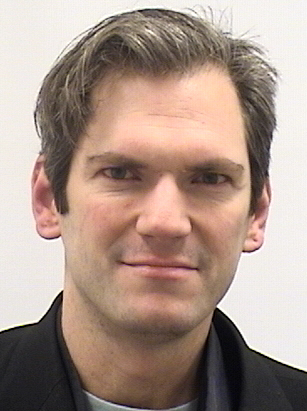 Philipp Koehn合作论文数Department of Computer Science, Johns Hopkins University;Omniscien Technologies4
 Katherine Thai合作论文数Pangram Labs4
 Mark Fishel合作论文数University of Tartu4
 Barry Haddow合作论文数Aveni4
 Markus Freitag合作论文数Google Translate Research4
 Aleksandr Drozd合作论文数RIKEN Center for Computational Science;Amigawa GK4
 Martin Popel合作论文数Charles University in Prague4
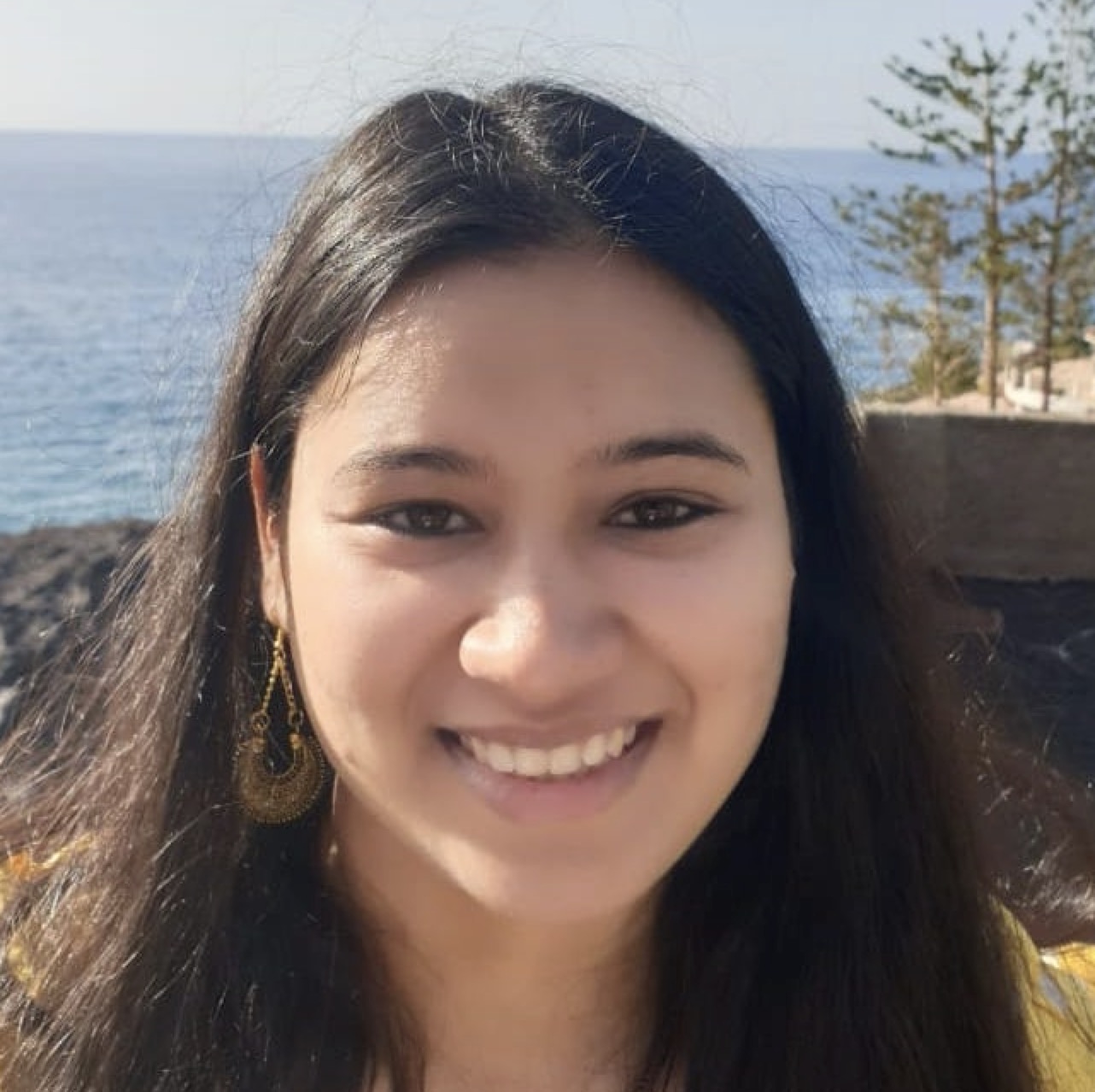 Ankita Gupta合作论文数University of Massachusetts Amherst3
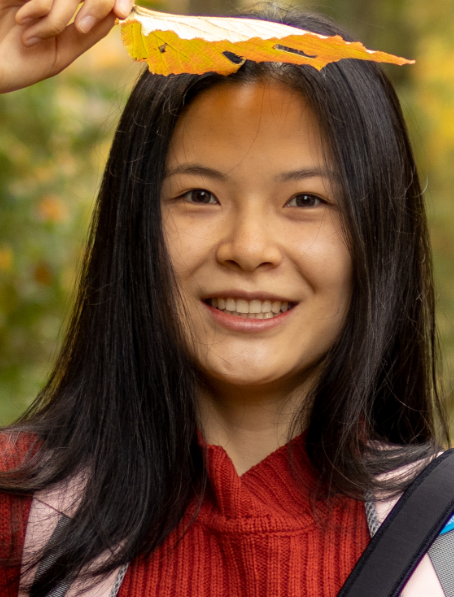 Yixiao Song合作论文数Department of Linguistics, College of Humanities & Fine Arts, University of Massachusetts Amherst3
 Mariya Shmatova合作论文数3
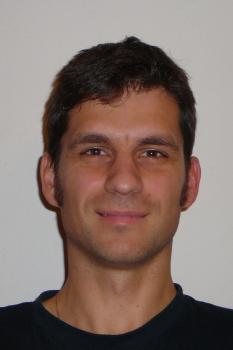 Ondřej Bojar合作论文数Institute of Formal and Applied Linguistics, Faculty of Mathematics and Physics, Charles University;Faculty of Nuclear Sciences and Physical Engineering, Czech Technical University3
 Kalpesh Krishna合作论文数Google3
 Jenna Russell合作论文数University of Maryland;Pangram Labs2Lorenzo Proietti合作论文数2
 Veronika Laippala合作论文数University of Turku2
 Ziyang Luo合作论文数Salesforce Research2Stefano Perrella合作论文数2
 Felix Friedrich合作论文数2
 Benjamin Marie合作论文数4i Intelligent Insights2
 Terry Yue Zhuo (卓越)合作论文数Qwen2
 Simone Tedeschi合作论文数Department of Computer, Control and Management Engineering "Antonio Ruberti", Sapienza Università di Roma;Babelscape2Anton Dvorkovich合作论文数2
 Diganta Misra合作论文数KIIT University2
 Minh Chien Vu合作论文数Detomo Japan2
 Jordan Clive合作论文数Chattermill2
 Xiaozhe Yao合作论文数Shenzhen Univ2
 Tanmay Laud合作论文数Megagon Labs2
 Niklas Muennighoff合作论文数Meta;Stanford University;Ai22Lisa Yankovskaya合作论文数Institute of Computer Science [University of Tartu, Estonie]2
 Ben Bogin合作论文数Allen Institute for AI2Bofang Li合作论文数2
 Victor May合作论文数2
 John Wieting合作论文数Toyota Technological Institute, University of Chicago2
 Kshitij Gupta合作论文数Google2
 Mayank Mishra合作论文数MIT-IBM Watson AI Lab;IBM Research India2
 Kyle Lo合作论文数Allen Institute for Artificial Intelligence2
 Roberto Navigli合作论文数Department of Computer, Control and Management Engineering, Sapienza University of Rome;Babelscape2




