The structure and operating principles of a system for monitoring and controlling the operation of a thermal energy store have been presented in this study.As a novel feature of the presented solution, the device can be operated as a thermal energy store that relies on specific heat of fluids or phase transition heat when packages of phase change materials (PCM) are placed inside the device.Grates were used to arrange PCM packages in a manner that guarantees the flow of the heat transfer medium.The grates were equipped with temperature sensors to control thermal decomposition throughout the entire tank.The use of aerogel for thermal insulation was also a novel solution.Only a thin layer of aerogel was required to reduce heat loss across the tank wall.The structure and functionality of the modelled thermal energy store correspond to real-life conditions.The model can be used to test monitoring and control systems and to analyse the phenomena observed during the operation of similar devices.The operation of the thermal energy store can be regularly monitored and controlled on-line from any location in the world.The developed model supports the automatic import of operating parameters into a database for further analysis.
The article presents the design and characteristics of the eddy current electrodynamic brake used in the system working with an asynchronous motor. The construction of the stand allows the determination of the characteristics of electric motors in combination with the regulated mechanical load in the form of an electrodynamic brake. The presented electrodynamic brake allows precise adjustment of the torque loaded on the tested motor. It allows the load up to 10 Nm at speeds ranging from 100 to 1500 rpm.
The article presents the design and characteristics of the eddy current electrodynamic brake used in the system working with an asynchronous motor. The construction of the stand allows the determination of the characteristics of electric motors in combination with the regulated mechanical load in the form of an electrodynamic brake. The presented electrodynamic brake allows precise adjustment of the torque loaded on the tested motor. It allows the load up to 10 Nm at speeds ranging from 100 to 1500 rpm.
W artykule przedstawiono ideę, możliwości oraz korzyści dydaktyczne wynikające z wprowadzenia przedmiotu "Projektowanie z wykorzystaniem szybkiego prototypowania" realizowanego w Katedrze Mechaniki i Podstaw Konstrukcji Maszyn na Wydziale Nauk Technicznych Uniwersytetu Warmińsko-Mazurskiego w Olsztynie.Celem przedmiotu jest doskonalenie umiejętności pracy zespołowej w rozwiązywaniu problemów inżynierskich -od pomysłu poprzez projekt do wytwo
Streszczenie: W artykule omówiono proces projektowania przyrządu do kształtowania folii falistej będącej elementem strukturalnej
Frontiers of Intelligent Control and Information Processing, pp. 283-307 (2014) No AccessChapter 11: Recognizing sEMG Patterns for Interacting with Prosthetic ManipulationZhaojie Ju, Gaoxiang Ouyang, Marzena Wilamowska-Korsak and Honghai LiuZhaojie Ju, Gaoxiang Ouyang, Marzena Wilamowska-Korsak and Honghai Liuhttps://doi.org/10.1142/9789814616881_0011Cited by:0 PreviousNext AboutSectionsPDF/EPUB ToolsAdd to favoritesDownload CitationsTrack CitationsRecommend to Library ShareShare onFacebookTwitterLinked InRedditEmail Abstract: It is a challenge to achieve a satisfactory rate for the sEMG pattern recognition, which is becoming the main focus of the on-going research in rehabilitation and prosthetics. This chapter introduces nonlinear feature extraction and nonlinear classification approaches to efficiently identify different human hand manipulations based on surface electromyography (sEMG) signals. The recurrence plot is employed to represent dynamical characteristics of sEMG during hand movements as nonlinear features. Fuzzy Gaussian Mixture Models (FGMMs) are proposed and employed as a nonlinear classifier to recognise these hand grasps and in-hand manipulations captured from different subjects. Results from a variety of experiments comparing 14 individual features, 19 multi-features and 4 classifiers demonstrate the proposed nonlinear measures provide essential supplemental information to the good performance in multi-features. It also proves that FGMMs with capacity of modelling nonlinear datasets outperform commonly used approaches including Linear Discriminant Analysis (LDA), Gaussian Mixture Models (GMMs) and Support Vector Machine (SVM). Specially, the best performance with the recognition rate of 96.7% is achieved by FGMMs with the multi-feature combining Willison Amplitude (WAMP) and Determinism (DET). FiguresReferencesRelatedDetails Frontiers of Intelligent Control and Information ProcessingMetrics History PDF download
The significance of Internet‐of‐Things to Supply Chain Management has been dramatically increasing. The performance of supply chain based on Internet‐of‐Things is largely dependent on its optimization. Genetic algorithms (GAs) are important intelligent methods for complex system optimization problems, but they have some internal drawbacks such as premature and slow convergence to the global optimum. In this paper, we present a new schema protection based GA (BSP‐GA). First, we propose three principles for selecting excellent schema based on the schema theory; second, we propose the concept of K‐intensive effect synthesis operator, and we give a general five‐intensive effect synthesis operator and its proof; third, we give the selection process of excellent schema through an example, and further we give the implementation steps of BSP‐GA. The performance of BSP‐GA has been compared with simple GA by using two carefully chosen benchmark problems. It has been observed that BSP‐GA can yield the global optimum more efficiently than commonly used simple GA. Furthermore, a theorem is presented to guarantee the convergence of BSP‐GA. Copyright © 2014 John Wiley & Sons, Ltd.
Decision-making processes in complex systems generally require the mechanisms to make the tradeoff among contradicting design criteria. When multiple objectives are involved in decision making or machine learning, a crucial step is to determine the weights of individual objectives to the system-level performance. Determining the weights of multiobjectives is an evaluation process, and it has been often treated as an optimization problem. However, our preliminary investigation has shown that existing methodologies in dealing with the weights of multiobjectives have some obvious limitations in the sense that the determination of weights is tackled as a single optimization problem, a result based on such an optimization is incomprehensive, and it can even be unreliable when the information about multiple objectives is incomplete such as an incompleteness caused by poor data. The constraints of weights are also discussed. Variable weights are natural in decision-making processes. Therefore, we are motivated to develop a systematic methodology in determining variable weights of multiobjectives. The roles of weights in an original multiobjective decision-making or machine-learning problem are analyzed, and the weights are determined with the aid of a modular neural network. The inconsistency issue of weights is particularly discussed.
This paper proposes and evaluates methods of nonlinear feature extraction and nonlinear classification to identify different hand manipulations based on surface electromyography (sEMG) signals. The nonlinear measures are achieved based on the recurrence plot to represent dynamical characteristics of sEMG during hand movements. Fuzzy Gaussian Mixture Models (FGMMs) are proposed and employed as a nonlinear classifier to recognise different hand grasps and in-hand manipulations captured from different subjects. Various experiments are conducted to evaluate their performance by comparing 14 individual features, 19 multifeatures and 4 different classifiers. The experimental results demonstrate the proposed nonlinear measures provide important supplemental information and they are essential to the good performance in multifeatures. It is also shown that FGMMs outperform commonly used approaches including Linear Discriminant Analysis, Gaussian Mixture Models and Support Vector Machine in terms of the recognition rate. The best performance with the recognition rate of 96.7% is achieved by using FGMMs with the multifeature combining Willison Amplitude and Determinism.
The share of gross domestic product from the service industry reflects the competitiveness of a nation; the service industry in the USA accounts for around 80% of its gross domestic product, and it has been increasing gradually. Continual innovations and advances in enabling technologies for the service industry are crucial for developed countries to sustain their leading positions in the globalized economy. To clarify future research directions of operations research (OR) in the service industry, the state of art of OR has been examined systematically, the new requirements of OR are identified for its applications in service industries in comparison with those in manufacturing industries, and the limitations of existing methodologies and tools have been discussed. This paper was intended to provide an updated review on how OR has been applied in the service sector in recent years and what directions the study of OR will be carried forward in the near future. Under a proposed research framework, recent OR‐related articles were collected from 17 leading OR journals and classified into the five most active sectors, that is, transportation and warehousing, information and communication, human health and social assistance, retails and wholesales, and financial and insurance services. The conclusions on the limitations of existing studies and the demanding ORs in the service have been drawn from our summaries and observations from a comprehensive review in this field. Copyright © 2013 John Wiley & Sons, Ltd.
The share of gross domestic product from the service industry reflects the competitiveness of a nation; the service industry in the USA accounts for around 80% of its gross domestic product, and it has been increasing gradually. Continual innovations and advances in enabling technologies for the service industry are crucial for developed countries to sustain their leading positions in the globalized economy. To clarify future research directions of operations research (OR) in the service industry, the state of art of OR has been examined systematically, the new requirements of OR are identified for its applications in service industries in comparison with those in manufacturing industries, and the limitations of existing methodologies and tools have been discussed. This paper was intended to provide an updated review on how OR has been applied in the service sector in recent years and what directions the study of OR will be carried forward in the near future. Under a proposed research framework, recent OR-related articles were collected from 17 leading OR journals and classified into the five most active sectors, that is, transportation and warehousing, information and communication, human health and social assistance, retails and wholesales, and financial and insurance services. The conclusions on the limitations of existing studies and the demanding ORs in the service have been drawn from our summaries and observations from a comprehensive review in this field. Copyright (c) 2013 John Wiley & Sons, Ltd.
The globalization connects different parts of the world tightly, one region can be closely interacted by another region. The globalized environment can become dynamic and turbulent, thus brings uncertainties into decision making. A critical challenge in system science is to deal with the uncertainties such as fuzziness, randomness and roughness of information. In this paper, a programming model in rough sets is presented. First, the characteristics and limitations of the existing rough programming methods are analysed systematically. Second, the necessity and feasibility of developing a new rough programming model is discussed, and the model is developed on the basis of the greatest compatible classes and synthesis effect. Finally, the effectiveness and characteristics of the newly developed model are validated through a case study. The result illustrates that the new programming model is of significance in practical applications, and it makes it possible to take decision preferences into account of the decision‐making processes effectively. Copyright © 2013 John Wiley & Sons, Ltd.
 Wojciech Miaskowski合作论文数Faculty of Technical Sciences, University of Warmia and Mazury in Olsztyn5
 Krzysztof Nalepa合作论文数4
 Lynn Li合作论文数Department of Information Technology & Decision Sciences, Old Dominion University4
 Zhuming Bi合作论文数Department of Civil and Mechanical Engineering, Purdue University Fort Wayne4Piotr Puchowski合作论文数2Yiting Xing (邢一亭)合作论文数School of Economics and Management, Chang'an University2
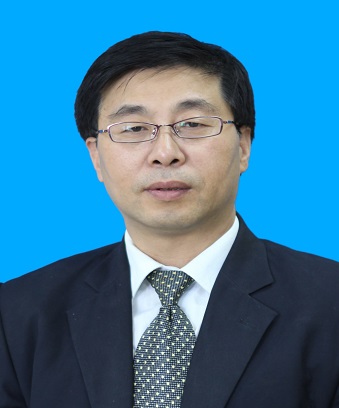 Fachao Li (李法朝)合作论文数School of Economics and Management, Hebei University of Science and Technology2
 Gaoxiang Ouyang (欧阳高翔)合作论文数State Key Laboratory of Cognitive Neuroscience and Learning, Beijing Normal University2
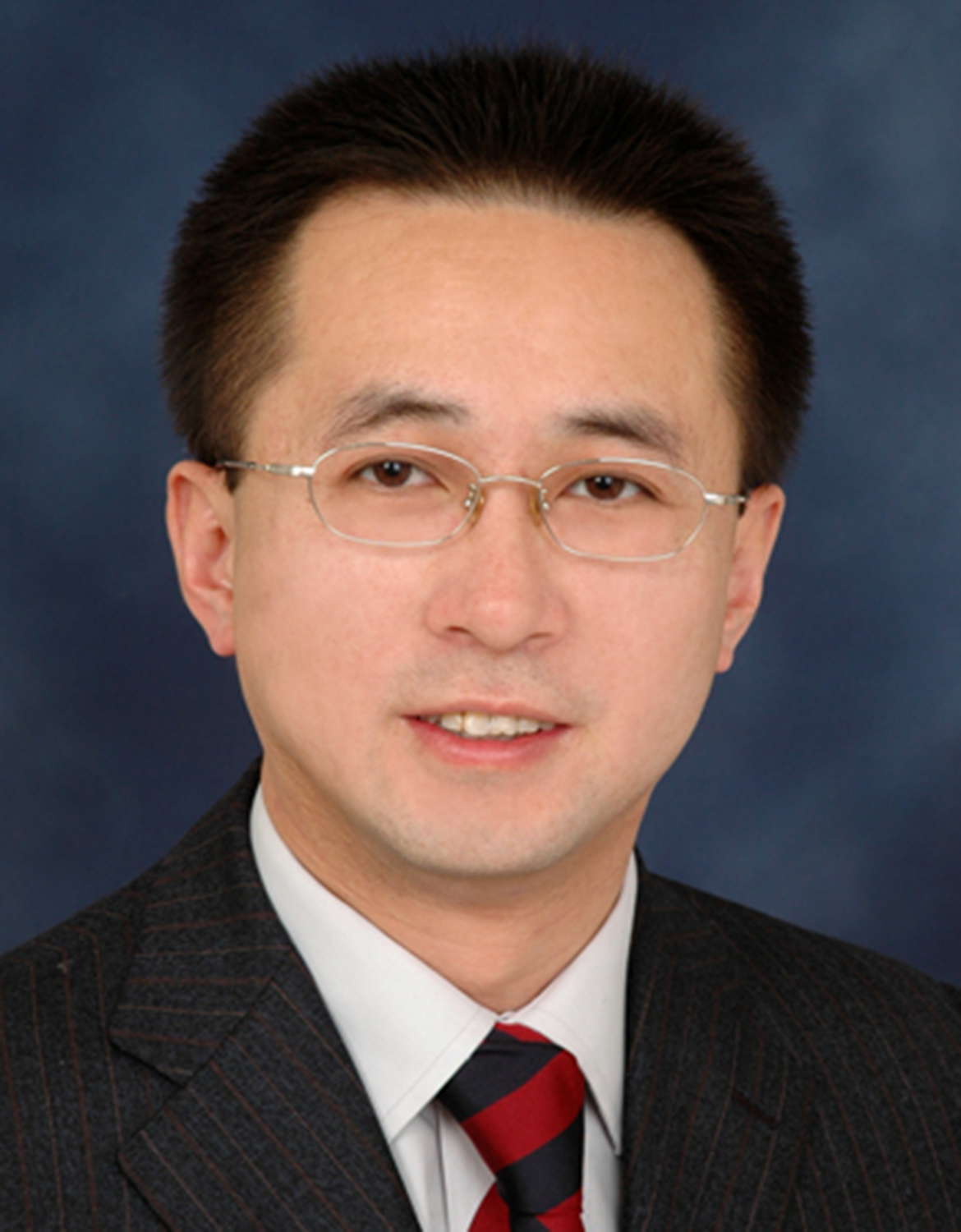 Li Zhang (张力)合作论文数School of Economics and Management, Beijing Jiaotong University2
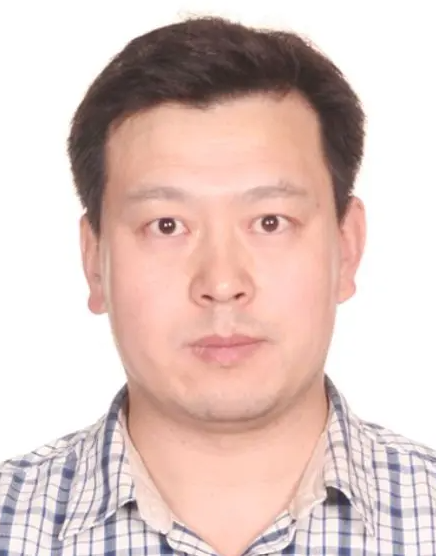 Honghai Liu (刘洪海)合作论文数School of Biomedical Engineering, State Key Laboratory of Robotics and Systems, Harbin Institute of Technology, Shenzhen;School of Computing, University of Portsmouth; Shanghai Jiao Tong University2
 Zhaojie Ju (琚兆杰)合作论文数College of Biomedical Engineering and Instrument Science, Zhejiang University2
 Paweł Pietkiewicz合作论文数2Chenxia Jin合作论文数2k nalepa合作论文数1Bartosz Moczulak合作论文数Faculty of Technical Sciences, University of Warmia and Mazury in Olsztyn1Ying Jing合作论文数1Liuliu Fu合作论文数1Pan Wang合作论文数Mathematics Subject Classification: 68 a€” Computer science1
 Haoshen Zhu合作论文数1




