Apples Core Animation framework enables Mac OS X, iPhone, and iPod touch developers to create richer, more visual applicationsmore easily than ever and with far less code. Now, theres a comprehensive, example-rich, full-color reference to Core Animation for experienced OS X and iPhone developers who want to make the most of this powerful framework. Marcus Zarra and Matt Long reveal exactly what Core Animation can and cant do, how to use it most effectivelyand how to avoid misusing it. Building on your existing knowledge of Objective-C, Cocoa, and Xcode, they present expert techniques, insights, and downloadable code for all aspects of Core Animation programming, from keyframing to movie playback. Zarra and Long thoroughly review similarities and differences between Core Animation on the Mac and iPhone, helping you write code that can easily move between platforms. They also present a full chapter of innovative techniques and proven rules of thumb for optimizing Core Animations real-world performance. Coverage includes: Taking full advantage of Core Animations lightweight layers and views Using keyframes to gain complete control over your animations Creating startling effects with Core Animation transforms Leveraging Core Images powerful filtering capabilities from within Core Animation Playing QuickTime movies using Core Animations QTMovieLayer Using the OpenGL layer to achieve greater control over movie playback Integrating advanced Quartz Composer visualizations into your user interfaces How to use helper layers to draw gradients, composite shapes, and replicate sublayers Adding mouse and keyboard user interaction points, and much more
This paper describes a multilayer, hybrid, distributed field robot architecture (DFRA) and its integration with MATLAB that is capable of supporting simple and complex functionality of heterogeneous teams of robot systems. This architecture was used to demonstrate multisensor mobile robot fuzzy-logic-based navigation in outdoor environments
IEEE Robotics & Automation Magazine (ISSN 1070-9932) (IRAMEB) is published quarterly by the Institute of Electrical and Electronics Engineers, Inc. Headquarters: 3 Park Avenue, 17th Floor, New York, NY 10016-5997 USA, Telephone: +1 212 419 7900. Responsibility for the content rests upon the authors and not upon the IEEE, the Society or its members. IEEE Service Center (for orders, subscriptions, address changes): 445 Hoes Lane, PO Box 1331, Piscataway, NJ 08855-1331 USA. Telephone: +1 732 981 0060. Individual copies: IEEE members $20.00 (first copy only), nonmembers $79.00 per copy. Subscription rates: Annual subscription rates included in IEEE Robotics and Automation Society member dues. Subscription rates available on request. Copyright and reprint permission: Abstracting is permitted with credit to the source. Libraries are permitted to photocopy beyond the limits of US Copyright law for the private use of …
We are exploring using techniques of semantic integration to enable the integration of teams of mobile robots into new domains.. This paper proposes an approach to semantic integration which relies on the persona structure first presented for allocating resources within distributed, heterogeneous teams of robots. The persona, a reflection of the internal state of the robot, can be mapped to different domains through the use of a domain adapter that performs a semantic mapping between the ontology of the robot and the ontology of the domain. In this context, the multi-robot system and each robot play some role in the external domain; identifying and mapping these roles will be a critical first step in solving the larger problem. This work will ultimately enable more rapid integration of teams of robots into varied domains. We are investigating semantic integration and ontology mapping as applied to distributed robotics in new domains and systems. Multirobot systems are currently used in a wide variety of situations, from military applications to search and rescue to off-world exploration. Unfortunately, there is little semantic interoperability between domains – existing approaches to multirobot system design incorporate domain knowledge directly in the robot software and system designs (Marmelstein 2002; DiLeo, Jacobs, & DeLoach 2002). Adaptation to the information environment of a new domain will be important for the rapid deployment of robot systems, particularly for organizations such as CRASAR that respond to Urban Search and Rescue events with a variety of external organizations. For instance, this could allow robot systems designed for use with US search and rescue teams to be integrated into an agent-based multinational rescue operation of the sort described in (Tate et al. 2004; Pěchouček, Mařı́k, & Bárta 2002). This paper proposes an approach to semantic integration which relies on the persona structure first presented for allocating resources within distributed, heterogeneous teams of robots in (Long 2004). A persona is the way to represent the roles, goals, capabilities and limitations of a robot or other situated agent to another agent, and is in essence an ontology representing the public information about the robot. The use of the persona provides several advantages for semantic integration. First, the persona is a known ontology and is most likely more limited in scope than the overall domain. Second, we are not looking for a total map, and can limit search to the structures known in the persona. And third, since current practice calls for a human operator at some level of interaction with a robot, we may allow human-assisted semantic mapping (Uschold & Gruninger 2004). The first two features may yield effective heuristics that will improve results for mapping to and from the persona, while last is particularly important as most approaches to semantic integration are at least partially manual (Kalfoglou & Schorlemmer 2003). Previous work has introduced the persona within a single distributed system, but it is not enough to design a multirobot system in isolation; a complex robotic system will eventually play roles in the context of some external domain. Without some way to address semantic consistency between the robot and the domain, the utility of such systems are limited. We propose using domain adapters to address the translation; the adapter defines the mapping between ontology of the persona and the ontology of the domain. The persona contains all the public information about a robot, and any of this is available for mapping. However, not all domains will be interested in all information; in the context of the CoSAR-TS project (Tate et al. 2004), role and task information is key. Each task or role that a robot can perform in the system could be attached to a set of properties and behaviors that define how the role should be performed. Roles are often dynamic: a robot may assume multiple roles, may transition between roles, or may be restricted to certain roles as events dictate (Steimann 2000). But while roles and tasks are important for planning in the domain, other sensor data, such as readings from a laser rangefinder, would be irrelevant and thus may not need to be mapped. On the other hand, for a narrower domain such as USAR, a domain ontology such as that proposed in (Chatterjee & Matsuno 2004; Messina et al. 2005; Schlenoff 2005) may require mapping to the level of sensor data, particularly for a medical or environmental monitoring task. The approach in this work is a specific instance of the field of semantic integration. Semantic integration is ultimately a search task, but implementation of ontology mappings can vary from completely manual, guided (as in PROMPT (Noy & Musen 2003)), heuristic or learning-based (such as GLUE (Doan et al. 2003)) or framework-based (Maedche et al. 2002). Discussion of these and other techniques can be found in (Kalfoglou & Schorlemmer 2003). We will investigate specific issues that are unique to this robotics and this concept of a persona: i) can we leverage the persona to improve semantic integration? ii) is there a common subset of the persona that is commonly mapped across domains? iii) is there a specific methodology or toolset that can enable rapid adaptation of a robot system to new domains? iv) can the concept of the persona and results of this work be extended from physically situated agents (such as robots) to situated agents (such as complex software agents or services)? The proposed approach will be designed and tested with an implementation on a heterogeneous robot team using the DFRA as the underlying distributed architecture and KAoS for policy-based agent management, which can control various aspects of the agent system, from how agents can communicate to allowing, denying or obligating certain actions. The implementation will initially use an ontology developed for roles and tasks in a search and rescue scenario. Testing will initially use simulation to validate the concept, but will be grounded on a team of real robots (Gage 2004; Long 2004).
This article presents a novel emotion-based recruitment approach to the multi-robot task allocation problem. This approach requires less communication bandwidth than auction methods, enabling it to scale to large team sizes, and making it appropriate for low-power or stealth applications. Affective recruitment is tolerant of unreliable communications channels, and can find better solutions than simple greedy schedulers (based on experimental metrics of the time necessary to complete recruitment and the total number of messages transmitted). Experimental results in simulation and on three UGVs and one UAV in a mine-detection task show that affective recruitment succeeds with network failure rates up to 25% and requires 32% fewer transmissions compared to existing methods on average. Affective recruitment also scales better with team size, requiring up to 61% fewer transmissions than a greedy instantaneous scheduler that has an O(n) communications complexity, without a significant increase in allocation time.
 Kimon P. Valavanis合作论文数Department of Electrical & Computer Engineering, Daniel Felix Ritchie School of Engineering & Computer Science, University of Denver5
 Robin Murphy合作论文数Humanitarian Robotics and AI Laboratory, Department of Computer Science and Engineering, College of Engineering, Texas A&M University5
 Lefteris Doitsidis合作论文数Technological Educational Institute of Crete, Technical University of Crete4
 Niklas Karlsson合作论文数Amazon1
 S. Shankar Sastry合作论文数Department of Electrical Engineering and Computer Sciences, University of California, Berkeley;C3 Digital Transformation Institute;FHL Vive Center for Enhanced Reality;Richard C. Blum Center for Developing Economies1
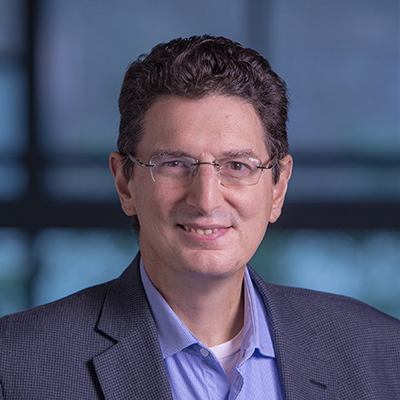 George J. Pappas合作论文数Department of Electrical & Systems Engineering, School of Engineering and Applied Science, University of Pennsylvania1
 Hyunchul Shim合作论文数Unmanned Systems Research Laboratory, Korea Advanced Institute of Science and Technology1
 Hoam Chung合作论文数Department of Mechanical and Aerospace Engineering, Faculty of Engineering, Monash University1
 Ludington, B.合作论文数1
 Aníbal Ollero合作论文数Ingeniería de Sistemas y Automática Department, University of Seville;Center for Advanced Aerospace Technologies1
 Walter Hans Engel合作论文数1
 Roland Siegwart合作论文数Autonomous Systems Lab, ETH Zurich;Department of Mechanical and Process Engineering, ETH Zurich1
 Timothy W. Mclain合作论文数Mechanical Engineering Ira A. Fulton College1
 Andrew Curtis合作论文数1Anders Moe合作论文数1Stephen Griffiths合作论文数1
 James Keller合作论文数Department of Electrical Engineering and Computer Science, University of Missouri;Institute for Data Science & Informatics, University of Missouri1
 Eric Johnson合作论文数Department of Aerospace Engineering College of Engineering, The Pennsylvania State University1
 Klas Nordberg合作论文数I am a researcher at the Computer Vision Laboratory.
LinkA¶ping University
Department of Electrical Engineering
Computer Vision Laboratory1
Klas Nordberg合作论文数I am a researcher at the Computer Vision Laboratory.
LinkA¶ping University
Department of Electrical Engineering
Computer Vision Laboratory1 David Lowe合作论文数Computer Science Department, University of British Columbia1D. Blake Barber合作论文数1
 Paolo Pirjanian合作论文数Embodied, Inc1
 Luis Merino合作论文数Departamento de Deporte e Informática, Universidad Pablo de Olavide;School of Engineering, Universidad Pablo de Olavide1Ben Grocholsky合作论文数Robotics Institute, Carnegie Mellon University1Cameron Parker合作论文数Department of Mathematics, University of San Diego1
 Mario E. Munich合作论文数Evolution Robotics1
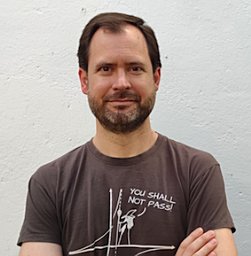 Fernando Perez-Caballero合作论文数Escuela Superior de Ingenieros, Universidad de Sevilla1Brendan Elliott合作论文数1
 Johan Wiklund合作论文数Martin J. Whitman School of Management, Syracuse University1Anthony Stanley合作论文数Griffith University1Aaron Gage合作论文数1
 Randy Beard合作论文数Department of Electrical and Computer Engineering Department, Ira A. Fulton College of Engineering, Brigham Young University1
 George Vachtsevanos合作论文数Intelligent Control Systems Laboratory, School of Electrical and Computer Engineering, College of Engineering, Georgia Institute of Technology1Kyle Grimes合作论文数1
 Andre Noth合作论文数Autonomous Systems Lab;Swiss Federal Institute of Technology of Zürich;Autonomous Systems Lab, Swiss Federal Institute of Technology of Zürich1E. Di Bernardo合作论文数1




