We present an experimental instrument that performs laboratory-based gas-phase Terahertz Desorption Emission Spectroscopy (THz-DES) experiments in support of astrochemistry. The measurement system combines a terahertz heterodyne radiometer that uses room temperature semiconductor mixer diode technology previously developed for the purposes of Earth observation, with a high-vacuum desorption gas cell and high-speed digital sampling circuitry to enable high spectral and temporal resolution spectroscopy of molecular species with thermal discrimination. During use, molecules are condensed on to a liquid nitrogen cooled metal finger to emulate ice structures that may be present in space. Following deposition, thermal desorption is controlled and initiated by means of a heater and monitored via a temperature sensor. The ‘rest frequency’ spectral signatures of molecules released into the vacuum cell environment are detected by the heterodyne radiometer in real-time and characterised with high spectral resolution. To demonstrate the viability of the instrument, we have studied Nitrous Oxide (N2O). This molecule strongly emits within the terahertz (sub-millimetre wavelength) range and provide a suitable test gas and we compare the results obtained with more traditional techniques such as quadrupole mass spectrometry. The results obtained allow us to fully characterize the measurement method and we discuss its potential use as a laboratory tool in support of astrochemical observations of molecular species in the interstellar medium and the Solar System.
We have developed precision micromachining techniques for integration of terahertz quantum cascade lasers (QCLs) with waveguides and feedhorns for use as local oscillators in satellite-borne receivers. We demonstrate these techniques using QCLs at 3.4 THz and 4.7 THz, as well as the first QCL with a monolithically integrated power modulator.
We demonstrate a terahertz gas spectroscopy technique based on self-mixing in a multimode quantum cascade laser (QCL). The spectral parameters of the H/D exchange reaction between water (H2O) and deuterated water (D2O) have been measured between 3.36-3.37 THz.
RAL Space has delivered four engineering qualification model (EQM) front-end receivers (FERXs) for the Microwave Sounder (MWS) and Microwave Imager (MWI) on-board the MetOp Second Generation (MetOp-SG) satellites. This mission will provide the European and wider global communities with weather forecasting services from 2022 to 2043. The two EQM FERXs developed by RAL for the MWS operate in the 183 and 229 GHz frequency ranges, featuring average double sideband (DSB) noise figures (NFs) of 5.3 and 6.2 dB, respectively. This paper presents the design and main characterisation results of these two state-of-the-art FERXs for the MWS and compares their performance with other in-orbit microwave sounding instruments, including those on-board MetOp.
AbstractAntenna-pattern measurements obtained from a double-metal supra-terahertz-frequency (supra-THz) quantum cascade laser (QCL) are presented. The QCL is mounted within a mechanically micro-machined waveguide cavity containing dual diagonal feedhorns. Operating in continuous-wave mode at 3.5 THz, and at an ambient temperature of ~60 K, QCL emission has been directed via the feedhorns to a supra-THz detector mounted on a multi-axis linear scanner. Comparison of simulated and measured far-field antenna patterns shows an excellent degree of correlation between beamwidth (full-width-half-maximum) and sidelobe content and a very substantial improvement when compared with unmounted devices. Additionally, a single output has been used to successfully illuminate and demonstrate an optical breadboard arrangement associated with a future supra-THz Earth observation space-borne payload. Our novel device has therefore provided a valuable demonstration of the effectiveness of supra-THz diagonal feedhorns and QCL devices for future space-borne ultra-high-frequency Earth-observing heterodyne radiometers.
Rutherford Appleton Laboratory Space Department (RAL Space) and Radiometer Physics GmbH are responsible for the provision of millimetre-wave front-end receivers operating from 165 GHz to 664 GHz for three instruments on board the MetOp Second Generation (MetOp-SG) satellites. Qualification of the Engineering Qualification Models (EQMs) is recently completed. This paper presents the results of the EQM qualification for receivers operating at 165 GHz, 183 GHz and 229 GHz for the MWS and MWI instruments.
we present an electromagnetic-field analysis of a terahertz-frequency quantum-cascade laser (THz QCL) integrated with a mechanically micro-machined waveguide cavity and diagonal feedhorn. A hybrid finite-element/Fourier transform approach enables analysis of both the near-field and far-field regions and is shown to agree well with experimental observations. The far-field antenna patterns show enhancement of the beam profile when compared with an unmounted QCL, in terms of beam divergence and side-lobe suppression ratio. Furthermore, we demonstrate integration of the QCL with dual diagonal feedhorns, enabling simultaneous access to both facets of the QCL, underpinning future integration with a satellite-based receiver and frequency-stabilization subsystem.
We present a self-mixing terahertz-frequency gas spectroscopy technique using a multimode quantum cascade laser. A precision-micro-machined external waveguide module and a double-metal quantum cascade laser device are used to increase the optical feedback and the laser’s frequency tuning range. Methanol spectra are obtained using two laser modes at 3.362 THz and 3.428 THz simultaneously, with more than 8 absorption peaks resolved over a 17-GHz bandwidth, which provide minimum detectable absorption coefficients of 2.7×10⁻⁴ cm−1 and 4.9×10⁻⁴ cm−1, respectively. In contrast to all previous self-mixing spectroscopy, our multimode technique expands the sensing bandwidth significantly. This broadband spectroscopy technique can potentially be used for the identification and analysis of chemical, biological radiological and nuclear (CBRN) agents and explosives.
We report the development of terahertz frequency quantum cascade lasers for applications as local oscillators. A range of active region designs and waveguide structures have been characterised in order to develop the devices for operation at high temperatures, with high output power and low dissipated power. Quantum cascade lasers based on a LO-phonon bound-to-continuum design emitting at 3.5 THz, suitable for the detection of hydroxyl, were fabricated with a double-metal (gold-gold) waveguide structure. These devices operated in continuous-wave up to 94 K, with an output power of 0.4 mW and dissipated power of 1.7 W at 10 K. A new, mechanically robust packaging and waveguide-integration scheme is also presented for operation outside laboratory environments, which further allows integration of quantum cascade lasers with terahertz waveguides, mixers and other system components. This integration scheme yielded a better beam quality, with a divergence of <20°, compared to standard double-metal devices. Its impacts on the device performance, such as operating temperature range, spectral emission, output power and electrical properties, are presented.
The International Submillimetre Airborne Radiometer (ISMAR) has been developed as an airborne demonstrator for the Ice Cloud Imager (ICI) that will be launched on board the next generation of European polar-orbiting weather satellites in the 2020s. It currently has 15 channels at frequencies between 118 and 664 GHz which are sensitive to scattering by cloud ice, and additional channels at 874 GHz are being developed. This paper presents an overview of ISMAR and describes the algorithms used for calibration. The main sources of bias in the measurements are evaluated, as well as the radiometric sensitivity in different measurement scenarios. It is shown that for downward views from high altitude, representative of a satellite viewing geometry, the bias in most channels is less than ±1 K and the NEΔT is less than 2 K, with many channels having an NEΔT less than 1 K. In-flight calibration accuracy is also evaluated by comparison of high-altitude zenith views with radiative-transfer simulations.
We present the first antenna power measurements from a double metal terahertz-frequency quantum cascade laser (THz QCL) mounted within a waveguide cavity and incorporating dual diagonal feedhorns that enable directional output coupling of THz radiation from both laser facets. The feedhorn antenna patterns have been measured simultaneously at a frequency of 3.5 THz and with the QCL operating at an ambient temperature of 60 K in continuous wave mode. Comparison with a feedhorn theoretical model shows good pattern correlation and implies that the QCL signal is likely propagating within the waveguide in a fundamental mode.
RAL Space and its project partner PRG are tasked with providing space-qualified heterodyne receiver front-ends operating between 165.5 GHz and 325 GHz for the Microwave Sounder (MWS), the Microwave Imager (MWI) and the Ice Cloud Imager (ICI) of the MetOp Second Generation (MetOp-SG) series of satellites. The preliminary design of the receiver front-ends is now complete. Extensive tests on performance of the individual components, as well as of the assembled breadboard versions of the receiver front-ends, have been performed. The results and conclusions derived from these tests will be presented.
This paper presents the results of two test programmes using novel instrumentation to characterise the pressure and turbulent velocity fields in gas-turbine combustor exit flows. The probes are uncooled, therefore a fast-insertion traverse system is employed to prevent thermal degradation of the instrumentation in these severely hostile high-temperature environments. High-bandwidth ultra-miniature pressure transducers are used to measure unsteady total pressure, whilst a Pitot tube is employed to measure time-averaged total pressure. The probes are 4 mm in diameter with a measurement bandwidth of the order of 100 kHz. In the first test programme, the probes are used to characterise the streamwise turbulent velocity field approximately two axial chords downstream of an uncooled single-stage turbine in a turbojet engine. Established data reduction methods and calibration against a hot-wire are used to obtain turbulent velocity fluctuations from unsteady total pressure measurements. Comprehensive turbulence results are presented including time-histories, power spectra, intensities, and lengthscales obtained at four-engine conditions and at two radial and two circumferential measurement locations. In the second test programme the probes are demonstrated in an industrial combustor rig, featuring a can combustor with swirler nozzle and no dilution holes, at temperatures up to 1500 K. Static pressure fluctuations are obtained up to 100 kHz, and some typical combustor spectral features are identified.
Since their first demonstration in 2002, the performance of terahertz frequency quantum cascade lasers has developed extremely rapidly. We consider the potential use of terahertz frequency quantum cascade lasers as local oscillators in satellite-borne instrumentation for future Earth observation and planetary science missions. A specific focus will be on the development of compact, waveguide-integrated, heterodyne detection systems for the supra-terahertz range.
TeraSCREEN is an EU FP7 Security project aimed at developing a combined active, with frequency channel centered at 360 GHz, and passive, with frequency channels centered at 94, 220 and 360 GHz, imaging system for border controls in airport and commercial ferry ports. The system will include automatic threat detection and classification and has been designed with a strong focus on the ethical, legal and practical aspects of operating in these environments and with the potential threats in mind. Furthermore, both the passive and active systems are based on array receivers with the active system consisting of a 16 element MIMO FMCW radar centered at 360 GHz with a bandwidth of 30 GHz utilizing a custom made direct digital synthesizer. The 16 element passive receiver system at 360 GHz uses commercial Gunn diode oscillators at 90 GHz followed by custom made 90 to 180 GHz frequency doublers supplying the local oscillator for 360 GHz sub-harmonic mixers. This paper describes the development of the passive antenna module, local oscillator chain, frequency mixers and detectors used in the passive receiver array of this system. The complete passive receiver chain is characterized in this paper.
The LOCUS atmospheric sounder is a satellite-borne THz radiometer concept, for studying molecular species in the mesosphere and lower thermosphere. We report waveguide-integrated THz quantum-cascade lasers for use as 3.5 THz local oscillators. A waveguide-integration scheme, using an integrated diagonal feedhorn significantly improves power outcoupling. 1.3 mW THz emission is demonstrated in a space-qualified Stirling cryocooler at 57 K, with ~15° beam divergence.
Terahertz-frequency quantum cascade lasers (THz QCLs) have numerous potential applications as 1-5 THz radiation sources in space science, biomedical and industrial sensing scenarios. However, the key obstacles to their wide-scale adoption outside laboratory environments have included their poor far-field beam quality and the lack of mechanically robust schemes that allow integration of QCLs with THz waveguides, mixers and other system components. A block integration scheme is presented, in which a continuous-wave similar to 3.4 THz double-metal QCL is bonded into a precision-machined rectangular waveguide within a copper heat-sink block. This highly reproducible approach provides a single-lobed far-field beam profile with a divergence of less than or similar to 20 degrees, and with no significant degradation in threshold current or in the range of operating temperatures.
Millimetre wave radar has been successfully applied in cloud research for a number of decades. The Rutherford Appleton Laboratory (RAL) has developed a 94 GHz radar based on solid state components and operated in Frequency Modulated Continuous Wave (FMCW) mode. The approach for improving the RF design — including the implementation of Doppler capability — and the results of this activity will be presented.
We demonstrate high-performance THz QCLs lasing at 2.2, 2.53, 3.5 and 4.7 THz, which target absorption lines of water, methane, hydroxyl and atomic oxygen respectively. Reliable single-mode targeting of gas species is obtained through the use of a photonic lattice design. A highly reproducible micro-machined waveguide block yields narrow beam-divergence and enables future integration of a complete THz heterodyne system including local-oscillator, mixer, and feed-horn.
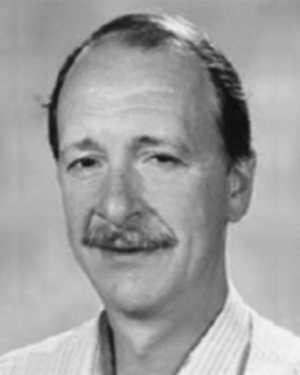 Brian Ellison合作论文数Rutherford Appleton Laboratories33
 Peter G Huggard合作论文数Millimeter Wave Technology Group, STFC Rutherford Appleton Laboratory18
 Manju Henry合作论文数15
 Nick Brewster合作论文数14
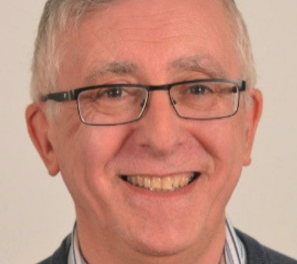 Vincent Fusco合作论文数School of Electronics, Electrical Engineering and Computer Science, Faculty of Engineering and Physical Science, Queen's University Belfast;Institute of Electronics, Communications & Information Technology, Queen's University Belfast13David N. Matheson合作论文数13Yingjun Han合作论文数12
 Alexander Valavanis合作论文数Institute of Microwaves and Photonics;School of Electronic and Electrical Engineering;University of Leeds;School of Electronic and Electrical Engineering, University of Leeds12
 Giles Davies合作论文数School of Electronic and Electrical Engineering, Faculty of Engineering and Physical Sciences, University of Leeds12
 Peter de Maagt合作论文数Electromagnetics & Space Environments Division, European Space Agency12Lianhe Li (李联合)合作论文数Univ Leeds, Sch Elect & Elect Engn11
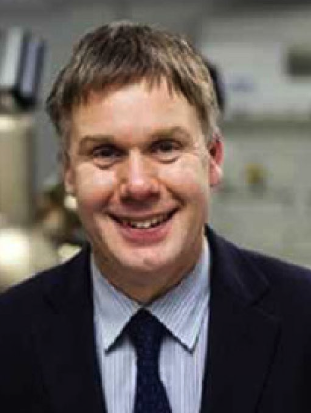 Edmund Linfield合作论文数School of Electronic and Electrical Engineering, Faculty of Engineering and Physical Sciences, University of Leeds11
 Robert Cahill合作论文数queen s university belfast10Terry V. Jones合作论文数10Gary D. Lock合作论文数Department of Mechanical Engineering, University of Bath10
 Chris Mann合作论文数10Simon Rea合作论文数9b p moyna合作论文数8b j maddison合作论文数8y munro合作论文数8HS Gamble合作论文数8O. Auriacombe合作论文数8
 Raymond Dickie合作论文数8B. Moyna合作论文数7
 Guy Houlsby合作论文数Department of Engineering Science, University of Oxford7D. L. Schultz合作论文数7p dean合作论文数6Daniel Gerber合作论文数6D. Klugmann合作论文数5r w ainsworth合作论文数5T. Rawlings合作论文数5
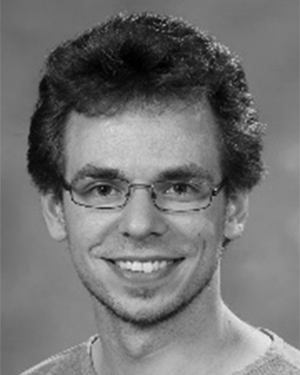 Kai Parow-Souchon合作论文数5
 Shengmin Guo合作论文数Department of Mechanical & Industrial Engineering, College of Engineering, Louisiana State University5R. Dong合作论文数5
 Hui Wang合作论文数5
 Byron Alderman合作论文数5Jingxuan Zhu合作论文数5
 Ross McAdam合作论文数Department of Engineering Science, University of Oxford5
 Norman Grant合作论文数5A. J. Rawlinson合作论文数5ray a dickie合作论文数4Jm Chamberlain合作论文数4V. Kangas合作论文数4
 John E. Lagraff合作论文数4Brian J. Kerridge合作论文数4Pepe Palafox合作论文数4G. Burton合作论文数3A. Obeed合作论文数3C. Howe合作论文数3




