A four-channel waveguide multiplexer operating at 180 GHz is presented and analyzed in this paper. The four channel filters are centered at 178.8 GHz, 180.3 GHz, 181.5 GHz, and 182.3 GHz, with very narrow bandwidths of 1.7 GHz (0.9%), 0.85 GHz (0.47%), 0.85 GHz (0.47%), and 0.425 GHz (0.23%), respectively. The three lower-frequency channels employ 8th order configurations, each consisting of four dualmode TE301/TE102 rectangular cavity resonators, while the highest-frequency channel adopts four TE201 and one TE101 rectangular cavity resonators. The multiplexer was fabricated in brass using high-precision computer numerical control (CNC) milling, followed by a gold surface coating to minimize losses. The measured insertion losses (ILs) of the four channel filters were 3.0 dB, 5.0 dB, 5.7 dB, and 22.5 dB, respectively, with observed centre frequency upward shifts of 0.80 GHz (0.45%), 0.88 GHz (0.49%), 0.76 GHz (0.42%), and 1.47 GHz (0.81%).
The design, fabrication, and performance of a millimeter-wave waveguide orthomode transducer (OMT) operating over an extended W-band frequency range 70–116 GHz is presented. The OMT has been designed for integration within a cryogenic radio astronomy focal plane array millimeter-wave receiver. In addition to delivering necessary millimeter-wave performance, a custom mechanical housing incorporating suitable waveguide interfaces is required. Within the OMT, a turnstile junction performs polarization separation of a signal entering a bespoke circular waveguide interface into two orthogonally polarized outputs via WR10 standard waveguide flanges. The device’s internal architecture was optimized using a combination of proprietary software and a commercially available 3-dimensional electromagnetic field analysis package. In order to demonstrate required performance, compactness and reliable production, two approaches were taken with respect to device mechanical fabrication: platelet and split block direct machining methods. Both structures were manufactured and tested at room temperature. Due to advantages in machining and assembly, the split block concept was selected for inclusion with the array receiver.
A narrowband subterahertz (sub-THz) bandpass filter with a wide spurious-free stopband, fabricated using high-precision 3-D printing technology, is presented. The filter is based on high- $Q$ spherical TE101-mode resonators, whose inherently high unloaded quality factor enables the realization of low loss over very narrow bandwidth. To suppress out-of-band spurious resonances, a combination of a meandered filter topology and cutoff waveguide sections is employed. To address the manufacturing challenges associated with curved spherical geometries, projection micro-stereolithography (P $\mu $ SL) 3-D printing is adopted together with an adaptive slicing strategy. As a proof-of-concept, an eighth-order filter with a center frequency of 180 GHz and a bandwidth of 5 GHz (2.8%) is designed, fabricated, and measured. Mechanical characterization confirms excellent dimensional accuracy and surface quality. RF experimental results show a minimum measured insertion loss of 0.7 dB and a worst-case in-band return loss better than 15 dB. The extracted unloaded quality factor is approximately 3600, which is the highest value reported to date for bandpass filters operating in this frequency range.
This paper describes the design and performance of the single-pixel receiver elements in the Cryogenic Array Receiver for Users of the Sardinia Observatory (CARUSO). CARUSO contains an array of 4x4 extended-W-band pixels, covering astronomical source frequencies from 70 to 116 GHz. CARUSO has recently been installed at the Gregorian focus of the 64 m diameter Sardinia Radio Telescope. Each cryogenic receiver pixel comprises a smooth walled feedhorn and a waveguide orthomode transducer for polarization separation. Each polarization channel comprises two low-noise amplification modules with a waveguide isolator between them, and an image-rejecting sub-harmonic mixer delivering the upper and lower sidebands, with a frequency tripler providing the local oscillator signal. The low noise amplifiers are based on two-stage MMIC amplifiers, incorporating InP high electron mobility transistors.
Terahertz (THz) radiation encompasses a wide spectral range within the electromagnetic spectrum that extends from microwaves to the far infrared (100 GHz–∼30 THz). Within its frequency boundaries exist a broad variety of scientific disciplines that have presented, and continue to present, technical challenges to researchers. During the past 50 years, for instance, the demands of the scientific community have substantially evolved and with a need for advanced instrumentation to support radio astronomy, Earth observation, weather forecasting, security imaging, telecommunications, non-destructive device testing and much more. Furthermore, applications have required an emergence of technology from the laboratory environment to production-scale supply and in-the-field deployments ranging from harsh ground-based locations to deep space. In addressing these requirements, the research and development community has advanced related technology and bridged the transition between electronics and photonics that high frequency operation demands. The multidisciplinary nature of THz work was our stimulus for creating the 2017 THz Science and Technology Roadmap (Dhillon et al 2017 J. Phys. D: Appl. Phys. 50 043001). As one might envisage, though, there remains much to explore both scientifically and technically and the field has continued to develop and expand rapidly. It is timely, therefore, to revise our previous roadmap and in this 2023 version we both provide an update on key developments in established technical areas that have important scientific and public benefit, and highlight new and emerging areas that show particular promise. The developments that we describe thus span from fundamental scientific research, such as THz astronomy and the emergent area of THz quantum optics, to highly applied and commercially and societally impactful subjects that include 6G THz communications, medical imaging, and climate monitoring and prediction. Our Roadmap vision draws upon the expertise and perspective of multiple international specialists that together provide an overview of past developments and the likely challenges facing the field of THz science and technology in future decades. The document is written in a form that is accessible to policy makers who wish to gain an overview of the current state of the THz art, and for the non-specialist and curious who wish to understand available technology and challenges. A such, our experts deliver a ‘snapshot’ introduction to the current status of the field and provide suggestions for exciting future technical development directions. Ultimately, we intend the Roadmap to portray the advantages and benefits of the THz domain and to stimulate further exploration of the field in support of scientific research and commercial realisation.
This paper presents the development of a hyperspectral microwave sensing radiometer, HyMS, for enhanced weather forecasting and climate data records. This airborne instrument employs hundreds of contiguous detection channels, spread across a wide instantaneous bandwidth, 4 GHz. HyMS samples atmospheric molecular absorption features associated with O 2 centered at 54.3 GHz and 66.6 GHz and H 2 O vapour centered at 183.311 GHz. The radiometer was built in a small form factor suited for deployment on a small satellite constellation with the potential to provide high spatio-temporal coverage of the planet. Results from an airborne demonstrator campaign in December 2022 is presented.
AbstractRealizing packaged state-of-the-art performance of monolithic microwave integrated circuits (MMICs) operating at millimeter wavelengths presents significant challenges in terms of electrical interface circuitry and physical construction. For instance, even with the aid of modern electromagnetic simulation tools, modeling the interaction between the MMIC and its package embedding circuit can lack the necessary precision to achieve optimum device performance. Physical implementation also introduces inaccuracies and requires iterative interface component substitution that can produce variable results, is invasive and risks damaging the MMIC. This paper describes a novel method for in situ optimization of packaged millimeter-wave devices using a pulsed ultraviolet laser to remove pre-selected areas of interface circuit metallization. The method was successfully demonstrated through the optimization of a 183 GHz low noise amplifier destined for use on the MetOp-SG meteorological satellite series. An improvement in amplifier output return loss from an average of 12.9 dB to 22.7 dB was achieved across an operational frequency range of 175–191 GHz and the improved circuit reproduced. We believe that our in situ tuning technique can be applied more widely to planar millimeter-wave interface circuits that are critical in achieving optimum device performance.
We present an experimental instrument that performs laboratory-based gas-phase Terahertz Desorption Emission Spectroscopy (THz-DES) experiments in support of astrochemistry. The measurement system combines a terahertz heterodyne radiometer that uses room temperature semiconductor mixer diode technology previously developed for the purposes of Earth observation, with a high-vacuum desorption gas cell and high-speed digital sampling circuitry to enable high spectral and temporal resolution spectroscopy of molecular species with thermal discrimination. During use, molecules are condensed on to a liquid nitrogen cooled metal finger to emulate ice structures that may be present in space. Following deposition, thermal desorption is controlled and initiated by means of a heater and monitored via a temperature sensor. The ‘rest frequency’ spectral signatures of molecules released into the vacuum cell environment are detected by the heterodyne radiometer in real-time and characterised with high spectral resolution. To demonstrate the viability of the instrument, we have studied Nitrous Oxide (N2O). This molecule strongly emits within the terahertz (sub-millimetre wavelength) range and provide a suitable test gas and we compare the results obtained with more traditional techniques such as quadrupole mass spectrometry. The results obtained allow us to fully characterize the measurement method and we discuss its potential use as a laboratory tool in support of astrochemical observations of molecular species in the interstellar medium and the Solar System.
RAL Space has delivered four engineering qualification model (EQM) front-end receivers (FERXs) for the Microwave Sounder (MWS) and Microwave Imager (MWI) on-board the MetOp Second Generation (MetOp-SG) satellites. This mission will provide the European and wider global communities with weather forecasting services from 2022 to 2043. The two EQM FERXs developed by RAL for the MWS operate in the 183 and 229 GHz frequency ranges, featuring average double sideband (DSB) noise figures (NFs) of 5.3 and 6.2 dB, respectively. This paper presents the design and main characterisation results of these two state-of-the-art FERXs for the MWS and compares their performance with other in-orbit microwave sounding instruments, including those on-board MetOp.
Rutherford Appleton Laboratory Space Department (RAL Space) and Radiometer Physics GmbH are responsible for the provision of millimetre-wave front-end receivers operating from 165 GHz to 664 GHz for three instruments on board the MetOp Second Generation (MetOp-SG) satellites. Qualification of the Engineering Qualification Models (EQMs) is recently completed. This paper presents the results of the EQM qualification for receivers operating at 165 GHz, 183 GHz and 229 GHz for the MWS and MWI instruments.
Terahertz-frequency quantum-cascade lasers (THz QCLs) are compact, electrically-driven sources of narrowband radiation in the ~2-5-THz band. Numerous scientifically important gas-phase species within the Earth's upper atmosphere have distinctive spectral features within this band, making QCLs attractive sources for spectroscopic and radiometric atmospheric studies. In this paper, we demonstrate the integration of a QCL with a satellite-compliant cryocooler, precision-micromachined waveguide, a pair of diagonal feedhorns and a Cassegrain telescope, as key steps toward a complete 3.5-THz integrated receiver system.
Science and technologies based on terahertz frequency electromagnetic radiation (100 GHz–30 THz) have developed rapidly over the last 30 years. For most of the 20th Century, terahertz radiation, then referred to as sub-millimeter wave or far-infrared radiation, was mainly utilized by astronomers and some spectroscopists. Following the development of laser based terahertz time-domain spectroscopy in the 1980s and 1990s the field of THz science and technology expanded rapidly, to the extent that it now touches many areas from fundamental science to 'real world' applications. For example THz radiation is being used to optimize materials for new solar cells, and may also be a key technology for the next generation of airport security scanners. While the field was emerging it was possible to keep track of all new developments, however now the field has grown so much that it is increasingly difficult to follow the diverse range of new discoveries and applications that are appearing. At this point in time, when the field of THz science and technology is moving from an emerging to a more established and interdisciplinary field, it is apt to present a roadmap to help identify the breadth and future directions of the field. The aim of this roadmap is to present a snapshot of the present state of THz science and technology in 2017, and provide an opinion on the challenges and opportunities that the future holds. To be able to achieve this aim, we have invited a group of international experts to write 18 sections that cover most of the key areas of THz science and technology. We hope that The 2017 Roadmap on THz science and technology will prove to be a useful resource by providing a wide ranging introduction to the capabilities of THz radiation for those outside or just entering the field as well as providing perspective and breadth for those who are well established. We also feel that this review should serve as a useful guide for government and funding agencies.
The International Submillimetre Airborne Radiometer (ISMAR) has been developed as an airborne demonstrator for the Ice Cloud Imager (ICI) that will be launched on board the next generation of European polar-orbiting weather satellites in the 2020s. It currently has 15 channels at frequencies between 118 and 664 GHz which are sensitive to scattering by cloud ice, and additional channels at 874 GHz are being developed. This paper presents an overview of ISMAR and describes the algorithms used for calibration. The main sources of bias in the measurements are evaluated, as well as the radiometric sensitivity in different measurement scenarios. It is shown that for downward views from high altitude, representative of a satellite viewing geometry, the bias in most channels is less than ±1 K and the NEΔT is less than 2 K, with many channels having an NEΔT less than 1 K. In-flight calibration accuracy is also evaluated by comparison of high-altitude zenith views with radiative-transfer simulations.
RAL Space and its project partner PRG are tasked with providing space-qualified heterodyne receiver front-ends operating between 165.5 GHz and 325 GHz for the Microwave Sounder (MWS), the Microwave Imager (MWI) and the Ice Cloud Imager (ICI) of the MetOp Second Generation (MetOp-SG) series of satellites. The preliminary design of the receiver front-ends is now complete. Extensive tests on performance of the individual components, as well as of the assembled breadboard versions of the receiver front-ends, have been performed. The results and conclusions derived from these tests will be presented.
We report the design, analysis and development of Schottky-based frequency multipliers that will be used in millimetre/sub-millimeter-wave heterodyne receiver payloads. The devices are destined for future space deployment in support of a series of second generation European polar-orbiting satellites (MetOp-SG) that will perform operational meteorology.
Ice desorption is the main mechanism causing the release of complex molecules from the solid to the gas phase in star forming regions. A Schottky diode millimetre-wave heterodyne radiometer, developed by the Millimetre-Wave Technology Group, RAL Space, UK, has been used for laboratory-based analysis of interstellar ice analogues. The sensitivity and stability of the instrument has been characterised to determine its suitability for use with a future unique desorption facility under development at the Open University, UK. We describe our method of radiometer calibration and the results obtained, and provide example emission spectra acquired by using the radiometer with a gas cell.
Millimetre wave radar has been successfully applied in cloud research for a number of decades. The Rutherford Appleton Laboratory (RAL) has developed a 94 GHz radar based on solid state components and operated in Frequency Modulated Continuous Wave (FMCW) mode. The approach for improving the RF design — including the implementation of Doppler capability — and the results of this activity will be presented.
The LOw Cost Upper atmosphere Sounder (LOCUS) mission has a core objective of probing the Earths meso-sphere and low thermosphere (MLT) region using THz receivers combined with an infrared (IR) filter radiometer. This will give the first comprehensive data on the energy balance and chemical processes in the MLT from direct detection, including the important atomic oxygen which until now has never been mapped by remote sensing measurements. The payload and mission design concept has very recently, and very successfully, concluded an ESA sponsored phase A0 study, led by SSTL. It is essential to build upon this success and to maintain the mission momentum towards achieving a high readiness level (TRL) and eventual flight. A key step in this process is the demonstration and proof of operation of the THz payload in a representative environment (towards TRL 6). We therefore have begun working on a hi-fidelity breadboard of the LOCUS payload suitable for both extensive laboratory and environmental testing, and with a potential for deployment on a high-altitude platform, such as NASAs Global Hawk. The latter will prove the system technical operation in a closely representative environment, and will return valuable and useful scientific data. The breadboard will consist of the system primary antenna; optical bench; one or more THz receivers; back-end electronics, and a physical realisation of the spacecraft payload bay. An extensive test programme will be undertaken to raise the payload and receiver system towards level 6, and we will seek opportunities to test the system in an observational campaign.
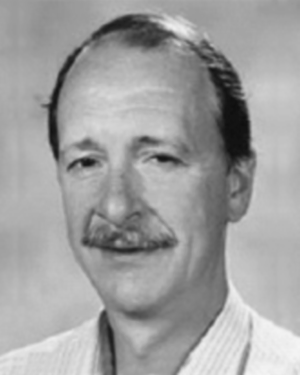 Brian Ellison合作论文数Rutherford Appleton Laboratories19
 B. Moyna合作论文数12
 Manju Henry合作论文数11
 Peter G Huggard合作论文数Millimeter Wave Technology Group, STFC Rutherford Appleton Laboratory11
 D. Linton合作论文数11
 Byron Alderman合作论文数9
 Martin L Oldfield合作论文数University of Oxford9
 Robert Cahill合作论文数queen s university belfast8
 Vincent Fusco合作论文数School of Electronics, Electrical Engineering and Computer Science, Faculty of Engineering and Physical Science, Queen's University Belfast;Institute of Electronics, Communications & Information Technology, Queen's University Belfast8O. Auriacombe合作论文数7
 Kai Parow-Souchon合作论文数7Orr, E.合作论文数7McConnell, J.合作论文数7
 Raymond Dickie合作论文数7Nick Brewster合作论文数6
 Norman Grant合作论文数6David N. Matheson合作论文数6P. Hunyor合作论文数5D. Klugmann合作论文数5HS Gamble合作论文数5
 Axel Murk合作论文数5M. Merritt合作论文数5
 Hui Wang合作论文数5
 Giles Davies合作论文数School of Electronic and Electrical Engineering, Faculty of Engineering and Physical Sciences, University of Leeds5
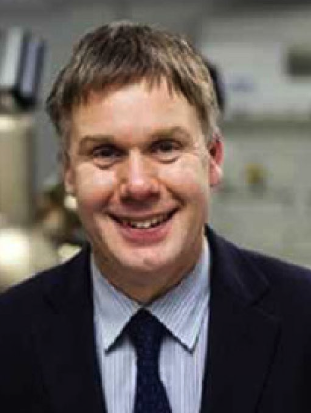 Edmund Linfield合作论文数School of Electronic and Electrical Engineering, Faculty of Engineering and Physical Sciences, University of Leeds5A. Obeed合作论文数4M. Beardsley合作论文数4B. Thomas合作论文数4Brian Moyna合作论文数4Linton, D.合作论文数4G. Burton合作论文数3C. Howe合作论文数3T. Stangier合作论文数3
 Muhammad Yusof Ismail合作论文数3
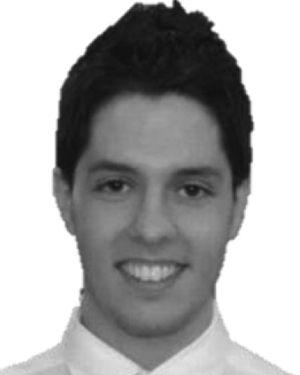 David Cuadrado-Calle合作论文数3
 h s gamble合作论文数3J. Hampton合作论文数3M. Phillips合作论文数3M. Brandt合作论文数3eddie orr合作论文数3V. Kangas合作论文数3A. Marshall合作论文数3B. Davis合作论文数3Renker, M.合作论文数3
 Thomas, B.合作论文数3
 Alessandro Navarrini合作论文数3Daniel Gerber合作论文数3W. Hu合作论文数3
 Steve Parkes合作论文数3




