Driven by the advancements in generative AI, large machine learning models have revolutionized domains such as image processing, audio synthesis, and speech recognition. While server-based deployments remain the locus of peak performance, the imperative for on-device inference, necessitated by privacy and efficiency considerations, persists. Recognizing GPUs as the on-device ML accelerator with the widest reach, we present ML Drift--an optimized framework that extends the capabilities of state-of-the-art GPU-accelerated inference engines. ML Drift enables on-device execution of generative AI workloads which contain 10 to 100x more parameters than existing on-device generative AI models. ML Drift addresses intricate engineering challenges associated with cross-GPU API development, and ensures broad compatibility across mobile and desktop/laptop platforms, thereby facilitating the deployment of significantly more complex models on resource-constrained devices. Our GPU-accelerated ML/AI inference engine achieves an order-of-magnitude performance improvement relative to existing open-source GPU inference engines.
Preference optimization techniques such as Reinforcement Learning From Human/AI Feedback(RLHF/RLAIF) emerge as the new standard approach in fine-tuning foundation models. Preference learning, however, is often optimized under the reinforcement learning setting which leads to a high variance, low data efficiency, as well as much longer steps to converge. Recent study of Direct Preference Optimization proved to be an effective way to mitigate such issues by converting the preference learning into a supervised learning paradigm for language models. However, little have been studied in the case of image generative models such as diffusion models. In this paper, we propose Proximal Preference Optimization for Diffusion models (PPOD) that extends the prior work with proximal constraints to solve the optimization challenges in diffusion model. We further study the online vs offline evaluation as well as the optimization objective choices and figure out the optimal setting for different use cases. Such a method makes preference optimization stable and feasible under the supervised learning setting. Our evaluation shows PPOD outperforms the other RL based reward optimization approaches on the stable diffusion model. To the best of our knowledge, we are the first work that enabled the efficient optimization for the RLAIF on the diffusion models.
We present StreamVC, a streaming voice conversion solution that preserves the content and prosody of any source speech while matching the voice timbre from any target speech. Unlike previous approaches, StreamVC produces the resulting waveform at low latency from the input signal even on a mobile platform, making it applicable to real-time communication scenarios like calls and video conferencing, and addressing use cases such as voice anonymization in these scenarios. Our design leverages the architecture and training strategy of the SoundStream neural audio codec for lightweight high-quality speech synthesis. We demonstrate the feasibility of learning soft speech units causally, as well as the effectiveness of supplying whitened fundamental frequency information to improve pitch stability without leaking the source timbre information.
We propose a neural network model that can separate target speech sources from interfering sources at different angular regions using two microphones. The model is trained with simulated room impulse responses (RIRs) using omni-directional microphones without needing to collect real RIRs. By relying on specific angular regions and multiple room simulations, the model utilizes consistent time difference of arrival (TDOA) cues, or what we call delay contrast, to separate target and interference sources while remaining robust in various reverberation environments. We demonstrate the model is not only generalizable to a commercially available device with a slightly different microphone geometry, but also outperforms our previous work which uses one additional microphone on the same device. The model runs in real-time on-device and is suitable for low-latency streaming applications such as telephony and video conferencing.
Reward finetuning has emerged as a promising approach to aligning foundation models with downstream objectives. Remarkable success has been achieved in the language domain by using reinforcement learning (RL) to maximize rewards that reflect human preference. However, in the vision domain, existing RL-based reward finetuning methods are limited by their instability in large-scale training, rendering them incapable of generalizing to complex, unseen prompts. In this paper, we propose Proximal Reward Difference Prediction (PRDP), enabling stable black-box reward finetuning for diffusion models for the first time on large-scale prompt datasets with over 100K prompts. Our key innovation is the Reward Difference Prediction (RDP) objective that has the same optimal solution as the RL objective while enjoying better training stability. Specifically, the RDP objective is a supervised regression objective that tasks the diffusion model with predicting the reward difference of generated image pairs from their denoising trajectories. We theoretically prove that the diffusion model that obtains perfect reward difference prediction is exactly the maximizer of the RL objective. We further develop an online algorithm with proximal updates to stably optimize the RDP objective. In experiments, we demonstrate that PRDP can match the reward maximization ability of well-established RL-based methods in small-scale training. Furthermore, through large-scale training on text prompts from the Human Preference Dataset v2 and the Pick-a-Pic v1 dataset, PRDP achieves superior generation quality on a diverse set of complex, unseen prompts whereas RL-based methods completely fail.
An authentic face restoration system is becoming increasingly demanding in many computer vision applications, e.g., image enhancement, video communication, and taking portrait. Most of the advanced face restoration models can recover high-quality faces from low-quality ones but usually fail to faithfully generate realistic and high-frequency details that are favored by users. To achieve authentic restoration, we propose IDM, an Iteratively learned face restoration system based on denoising Diffusion Models (DDMs). We define the criterion of an authentic face restoration system, and argue that denoising diffusion models are naturally endowed with this property from two aspects: intrinsic iterative refinement and extrinsic iterative enhancement. Intrinsic learning can preserve the content well and gradually refine the high-quality details, while extrinsic enhancement helps clean the data and improve the restoration task one step further. We demonstrate superior performance on blind face restoration tasks. Beyond restoration, we find the authentically cleaned data by the proposed restoration system is also helpful to image generation tasks in terms of training stabilization and sample quality. Without modifying the models, we achieve better quality than state-of-the-art on FFHQ and ImageNet generation using either GANs or diffusion models.
The rapid development and application of foundation models have revolutionized the field of artificial intelligence. Large diffusion models have gained significant attention for their ability to generate photorealistic images and support various tasks. On-device deployment of these models provides benefits such as lower server costs, offline functionality, and improved user privacy. However, common large diffusion models have over 1 billion parameters and pose challenges due to restricted computational and memory resources on devices. We present a series of implementation optimizations for large diffusion models that achieve the fastest reported inference latency to-date(under 12 seconds for Stable Diffusion 1.4 without INT8 quantization for a 512 × 512 image with 20 iterations) on GPU-equipped mobile devices. These enhancements broaden the applicability of generative AI and improve the overall user experience across a wide range of devices.
StyleGAN models have been widely adopted for generating and editing face images. Yet, few work investigated running StyleGAN models on mobile devices. In this work, we introduce BlazeStyleGAN — to the best of our knowledge, the first StyleGAN model that can run in real-time on smartphones. We design an efficient synthesis network with the auxiliary head to convert features to RGB at each level of the generator, and only keep the last one at inference. We also improve the distillation strategy with a multi-scale perceptual loss using the auxiliary heads, and an adversarial loss for the student generator and discriminator. With these optimizations, BlazeStyleGAN can achieve real-time performance on high-end mobile GPUs. Experimental results demonstrate that BlazeStyleGAN generates high-quality face images and even mitigates some artifacts from the teacher model.
We present Blendshapes GHUM, an on-device ML pipeline that predicts 52 facial blendshape coefficients at 30+ FPS on modern mobile phones, from a single monocular RGB image and enables facial motion capture applications like virtual avatars. Our main contributions are: i) an annotation-free offline method for obtaining blendshape coefficients from real-world human scans, ii) a lightweight real-time model that predicts blendshape coefficients based on facial landmarks.
Most existing hand gesture recognition (HGR) systems are limited to a predefined set of gestures. However, users and developers often want to recognize new, unseen gestures. This is challenging due to the vast diversity of all plausible hand shapes, e.g. it is impossible for developers to include all hand gestures in a predefined list. In this paper, we present a user-friendly framework that lets users easily customize and deploy their own gesture recognition pipeline. Our framework provides a pre-trained single-hand embedding model that can be fine-tuned for custom gesture recognition. Users can perform gestures in front of a webcam to collect a small amount of images per gesture. We also offer a low-code solution to train and deploy the custom gesture recognition model. This makes it easy for users with limited ML expertise to use our framework. We further provide a no-code web front-end for users without any ML expertise. This makes it even easier to build and test the end-to-end pipeline. The resulting custom HGR is then ready to be run on-device for real-time scenarios. This can be done by calling a simple function in our open-sourced model inference API, MediaPipe Tasks. This entire process only takes a few minutes.
High quality speech capture has been widely studied for both voice communication and human computer interface reasons. To improve the capture performance, we can often find multi-microphone speech enhancement techniques deployed on various devices. Multi-microphone speech enhancement problem is often decomposed into two decoupled steps: a beamformer that provides spatial filtering and a single-channel speech enhancement model that cleans up the beamformer output. In this work, we propose a speech enhancement solution that takes both the raw microphone and beamformer outputs as the input for an ML model. We devise a simple yet effective training scheme that allows the model to learn from the cues of the beamformer by contrasting the two inputs and greatly boost its capability in spatial rejection, while conducting the general tasks of denoising and dereverberation. The proposed solution takes advantage of classical spatial filtering algorithms instead of competing with them. By design, the beamformer module then could be selected separately and does not require a large amount of data to be optimized for a given form factor, and the network model can be considered as a standalone module which is highly transferable independently from the microphone array. We name the ML module in our solution as GSENet, short for Guided Speech Enhancement Network. We demonstrate its effectiveness on real world data collected on multi-microphone devices in terms of the suppression of noise and interfering speech.
Despite the proliferation of generative models, achieving fast sampling during inference without compromising sample diversity and quality remains challenging. Existing models such as Denoising Diffusion Probabilistic Models (DDPM) deliver high-quality, diverse samples but are slowed by an inherently high number of iterative steps. The Denoising Diffusion Generative Adversarial Networks (DDGAN) attempted to circumvent this limitation by integrating a GAN model for larger jumps in the diffusion process. However, DDGAN encountered scalability limitations when applied to large datasets. To address these limitations, we introduce a novel approach that tackles the problem by matching implicit and explicit factors. More specifically, our approach involves utilizing an implicit model to match the marginal distributions of noisy data and the explicit conditional distribution of the forward diffusion. This combination allows us to effectively match the joint denoising distributions. Unlike DDPM but similar to DDGAN, we do not enforce a parametric distribution for the reverse step, enabling us to take large steps during inference. Similar to the DDPM but unlike DDGAN, we take advantage of the exact form of the diffusion process. We demonstrate that our proposed method obtains comparable generative performance to diffusion-based models and vastly superior results to models with a small number of sampling steps.
An authentic face restoration system is becoming increasingly demanding in many computer vision applications, e.g., image enhancement, video communication, and taking portrait. Most of the advanced face restoration models can recover high-quality faces from low-quality ones but usually fail to faithfully generate realistic and high-frequency details that are favored by users. To achieve authentic restoration, we propose $\textbf{IDM}$, an $\textbf{I}$teratively learned face restoration system based on denoising $\textbf{D}$iffusion $\textbf{M}$odels (DDMs). We define the criterion of an authentic face restoration system, and argue that denoising diffusion models are naturally endowed with this property from two aspects: intrinsic iterative refinement and extrinsic iterative enhancement. Intrinsic learning can preserve the content well and gradually refine the high-quality details, while extrinsic enhancement helps clean the data and improve the restoration task one step further. We demonstrate superior performance on blind face restoration tasks. Beyond restoration, we find the authentically cleaned data by the proposed restoration system is also helpful to image generation tasks in terms of training stabilization and sample quality. Without modifying the models, we achieve better quality than state-of-the-art on FFHQ and ImageNet generation using either GANs or diffusion models.
We present BlazePose GHUM Holistic, a lightweight neural network pipeline for 3D human body landmarks and pose estimation, specifically tailored to real-time on-device inference. BlazePose GHUM Holistic enables motion capture from a single RGB image including avatar control, fitness tracking and AR/VR effects. Our main contributions include i) a novel method for 3D ground truth data acquisition, ii) updated 3D body tracking with additional hand landmarks and iii) full body pose estimation from a monocular image.
We introduce an efficient video segmentation system for resource-limited edge devices leveraging heterogeneous compute. Specifically, we design network models by searching across multiple dimensions of specifications for the neural architectures and operations on top of already light-weight backbones, targeting commercially available edge inference engines. We further analyze and optimize the heterogeneous data flows in our systems across the CPU, the GPU and the NPU. Our approach has empirically factored well into our real-time AR system, enabling remarkably higher accuracy with quadrupled effective resolutions, yet at much shorter end-to-end latency, much higher frame rate, and even lower power consumption on edge platforms.
We present an on-device real-time hand gesture recognition (HGR) system, which detects a set of predefined static gestures from a single RGB camera. The system consists of two parts: a hand skeleton tracker and a gesture classifier. We use MediaPipe Hands as the basis of the hand skeleton tracker, improve the keypoint accuracy, and add the estimation of 3D keypoints in a world metric space. We create two different gesture classifiers, one based on heuristics and the other using neural networks (NN).
3D object detection has recently become popular due to many applications in robotics, augmented reality, autonomy, and image retrieval. We introduce the Objectron dataset to advance the state of the art in 3D object detection and foster new research and applications, such as 3D object tracking, view synthesis, and improved 3D shape representation. The dataset contains object-centric short videos with pose annotations for nine categories and includes 4 million annotated images in 14, 819 annotated videos. We also propose a new evaluation metric, 3D Intersection over Union, for 3D object detection. We demonstrate the usefulness of our dataset in 3D object detection and novel view synthesis tasks by providing baseline models trained on this dataset. Our dataset and evaluation source code are available online at Github.com/google-research-datasets/Objectron.
In this paper, we address the problem of detecting unseen objects from RGB images and estimating their poses in 3D. We propose two mobile friendly networks: MobilePose-Base and MobilePose-Shape. The former is used when there is only pose supervision, and the latter is for the case when shape supervision is available, even a weak one. We revisit shape features used in previous methods, including segmentation and coordinate map. We explain when and why pixel-level shape supervision can improve pose estimation. Consequently, we add shape prediction as an intermediate layer in the MobilePose-Shape, and let the network learn pose from shape. Our models are trained on mixed real and synthetic data, with weak and noisy shape supervision. They are ultra lightweight that can run in real-time on modern mobile devices (e.g. 36 FPS on Galaxy S20). Comparing with previous single-shot solutions, our method has higher accuracy, while using a significantly smaller model (2~3% in model size or number of parameters).
We present Attention Mesh, a lightweight architecture for 3D face mesh prediction that uses attention to semantically meaningful regions. Our neural network is designed for real-time on-device inference and runs at over 50 FPS on a Pixel 2 phone. Our solution enables applications like AR makeup, eye tracking and AR puppeteering that rely on highly accurate landmarks for eye and lips regions. Our main contribution is a unified network architecture that achieves the same accuracy on facial landmarks as a multi-stage cascaded approach, while being 30 percent faster.
Tracking object poses in 3D is a crucial building block for Augmented Reality applications. We propose an instant motion tracking system that tracks an object's pose in space (represented by its 3D bounding box) in real-time on mobile devices. Our system does not require any prior sensory calibration or initialization to function. We employ a deep neural network to detect objects and estimate their initial 3D pose. Then the estimated pose is tracked using a robust planar tracker. Our tracker is capable of performing relative-scale 9-DoF tracking in real-time on mobile devices. By combining use of CPU and GPU efficiently, we achieve 26-FPS+ performance on mobile devices.
 Irfan Essa合作论文数School of Interactive Computing, College of Computing, Georgia Institute of Technology;Interdisciplinary Research Center for Machine Learning, Georgia Institute of Technology;Google Inc.16
 Vivek Kwatra合作论文数Computer Science Department at UNC Chapel Hill13
 Tingbo Hou合作论文数Google DeepMind9
 George Sung合作论文数7Juhyun Lee合作论文数6Karthik Raveendran合作论文数Georgia Tech6Raman Sarokin合作论文数5
 Ivan Grishchenko合作论文数5Valentin Bazarevsky合作论文数5
 Chuo-Ling Chang合作论文数Google5Andrei Kulik合作论文数4
 Kartynnik Yury合作论文数4
 Adel Ahmadyan合作论文数4Artsiom Ablavatski合作论文数4Jianing Wei合作论文数4
 Kihwan Kim合作论文数Mobile Communications Division, Samsung Electronics4
 Qifei Wang合作论文数Google DeepMind4Mei Han合作论文数Tianjin University4
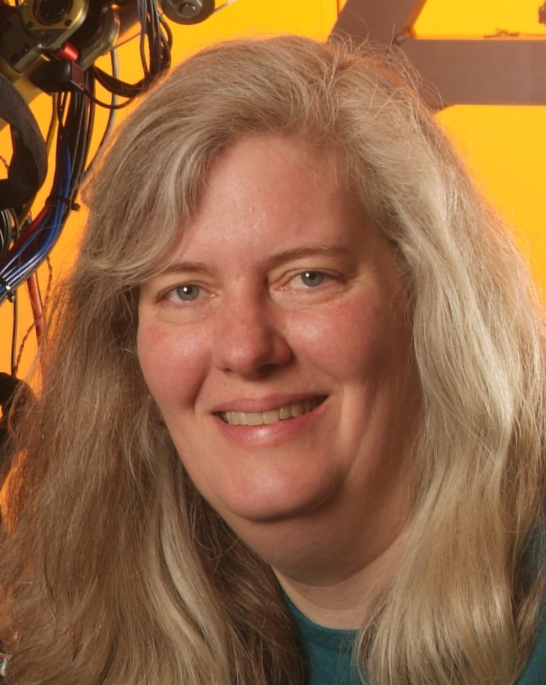 Jessica K. Hodgins合作论文数Robotics Institute, School of Computer Science, Carnegie Mellon University4Jiuqiang Tang合作论文数3
 Fei Deng合作论文数Department of Computer Science, School of Arts and Sciences, Rutgers, The State University of New Jersey;Google3Ignasheva Ekaterina合作论文数3Esha Uboweja合作论文数3Liangkai Zhang合作论文数3
 Eduard Gabriel Bazavan合作论文数Google Research3Chehung Lee合作论文数2Shao-Fu Shih合作论文数2Fan Zhang合作论文数2David Tian合作论文数2Yunpeng Li合作论文数2
 Hakan Erdogan合作论文数Google DeepMind2Shieh Mogan合作论文数2Vakunov Andrey合作论文数2Pisarchyk Yury合作论文数2Nikolay S Chirkov合作论文数2
 Jamie Lin合作论文数Qualcomm AI Research2Chris McClanahan合作论文数2
 Yang Zhao合作论文数Google2
 Ariel Shamir合作论文数Efi Arazi School of Computer Science, Reichman University2Yu-Chuan Su合作论文数Computer Science Department, The University of Texas at Austin2
 Cristian Sminchisescu合作论文数Department of Mathematics, Faculty of Engineering, Lund University;Google DeepMind2
 Iain Matthews合作论文数Epic Games;Robotics Institute, Carnegie Mellon University;University of East Anglia2
 Raffay Hamid合作论文数Georgia Institute of Technology 2002-20072
 Sergey Ioffe合作论文数xAI2
 Andrei Zanfir合作论文数Google2S. Hussain Raza合作论文数2
 Fabio Riccardi合作论文数CERN2Xing Li合作论文数1Lu Wang合作论文数1




