HIPE-2026 is a CLEF evaluation lab dedicated to person-place relation extraction from noisy, multilingual historical texts. Building on the HIPE-2020 and HIPE-2022 campaigns, it extends the series toward semantic relation extraction by targeting the task of identifying person–place associations in multiple languages and time periods. Systems are asked to classify relations of two types - at ("Has the person ever been at this place?") and isAt ("Is the person located at this place around publication time?") - requiring reasoning over temporal and geographical cues. The lab introduces a three-fold evaluation profile that jointly assesses accuracy, computational efficiency, and domain generalization. By linking relation extraction to large-scale historical data processing, HIPE-2026 aims to support downstream applications in knowledge-graph construction, historical biography reconstruction, and spatial analysis in digital humanities.
Was this person ever at that place, and if so, when? Answering such questions from noisy, multilingual historical documents is the central challenge of HIPE-2026, the third edition of the HIPE evaluation series. Moving from named entity recognition and linking (HIPE-2020, HIPE-2022) to reasoning about relationships between entities, HIPE-2026 targets two temporally grounded relation types: at, indicating that a person was present at a location at some point prior to a document's publication date, and isAt, indicating presence contemporaneous with that date. This paper presents the results of the evaluation campaign, which confronted 17 participating teams with the challenges of historical language variation, OCR noise, and indirect contextual cues across three languages: French, German, and English. The datasets include historical newspaper text from the nineteenth and twentieth centuries, as well as a surprise-domain generalization set drawn from early modern French literary texts. A distinctive feature of HIPE-2026 is its three-fold evaluation framework, which assesses predictive accuracy, computational efficiency, and cross-domain generalization, reflecting the practical demands of large-scale historical document processing in the cultural heritage domain. Across more than 40 submitted runs, results reveal a wide range of strategies, from state-of-the-art large language models to lightweight task-specific classifiers, and highlight the trade-offs between accuracy, efficiency, and robustness inherent to historical relation extraction at corpus scale. System descriptions, datasets, and findings are presented and discussed, offering a detailed picture of the current state of temporally grounded relation extraction for historical documents.
We present the results of HIPE-OCRepair-2026, an ICDAR competition on LLM-assisted OCR post-correction of historical documents. OCR post-correction remains a long-standing challenge in digital heritage: large-scale collections of digitized documents are affected by legacy OCR errors, while re-digitization at scale remains impractical. Large language models (LLMs) offer a major opportunity to revisit this challenge, yet their effectiveness across languages, document types, and noise conditions—and their tendency to hallucinate—remains insufficiently understood. HIPE-OCRepair-2026 pursues two objectives: (i) to evaluate the capabilities of modern OCR post-correction systems, and (ii) to provide a reproducible evaluation framework anchored in the HIPE-OCRepair-2026 dataset, a harmonized multilingual resource consolidating existing and newly curated historical datasets. Participants were tasked with correcting noisy OCR transcripts from historical newspapers and printed works in English, French, and German (17th–20th century), working at the level of coherent transcription units (paragraphs or articles) without access to source images. The evaluation adopts a retrieval-oriented rather than diplomatic scoring approach, reflecting the practical use case of search and access over digitized collections. Four teams submitted systems ranging from zero-shot prompting to continued pre-training and fine-tuning, offering insights into the merits of different adaptation strategies. Results show that modern LLM-assisted systems can significantly improve OCR quality, but performance varies across datasets, languages, and noise levels. Overcorrection on low-noise inputs emerges as a recurring challenge, highlighting the importance of evaluation beyond character error reduction. The dataset, scorer, and evaluation pipeline are publicly released to support future research.
These guidelines outline the participation rules for HIPE-2026, a CLEF evaluation lab focused on extracting person–place relations from noisy, multilingual historical texts. They define the task, describe the data, explain the evaluation setup, and detail the submission instructions.
After decades of massive digitisation, an unprecedented number of historical documents are available in digital format, along with their machine-readable texts. While this represents a major step forward with respect to preservation and accessibility, it also opens up new opportunities in terms of content mining and the next fundamental challenge is to develop appropriate technologies to efficiently search, retrieve, and explore information from this ‘big data of the past’. Among semantic indexing opportunities, the recognition and classification of named entities are in great demand among humanities scholars. Yet, named entity recognition (NER) systems are heavily challenged with diverse, historical, and noisy inputs. In this survey, we present the array of challenges posed by historical documents to NER, inventory existing resources, describe the main approaches deployed so far, and identify key priorities for future developments.
This paper investigates the presence of OCR-sensitive neurons within the Transformer architecture and their influence on named entity recognition (NER) performance on historical documents. By analysing neuron activation patterns in response to clean and noisy text inputs, we identify and then neutralise OCR-sensitive neurons to improve model performance. Based on two open access large language models (Llama2 and Mistral), experiments demonstrate the existence of OCR-sensitive regions and show improvements in NER performance on historical newspapers and classical commentaries, highlighting the potential of targeted neuron modulation to improve models' performance on noisy text.
Click to increase image sizeClick to decrease image size Notes1 I want to acknowledge that I (have) work(ed) with two of the editors (Estelle Bunout and Frédéric Clavert) and several of the contributors (Kaspar Beelen, Katherine McDonough, and Melvin Wevers).2 Beelen et al., “Bias and Representativeness in Digitized Newspaper Collections,” 1–22.3 Hobbs, “The Deleterious Dominance of The Times in Nineteenth-Century Scholarship,” 472–97.4 Smits, “Problems and Possibilities of Digital Newspaper and Periodical Archives,” 139–46.5 Cordell, “‘Q i-Jtb the Raven’,” 188–225.6 van Strien et al., Assessing the Impact of OCR Quality on Downstream NLP Tasks.7 McDonough, “Maps as Data.”
The quality of automatic transcription of heritage documents, whether from printed, manuscripts or audio sources, has a decisive impact on the ability to search and process historical texts. Although significant progress has been made in text recognition (OCR, HTR, ASR), textual materials derived from library and archive collections remain largely erroneous and noisy. Effective post-transcription correction methods are therefore necessary and have been intensively researched for many years. As large language models (LLMs) have recently shown exceptional performances in a variety of text-related tasks, we investigate their ability to amend poor historical transcriptions. We evaluate fourteen foundation language models against various post-correction benchmarks comprising different languages, time periods and document types, as well as different transcription quality and origins. We compare the performance of different model sizes and different prompts of increasing complexity in zero and few-shot settings. Our evaluation shows that LLMs are anything but efficient at this task. Quantitative and qualitative analyses of results allow us to share valuable insights for future work on post-correcting historical texts with LLMs.
Historical newspapers are mirrors of past societies, keeping track of the small and great history and reflecting the political, moral, and economic environments in which they were produced. Highly valued as primary sources by historians and humanities scholars, newspaper archives have been massively digitised in libraries, resulting in large collections of machine-readable documents and, over the past half-decade, in numerous academic research initiatives on their automatic processing. The Dagstuhl Seminar 22292 “Computational Approaches to Digitised Historical Newspaper” gathered researchers and practitioners with backgrounds in natural language processing, computer vision, digital history and digital library involved in computational approaches to historical newspapers with the objectives to share experiences, analyse successes and shortcomings, deepen our understanding of the interplay between computational aspects and digital scholarship, and discuss future challenges. This report documents the program and the outcomes of the seminar. Seminar July 17–22, 2022 – http://www.dagstuhl.de/22292 2012 ACM Subject Classification Computing methodologies → Information extraction; Computing methodologies → Machine learning; Information systems → Digital libraries and archives; Applied computing → Arts and humanities; Applied computing → Document management and text processing; Information systems → Information retrieval; Information systems → Data mining; Information systems → Document representation; Information systems → Document structure; Information systems → Structure and multilingual text search; Information systems → Users and interactive retrieval
Text Reuse reveals meaningful reiterations of text in large corpora. Humanities researchers use text reuse to study, e.g., the posterior reception of influential texts or to reveal evolving publication practices of historical media. This research is often supported by interactive visualizations which highlight relations and differences between text segments. In this paper, we build on earlier work in this domain. We present impresso Text Reuse at Scale, the to our knowledge first interface which integrates text reuse data with other forms of semantic enrichment to enable a versatile and scalable exploration of intertextual relations in historical newspaper corpora. The Text Reuse at Scale interface was developed as part of the impresso project and combines powerful search and filter operations with close and distant reading perspectives. We integrate text reuse data with enrichments derived from topic modeling, named entity recognition and classification, language and document type detection as well as a rich set of newspaper metadata. We report on historical research objectives and common user tasks for the analysis of historical text reuse data and present the prototype interface together with the results of a user evaluation.
In the Digital Age, the analysis and exploration of unstructured document collections is of central importance to members of investigative professions, whether they might be scholars, journalists, paralegals, or analysts. In many of their domains, entities play a key role in the discovery of implicit relations between the contents of documents and thus serve as natural entry points to a detailed manual analysis, such as the prototypical 5Ws in journalism or stock symbols in finance. To assist in these analyses, entity-centric networks have been proposed as a language model that represents document collections as a cooccurrence graph of entities and terms, and thereby enables the visual exploration of corpora. Here, we present ECCE, a web-based application that implements entity-centric networks, augments them with contextual language models, and provides users with the ability to upload, manage, and explore document collections. Our application is available as a web-based service at http://dimtools.uni.kn/ecce.
This paper presents an overview of the second edition of HIPE (Identifying Historical People, Places and other Entities), a shared task on named entity recognition and linking in multilingual historical documents. Following the success of the first CLEF-HIPE-2020 evaluation lab, HIPE-2022 confronts systems with the challenges of dealing with more languages, learning domain-specific entities, and adapting to diverse annotation tag sets. This shared task is part of the ongoing efforts of the natural language processing and digital humanities communities to adapt and develop appropriate technologies to efficiently retrieve and explore information from historical texts. On such material, however, named entity processing techniques face the challenges of domain heterogeneity, input noisiness, dynamics of language, and lack of resources. In this context, the main objective of HIPE-2022, run as an evaluation lab of the CLEF 2022 conference, is to gain new insights into the transferability of named entity processing approaches across languages, time periods, document types, and annotation tag sets. Tasks, corpora, and results of participating teams are presented.
We present the HIPE-2022 shared task on named entity processing in multilingual historical documents. Following the success of the first CLEF-HIPE-2020 evaluation lab, this edition confronts systems with the challenges of dealing with more languages, learning domain-specific entities, and adapting to diverse annotation tag sets. HIPE-2022 is part of the ongoing efforts of the natural language processing and digital humanities communities to adapt and develop appropriate technologies to efficiently retrieve and explore information from historical texts. On such material, however, named entity processing techniques face the challenges of domain heterogeneity, input noisiness, dynamics of language, and lack of resources. In this context, the main objective of the evaluation lab is to gain new insights into the transferability of named entity processing approaches across languages, time periods, document types, and annotation tag sets.
 Simon Clematide合作论文数University of Zurich18
 Guillaume Jacquet合作论文数Traitements Informatiques et Cognition18
 Matteo Romanello合作论文数Department of Digital Humanities, King's College London16
 Damien Nouvel合作论文数Institut National des Langues et Civilisations Orientales12
 Caroline Brun合作论文数Naver Labs Europe12
 Ralf Steinberger合作论文数European Commission - Joint Research Centre10Frédéric Kaplan合作论文数School of Computer and Communication Sciences, Ecole Polytechnique Federale de Lausanne9Estelle Bunout合作论文数8Sophie Rosset合作论文数Spoken Language Processing Group8
 Marco Turchi合作论文数Zoom7
 Marten During合作论文数7
 Mohamed Ebrahim合作论文数6
 Emanuela Boros合作论文数TEKLIA, Paris, France5
 Juri Opitz合作论文数Department of Computational Linguistics, University of Zurich5
 Antoine Doucet合作论文数University of Caen5Daniele Guido合作论文数4
 Giovanni Colavizza合作论文数The Alan Turing Institute;CWTS Leiden University;University of Amsterdam;Odoma4
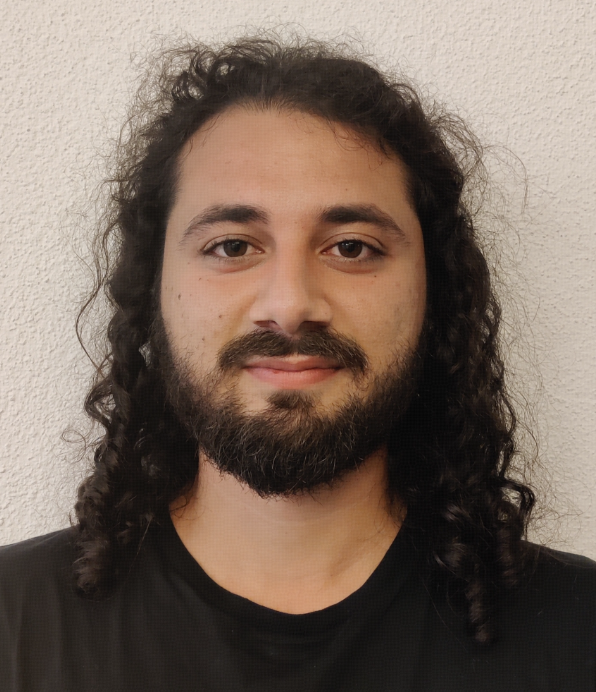 Andrianos Michail合作论文数Department of Computational Linguistics, University of Zurich4Adeline Nazarenko合作论文数Institut Galilee
Universite Paris-Nord4
Andrianos Michail合作论文数Department of Computational Linguistics, University of Zurich4Adeline Nazarenko合作论文数Institut Galilee
Universite Paris-Nord4 Karën Fort合作论文数INIST-CNRS4
 Josef Steinberger合作论文数EC Joint Research Centre, Ispra4
 Clemens Neudecker合作论文数Natl Lib Netherlands, The Hague, Netherlands3
 Rochat Yannick合作论文数3
 Hristo Tanev合作论文数Joint Research Centre, European Commission3Júlia Pajzs合作论文数3Leonida Della Rocca合作论文数3Andreas Fickers合作论文数2Orlin Topalov合作论文数2Marianna Kucharski合作论文数2Aurélie Migeotte合作论文数2
 Raphael Barman合作论文数2
 Phillip Ströbel合作论文数2
 Frédéric Clavert合作论文数C2DH, University of Luxembourg2Roman Kalyakin合作论文数Digital Res Infrastruct, Luxembourg Ctr Contemporary & Digital Hist C2DH2Daniele Vannella合作论文数2
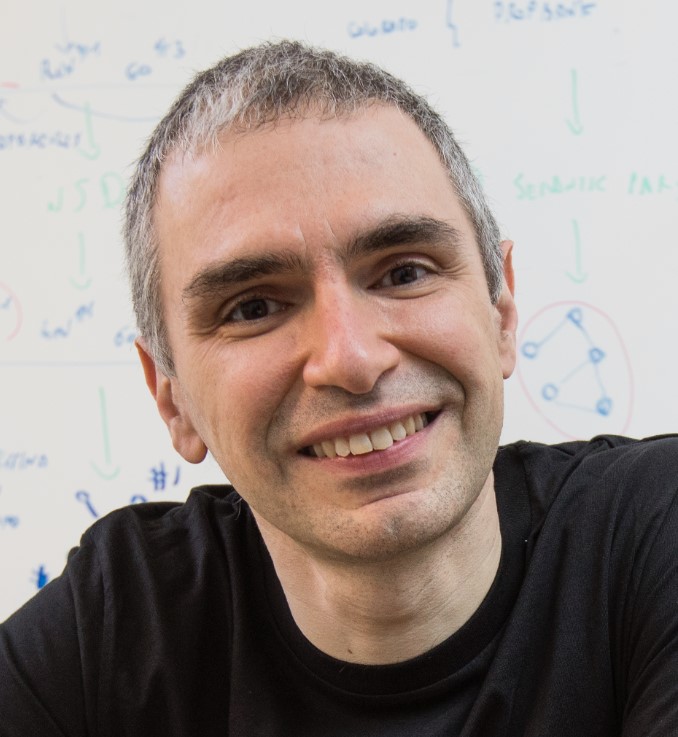 Roberto Navigli合作论文数Department of Computer, Control and Management Engineering, Sapienza University of Rome;Babelscape2
 Philipp Cimiano合作论文数Faculty of Technology, Bielefeld University2Jakub Piskorski合作论文数Institute of Computer Science, Polish Academy of Sciences2
 Vanni Zavarella合作论文数JRC - European Commission2
 Stavroula Voyatzi合作论文数Université2
 Mijail Kabadjov合作论文数EC Joint Research Centre, Ispra2Francesco Cecconi合作论文数2Lars Wieneke合作论文数Bauhaus Universität Weimar2
 John Philip Mccrae合作论文数Data Science Institute, University of Galway2Takuya Nakamura合作论文数2Sylvie Guillemin-Lanne合作论文数2
 Martin Völk合作论文数Institute of Computational Linguistics, University of Zurich2Caroline Hagège合作论文数2Julian Schelb合作论文数1




