Polycyclic aromatic hydrocarbons (PAHs) are likely responsible for the family of infrared emission features seen in a wide variety of astrophysical environments. A potentially important subclass of these materials are PAHs whose edges contain excess H atoms (Hn-PAHs). This type of compound may be present in space, but it has been difficult to assess this possibility because of a lack of suitable laboratory spectra to assist with analysis of astronomical data. We present 4000-500 cm(-1) (2.5-20 mu m) infrared spectra of 23 Hn-PAHs and related molecules isolated in argon matrices under conditions suitable for interpretation of astronomical data. Spectra of molecules with mixed aromatic and aliphatic domains show characteristics that distinguish them from fully aromatic PAH equivalents. Two major changes occur as PAHs become more hydrogenated: (1) aromatic C-H stretching bands near 3.3 mu m weaken and are replaced with stronger aliphatic bands near 3.4 mu m, and (2) aromatic C-H out-of-plane bending mode bands in the 11-15 mu m region shift and weaken concurrent with growth of a strong aliphatic -CH2-deformation mode near 6.9 mu m. Implications for interpreting astronomical spectra are discussed with emphasis on the 3.4 and 6.9 mu m features. Laboratory data is compared with emission spectra from IRAS 21282+5050, an object with normal PAH emission features, and IRAS 22272+5435 and IRAS 0496+3429, two protoplanetary nebulae with abnormally large 3.4 mu m features. We show that "normal" PAH emission objects contain relatively few Hn-PAHs in their emitter populations, but less evolved protoplanetary nebulae may contain significant abundances of these molecules.
Organic compounds are synthesized in the interstellar medium and can be delivered to planetary surfaces such as the early Earth, where they mix with endogenous species. Some of these compounds are amphiphilic, having polar and nonpolar groups on the same molecule. Amphiphilic compounds spontaneously self-assemble into more complex structures such as bimolecular layers, which in turn form closed membranous vesicles. The first forms of cellular life required self-assembled membranes that were likely to have been produced from amphiphilic compounds on the prebiotic Earth. Laboratory simulations show that such vesicles readily encapsulate functional macromolecules, including nucleic acids and polymerases. The goal of future investigations will be to fabricate artificial cells as models of the origin of life.
Amino acids have been identified in carbonaceous chondrites, but their origin is yet unknown. Previous work has shown that a variety of amino acids can be formed via ultraviolet photolysis of interstellar ice analogs. Two possible mechanisms of formation of these amino acids have been proposed: a Strecker-type synthesis or a radical-radical mechanism. In this work, we have used isotopic labeling techniques to test the predictions made by each of these proposed mechanisms for the formation of the amino acids glycine and serine. We observe that amino acid formation occurs via multiple pathways, with potentially different mechanisms for glycine and serine. The major reaction paths do not match either of the two predicted mechanisms, although a modified radical-radical mechanism may account for our observations. The observation of multiple routes suggests that the formation of amino acids in interstellar ice analogs is not narrowly dependent on ice composition, but may occur under a variety of conditions that influence product distributions.
Abstract— The polycyclic aromatic hydrocarbon (PAH) anthracene was oxidized by exposure to ultraviolet (UV) radiation in H2O ice under simulated astrophysical conditions, forming several anthracene ketones (9‐anthrone, 1,4‐anthraquinone, and 9,10‐anthraquinone) and alcohols (1‐anthrol and 2‐anthrol). Two of the ketones produced have been detected in the Murchison meteorite but, to our knowledge, there has been no search for the alcohols or other oxidized anthracenes in meteorites. These results seem consistent with the possibility that interstellar ice photochemistry could have influenced the inventory of aromatics in meteorites. Since quinones are also fundamental to biochemistry, their formation in space and delivery to planets is relevant to studies relating to the habitability of planets and the evolution of life.
Polycyclic aromatic hydrocarbons (PAHs) have been observed in absorption along lines of sight toward embedded protostars. In such cold space environments PAHs should condense into H(2)O- rich ice mantles at low temperature and be exposed to ionizing radiation. In this paper we present the first infrared spectra of PAH cations in solid H(2)O generated under conditions that resemble dense molecular clouds. After exposing PAHs in solid H(2)O at 15 K to low doses of UV radiation, we have observed both the vibrational absorptions of PAH cations in the mid-IR and electronic transitions in the near-IR. The PAHs observed as ions in solid H(2)O were naphthalene, anthracene, phenanthrene, benzo[k] fluoranthene, and benzo[ghi] perylene. Peak positions, strengths, and temperature dependence are reported for the detected ion bands, and their astrophysical significance is discussed. These laboratory measurements suggest that absorption bands of PAH cations in H(2)O ice may be observable by astronomers in the near- and mid-infrared.
New spectra of Pluto were obtained with the Gemini Near-Infrared Spectrometer (GNIRS) on the Gemini South 8-m telescope covering the region 1.9-2.5 µm. We have analyzed these data and two spectra of Triton with particular emphasis on a weak absorption feature detected at 2.405 μm. While this wavelength is coincident with a 13CO absorption band that is the isotopic variant of the 12CO band (2.35 μm) seen on both Pluto and Triton, our analysis, supported by new lab spectra of CO, shows that the strength of the 2.405-μm band is much too great to be attributed to any plausible abundance of 13CO. Instead, we identify this band as the 2.4045 μm absorption of pure ethane in solid form (Quirico & Schmitt Icarus 127, 354, 1997). Published models of the spectra of Triton (Quirico et al. Icarus 139, 159, 1999) and Pluto (Doute et al. Icarus 142, 421, 1999) show small variations from the data at 2.28 μm. The addition of absorption from the ethane band at 2.274 μm removes this small discrepancy. We do not see evidence for the 2.461 μm ethane band, although this is a somewhat noisy region of both spectra. Other investigators (Nakamura et al. P.A.S. Japan 52, 551, 2000) noted that Pluto's absorption bands at 2.28 and 2.32 μm are best fit with ethane, but their 2.405 μm region is discrepant with ethane. At longer wavelengths, Sasaki et al. (Ap.J. 618, L57, 2005) noted that models fit their Pluto data best when ethane was added, but they did not clearly identify ethane bands. Estimates of the abundances of ethane on Triton and Pluto suggest that this ice is deposited on relatively short time-scales by precipitation from the atmosphere, where it is produced by photochemistry (Krasnopolsky & Cruikshank JGR 100, 21271, 1995; JGR 104, 21979, 1999).
We present 1.25–19 μm infrared spectra of pure solid CH4 and H2O/CH4=87, 20, and 3 solid mixtures at temperatures from 15 to 150 K. We compare and contrast the absorptions of CH4 in solid H2O with those of pure CH4. Changes in selected peak positions, profiles, and relative strength with temperature are presented, and absolute strengths for absorptions of CH4 in solid H2O are estimated. Using the two largest (ν3+ν4) and (ν1+ν4) near-IR absorptions of CH4 at 2.324 and 2.377 μm (4303 and 4207 cm−1), respectively, as examples, we show that peaks of CH4 in solid H2O are at slightly shorter wavelength (higher frequency) and broader than those of pure solid CH4. With increasing temperature, these peaks shift to higher frequency and become increasingly broad, but this trend is reversible on re-cooling, even though the phase transitions of H2O are irreversible. It is to be hoped that these observations of changes in the positions, profiles, and relative intensities of CH4 absorptions with concentration and temperature will be of use in understanding spectra of icy outer Solar System bodies.
Cassini's VIMS has already returned exciting results interpreting spectra of Saturn's icy satellites. The discovery of unidentified features possibly due to CN compounds inspired the work reported here. We wanted to test HCN as a possibility for explaining these features, and also explore how the features of HCN change when mixed with H2O. We have previously noted that mixing H20 and CO2 produces new spectral features and that those features change with temperature and mixing ratio.
CO2 is present on the surface of many Solar System objects, but not always as a segregated, pure ice. In pure CO2-ice, the fundamental absorption is located near 4.268 micron (2343.3 wavenumbers). However, on several objects, the CO2 fundamental is shifted to higher frequency. This shift may be produced by CO2 gas trapped in another material, or adsorbed onto minerals. We have seen that a mixture of H2O, CH3OH4 and CO2 forms a type II clathrate when heated to 125 K and produces a CO2 fundamental near 4.26 micron. The exact location of the feature is strongly dependent on the initial ratio of the three components. We are currently exploring various starting ratios relevant to the Solar System to determine the minimum amount of CH3OH needed to convert all of the CO2 to the clathrate, i.e. eliminate the splitting of the CO2 fundamental. We are testing the stability of the clathrate to thermal processing and UV photolysis, and documenting the changes seen in the spectra in the wavelength range from 1-5 micron. We acknowledge financial support from the Origins of Solar Systems Program, the Planetary Geology and Geophysics and the NASA Postdoctoral Program.
We have used the infrared spectra of laboratory ices to calculate the real and imaginary indices of refraction for amorphous and crystalline H2O-ice. We create H2O-ice samples in vacuum (approx. 10(exp ^-8)Torr). We measure the thickness of the sample by reflecting a He-Ne laser off of the sample and counting interference fringes as it grows and then collect transmission spectra of the samples in the wavelength range 1.25-22 micrometers. Using the ice thickness and transmission spectrum we calculate the imaginary part of the index of refraction. A Kramers-Kronig calculation is then used to calculate the real part of the index of refraction (Berland et al. 1994; Hudgins et al. 1993). These optical constants can be used to create model spectra for comparison to spectra from Solar System objects. We will summarize the differences between the amorphous and crystalline H2O-ice spectra. These include weakening of features and shifting of features to shorter wavelength in amorphous H,O-ice spectra. We will also discuss methods of using band area ratios to quickly estimate the fraction of amorphous to crystalline H2O-ice. We acknowledge financial support from the NASA Origins of the Solar System Program, the NASA Planetary Geology and Geophysics Program, and the NASA Postdoctoral Program.
 Scott Sandford合作论文数Space Sciences and Astrophysics Branch, Space Science and Astrobiology Division, Ames Research Center, National Aeronautics and Space Administration104
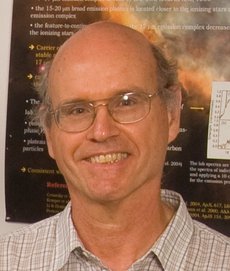 Louis Allamandola合作论文数Space Science Division, National Aeronautics and Space Administration;Ames Research Center, National Aeronautics and Space Administration69
 Jason P. Dworkin合作论文数NASA Ames Research Center;SETI Institute;NASA Ames Research Center, SETI Institute25
 Jamie E. Elsila合作论文数Department of Chemistry, Stanford University17
 Richard Zare合作论文数The Zarelab, Department of Chemistry, School of Humanities and Sciences, Stanford University13
 Dale Cruikshank合作论文数Astrophysics Branch, Ames Research Center, National Aeronautics and Space Administration10R. M. E. Mastrapa合作论文数8
 David B. Collum合作论文数Department of Chemistry and Chemical Biology, College of Arts Sciences, Cornell University7
 Yvonne Pendleton合作论文数7Donald L. Devincenzi合作论文数7
 David W Deamer合作论文数Department of Biomolecular Engineering, Baskin School of Engineering, University of California, Santa Cruz6rachel michelle elizabeth mastrapa合作论文数6Js Gillette合作论文数5Andrew Mattioda合作论文数5
 Floyd E. Romesberg合作论文数Scripps Research Institute4
 Tobias C. Owen合作论文数Institute for Astronomy, University of Hawaii4
 Thomas Ronald Geballe合作论文数Gemini Observatory4Sherwood Chang合作论文数4Douglas M. Hudgins合作论文数NASA Ames Research Center4J. E. Chiar合作论文数SETI Institute4Aidan T. Harrison合作论文数4David J. Fuller合作论文数4George Cooper合作论文数NASA, Ames Res Ctr3
 Jim Bell合作论文数School Of Earth and Space Exploration, Arizona State University;MILO Space Science Institute;Department of Astronomy, Cornell University3J. K. Davies合作论文数3
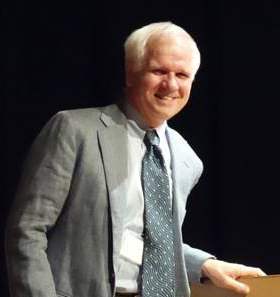 Paul Gregory Williard合作论文数Department of Chemistry, Brown University3
 A. C. A. Boogert合作论文数Kapteyn Astronomical Institute3
 David J. Tholen合作论文数Institute for Astronomy, University of Hawaii3
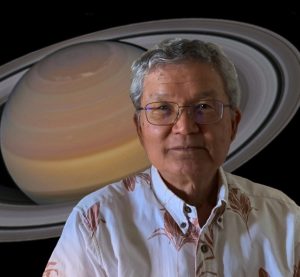 Alan T. Tokunaga合作论文数Institute for Astronomy, University of Hawaii3
 R. E. Mason合作论文数Gemini Observatory;Northern Operations Center;Northern Operations Center, Gemini Observatory3Ted L. Roush合作论文数3
 Cristina Morea Dalle Ore合作论文数SETI Institute3Aggm Tielens合作论文数2D. P. Cruikshank合作论文数2LJ ALLAMANDOLA合作论文数2Ennico Kimberly合作论文数2
 Robert H. Brown合作论文数Department of Neurology, UMass Chan Medical School2C. De Bergh合作论文数2Mary Jane Bartholomew合作论文数2Bishun N. Khare合作论文数2Samantha F. M. Ashbourn合作论文数2Kimberly A. Tryka合作论文数2
 Laura Iraci合作论文数Earth Science Division, Ames Research Center, National Aeronautics and Space Administration2
 Mark Fonda合作论文数2
 Simon D. M. White (西蒙·怀特)合作论文数Max-Planck-Institut für Astrophysik;Ludwig Maximilians University;Shanghai Astronomical Observatory;National Observatory2
 Thomas L. Roellig合作论文数NASA Ames Research Center2Fred C. Witteborn合作论文数2C DEBERGH合作论文数1Mildred P. Martin合作论文数1




