Digital holography enables marker-free, quantitative phase imaging of transparent biological specimens, yet retrieving phase from intensity-only measurements remains fundamentally ill-posed. We investigate the effectiveness of physics-informed Fourier Neural Operators (FNOs) for holographic phase retrieval through PhysSpec-FNO, a self-supervised spectral boosting framework that derives its entire training signal from the Angular Spectrum Method (ASM) propagator—requiring no paired ground-truth data. The architecture employs a two-stage Generator–Refiner pipeline: the Generator captures dominant low-frequency wavefield structure, while the Refiner corrects high-frequency residuals via concatenated input conditioning. We systematically evaluate PhysSpec-FNO against a supervised Hybrid SpecBoost baseline across four domain configurations, using synthetically generated Random Noise and MS-COCO datasets (100,000 images at 512×512 resolution each). In matched-domain settings, PhysSpec-FNO achieves a peak Structural Similarity Index (SSIM) of 0.846—a 33% relative improvement over the supervised baseline (0.636)—while the supervised method demonstrates superior cross-domain robustness. Validation on real lung tissue specimens further confirms the practical advantage of the physics-informed approach (SSIM 0.509 vs. 0.484). These results illuminate a fundamental specialization–generalization trade-off inherent to physics-informed learning: FNOs constrained by physical propagation laws excel when training and deployment domains are aligned, but sacrifice distributional flexibility. Our findings position physics-informed FNOs as an effective solution for dedicated biological microscopy pipelines where ground-truth annotations are unavailable and domain alignment can be assumed.
Holography is an advanced coherent imaging technique that allows to reconstruct wavefield in both amplitude and phase, and can be applied to micro-objects using Digital Holographic Microscopy (DHM). Thanks to a digital image processing [1], aberrations can be compensated and digital refocusing can be achieved without mechani-cal displacement. Fast and simple numerical calculus can be implemented using the Angular Spectrum Method (ASM), and recently deep neural networks (DNN s) increased drastically performances of DHM techniques [2].
An effort to safeguard the legacy of optics includes a museum of historical instruments, some dating to 1845.
Deep neural networks based on physics-driven learning make it possible to train neural networks with a reduced data set and also have the potential to transfer part of the numerical computations to optical processing. The aim of this work is to develop the first deep holographic microscope device incorporating a hybrid neural network based on the plane-wave angular spectrum method for dynamic image autofocusing in microscopy applications.
Recently uncovered archives at the University of Franche-Comt\'e in Besan\c{c}on (France) reveal a rich history of research and teaching in physics since the Faculty of Science was first established in 1845. Here, we describe a selection of notable activities conducted by the named Chairs of Physics during the period 1845-1970. We uncover a long tradition of major contributions to physics education and research, including the production of highly regarded physics textbooks that were widely used in Europe, as well as pioneering contributions to electron diffraction and microscopy, Fourier optics, and holography. These discoveries yield valuable insights into the historical development of physics research in France, and show how even a small provincial university was able to stay up-to-date with international developments across several areas of physics.
The application of advanced microscopy imaging techniques to 3D specimens or motions faces the problem of the limited depth of field of optical lenses [1]. Thanks to numerical focus computations, digital holography (DH) releases these limitations and extends significantly the allowed axial range of imaging. However, the digital cost of focus distance determination and of object reconstruction makes real-time 3D imaging hardly possible, especially when both in-plane and out-of-plane metrics must be extracted simultaneously.
An area of particular importance in developing advanced imaging techniques concerns 3D motion measurement in small-scale mechatronics and automated microscopy. One major drawback is related to complex motion measurement with 6 degrees of freedom. In the proposed work, the extraction of unknown metrics such as focusing distance, in plane and out-of-plane positioning from digital holograms is performed including real‐time constraints. This work explores extended computer micro-vision capabilities offered by combining digital holographic microscopy (DHM) and last generation of deep learning algorithms such as Vision Transformer (ViT) networks. Our experiments show that the reconstruction in-focus distance can be predicted in DHM with a high accuracy using tiny modified architectures of deep ViT networks and convolutional neural networks (CNN). We compare ViT and Tiny ViT models with deep CNN usually used in digital holography such as VGG16, LeNet and AlexNet.
We describe a project underway since 2015 at the Université de Franche-Comté in France where we have been preserving the history of optics and photonics, with the particular aim of ensuring our students are made aware of this rich scientific heritage. We have successfully located and preserved a wide range of instrumentation and archival material dating from the mid-19th century to the 1960s, including some of the first European studies of lasers, holograms, and their applications. We are currently placing an emphasis on recording oral histories of current and former researchers and educators to ensure that our history during the latter part of the 20th century is fully recorded whilst memories are still fresh, and whilst supporting equipment and laboratory material can be found and archived.
Holography is an advanced coherent imaging technique that records and reproduces 3D images using the principles of interference and diffraction. It finds numerous applications in fields such as biomedicine, engineering, art, and microscopy. Teaching holography at university provides students with a unique opportunity to learn more about optical physics. Moreover, it fosters creativity and innovation, as students can explore the potential of Digital Holography for their own future research.
The retrieval of an observed object’s pose is an essential computer vision problem. The challenge arises in many different fields, among them robotics control, contactless metrology, or augmented reality. When the observed object shrinks from the macroscopic scale to the microscopic, pose estimation is further complicated by the weaker perspective of imaging macroscale lenses down to the quasi-orthographic projection inherent to microscope objectives. This paper tackles this issue of microscale pose estimation in two complementary steps that rely on the use of planar periodic targets. We first consider the orthographic projection case as a means of presenting the theory of the method and showing how the pose of periodic patterns can be directly retrieved from the Fourier frequency spectrum of a given image. We then address the perspective case with long focal lengths, in which the full six-degrees of freedom (6-DOF) pose can be retrieved without ambiguities by following the same theoretical background. In addition to theoretically justifying pose retrieval via Fourier analysis of acquired images, this paper demonstrates the method’s actual performance. Both simulations and experimentation are conducted to validate the method and confirm an experimental resolution lower than $$1/1000{\mathrm{th}}$$ of a pixel for translations. For orientation measurement, resolutions below 1 $$\upmu $$ rad. for in-plane orientation, and below 100 $$\upmu $$ rad. for off-axis orientations can be achieved.
We develop a novel high‐profile application of machine learning techniques by elevating digital holography and sensing in robotics to a new level. The extraction of unknown metrics such as focusing distance and in plane positioning without full image restoration from digital holograms is performed by pre‐processing approach in space‐domain and/or in Fourier‐domain, including real‐time constraints. Measuring a single hologram, we successfully determine the axial distance of a complex object to the 10x microscope objective over a range of 100 µm with an accuracy of 1.25 µm. We apply a machine learning technique to the hologram to speed up tracking in the plane of the pseudo-periodic target position up to several tens of frames per second (fps). Such high frame rates enable real-time processing in many different application scenarios.
The real-time positioning of an object on a microscopic scale is a significant challenge and remains difficult to apply. Many traditional imaging techniques exist but their axial resolution and/or their measurement range is often limited. We develop a novel high‐profile technology based on three pillars to meet these challenges. Using digital holography, we determine the correct focus distance on a large scale. Secondly, a new generation transformer neural networks processes the hologram giving in real-time (~30 frames per seconds) a submicrometric axial resolution, exceeding therefore the diffraction limit of the depth of field. Finally, the spatial structuring of the object allows us a nanometric lateral positioning by classical techniques, which will be sped up by a machine learning technique. Such high frame rates enable real-time processing in many different application scenarios.
The numerical wavefront backpropagation principle of digital holography confers unique extended focus capabilities, without mechanical displacements along z-axis. However, the determination of the correct focusing distance is a non-trivial and time consuming issue. A deep learning (DL) solution is proposed to cast the autofocusing as a regression problem and tested over both experimental and simulated holograms. Single wavelength digital holograms were recorded by a Digital Holographic Microscope (DHM) with a 10x microscope objective from a patterned target moving in 3D over an axial range of 92 μm. Tiny DL models are proposed and compared such as a tiny Vision Transformer (TViT), tiny VGG16 (TVGG) and a tiny Swin-Transfomer (TSwinT). The proposed tiny networks are compared with their original versions (ViT/B16, VGG16 and Swin-Transformer Tiny) and the main neural networks used in digital holography such as LeNet and AlexNet. The experiments show that the predicted focusing distance Z R P r e d is accurately inferred with an accuracy of 1.2 μm in average in comparison with the DHM depth of field of 15 µm. Numerical simulations show that all tiny models give the Z R P r e d with an error below 0.3 µm. Such a prospect would significantly improve the current capabilities of computer vision position sensing in applications such as 3D microscopy for life sciences or micro-robotics. Moreover, all models reach an inference time on CPU, inferior to 25 ms per inference. In terms of occlusions, TViT based on its Transformer architecture is the most robust.
Millimeter-sized whispering gallery mode resonators produced from bulk crystalline substrates show great potential as optoelectronics components but are still delicate to produce. We report here on an improved manufacturing technique based on femtosecond laser ablation, which allowed us to obtain state-of-the-art performance (quality factor around 109) in calcium fluoride with only half the processing time required before. Our results are supported by optical profilometric and cavity ringdown measurements, and could be extended to a variety of other substrates.
Computer vision is a convenient noncontact tool for position control and thus constitutes an attractive multidirectional alternative to widely used single-direction sensors. However, to meet actual industry requirements, vision-based measurement methods must be sufficiently robust to comply with industrial environments. This article explores the robustness of an in-plane position measurement method based on a pseudoperiodic pattern and allowing a 10(8) range-to-resolution ratio in displacement and a 1-mu rad angular resolution over 2 pi rad. This article shows how the pattern phase can be used to maintain reliable measurements despite defocus, discrepancies in local contrast, nonuniform illuminations, or occlusions. The proposed method can be implemented at different size scales with unique capabilities combining high resolution, large measurement range, and robustness to diverse kinds of disturbances.
We analyze the fundamental impact of noise propagation in deep neural network (DNN) comprising nonlinear neurons and with connections optimized by training. Our motivation is to understand the impact of noise in analogue neural network realizations. We consider the influence of additive and multiplicative, correlated and uncorrelated types of internal noise in DNNs. We find general properties of the noise impact depending on the noise type, activation function, depth and the statistics of connection matrices and show that noise accumulation can be efficiently avoided. Our work is based on analytical methods predicting the noise levels in all layers of the network.
 Laurent Larger合作论文数FEMTO-ST Institute, University Marie & Louis Pasteur75
 Francois Courvoisier合作论文数Optique Department, Femto-st Institute, Centre National de la Recherche Scientifique, Universite de Franche-Comte62
 John M. Dudley合作论文数Optics Department, Franche-Comte Electronique Mecanique Thermique et Optique-Sciences et Technologies Institute, Universite de Franche-Comte61
 Luca Furfaro合作论文数55
 Luc Froehly合作论文数FEMTO-ST44
 Daniel Brunner合作论文数UMR CNRS 6174, Univ Bourgogne Franche Comte37
 Yanne Chembo合作论文数Department of Electrical & Computer Engineering, A. James Clark School of Engineering, University of Maryland;Institute for Research in Electronics and Applied Physics, University of Maryland36
 Remo Giust合作论文数36
 Patrick Sandoz合作论文数Laboratoire d'Optique P.M. Duffieux, Institut des Microtechniques de Franche-Comté, UMR 6603 CNRS/Université de Franche-Comté, FR W0067, 16, Route de Gray, F-25030 Besançon Cedex, France29
 PA Lacourt合作论文数26
 Guillaume Jacques Laurent合作论文数FEMTOST/UFC-ENSMM-UTBM-CNRS, Université de Franche-Comté20
 Louis Andreoli合作论文数CNRS, Opt Dept, FEMTO ST Inst, 15B Ave Montboucons, F-25030 Besancon, France17
 Xavier Porte合作论文数Inst. de Fis. Interdisciplinar y Sist. Complejos, Univ. de les Illes Balears;c;Inst. de Fis. Interdisciplinar y Sist. Complejos, Univ. de les Illes Balears16
 Mohammad Bhuyan合作论文数Indian Inst Technol Guwahati15Amaury Mathis合作论文数14Pierre-Ambroise Lacourt合作论文数13
 Antoine Nicolas Andre合作论文数Inst FEMTO ST, CNRS12Romain Martinenghi合作论文数12
 Thomas Erneux合作论文数Unité de recherche en Physique des systèmes dynamiques, Université libre de Bruxelles12
 Chen Xie合作论文数Tianjin University, Tianjin Univ.11
 Lionel Weicker合作论文数Optique Nonlinéaire Théorique, Université Libre de Bruxelles10
 Lavrov, R.合作论文数9Guy Le Brun合作论文数8Isabelle Verrier合作论文数Laboratoire TSI/UA - CNRS 842, Faculté des Sciences et Techniques 23, rue du Docteur Paul Michelon, F-42023 Saint-Etienne Cedex 2 France8Roland Salut合作论文数UMR CNRS 6174, FEMTO-ST Institute8
 Stephane Cuenat合作论文数7Colette Veillas合作论文数7
 Michael Peil合作论文数Institute of Applied Physics;University of Technology7M. Asmad合作论文数7
 Muamer Kadic合作论文数Phononique & Microscopies Team, MN2S Department, UFC;FEMTO-ST7Johnny Moughames合作论文数Optics, FEMTO-ST6Ludovic Rapp合作论文数Laser Phys. Centre, Australian Nat. Univ.;c;Laser Phys. Centre, Australian Nat. Univ.6
 Nadezhda Semenova合作论文数6
 Ralph Meyer合作论文数Department of Oncology, Faculty of Health Sciences, McMaster University;Escarpment Cancer Research Institute, McMaster University6
 Ingo Fischer合作论文数Nonlinear Photonics Lab, Institute for Cross-Disciplinary Physics and Complex Systems, Universitat de les Illes Balears6Raphaël Couturier合作论文数IUT Belfort-Montb??liard;University of Franche-Comte6Rémi Meyer合作论文数5Sheler Maktoobi合作论文数5
 Bicky A. Marquez合作论文数Engn Phys & Astron, Queens Univ5
 Stephan Reitzenstein合作论文数Center of Nanophotonics, Technische Universitat Berlin5D. Reolon合作论文数5
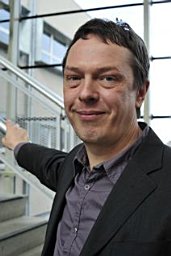 Jan Danckaert合作论文数Applied Physics Department (TONA-TW),, Vrije Universiteit Brussel5
 Stéphane Chrétien合作论文数Laboratoire de Mathématiques, Université de Franche Comté5
 Michael Withford合作论文数Department of Physics and Astronomy, School of Mathematical and Physical Sciences, Faculty of Science and Engineering, Macquarie University;MQ Photonics Research Centre, Macquarie University5Javier Porte合作论文数4Jinggui Zhang合作论文数4
 Remi Henriet合作论文数4
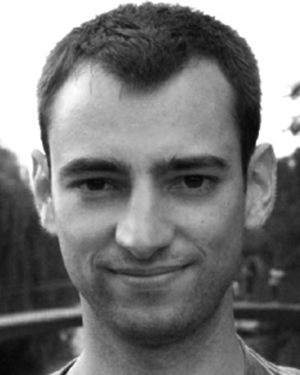 Aurelien Coillet合作论文数Opt. Dept., Franche Comte Electron. Mec. Thermique et Opt.-Sci. et Technol.;c;Opt. Dept., Franche Comte Electron. Mec. Thermique et Opt.-Sci. et Technol.4




