Background: After nonelective (i.e., semiurgent, urgent and emergent) surgeries, patients discharged from hospitals are at risk of readmissions, emergency department visits or death. During the coronavirus disease 2019 (COVID-19) pandemic, we are undertaking the Post Discharge after Surgery Virtual Care with Remote Automated Monitoring Technology (PVC-RAM) trial to determine if virtual care with remote automated monitoring (RAM) compared with standard care will increase the number of days adult patients remain alive at home after being discharged following nonelective surgery. Methods: We are conducting a randomized controlled trial in which 900 adults who are being discharged after nonelective surgery from 8 Canadian hospitals are randomly assigned to receive virtual care with RAM or standard care. Outcome adjudicators are masked to group allocations. Patients in the experimental group learn how to use the study’s tablet computer and RAM technology, which will measure their vital signs. For 30 days, patients take daily biophysical measurements and complete a recovery survey. Patients interact with nurses via the cellular modem–enabled tablet, who escalate care to preassigned and available physicians if RAM measurements exceed predetermined thresholds, patients report symptoms, a medication error is identified or the nurses have concerns they cannot resolve. The primary outcome is number of days alive at home during the 30 days after randomization. Interpretation: This trial will inform management of patients after discharge following surgery in the COVID-19 pandemic and offer insights for management of patients who undergo nonelective surgery in a nonpandemic setting. Knowledge dissemination will be supported through an online multimedia resource centre, policy briefs, presentations, peer-reviewed journal publications and media engagement. Trial registration: ClinicalTrials.gov, no. NCT04344665
Filamentation of Bessel and Bessel-like beams has enabled a number of applications in the field of transparent materials processing. Spatial phase is an important parameter to control four-wave-mixing and the cross section of plasma tracks.
Neue Verfahren der molekulargenetischen Diagnostik ermöglichen eine umfassendere genetische Untersuchung von Patienten.
The material processing technique of “stealth” nanomachining is based on translating a longitudinally extended beam such as a Bessel beam into a transparent sample to generate extended nanochannels, which leads to subsequent internal stress that facilitates high quality cleaving. In this letter, we compare the quality of such cleaving in glass samples obtained using Bessel beams with both circularly symmetric and elliptical transverse profiles. We find that the use of an elliptical Bessel beam generates elliptical nanochannels, which greatly improves the cleavage quality and cuts material strength by aligning the centre of the cleavage plane with the centre of the machined channels. These results are interpreted using numerical simulations that show how elliptical nanochannels enhance the intensity and localization of the tensile stress distribution in glass under bending when compared to channels with circular cross-sections.
Ultrafast lasers have revolutionized material processing, opening a wealth of new applications in many areas of science. A recent technology that allows the cleaving of transparent materials via non-ablative processes is based on focusing and translating a high-intensity laser beam within a material to induce a well-defined internal stress plane. This then enables material separation without debris generation. Here, we use a non-diffracting beam engineered to have a transverse elliptical spatial profile to generate high-aspect-ratio elliptical channels in glass of a dimension 350 nm×710 nm and subsequent cleaved surface uniformity at the sub-micron level.
Hodgkin lymphoma is a cancer of the lymphoid system that carries substantial importance in understanding the principles of cancer control for adolescent and young adult patients [1]. The disease typically involves lymph nodes with more disseminated disease patterns including the spleen, bone marrow, liver, and other extranodal sites. It is the most common cancer diagnosis in patients between the ages of 15 and 24 years and over 40 % of newly diagnosed Hodgkin lymphoma patients will be between the ages of 15 and 34 years [2]. Hodgkin lymphoma was an initial setting for demonstrating the curative potentials of radiation treatment and combination chemotherapy and patients with recurrent Hodgkin lymphoma were among the first to receive long-term benefits from treatment with autologous stem cell transplantation [3]. The 5-year survival of adolescent and young adult Hodgkin lymphoma patients is now in excess of 90 % [2]. With such curative potential in a population free of comorbidities that would otherwise affect survival, the management of patients with Hodgkin lymphoma characterizes the challenges of optimizing the balance between maximizing the eradication of the cancer and minimizing the late effects associated with the treatments provided.
Cancer is the most common disease-related cause of death in 15- to 29-year-olds in Canada [...]
 Francois Courvoisier合作论文数Optique Department, Femto-st Institute, Centre National de la Recherche Scientifique, Universite de Franche-Comte14
 Remo Giust合作论文数13Ludovic Rapp合作论文数Laser Phys. Centre, Australian Nat. Univ.;c;Laser Phys. Centre, Australian Nat. Univ.10
 John M. Dudley合作论文数Optics Department, Franche-Comte Electronique Mecanique Thermique et Optique-Sciences et Technologies Institute, Universite de Franche-Comte9
 Luca Furfaro合作论文数9
 Maxime Jacquot合作论文数CNRS, Univ Franche Comte6
 Jesus del Hoyo合作论文数Faculty of Physics, Universidad Complutense de Madrid5
 Luc Froehly合作论文数FEMTO-ST5
 Chen Xie合作论文数Tianjin University, Tianjin Univ.4
 Lois Shepherd合作论文数Sinclair Cancer Research Institute, Queen’s University4IO Idrissi合作论文数3S. Hussein合作论文数3Pierreambroise Lacourt合作论文数3
 Cyril Billet合作论文数Institut FEMTO-ST, Université Bourgogne Franche Comté3Jassem Safioui合作论文数3
 Nadir Abdelrahman合作论文数Atomic Energy Establishment Nuclear Chemistry Department Cairo (Egypt), Nuclear Research Centre3
 Niels Bergsland合作论文数2AG Villalba合作论文数2Tabra Ward合作论文数2S Horning合作论文数2FE Munschauer合作论文数2B Burns合作论文数2
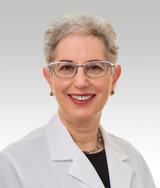 Jane N Winter合作论文数Hematology and Oncologys, Department of Medicine, Feinberg School of Medicine, Northwestern University2
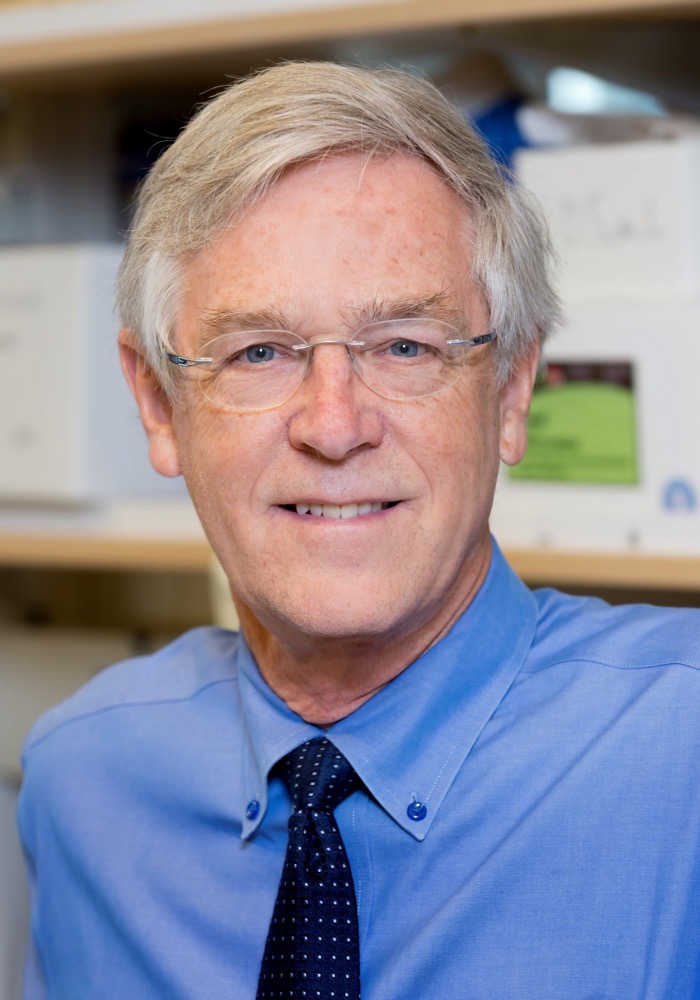 Joseph M Connors合作论文数Department of Medicine, Faculty of Medicine, University of British Columbia2
 Kristin J Reimers合作论文数2
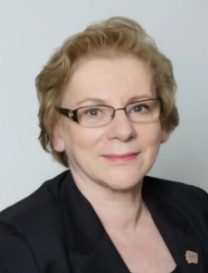 Mary Gospodarowicz合作论文数Department of Radiation Oncology, Temerty Faculty of Medicine, University of Toronto;Princess Margaret Cancer Centre2
 Andrea Bezjak合作论文数Department of Radiation Oncology, Temerty Faculty of Medicine,, University of Toronto;Princess Margaret Cancer Centre & Krembil Research Institute, University Health Network;Princess Margaret Cancer Centre, University Health Network2Woodrow Wells合作论文数2
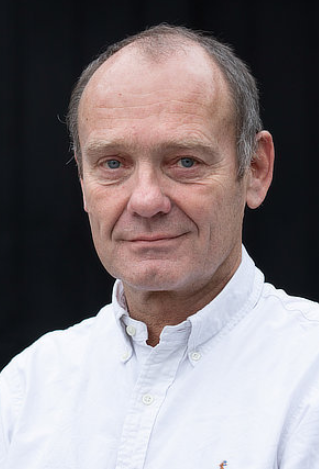 David Hougaard合作论文数Department for Congenital Disorders, Statens Serum Institut2
 Michael G. Dwyer合作论文数Jacobs Neurological Institute, State University of New York at Buffalo2Jennifer L. Cox合作论文数2
 Bingshu Chen合作论文数Department of Public Health Sciences, Faculty of Health Sciences, Queen's University;Department of Mathematics and Statistics, Faculty of Health Sciences, Queen's University;Canadian Cancer Trials Group2Neeta Garg合作论文数Multiple Sclerosis Center, UMass Memorial Medical Center2
 Keyue Ding (丁克越)合作论文数Mayo Clinic2Michael Brundage合作论文数2
 Lesley Seymour合作论文数Department of Oncology, Queen's University;Sinclair Cancer Research Institute, Queen's University;Canadian Cancer Trials Group2R. Pearcey合作论文数2
 Robert Zivadinov合作论文数Department of Neurology, Jacobs School of Medicine and Biomedical Sciences, University at Buffalo, The State University of New York;Translational Imaging Center, Clinical Translational Research Center, Jacobs School of Medicine & Biomedical Sciences, University at Buffalo, The State University of New York;College of Medicine, Florida International University;Buffalo Neuroimaging Analysis Center, Jacobs Neurological Institute2B Zanke合作论文数1S. Mckillop合作论文数1Melissa Waggott合作论文数1K. Ding合作论文数1B Srinivasaraghavan合作论文数1D. Tu合作论文数1Ameen Patel合作论文数1Susan O'Leary合作论文数1Rahima Nenshi合作论文数1Kelsea Levesque合作论文数1Kristen Marosi合作论文数1




