The measurement of missing transverse momentum in the ATLAS detector, described in this paper, makes use of the full event reconstruction and a calibration based on reconstructed physics objects. The performance of the missing transverse momentum reconstruction is evaluated using data collected in pp collisions at a centre-of-mass energy of 7 TeV in 2010. Minimum bias events and events with jets of hadrons are used from data samples corresponding to an integrated luminosity of about 0.3 nb −1 and 600 nb −1 respectively, together with events containing a Z boson decaying to two leptons (electrons or muons) or a W boson decaying to a lepton (electron or muon) and a neutrino, from a data sample corresponding to an integrated luminosity of about 36 pb −1 . An estimate of the systematic uncertainty on the missing transverse momentum scale is presented.
We present an overview of the CALICE activities on calorimeter development for a future linear collider. We report on test beam analysis results, the status of prototype development and future plans.
We describe the design and operational experience of the ATLAS production system as implemented for execution on Grid3 resources. The execution environment consisted of a number of grid-based tools: Pacman for installation of VDT-based Grid3 services and ATLAS software releases, the Capone execution service built from the Chimera/Pegasus virtual data system for directed acyclic graph (DAG) generation, DAGMan/Condor-G for job submission and management, and the Windmill production supervisor which provides the Jabber messaging system for Capone interactions with the ATLAS production database at CERN. Datasets produced on Grid3 were registered into a distributed replica location service (Globus RLS) that was integrated with the Don Quijote proxy service for interoperability with other Grids used by ATLAS. We discuss performance, scalability, and fault handling during the first phase of ATLAS Data Challenge 2.
This report describes the research conducted in the High Energy Physics Division of Argonne National Laboratory during the period of January 1, 1998 through June 30, 1998. Topics covered here include experimental and theoretical particle physics, advanced accelerator physics, detector development, and experimental facilities research. Lists of Division publications and colloquia are included.
Atmospheric [nu][sub [mu]] and [nu][sub e] are created in cosmic ray interactions in the atmosphere, and can be detected in underground detectors. The Kamiokande and IMB water Cerenkov detectors have found fewer [nu][sub [mu]] interactions (relative to [nu][sub e]) than are expected. Results are usually expressed by the ratio: R[triple bond]([nu][sub [mu]]/[nu][sub [mu]]) measured ([nu][sub [mu]]/[nu][sub e]) predicted with R found to be less than 1. The Soudan 2 detector is an iron calorimeter, which has different systematic effects than the water Cerenkov counters. Results from the Frejus and NUSEX calorimeters do not suggest a deficit of [nu][sub [mu]]'s in iron, implying that perhaps there is a systematic effect in Cerenkov detectors or some unexpected nuclear effect. Here we report on a preliminary analysis of 0.5 kton-year of data in Soudan 2. We are presently analyzing our second 0.5 kt-year of data, and will present new results at the meeting.
used in the SSC test beam fines. It follows a 20-m drift section of beam tube downstream of the last silicon strip detector. A bending dipole just in of the last silicon strip detector produces the synchrotron radiation that is detected in a 50-mm-square cross section NaI crystal. A secondary scintillator made of Bicron BC-400 plastic is used to discriminate whether it is synchrotron radiation or a stray particle that causes the triggering of the NaI crystal`s photo multiplier tube (PMT).
 Steven Errede合作论文数Department of Physics, The Grainger College of Engineering, University of Illinois Urbana-Champaign23
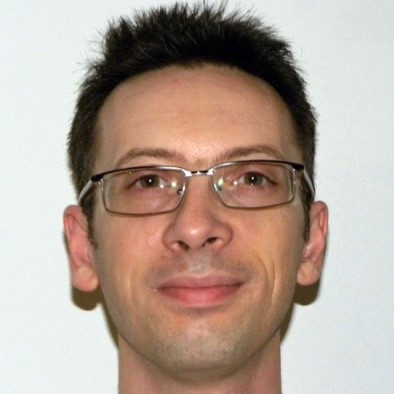 Alessandro De Salvo合作论文数Istituto Nazionale di Fisica Nucleare Sezione di Roma;CERN21
 Ken A. Johns合作论文数20
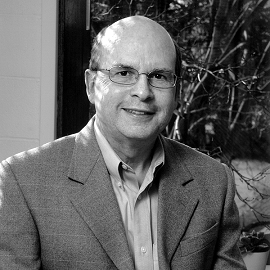 James E. Pilcher合作论文数Department of Physics, The University of Chicago19D. Ta合作论文数18
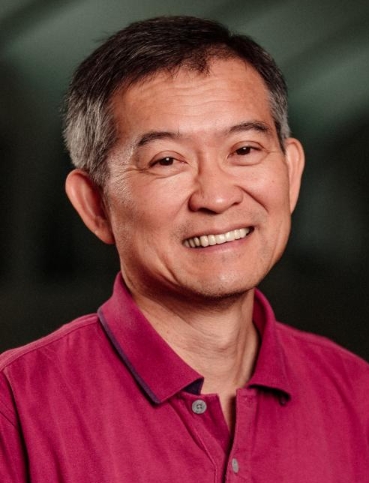 K. K. Gan合作论文数Department of Physics, College of Arts and Sciences, The Ohio State University18
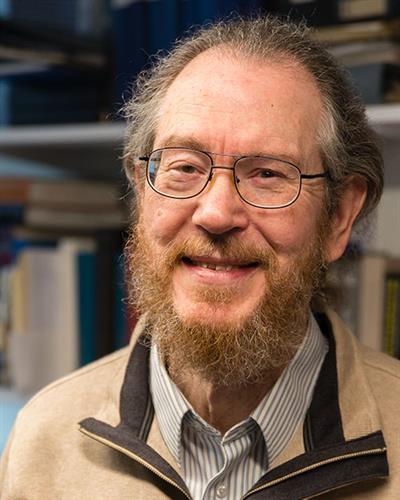 Austin Napier合作论文数Department of Physics and Astronomy, School of Arts and Sciences, Tufts University18
 M. Shupe合作论文数department of physics18L. E. Price合作论文数18
 Alexander Milov合作论文数Department of Particle Physics and Astrophysics, Faculty of Physics, Weizmann Institute of Science16
 David Underwood合作论文数Collider-Accelerator Department, Brookhaven National Laboratory;Enrico Fermi Institute, University of Chicago16Annette Wilson合作论文数16
 Kaushik De合作论文数Department of Physics, College of Science, Univeristy of Texas at Arlington15
 Bertrand Pascal Christian Martin Dit Latour合作论文数Department for Physics and Technology, Faculty of Mathematics and Natural Sciences, University of Bergen15Malik Abdurahmanovich Aliev合作论文数Physics Department, Tomsk State University15R. W. Stanek合作论文数14
 Santiago Gonzalez de la Hoz合作论文数14D. Benjamin合作论文数14J. De Graat合作论文数14D. Van Eijk合作论文数14J. L. Schlereth合作论文数14
 Giorgio Cortiana合作论文数Max-Planck-Institute for Physics;E.ON Digital Technology;European Organization for Nuclear Research13N. Massol合作论文数13david hadley合作论文数13Carl Haber合作论文数Physics Division, Lawrence Berkeley National Laboratory13M.J. Losty合作论文数13J. Buchanan合作论文数13
 Bruce Barnett合作论文数William H. Miller III Department of Physics and Astronomy, Krieger School of Arts and Sciences, Johns Hopkins University13
 Hugh Williams合作论文数Department of Physics & Astronomy, College of Arts & Sciences, University of Pennsylvania13K. Einsweiler合作论文数12l micu合作论文数12R. Zitoun合作论文数12G. Sauvage合作论文数12J. Colás合作论文数12P. Lichard合作论文数12R. E. Blair合作论文数University of Bologna12
 Stavros Maltezos合作论文数Department of Physics, School of Applied Mathematical and Physical Sciences, National Technical University of Athens12Nikos D. Giokaris合作论文数University of Athens12
 Lawrence J. Nodulman合作论文数Argonne National Laboratory12
 Waad Mohr合作论文数12D. Pantea合作论文数12H. J. Lubatti合作论文数12Ggg Massaro合作论文数12
 James R. Bensinger合作论文数Martin A. Fisher School of Physics, Brandeis University;CERN12
 Peter Loch合作论文数Department of Physics, University of Arizona12
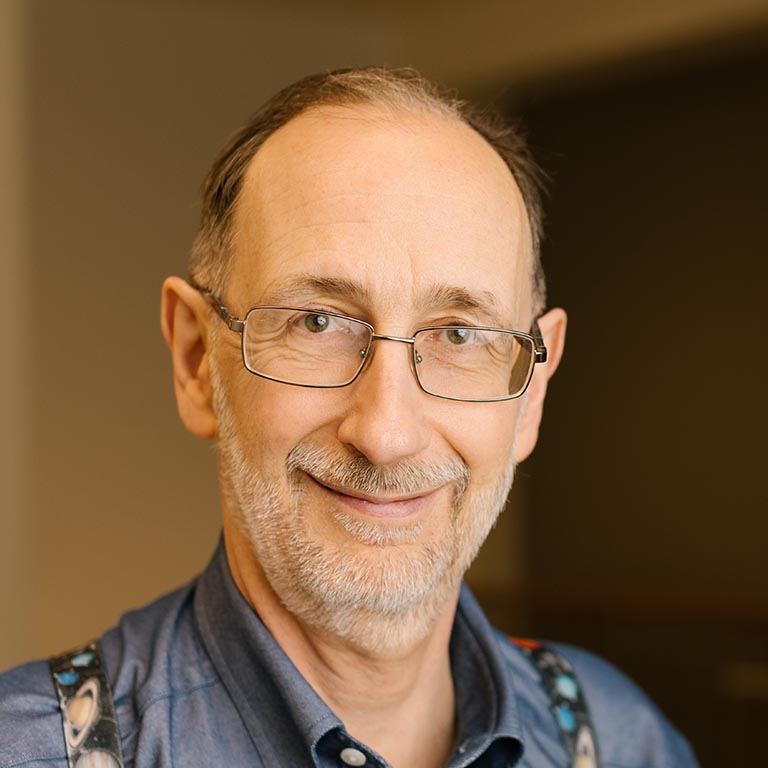 Frederick C. Luehring合作论文数Department of Physics, College of Arts & Sciences, Indiana University Bloomington;European Organization for Nuclear Research12
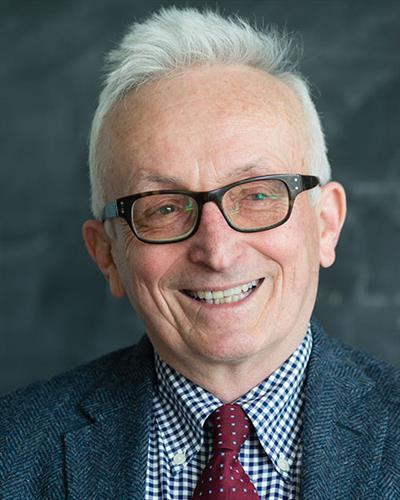 Krzysztof Sliwa合作论文数Department of Physics and Astronomy, School of Arts and Sciences, Tufts University12
 Seog Oh合作论文数Physics Department, Trinity College of Arts & Sciences, Duke University12




