Experimental particle physics seeks to understand the universe by probing its fundamental particles and forces and exploring how they govern the large-scale processes that shape cosmic evolution. This whitepaper presents a vision for how Artificial Intelligence (AI) can accelerate discovery in this field. We outline grand challenges that must be addressed to enable transformative breakthroughs and describe how current and planned experimental facilities can implement this vision to advance our understanding of the vast and complex physical world from the smallest to the largest scales. We show how facilities currently under construction, such as the HL-LHC, DUNE and soon EIC, can both benefit from and serve as proving grounds for this vision, while also enabling a longer-term goal for how future experiments – like FCC-ee at CERN, IceCube-Gen2, a Muon Collider in the U.S., and smaller to mid-scale projects – can be fully AI-native. We describe how a truly national-scale collaboration, jointly managed across large funding partners, and involving both DOE laboratories and universities, can make this happen.
Large Language Models (LLM) are increasingly used for software development, yet existing benchmarks for LLM-based coding assistance do not reflect the constraints of High Energy Physics (HEP) and High Performance Computing (HPC) software. Code correctness must respect science constraints and changes must integrate into large, performance-critical codebases with complex dependencies and build systems. The primary contribution of this paper is the development of practical, repeatable benchmarks that quantify LLM performance on HEP/HPC-relevant tasks. We introduce three evaluation tracks -- code documentation benchmarks measure the ability of an LLM to generate Doxygen-style comments, code generation benchmarks evaluate end-to-end usability on representative GPU kernels, and graphical data analysis benchmarks evaluate vision-enabled LLMs. These benchmarks provide a unified framework for measuring progress in scientific coding assistance across documentation quality, code generation robustness, and multimodal validation analysis. By emphasizing repeatability, automated scoring, and domain-relevant failure modes, the suite enables fair comparisons of models and settings while supporting future work on methods that improve reliability for HEP/HPC software development.
The ATLAS experiment is currently developing columnar analysis frameworks which leverage the Python data science ecosystem. We describe the construction and operation of the infrastructure necessary to support demonstrations of these frameworks, with a focus on those from IRIS-HEP. One such demonstrator aims to process the compact ATLAS data format PHYSLITE at rates exceeding 200 Gbps. Various access configurations and setups on different sites are explored, including direct access to a dCache storage system via Xrootd, the use of ServiceX, and the use of multiple XCache servers equipped with NVMe storage devices. Integral to this study was the analysis of network traffic and bottlenecks, worker node scheduling and disk configurations, and the performance of an S3 object store. The system’s overall performance was measured as the number of processing cores scaled to over 2,000 and the volume of data accessed in an interactive session approached 200 TB. The presentation will delve into the operational details and findings related to the physical infrastructure that underpins these demonstrators.
The determination of the direction of a stellar core collapse via its neutrino emission is crucial for the identification of the progenitor for a multimessenger follow-up. A highly effective method of reconstructing supernova directions within the Deep Underground Neutrino Experiment (DUNE) is introduced. The supernova neutrino pointing resolution is studied by simulating and reconstructing electron-neutrino charged-current absorption on Ar-40 and elastic scattering of neutrinos on electrons. Procedures to reconstruct individual interactions, including a newly developed technique called "brems flipping," as well as the burst direction from an ensemble of interactions are described. Performance of the burst direction reconstruction is evaluated for supernovae happening at a distance of 10 kpc for a specific supernova burst flux model. The pointing resolution is found to be 3.4 degrees at 68% coverage for a perfect interaction-channel classification and a fiducial mass of 40 kton, and 6.6 degrees for a 10 kton fiducial mass respectively. Assuming a 4% rate of charged-current interactions being misidentified as elastic scattering, DUNE's burst pointing resolution is found to be 4.3 degrees (8.7 degrees) at 68% coverage.
The Module-0 Demonstrator is a single-phase 600 kg liquid argon time projection chamber operated as a prototype for the DUNE liquid argon near detector. Based on the ArgonCube design concept, Module-0 features a novel 80k-channel pixelated charge readout and advanced high-coverage photon detection system. In this paper, we present an analysis of an eight-day data set consisting of 25 million cosmic ray events collected in the spring of 2021. We use this sample to demonstrate the imaging performance of the charge and light readout systems as well as the signal correlations between the two. We also report argon purity and detector uniformity measurements, and provide comparisons to detector simulations.
Modern HEP workflows must manage increasingly large and complex data collections. HPC facilities may be employed to help meet these workflows’ growing data processing needs. However, a better understanding of the I/O patterns and underlying bottlenecks of these workflows is necessary to meet the performance expectations of HPC systems. Darshan is a lightweight I/O characterization tool that captures concise views of HPC application I/O behavior. It intercepts application I/O calls at runtime, records file access statistics for each process, and generates log files detailing application I/O access patterns. Typical HEP workflows include event generation, detector simulation, event reconstruction, and subsequent analysis stages. A study of the I/O behavior of the ATLAS simulation and filtering stage, and the CMS simulation workflow using Darshan is presented, including insights into the I/O operations and data access size.
ProtoDUNE Single-Phase (ProtoDUNE-SP) is a 770-ton liquid argon time projection chamber that operated in a hadron test beam at the CERN Neutrino Platform in 2018. We present a measurement of the total inelastic cross section of charged kaons on argon as a function of kaon energy using 6 and 7 GeV/$c$ beam momentum settings. The flux-weighted average of the extracted inelastic cross section at each beam momentum setting was measured to be 380$\pm$26 mbarns for the 6 GeV/$c$ setting and 379$\pm$35 mbarns for the 7 GeV/$c$ setting.
Prior to the start of the LHC Run 3, the US ATLAS Software and Computing operations program established three shared Tier 3 Analysis Facilities (AFs). The newest AF was established at the University of Chicago in the past year, joining the existing AFs at Brookhaven National Lab and SLAC National Accelerator Lab. In this paper, we will describe both the common and unique aspects of these three AFs, and the resulting distributed facility from the user’s perspective, including how we monitor and measure the AFs. The common elements include enabling easy access via Federated ID, file sharing via EOS, provisioning of similar Jupyter environments using common Jupyter kernels and containerization, and efforts to centralize documentation and user support channels. The unique components we will cover are driven in turn by the requirements, expertise and resources at each individual site. Finally, we will highlight how the US AFs are collaborating with other ATLAS and LHC wide (IRIS-HEP and HSF) user analysis support activities, evaluating tools like ServiceX and Coffea-Casa.
This white paper presents the current status of the R&D for Analysis Facilities (AFs) and attempts to summarize the views on the future direction of these facilities. These views have been collected through the High Energy Physics (HEP) Software Foundation's (HSF) Analysis Facilities forum, established in March 2022, the Analysis Ecosystems II workshop, that took place in May 2022, and the WLCG/HSF pre-CHEP workshop, that took place in May 2023. The paper attempts to cover all the aspects of an analysis facility.
DUNE is an international experiment dedicated to addressing some of the questions at the forefront of particle physics and astrophysics, including the mystifying preponderance of matter over antimatter in the early universe. The dual-site experiment will employ an intense neutrino beam focused on a near and a far detector as it aims to determine the neutrino mass hierarchy and to make high-precision measurements of the PMNS matrix parameters, including the CP-violating phase. It will also stand ready to observe supernova neutrino bursts, and seeks to observe nucleon decay as a signature of a grand unified theory underlying the standard model. The DUNE far detector implements liquid argon time-projection chamber (LArTPC) technology, and combines the many tens-of-kiloton fiducial mass necessary for rare event searches with the sub-centimeter spatial resolution required to image those events with high precision. The addition of a photon detection system enhances physics capabilities for all DUNE physics drivers and opens prospects for further physics explorations. Given its size, the far detector will be implemented as a set of modules, with LArTPC designs that differ from one another as newer technologies arise. In the vertical drift LArTPC design, a horizontal cathode bisects the detector, creating two stacked drift volumes in which ionization charges drift towards anodes at either the top or bottom. The anodes are composed of perforated PCB layers with conductive strips, enabling reconstruction in 3D. Light-trap-style photon detection modules are placed both on the cryostat's side walls and on the central cathode where they are optically powered. This Technical Design Report describes in detail the technical implementations of each subsystem of this LArTPC that, together with the other far detector modules and the near detector, will enable DUNE to achieve its physics goals.
The international collaboration designing and constructing the Deep Underground Neutrino Experiment (DUNE) at the Long-Baseline Neutrino Facility (LBNF) has developed a two-phase strategy toward the implementation of this leading-edge, large-scale science project. The 2023 report of the US Particle Physics Project Prioritization Panel (P5) reaffirmed this vision and strongly endorsed DUNE Phase I and Phase II, as did the European Strategy for Particle Physics. While the construction of the DUNE Phase I is well underway, this White Paper focuses on DUNE Phase II planning. DUNE Phase-II consists of a third and fourth far detector (FD) module, an upgraded near detector complex, and an enhanced 2.1 MW beam. The fourth FD module is conceived as a "Module of Opportunity", aimed at expanding the physics opportunities, in addition to supporting the core DUNE science program, with more advanced technologies. This document highlights the increased science opportunities offered by the DUNE Phase II near and far detectors, including long-baseline neutrino oscillation physics, neutrino astrophysics, and physics beyond the standard model. It describes the DUNE Phase II near and far detector technologies and detector design concepts that are currently under consideration. A summary of key R&D goals and prototyping phases needed to realize the Phase II detector technical designs is also provided. DUNE's Phase II detectors, along with the increased beam power, will complete the full scope of DUNE, enabling a multi-decadal program of groundbreaking science with neutrinos.
Doping of liquid argon TPCs (LArTPCs) with a small concentration of xenon is a technique for light-shifting and facilitates the detection of the liquid argon scintillation light. In this paper, we present the results of the first doping test ever performed in a kiloton-scale LArTPC. From February to May 2020, we carried out this special run in the single-phase DUNE Far Detector prototype (ProtoDUNE-SP) at CERN, featuring 720 t of total liquid argon mass with 410 t of fiducial mass. A 5.4 ppm nitrogen contamination was present during the xenon doping campaign. The goal of the run was to measure the light and charge response of the detector to the addition of xenon, up to a concentration of 18.8 ppm. The main purpose was to test the possibility for reduction of non-uniformities in light collection, caused by deployment of photon detectors only within the anode planes. Light collection was analysed as a function of the xenon concentration, by using the pre-existing photon detection system (PDS) of ProtoDUNE-SP and an additional smaller set-up installed specifically for this run. In this paper we first summarize our current understanding of the argon-xenon energy transfer process and the impact of the presence of nitrogen in argon with and without xenon dopant. We then describe the key elements of ProtoDUNE-SP and the injection method deployed. Two dedicated photon detectors were able to collect the light produced by xenon and the total light. The ratio of these components was measured to be about 0.65 as 18.8 ppm of xenon were injected. We performed studies of the collection efficiency as a function of the distance between tracks and light detectors, demonstrating enhanced uniformity of response for the anode-mounted PDS. We also show that xenon doping can substantially recover light losses due to contamination of the liquid argon by nitrogen.
The rapid development of general-purpose computing on graphics processing units (GPGPU) is allowing the implementation of highly-parallelized Monte Carlo simulation chains for particle physics experiments. This technique is particularly suitable for the simulation of a pixelated charge readout for time projection chambers, given the large number of channels that this technology employs. Here we present the first implementation of a full microphysical simulator of a liquid argon time projection chamber (LArTPC) equipped with light readout and pixelated charge readout, developed for the DUNE Near Detector. The software is implemented with an end-to-end set of GPU-optimized algorithms. The algorithms have been written in Python and translated into CUDA kernels using Numba, a just-in-time compiler for a subset of Python and NumPy instructions. The GPU implementation achieves a speed up of four orders of magnitude compared with the equivalent CPU version. The simulation of the current induced on 10^3 pixels takes around 1 ms on the GPU, compared with approximately 10 s on the CPU. The results of the simulation are compared against data from a pixel-readout LArTPC prototype.
Measurements of electrons from $\nu_e$ interactions are crucial for the Deep Underground Neutrino Experiment (DUNE) neutrino oscillation program, as well as searches for physics beyond the standard model, supernova neutrino detection, and solar neutrino measurements. This article describes the selection and reconstruction of low-energy (Michel) electrons in the ProtoDUNE-SP detector. ProtoDUNE-SP is one of the prototypes for the DUNE far detector, built and operated at CERN as a charged particle test beam experiment. A sample of low-energy electrons produced by the decay of cosmic muons is selected with a purity of 95%. This sample is used to calibrate the low-energy electron energy scale with two techniques. An electron energy calibration based on a cosmic ray muon sample uses calibration constants derived from measured and simulated cosmic ray muon events. Another calibration technique makes use of the theoretically well-understood Michel electron energy spectrum to convert reconstructed charge to electron energy. In addition, the effects of detector response to low-energy electron energy scale and its resolution including readout electronics threshold effects are quantified. Finally, the relation between the theoretical and reconstructed low-energy electron energy spectrum is derived and the energy resolution is characterized. The low-energy electron selection presented here accounts for about 75% of the total electron deposited energy. After the addition of lost energy using a Monte Carlo simulation, the energy resolution improves from about 40% to 25% at 50~MeV. These results are used to validate the expected capabilities of the DUNE far detector to reconstruct low-energy electrons.
A primary goal of the upcoming Deep Underground Neutrino Experiment (DUNE) is to measure the $\mathcal{O}(10)$ MeV neutrinos produced by a Galactic core-collapse supernova if one should occur during the lifetime of the experiment. The liquid-argon-based detectors planned for DUNE are expected to be uniquely sensitive to the $\nu_e$ component of the supernova flux, enabling a wide variety of physics and astrophysics measurements. A key requirement for a correct interpretation of these measurements is a good understanding of the energy-dependent total cross section $\sigma(E_\nu)$ for charged-current $\nu_e$ absorption on argon. In the context of a simulated extraction of supernova $\nu_e$ spectral parameters from a toy analysis, we investigate the impact of $\sigma(E_\nu)$ modeling uncertainties on DUNE's supernova neutrino physics sensitivity for the first time. We find that the currently large theoretical uncertainties on $\sigma(E_\nu)$ must be substantially reduced before the $\nu_e$ flux parameters can be extracted reliably: in the absence of external constraints, a measurement of the integrated neutrino luminosity with less than 10\% bias with DUNE requires $\sigma(E_\nu)$ to be known to about 5%. The neutrino spectral shape parameters can be known to better than 10% for a 20% uncertainty on the cross-section scale, although they will be sensitive to uncertainties on the shape of $\sigma(E_\nu)$. A direct measurement of low-energy $\nu_e$-argon scattering would be invaluable for improving the theoretical precision to the needed level.
We present a measurement of the W boson mass in W-->e(nu) decays using 1 fb-1 of data collected with the D0 detector during Run II of the Fermilab Tevatron collider. With a sample of 499830 W-->e(nu) candidate events, we measure M(W)=80.401+/-0.043 GeV. This is the most precise measurement from a single experiment.
The mass of the W boson, a mediator of the weak force between elementary particles, is tightly constrained by the symmetries of the standard model of particle physics. The Higgs boson was the last missing component of the model. After observation of the Higgs boson, a measurement of the W boson mass provides a stringent test of the model. We measure the W boson mass, M W , using data corresponding to 8.8 inverse femtobarns of integrated luminosity collected in proton-antiproton collisions at a 1.96 tera–electron volt center-of-mass energy with the CDF II detector at the Fermilab Tevatron collider. A sample of approximately 4 million W boson candidates is used to obtain M W = 80 , 433.5 ± 6.4 stat ± 6.9 syst = 80 , 433.5 ± 9.4 MeV / c 2 , the precision of which exceeds that of all previous measurements combined (stat, statistical uncertainty; syst, systematic uncertainty; MeV, mega–electron volts; c , speed of light in a vacuum). This measurement is in significant tension with the standard model expectation.
In the published HTML version of this article, the affiliations of the authors of the National Research Nuclear University MEPhI, Moscow, Russia were unfortunately marked incorrectly.
At the Fermilab Tevatron proton-antiproton ($p\bar{p}$) collider, high-mass electron-neutrino ($e\nu$) pairs are produced predominantly in the process $p \bar{p} \rightarrow W(\rightarrow e\nu) + X$. The asymmetry of the electron and positron yield as a function of their pseudorapidity constrain the slope of the ratio of the $u$- to $d$-quark parton distributions versus the fraction of the proton momentum carried by the quarks. This paper reports on the measurement of the electron-charge asymmetry using the full data set recorded by the Collider Detector at Fermilab in 2001--2011 and corresponding to 9.1~fb$^{-1}$ of integrated luminosity. The measurement significantly improves the precision of the Tevatron constraints on the parton-distribution functions of the proton. Numerical tables of the measurement are provided.
We conducted a search for technosignatures in 2018 and 2019 April with the L -band receiver (1.15–1.73 GHz) of the 100 m diameter Green Bank Telescope. These observations focused on regions surrounding 31 Sun-like stars near the plane of the Galaxy. We present the results of our search for narrowband signals in this data set, as well as improvements to our data processing pipeline. Specifically, we applied an improved candidate signal detection procedure that relies on the topographic prominence of the signal power, which nearly doubles the signal detection count of some previously analyzed data sets. We also improved the direction-of-origin filters that remove most radio frequency interference (RFI) to ensure that they uniquely link signals observed in separate scans. We performed a preliminary signal injection and recovery analysis to test the performance of our pipeline. We found that our pipeline recovers 93% of the injected signals over the usable frequency range of the receiver and 98% if we exclude regions with dense RFI. In this analysis, 99.73% of the recovered signals were correctly classified as technosignature candidates. Our improved data processing pipeline classified over 99.84% of the ∼26 million signals detected in our data as RFI. Of the remaining candidates, 4539 were detected outside of known RFI frequency regions. The remaining candidates were visually inspected and verified to be of anthropogenic nature. Our search compares favorably to other recent searches in terms of end-to-end sensitivity, frequency drift rate coverage, and signal detection count per unit bandwidth per unit integration time.
 Dante Amidei合作论文数Department of Physics, College of Literature, Science, and the Arts, University of Michigan1052
 Bruce Barnett合作论文数William H. Miller III Department of Physics and Astronomy, Krieger School of Arts and Sciences, Johns Hopkins University999
 Joseph Boudreau合作论文数Department of Physics and Astronomy, University of Pittsburgh959
 Giorgio Apollinari合作论文数Fermi National Accelerator Laboratory957
 J. Antos合作论文数954
 Giorgio Chiarelli合作论文数Istituto Nazionale di Fisica Nucleare946
 C. Bromberg合作论文数Michigan State University, USA945James Bellinger合作论文数Department of Physics, University of Wisconsin–Madison943
 Arie Bodek合作论文数Department of Physics and Astronomy, School of Arts & Sciences, University of Rochester941
 Daniela Bortoletto合作论文数Department of Physics, University of Oxford936
 Steven Errede合作论文数Department of Physics, The Grainger College of Engineering, University of Illinois Urbana-Champaign930V. E. Barnes合作论文数926
 Melissa Franklin合作论文数Department of Physics, Harvard University913Franco Bedeschi合作论文数Istituto Nazionale di Fisica Nucleare Sezione di Pisa904
 Pawel De Barbaro合作论文数Department of Physics and Astronomy, School of Arts and Sciences, University of Rochester;CERN902A. Cerri合作论文数A.G. Clark890
 Joey W Huston合作论文数Department of Physics & Astronomy, College of Natural Science, Michigan State University888K. Burkett合作论文数885C. Grosso-Pilcher合作论文数877
 Anwar Bhatti合作论文数Department of Physics, College of Computer, Mathematical, & Natural Sciences, University of Maryland875K. Goulianos合作论文数871
 Angela Barbaro-Galtieri合作论文数Physics Division, Lawrence Berkeley National Laboratory869
 Luc Demortier合作论文数Laboratory of Experimental High Energy Physics, The Rockefeller University866Marco Cordelli合作论文数Laboratori Nazionali di Frascati, Istituto Nazionale di Fisica Nucleare862S. Leone合作论文数857
 Bill Ashmanskas合作论文数Department of Physics & Astronomy, College of Arts & Sciences, University of Pennsylvania851Alvin Laasanen合作论文数Purdue University849
 Patrick Lukens合作论文数Particle Physics Division, Fermi National Accelerator Laboratory846
 Michael S. Gold合作论文数Department of Physics and Astronomy, The University of New Mexico843Andrew Beretvas合作论文数841
 Jacobo Konigsberg合作论文数Institute for High Energy Physics and Astrophysics, University of Florida;Department of Physics, College of Liberal Arts and Sciences, University of Florida841T. Kamon合作论文数837G. Bellettini合作论文数836M. A. Ciocci合作论文数836
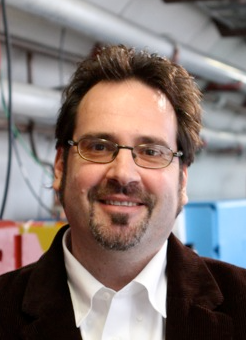 Mark C. Kruse合作论文数Department of Physics, Trinity College of Arts & Sciences, Duke University836
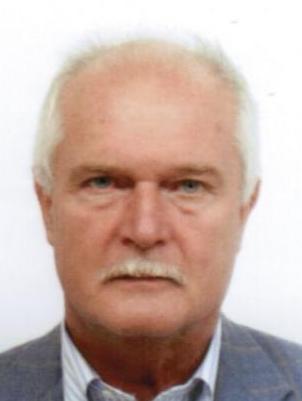 Dario Bisello合作论文数Department of Physics and Astronomy "Galileo Galilei", University of Padova832G. Busetto合作论文数Universita degli Studi821
 Duncan Carlsmith合作论文数Department of Physics, College of Letters & Science, University of Wisconsin-Madison816
 Ray Culbertson合作论文数Fermi National Accelerator Laboratory814
 Alfred T. Goshaw合作论文数Department of Physics, Trinity College of Arts & Sciences, Duke University811S. Lammel合作论文数810
 Fabio Happacher合作论文数Istituto Nazionale di Fisica Nucleare806
 Jeremy E. Lys合作论文数Lawrence Berkeley National Laboratory801
 Gianluca Introzzi合作论文数Department of Physics, University of Pavia801
 Lawrence J. Nodulman合作论文数Argonne National Laboratory799
 William F. Badgett Jr.合作论文数Fermi National Accelerator Laboratory797
 John S. Conway合作论文数Department of Physics and Astronomy, University of California, Davis793D. Lucchesi合作论文数791
 Jay R. Dittmann合作论文数Department of Physics, College of Arts and Sciences, Baylor University789




