In recent years, all-optical writing and switching of valley polarization in two-dimensional semiconductors has been demonstrated on femtosecond timescales. Reading this polarization out on the same timescale, carrier by carrier, has so far remained out of reach. Employing semiconductor Bloch equation simulations of monolayer MoS_2, we show that attosecond transient absorption closes this gap by turning the Mo 4p semicore edge into a quantitative valley polarimeter. We find that pump-enabled core-to-valence absorption probes the holes while core-to-conduction bleaching probes the electrons, so that a single spectrum identifies each carrier by its photoabsorption energy. The hole channel, Pauli-blocked in equilibrium, emerges background-free. Its circular dichroism reverses sign with the pump helicity, and its normalized magnitude is proportional to the valley polarization. Finally, we show that scanning the probe delay clocks the few-femtosecond write in real time. Thus, attosecond core-level dichroism is a carrier-sensitive, quantitative probe of the creation and evolution of valley polarization.
Solid-state high-harmonic spectroscopy allows the study of strongly driven ultrafast electron dynamics. Microscopically, high harmonics are generated by strong-laser-field acceleration of electron-hole pairs through the lattice. At finite temperatures, atomic-scale structural fluctuations are ubiquitous and are expected to influence the electron-hole trajectories. Yet, the effect of thermal lattice fluctuations on solid-state high-harmonic generation (HHG) has not been quantified. Here, we demonstrate a profound sensitivity of HHG to thermal lattice fluctuations, by characterizing the temperature dependence of HHG in Re6Se8Cl2, a superatomic semiconductor. As the sample temperature is decreased, the high-harmonic yield exhibits a slow increase, followed by an abrupt increase below 50 K, consistent with the temperature at which lattice vibrations are strongly suppressed. Our calculations show that thermal lattice fluctuations both weaken the harmonic response from individual distorted configurations and induce phase dispersion across the ensemble, leading to a pronounced suppression of the coherently emitted harmonics. We show that this effect can be interpreted in terms of an effective electronic dephasing time that varies with temperature. Our results are relevant to dephasing in broad strong-field phenomena, including lightwave electronics and Floquet engineering. The wide tunability of superatomic crystals further enables materials-controlled strong-field physics.
We present a combined experimental and theoretical study of collinear four-wave mixing (FWM) in helium driven by an XUV attosecond pulse and two femtosecond near-infrared (NIR) pulses. The first NIR pulse is synchronized with XUV, enabling the simultaneous excitation of both bright and dark states from the ground state. A second, time-delayed NIR pulse then induces resonant coupling between states of opposite parity, generating full-NIR-cycle oscillations in the transient absorption spectrum. By comparing experimental measurements with simulations based on solving the time-dependent Schrödinger equation and a simplified multi-level model, we systematically disentangle the individual coupling pathways involved in helium. We find that highly excited bright states and light-induced states exhibit long-lived oscillations because the participating states are real bound states with long lifetimes. In contrast, oscillations associated with the 1s4p state decay rapidly due to the absence of an indirect coupling channel involving real states. Light-induced states near 1s2p exhibit both low- and high-frequency oscillations originating from two competing indirect pathways, and the relative amplitudes of these components can be actively tuned by adjusting the NIR pulse intensity. This collinear FWM scheme provides access to more complete information on XUV-driven electron dynamics and can be readily extended to more complex atomic and molecular systems.
The goal to control short-wavelength radiation for the investigation and manipulation of ultrafast dynamics in quantum systems coevolves with the growing availability of extreme-ultraviolet (XUV) and x-ray sources from high-harmonic generation and free-electron lasers. Here, we present an XUV spatio-spectral phase modulator based on an intense XUV laser beam propagating through an optically thick resonant target, introducing dispersion profile variations around the resonance both perpendicular to and along the laser propagation direction. The resulting dipole radiation gets spectrally reshaped and becomes more divergent as compared to the original beam in the far field. As an experimental demonstration, the intense-XUV-induced double-peak off-axis structure in the far-field spectrum obtained at the Free-Electron Laser in Hamburg (FLASH) shows indications of the underlying XUV-driven Rabi dynamics and resonant pulse propagation effects. The presented work highlights a ubiquitous phenomenon occurring when an intense laser beam passes through a resonant medium.
High-harmonic generation (HHG) is an extreme form of frequency upconversion that facilitates light-source engineering and ultrafast materials spectroscopy. Here, we broaden the spectroscopic scope of HHG, by demonstrating polarization manipulation of harmonic light in a dielectric, using a two-color field configuration that combines a midinfrared (MIR) driver with a terahertz (THz) perturbation. By varying the relative polarization axes of these fields, the emitted harmonics can be tuned to exhibit either linear or elliptical polarization. Supported by first-principles theory and semiclassical analysis, we show that our approach enables crystal-momentum-resolved dipole-vector spectroscopy across different bands. Crucially, we show that for certain field configurations, harmonic light emission will originate from electron-hole pairs created away from the minimum band gap. Furthermore, crossing MIR and THz polarization at oblique angles generates elliptically polarized harmonics whose microscopic origin is traced to the phase and amplitude imbalances of electron-hole trajectories released during adjacent half-cycles of the MIR field. Our Letter demonstrates new spectroscopy capabilities of HHG, deepens the contemporary microscopic understanding of the process, and paves the way for full polarization control of the harmonic light.
The ability to control absorption by modifying the polarization of light presents an exciting opportunity to experimentally determine the orbital alignment of absorption features. Here, attosecond extreme ultraviolet (XUV) transient absorption spectroscopy is used to investigate the polarization dependence of core exciton dynamics in LiF thin films at the Li+ K edge. XUV pulses excite electrons from the Li 1s core level into the conduction band, allowing for the formation of a p-orbital-like core exciton, aligned along the XUV light polarization axis. A sub-5 fs near-infrared (NIR) probe pulse then arrives at variable time delays, perturbing the XUV-excited states and allowing the coherence decay of the core exciton to be mapped. The coherence lifetimes are found to be approximate to 2.4 +/- 0.4 fs, which is attributed to a phonon-mediated dephasing mechanism as in previous core exciton studies. The differential absorption features are also shown to be sensitive to the relative polarization of the XUV and NIR fields. The parallel NIR probe induces couplings between the initial XUV-excited p-like bright exciton and s-like dark excitons. When crossed pump and probe polarizations are used, the coupling between the bright and dark states is no longer dipole-allowed, and the transient absorption signal associated with the coupling is suppressed by approximately 90%. This interpretation is supported by simulations of a few-level model system, as well as analysis of the calculated band structure. The results indicate that laser polarization can serve as a powerful experimental tool for exploring the orbital alignment of core excitonic states in solid-state materials.
Weak transitions between quantum states are of fundamental importance for a broad range of phenomena from analytical biochemistry to precision physics, but generally challenge experimental detection. Due to their small cross sections scaling with the absolute square of their transition matrix elements, spectroscopic measurements often fail in particular in the presence of competing background processes. Here we introduce a general concept to break this scaling law and enhance the transition probability by exploiting a stronger laser-coupled pathway to the same excited state. We demonstrate the concept experimentally by attosecond transient absorption spectroscopy in helium atoms. The quasi-forbidden transitions from the ground state 1s2 to the weakly coupled doubly excited 2p3d and sp2,4- states are boosted by an order of magnitude. Enhancing single-photon-suppressed transitions can find widespread applicability, from spectral diagnostics of complex molecules in life and chemical sciences to precision spectroscopy of weak transitions in metastable atomic nuclei in the search for new physics.
We show that applying a few-femtosecond midinfrared laser pulse parallel to the backbone of a halogenated, conjugated organic molecule induces localized ionization followed by long-lasting field-free charge migration (CM). Through time-dependent density-functional theory calculations, we find that this CM is robust with respect to the parameters of the applied laser pulse. We document the spatial and temporal origin of the localized hole, which is initiated via strong-field tunnel ionization in the halogen end of the molecule and near the peak of the laser electric field. In bromobutadiyne, we find a range of wavelengths around 1500 nm that consistently leads to the initiation of high-contrast CM. In addition, we show that the inclusion of Ehrenfest nuclear dynamics does not disrupt the creation of the localized hole, nor the subsequent CM motion, in bromobutadiyne or parabromoaniline.
High-harmonic generation (HHG) has been established as a powerful tool for studying structure and dynamics of quantum systems in gas and solid phases. To date, only a few studies have extended HHG spectroscopy to liquids, and much remains unresolved concerning the information that can be extracted from HHG spectra about the local liquid environment and the potential of HHG as a nonlinear probe of solvation dynamics. In this work, we investigate HHG in liquid binary solutions consisting of mixtures of aromatic benzene derivatives solvated in methanol. We observe evidence of a localized solvation structure that is imprinted on the harmonic spectra in the form of a strongly suppressed harmonic order, and an overall reduction of the total harmonic yield. We characterize this behavior as a function of laser parameters, concentration, and other halogenated benzene derivatives in methanol solution. Guided by theory, we interpret the results in terms of a localized solvation shell that is formed in specific solutions and acts like a local scattering barrier in the HHG process. This work demonstrates the potential of high-harmonic spectroscopy in liquids to extract detailed information about the structure and dynamics of solvation while expanding our understanding of the fundamental mechanism of HHG in systems with short-range order.
We compare the high-harmonic-generation (HHG) yield driven by a midinfrared laser field in three organic ring-shaped molecules, calculated using time-dependent density-functional theory (TDDFT). We average the yield over the relative orientation of the molecules and the linearly polarized, 1825-nm driving laser pulse to compare to experimental spectra obtained by Alharbi et al., [Phys. Rev. A 92, 041801 (2015)]. We find that the raw TDDFT-calculated HHG yield in cyclohexane is strongly overestimated compared to those of benzene and cyclohexene, and that this can be attributed to unphysically large contributions from cyclohexane orbitals lying well below the highest-occupied molecular orbital. We demonstrate this by implementing a simple orbital-resolved scaling factor that adjusts the tunneling-ionization contribution to the harmonic yield. The rescaled yields are in much better agreement with experimental results, and in particular, reproduce the correct relative-yield ordering of the three molecules. Our results are encouraging for the use of TDDFT in systematic computations of HHG in large molecules.
Propagation of intense X-ray pulses through dense media has led to the observation of phenomena such as atomic X-ray lasing1,2, self-induced transparency3 and stimulated X-ray Raman scattering (SXRS)4. SXRS has been long predicted as a means to launch and probe valence-electron wavepackets and as a building block for nonlinear X-ray spectroscopies5,6. However, experimental observations of SXRS to date4,7,8 have not provided spectroscopic information, and theoretical modelling has largely implemented hard-to-realize phase-coherent attosecond pulses. Here we demonstrate SXRS with spectroscopic precision, that is, detection of valence-excited states in neon with a near Fourier-limited joint energy-time resolution of 0.1 eV-40 fs. We used a new covariance analysis between statistically spiky broadband incident X-ray and scattered X-ray Raman pulses. Using 18,000 single shots, we beat not only the incident (about 8 eV) bandwidth but also the approximately 0.2 eV instrumental energy resolution, thus creating super-resolution conditions, in analogy to super-resolved fluorescence microscopy9. Our experimental results, supported by ab initio propagation simulations, reveal the competition between lasing in the ion and stimulated Raman scattering in the neutral. We demonstrate enhanced signal collection efficiency and a broad excitation window, surpassing spontaneous Raman efficiencies by orders of magnitude. This stochastic SXRS approach represents a first step towards tracking elementary events that determine chemical outcomes10.
We show that by combining strong-field dressing and resonant propagation of XUV pulses, the transition of absorption lines from their natural Lorentzian profiles through Fano and complex multipeak shapes all the way back to broadened near-Lorentzian profiles can be achieved, in the limit of optically thick samples. The final stage of this spectral modification can be understood in terms of a significant temporal stretching and delay of the resonant XUV pulse as it propagates through the dense gas, which alters the ultrafast absorption that is modified by the time-synchronized few-femtosecond laser pulse. We first demonstrate this concept in numerical calculations, both using a model system and through a fully coupled solution of the time-dependent Schrödinger equation and the Maxwell wave equation. The applicability and generality of the underlying mechanism is then illustrated in proof-of-principle attosecond transient absorption measurements in a helium gas with a widely varying atomic density. These results provide insights into the interaction of ultrashort laser pulses with dense media and its coherent control.
Many-body effects play an important role in enhancing and modifying optical absorption and other excited-state properties of solids in the perturbative regime, but their role in high harmonic generation (HHG) and other nonlinear response beyond the perturbative regime is not well-understood. We develop here an ab initio many-body method to study nonperturbative HHG based on the real-time propagation of the non-equilibrium Green's function with the GW self energy. We calculate the HHG of monolayer MoS2 and obtain good agreement with experiment, including the reproduction of characteristic patterns of monotonic and nonmonotonic harmonic yield in the parallel and perpendicular responses, respectively. Here, we show that many-body effects are especially important to accurately reproduce the spectral features in the perpendicular response, which reflect a complex interplay of electron-hole interactions (or exciton effects) in tandem with the many-body renormalization and Berry curvature of the independent quasiparticle bandstructure.
We present frequency-matched strobo-spectroscopy (FMSS) of charge migration (CM) in bromobutadiyne, simulated with time-dependent density functional theory. CM + FMSS is a pump-probe scheme that uses a frequency-matched high harmonic generation (HHG)-driving laser as an independent probe step, following the creation of a localized hole on the bromine atom that induces CM dynamics. We show that the delay-dependent harmonic yield tracks the phase of the CM dynamics through its sensitivity to the amount of electron density on the bromine end of the molecule. FMSS takes advantage of the intrinsic attosecond time resolution of the HHG process in which different harmonics are emitted at different times and thus probe different locations of the electron hole. Finally, we show that the CM-induced modulation of the HHG signal is dominated by the recombination step of the HHG process, with a negligible contribution from the ionization step.
We compare the high-harmonic-generation (HHG) yield driven by a mid-infrared laser in three organic ring-shaped molecules, calculated using time-dependent density-functional theory (TDDFT). We average the yield over the relative orientation of the molecules and the linearly-polarized, 1825 nm driving laser pulse in order to compare to experimental spectra obtained by Alharbi et al., Phys. Rev. A 92, 041801 (2015). We find that the raw TDDFT-calculated HHG yield in cyclohexane (CHA) is strongly overestimated compared to those of benzene and cyclohexene, and that this can be attributed to unphysically large contributions from CHA orbitals lying well below the highest-occupied molecular orbital. We show that implementing a simple orbital-resolved scaling factor, which corrects the yield of the tunneling ionization contribution to the first step in the HHG process, leads to much better comparisons with experimental results. Our results are encouraging for the use of TDDFT in systematic computations of HHG in large molecules.
The concept of resonant perfect absorption, enabled by the combined action of pulse propagation and an auxiliary gate pulse, was recently proposed and demonstrated in a group of two-level systems [Y. He et al., Phys. Rev. Lett. 129, 273201 (2022)]. Here we exploit this method in a more realistic scenario by solving the coupled time-dependent Schrodinger equation and the Maxwell wave equation in helium. Through emptying the population of the 1s2p excited state after its excitation, we explore the evolution of the spectral profile with time delay and propagation distance and link the observations to the controlled interference between the original field and the gated new field. We find that resonant absorption for higher-lying states can also be strongly enhanced, in spite of the congestion of multiple resonances and the presence of complex laser-induced couplings. Our results show that interferometric control of absorption using intense laser fields can be applied selectively in both the temporal and spatial domains.
We revisit Kohn-Sham time-dependent density-functional theory (TDDFT) equations and show that they derive from a canonical Hamiltonian formalism. We use this geometric description of the TDDFT dynamics to define families of symplectic split-operator schemes that accurately and efficiently simulate the time propagation for certain classes of DFT functionals. We illustrate these with numerical simulations of the far-from-equilibrium electronic dynamics of a one-dimensional carbon chain. In these examples, we find that an optimized 4th order scheme provides a good compromise between the numerical complexity of each time step and the accuracy of the scheme. We also discuss how the Hamiltonian structure changes when using a basis set to discretize TDDFT and the challenges this raises for using symplectic split-operator propagation schemes.
Charge migration (CM) is a coherent attosecond process that involves the movement of localized holes across a molecule. To determine the relationship between a molecule's structure and the CM dynamics it exhibits, we perform systematic studies of para-functionalized bromobenzene molecules (X-C6H4-R) using real-time time-dependent density functional theory. We initiate valence-electron dynamics by emulating rapid strong-field ionization leading to a localized hole on the bromine atom. The resulting CM, which takes on the order of 1 fs, occurs via an X localized → C6H4 delocalized → R localized mechanism. Interestingly, the hole contrast on the acceptor functional group increases with increasing electron-donating strength. This trend is well-described by the Hammett σ value of the group, which is a commonly used metric for quantifying the effect of functionalization on the chemical reactivity of benzene derivatives. These results suggest that simple attochemistry principles and a density-based picture can be used to predict and understand CM.
Anomalous high-harmonic generation (HHG) arises in certain solids when irradiated by an intense laser field, originating from a Berry-curvature-induced perpendicular anomalous current. The observation of pure anomalous harmonics is, however, often prohibited by contamination from harmonics stemming from interband coherences. Here, we fully characterize the anomalous HHG mechanism, via development of an ab initio methodology for strong-field laser-solid interaction that allows a rigorous decomposition of the total current. We identify two unique properties of the anomalous harmonic yields: an overall yield increase with laser wavelength; and pronounced minima at certain laser wavelengths and laser intensities around which the spectral phases drastically change. Such signatures can be exploited to disentangle the anomalous harmonics from competing HHG mechanisms, and thus pave the way for the experimental identification and time-domain control of pure anomalous harmonics, as well as reconstruction of Berry curvatures.
 Kenneth Schafer合作论文数Department of Physics & Astronomy, College of Science, Louisiana State University125
 Anne L'Huillier (安妮·呂利耶)合作论文数Division of Atomic Physics, Department of Physics, Faculty of Engineering, Lund University44
 François Mauger合作论文数LPC, IN2P3-CNRS et Université de Caen39
 Kenneth Lopata合作论文数Department of Chemistry and Biochemistry, UCLA37
 Paul M. Abanador合作论文数Dept Phys & Astron, Louisiana State Univ21
 Mengxi Wu合作论文数21
 Arnaud Couairon合作论文数20
 Johan Mauritsson合作论文数Dept Phys, Lund Univ20
 Louis Franklin DiMauro合作论文数Department of Physics, College of Arts and Sciences, The Ohio State University17Lun Yue合作论文数Dept Phys & Astron, Louisiana State Univ14Kyle A. Hamer合作论文数13
 Ursula Keller合作论文数Department of Information Technology and Electrical Engineering, ETH Zurich;JENOPTIK13
 Camp Seth合作论文数Department of Physics and Astronomy, Louisiana State University13
 Shaohao Chen合作论文数13
 Claes-Göran Wahlström合作论文数Department of Physics, Lund university12
 Adam Bruner合作论文数Dept Chem & Phys, Univ Tennessee Martin10
 Pierre Agostini (皮埃尔·阿戈斯蒂尼)合作论文数Department of Physics, College of Arts and Sciences, The Ohio State University;Nankai University10
 Per Johnsson合作论文数10
 A Folorunso合作论文数Dept Chem, Louisiana State Univ9Scarborough Timothy D合作论文数9L Roos合作论文数8Kc Kulander合作论文数8Adonay Sissay合作论文数8
 Robert Jones Jr.合作论文数Department of Physics, University of Virginia;College and Graduate School of Arts & Sciences, University of Virginia8Jennifer L. Tate合作论文数8
 Carlo Altucci合作论文数8Carre Bertrand合作论文数8Ph. Balcou合作论文数8C Lynga合作论文数7
 Timothy T. Gorman合作论文数Dept Phys, Ohio State Univ7
 Sándor Péter合作论文数7P Antoine合作论文数7
 Shambhu Ghimire合作论文数Stanford PULSE Institute, SLAC National Accelerator Laboratory, Menlo Park, California 94025, USA7
 Rodrigo Lopez-Martens合作论文数Ecole Polytechnique;ELI-ALPS Research Institute7Eric Mevel合作论文数7
 Katalin Varjú合作论文数ELI-ALPS7
 Pascal Salieres合作论文数Laser Interactions and Dynamics Laboratory, CEA-Saclay;IRAMIS Institut, CEA-Saclay7
 Jens Biegert合作论文数University of New Mexico;Instituciò Catalana de Recerca i Estudis Avancats;Institute of Photonic Sciences, Barcelona Institute of Science and Technology7
 Thomas Pfeifer合作论文数Max-Planck Institute for Nuclear Physics6
 François Légaré合作论文数Energie Materiaux Telecommunications Research Centre, Institut National De La Recherche Scientifique6
 Anders Persson合作论文数6
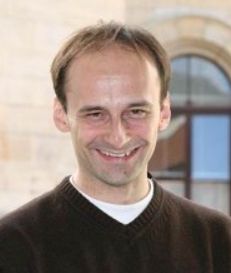 Milutin Kovacev合作论文数Ultrafast Laser Laboratory, Institute of Quantum Optics, Faculty of Mathematics and Physics, Leibniz Universität Hannover6
 Maciej Lewenstein合作论文数Instituciò Catalana de Recerca i Estudis Avancats;ICFO-Institut de Ciencies Fotoniques6Jeffrey M. Brown合作论文数5
 Imam Wahyutama合作论文数School of Engineering, The University of Tokyo5
 Andrea Rovere合作论文数INRS Energie Mat & Telecommun, 1650 Blvd Lionel Boulet, Varennes, PQ J3X 1S2, Canada5
 Luca Zanotto合作论文数5
 Luca Razzari合作论文数INRS EMT, Varennes, PQ J3X 1S2, Canada5E. Constant合作论文数5




