The perception of disparate traffic enforcement actions by police, commonly referred to as racial profiling, has eroded trust between police departments and the communities they serve. In an effort to reduce racial and ethnic disparities in traffic stops and build trust between police and citizens, several U.S. cities have passed legislation that discourages or prohibits police officers from conducting traffic stops for minor traffic violations such as a broken taillight. To date, there is limited research on whether these policies will effectively reduce overall racial and ethnic disparities in traffic stops. Using traffic stop information collected from more than 18,000 traffic stops in Douglas County, Kansas in 2020 and 2021, we examine whether persons of color are more likely to be cited and searched for “minor” traffic violations. The findings show mixed results, which provides partial support for these policies, but highlights the need to examine other strategies aimed at reducing racial and ethnic disparities in traffic stops.
The term hate crimes has been employed since the mid‐1980s to identify criminal acts motivated either entirely or in part by the fact or perception that a victim is different from the perpetrator. The term first appeared in newspaper accounts of a 1986 racial incident in the Howard Beach section of New York City, in which a black man was killed while attempting to flee a violent mob of white teenagers, shouting racial slurs. By the early 1990s the hate crime designation was being applied not only to attacks based on race and religion, but also on sexual orientation, national origin, disability status, and gender.
This article describes our current state of knowledge regarding the causes, conditions, and consequences of hate crimes. Initially, we offer a definition of hate crimes and then present a legal framework for the hate crime distinctions currently in place in the United States. Next, we provide some background concerning the nature of prejudice in general and the role of prejudice as a cause of hate-motivated offenses. In subsequent discussions, we characterize the current state of data on hate crimes in the United States, and then, based on these data, we describe the four major types of hate crimes involving offender motivation. We also describe the role played by organized hate groups with respect to inciting and participating in hate-motivated violence. This article concludes with a discussion of the most effective responses to hate crimes as well as ways to prevent these offenses from ever taking place.
Objective: To contribute a more complete and accurate understanding of rates of bias victimization toward Latinxs using self-report data from a community sample. Method: Totally, 910 Latinx adults from Boston, San Diego, and Houston were recruited through partnerships with community agencies and self-selection during local Latinx-focused events through the Spring and Summer of 2018. The survey evaluated experiences with hate crime, bias victimization, and non-bias victimization in their lifetime and past year. Background demographic information including immigration and documentation status were also queried. Results: The overall lifetime bias victimization rate for respondents was 52.9%. When focusing specifically on hate crimes this percentage was 28.4%, while the noncriminal bias victimization rate was 50%. There was a significant relationship between prior to past year bias victimization and past year non-bias victimization. Inversely, prior to past year non-bias victimization was also associated with past year bias victimization. Conclusion: The results of this study illustrate the limited nature of existing data sets on hate crime that rely on officially reported incidents or national surveys. This study is also one of the first to examine co-existence with other forms of victimization.
Although gun control laws are intended to reduce exposure to gun violence in communities across the country, the passage of gun control laws is often linked to a substantial rise in the number of guns sold in the U.S. National polls indicate that most individuals purchase firearms for protection, but some cite the fear of gun-buying restrictions as the main reason for purchasing a gun. It is unclear what impact gun legislation has on patterns of gun sales, as mass shootings continue to bring the U.S. gun debate to the forefront. Using statewide data on gun transactions in Massachusetts from 2006 to 2016, we examined patterns in gun sales following the passage of gun legislation and high profile mass shootings. Specifically, we used three events to test and refine the argument during this time period: (1) the Newtown shooting, (2) the San Bernardino shooting, and (3) the passage of the 2014 Massachusetts Gun Violence Reduction Act. Results from these time-series analyses indicated different patterns in handgun sales, with significantly larger increases occurring among first-time handgun buyers. Our findings complement prior work explaining the impact of mass shootings and gun control laws on the exposure to guns in communities.
Hate crimes are criminal offenses that involve elements of bias based on some individual characteristics of the victim, including race, gender, disability, sexual orientation, and religion. The passage of laws criminalizing or enhancing the punishment for crimes featuring bias motivations has been met with intense controversy. In addressing criticism of such legislation, proponents of these laws highlight the considerable harms caused by hate crime. These incidents are considered especially heinous as they not only violate the civil and human rights of the immediate victim but also send a message of fear to the entirety of that victim’s community or social group. Prior scholarship on these offenses have employed numerous theoretical frameworks—psychological, historical, sociological, and economic theories—to describe why perpetrators target victims based on perceived group identity. Other work has provided insight into the causes of hate crime by considering factors distinguishing bias-motivated offenders from other criminal offenders. Conflicting legal definitions of hate crime add to the complexity of its conceptualization. At the international level, hate crime statutes are strongly influenced by the different social, cultural, and historical contexts across nations. Hate crime laws differ markedly across countries with respect to the specification of protected groups’ identities, treatment of hate speech, legal standards for establishing bias motivation, and utilization of hate crime statutes for criminal prosecutions. These differences, coupled with nationally distinct methodologies for recording bias-motivated incidents, have stymied attempts to engage in cross-national comparisons of the quality and extent of hate crime.
Although partnerships between researchers and police practitioners have increased over the last few decades in some of the largest police agencies in the United States, very few small agencies have engaged in a partnership with a researcher. Of the 18,000 local police agencies in the United States, small agencies with less than 25 sworn officers make up about three quarters of all police agencies. To support future collaborations between researchers and smaller police agencies, like those in Douglas County, Kansas, this article identifies challenges that researchers can address and explores how these relationships can benefit small police agencies across the United States.
Abstract Hate crime is defined by the FBI as a criminal offense motivated by bias against the following protected categories: race, ethnicity, ancestry, religion, sexual orientation, disability, gender, and gender identity. There are three official sources of hate crime data in the United States: the Uniform Crime Report (UCR), the National Incident‐Based Reporting System (NIBRS, part of the UCR reporting program), and the NCVS (National Crime Victimization Survey). According to the FBI in 2018, of the 16,039 agencies that participated in the UCR reporting program, 2,026 agencies reported a total of 7,120 hate crime incidents. Both the UCR and NCVS reveal that victims were most commonly targeted due to their perceived race/ethnicity. Recommendations to reduce hate crime include condemnation of the hate incident by community leaders and proper identification and prosecution of criminal acts of hate.
This chapter examines patterns and trends in gun violence in the United States and provides a review on programs and strategies that jurisdictions have adopted to achieve safety in their communities. While national data indicate that young African American males living in urban communities continue to experience much higher rates of gun violence, only a handful of areas have developed solutions to address this issue. However, we provide a discussion on the various different strategies that have been implemented by communities and encourage future efforts to adopt solutions that address the consequences of violence and its underlying causes.
This chapter brings the research findings in this book together to suggest that across geographic, cultural, political and social divides, systems of justice struggle to reconcile experiences of exploitation that do not fit within their confines. We lay an argument for responses to human trafficking and, in fact, exploitation of migrant workers to be attendant to the diversity of experience. We argue for responses that do not provide fodder for increasing punitive regulation and control of migration in the name of eradicating exploitation. Across both volumes, we have emphasised that a framework of response is needed where migration and mobility are at the forefront. States and multi-state bodies must work to enhance labour mobility and increased state responsibility for the counterproductive consequences of increased border fortification. Currently, despite the rhetoric of human rights, the responses to both human trafficking …
This work was supported through research funds provided by the City of Boston and the Rappaport Institute for Greater Boston. The authors would like to thank Mayor Martin Walsh, Police Commissioner William Evans, Superintendent Kevin Buckley, Superintendent Frank Mancini, Superintendent John Daley, Amy Condon, Desiree Dusseault, and Dawn Mello for their support and assistance in the completion of this preliminary research report.
Purpose - Given the central role of supervision in shaping police agency outcomes and the impact of the supervisor-subordinate relationship, the purpose of this paper is to understand subordinates' ratings of supervisor performance overall and on several distinct dimensions.Design/methodology/approach - Descriptive and explanatory analyses are conducted on subordinate views of supervision based on a survey of officers and detectives ( n = 7,085) in 89-agencies.Findings - Reporting high ratings of supervisor performance overall, subordinates also view supervisors as fair, supportive and engaged in practices that set expectations. These dimensions are highly correlated with overall satisfaction; other variables, such as age, race and gender demonstrate weak relationships to overall satisfaction and perceptions of fairness, support and direction.Research limitations/implications - The study is based on subordinates' perceptions of supervisors and does not address the supervisors' own perceptions or actual behavior. Future studies should collect identical information from supervisors as well as examine agency-level variation in both subordinate and supervisor outlooks and styles.Practical implications - The results support modern approaches to police supervision that emphasize not just direction and control but also fair and supportive relationships with subordinates.Originality/value - The study examines the views of thousands of line-level police across a large number of representative US agencies and explores relationships using a comprehensive set of variables.
 Amy Farrell合作论文数Northeastern University34
 Jack Levin合作论文数Northeastern UniversiO21
 Stephanie Fahy合作论文数10
 Chad Posick合作论文数Dept Criminal Justice & Criminol, Georgia So Univ9S. W. Cronin合作论文数8russell wolff合作论文数7
 Dennis P. Rosenbaum合作论文数7Jennifer Balboni合作论文数6James J. Nolan合作论文数6
 Janice Anne Iwama合作论文数Dept Justice Law & Criminol, Amer Univ6Peter Finn合作论文数5
 Daniel S Lawrence合作论文数CNA Corporation5
 Rebecca Pfeffer合作论文数Division for Applied Justice Research, RTI International5Susan M. Hartnett合作论文数5Tom Rich合作论文数4
 Scott H. Decker合作论文数School of Criminology & Criminal Justice, Arizona State University4
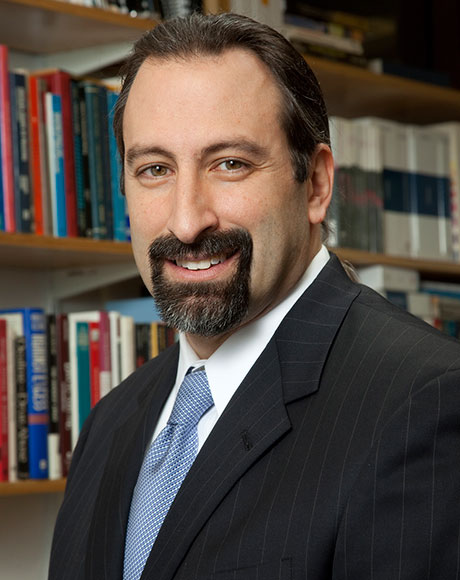 Anthony A. Braga合作论文数School of Criminology and Criminal Justice, College of Social Sciences and Humanities, Northeastern University4Sean P. Varano合作论文数College of Criminal Justice, Northeastern University4Michael Shively合作论文数3Jesenia Robles合作论文数3erica pierce合作论文数3Luis Garcia合作论文数3
 Sarah Lockwood合作论文数Violence & Justice Res Lab, Northeastern Univ3
 Natalie Hipple合作论文数School of Criminal Justice, Michigan State University3
 Sheldon Zhang合作论文数Department of Sociology, San Diego State University3
 Carlos A Cuevas合作论文数Departamento de Química Física;Facultad de CC Químicas;Universidad de Castilla-La Mancha;Facultad de CC Químicas, Universidad de Castilla-La Mancha3Jenn Panniello合作论文数3
 Glenn L Pierce合作论文数University of Oregon3
 Jeff R Temple合作论文数Department of Obstetrics & Gynecology, University of Texas Medical Branch3Nathaniel Lawshe合作论文数2
 Ruth Zschoche合作论文数2carsten andresen合作论文数2Keller G. Sheppard合作论文数2
 Gail Mason合作论文数Sydney Law School, The University of Sydney2Lagou Spiridoula合作论文数2
 Norman Conti合作论文数Department of Sociology, Duquesne University2Timothy Bynum合作论文数2
 Lorie Fridell合作论文数Reubin O'D. Askew School of Public Administration and Policy, Florida State University2Jana Rumminger合作论文数2Paul Iganski合作论文数2K. Baer合作论文数1R Andrijasevic合作论文数1C Cunneen合作论文数1john klofas合作论文数1Tim Bynum合作论文数1Michael E. Buerger合作论文数1G Burchell合作论文数1Karl Lamberth合作论文数1cook heffron合作论文数1




