There is an identified need to strengthen the field epidemiology workforce training in the Asia Pacific region. In response, the Asia Pacific Consortium of Veterinary Epidemiology (APCOVE) developed an online training program consisting of 36 modules delivered asynchronously and synchronously across 6 months in 2022. We sought to explore the effectiveness of the program based on participant perception and knowledge acquisition. All participants ( n = 139) were invited to participate in focus groups. Framework analysis was conducted using Biggs’ 3P model as a conceptual framework. In total, 93/139 (67%) trainees completed all competencies (36 modules) and 74/139 (53%) trainees participated in one of 12 focus groups. Participants were from the Philippines ( n = 28), Indonesia ( n = 18), Vietnam ( n = 16), Cambodia ( n = 3), Papua New Guinea ( n = 3), Laos ( n = 3), and Timor-Leste ( n = 3). They valued the interactivity of the modules, including online tools, calculators, and knowledge checks. Module content, including case scenarios, was relevant to the region and applicable to participants’ workplaces. Suggestions for improvement included incorporating local face-to-face sessions to complement the online delivery. The median score for the end-of-competency assessment tasks ranged from 42.5 to 45 (out of 50), and the APCOVE online training program provided an effective and scalable framework to ensure access to up-to-date training resources across the Asia-Pacific region. To improve module access and increase engagement, asynchronous online modules are now available and downloadable in six languages. The provision of face-to-face sessions to complement asynchronous online delivery, and engagement from country partners as mentors, will increase effectiveness and sustainability.
Building workforce capacity in epidemiology skills for veterinarians in the Asia-Pacific region is crucial to health security. However, successful implementation of these programs requires a supply of trained veterinary epidemiology teachers and mentors. We sought to design and evaluate delivery of a 4-day Veterinary Epidemiology Teaching Skills (VETS) workshop as part of a larger project to strengthen field veterinary epidemiology capacity. Thirty-five veterinarians were selected to participate in the 4-day VETS workshop, consisting of nine modules delivered synchronously online. Participants were formatively assessed and given feedback from peers and facilitators on all activities. Data were collected with pre- and post-course questionnaires. Numeric values were categorized to convert into an ordinal scale with four categories. Qualitative data were analyzed using thematic analysis. Thirty-four veterinary epidemiologists from eight countries of the Asia-Pacific completed the workshop. Participants felt able to achieve most key learning outcomes through provision of succinct literature, teaching frameworks, and active participation in small groups, with multiple opportunities to give and receive feedback. Although the online workshop provided flexibility, participants felt the addition of face-to-face sessions would enrich their experience. Additionally, protected time from work duties would have improved their ability to fully engage in the workshop. The VETS workshop granted an effective online framework for veterinary epidemiologists to develop and practice skills in teaching, facilitation, assessment, feedback, case-based learning, program evaluation, and mentorship. A challenge will be ensuring provision of local teaching and mentoring opportunities to reinforce learning outcomes and build workforce capacity.
Cultural competence in professional and research practice is important to effectively deliver animal and One Health services and programs. Veterinarians work with culturally and linguistically diverse teams, clients, and communities. Cultural perspectives on the significance and perceptions of animals and differences in consultation and engagement protocols and strategies can influence client-practitioner and researcher-community relationships, impacting animal health, welfare, and/or research outcomes. Curricula have been proposed to build cultural capacity in graduates, but these have not been reported in veterinary programs, and early attempts to integrate cultural competency into the University of Sydney veterinary curriculum lacked a formal structure and were ad hoc with respect to implementation. To address this, the authors introduced a broad curriculum framework into the University of Sydney veterinary program, which defines cultural competence, perceptions of animals, effective communication, and community engagement in a range of contexts. Cultural competency learning outcomes were described for units of study. These were contextually relevant and aligned to course learning outcomes and University of Sydney graduate qualities. Constructive alignment was achieved by linking learning outcomes to teaching and learning activities and assessment. The continuum of cultural competency underpinned mapping of cultural competency across the curriculum with staged, vertical integration of key principles. Additionally, action to engage staff, students, and stakeholders in a cultural competence agenda assisted in sustaining curriculum change. The result was integration of cultural competency across the curriculum aligning with recommendations from accrediting bodies and with best practice models in medicine, nursing, and allied health programs.
The Sydney School of Veterinary Science (SSVS), University of Sydney, recognises the ever-increasing importance of cultural competence (CC) and cultural capacity in professional and research practice and has been working since 2012 on the embedding of CC into the pre-veterinary programmes: Bachelor of Veterinary Biology (BVB) and the Doctor of Veterinary Medicine (DVM). During both their professional lives and while studying, veterinarians work in culturally and linguistically diverse teams and environments. Cultural perspectives can impact animal health, welfare and/or research outcomes and also relationships with communities. It is therefore important to build cultural capacity in graduates and prepare them with relevant skills such as the ability to reflect on cultural belief systems and worldviews present in themselves and in those with whom they interact. To address this, we introduced a broad framework (graduate qualities, learning outcomes and a rubric) that defines CC beyond the context of cultural and linguistic diversity and includes other self-defined cultural groups, and incorporates cultural awareness and competency for working across cultures. We embedded CC vertically into seven units of study within the pre-veterinary BVB and postgraduate DVM programmes. The major areas that were embedded include: Indigenous perceptions and knowledge about animals; principles of cultural competence; effective communication across cultures; and the impact of CC on professional practice, animal management and research. This initiative constitutes a crucial milestone for students and outcomes indicate that students have been inspired to develop core knowledge and skills in this critical area, skills which they will carry with them when approaching extramural rotations in remote communities and overseas, as well as in their future veterinary and animal science careers, including in their places of work. To date, one DVM class has graduated with an increased awareness of the importance of CC and ways to apply it, and many students have expressed that they see the relevance of CC in the curriculum and to their future careers.
Background: New educational approaches are needed to improve student understanding of the wider sociological and ecological determinants of health as well as professional responsibilities in related areas. Field trips allow students to observe interaction between plant, animal and human communities, making them an ideal tool for teaching One Health concepts. Methods: Veterinary medical students participated in a field trip to a local parklands area, frequented by humans, dogs, horses, and wildlife. Students rotated through 5 learning activities ('stations') that focused on: (1) response to exotic animal disease incursion (equine influenza); (2) impact of cultures and belief systems on professional practice; (3) management of dangerous dogs; (4) land use change, biodiversity and emerging infectious disease; and (5) management of environmentally-acquired zoonoses (botulism). Intended learning outcomes were for students to: evaluate the various roles and responsibilities of veterinarians in society; compare the benefits and risks associated with human-animal and animal-animal interactions; and evaluate the contributions made by various professionals in safeguarding the health and welfare of animals, humans and the environment. Following the field trip, students participated in a debrief exercise and completed an online survey on their experiences. Results: Feedback from students collected in 2016/2017 (n=211) was overwhelmingly positive. The learning experience at each station was rated as 4 ('Good') or 5 ('Very Good') out of 5 by 82-96% of students. Responses to closed- and open-ended questions - as well as outputs generated in the debrief session - indicated that students achieved the learning outcomes. Overall, 94% of students agreed or strongly agreed that they had a better understanding of One Health because of the field trip. Conclusions: Field trips to local parklands are effective in promoting learning about One Health and can be incorporated into the core curriculum to maximize student exposure at relatively low cost.
The University of Sydney is committed to providing a thriving environment for students from all cultural backgrounds. The Faculty of Veterinary Science has graduated seventeen Aboriginal and Torres Strait Islander students in the last twelve years. However, there was not a structured Faculty plan that celebrated Indigenous cultures and knowledges. In 2011 the University of Sydney adopted a new Aboriginal and Torres Strait Islander Integrated Strategy (Wingara Mura-Bunga Barrabugu) and the Faculty used the Strategy as a foundation to develop a Local Implementation Plan to build an environment in which students and staff understand and value Indigenous cultures and perspectives. The Faculty plan consists of twenty innovative initiatives which focus on building a culturally competent curriculum, providing support to Indigenous students, enhancing Indigenous research, providing cultural competence opportunities to staff and students whilst celebrating and embracing Indigenous cultures and knowledges and promoting community engagement. This plan has had a positive impact in the Faculty, evidenced by attendance at Faculty Indigenous seminars and feedback from students on changes in the curriculum to include cultural competence aspects. We believe we are demonstrating a change in attitude, and a movement towards better celebrating and embracing Indigenous cultures and supporting Indigenous students.
The Faculty of Veterinary Science at the University of Sydney has identified embedding cultural competence into the veterinary curriculum as being a central focus of its Indigenous implementation plan. There is a growing international recognition of the importance of cultural competence, and capacity, in professional practice. Faculty graduates will be dealing with clients in intercultural settings in Australia, which is a multicultural society, and when working overseas. Cultural differences can influence the client-practitioner relationship and attitudes towards the health and welfare of animals, and so it is important for graduates to be prepared with skills such as the ability to reflect on cultural belief systems present in themselves and in those they interact with. To address this, we developed a road map of learning outcomes and graduate attributes to embed cultural competence into our degree programs, starting with innovations primarily from the perspective of Aboriginal and Torres Strait Islander cultures. Teaching and assessment of these competences has commenced in the Faculty’s new Doctor of Veterinary Medicine program and initial qualitative student feedback and results have been encouraging. This initiative has been a crucial milestone for the Faculty and outcomes indicate students have been inspired to develop core knowledge and skills in this critical area.
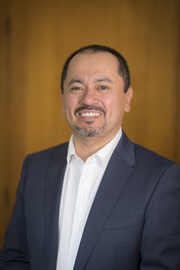 Jaime Gongora合作论文数Sydney School of Veterinary Science, Faculty of Science, The University of Sydney6
 Rosanne M. Taylor合作论文数Faculty of Veterinary Science, University of Sydney5
 Sanaa Zaki合作论文数Sydney School of Veterinary Science, Faculty of Science, The University of Sydney4Jenny-Ann L.M.L. Toribio合作论文数4
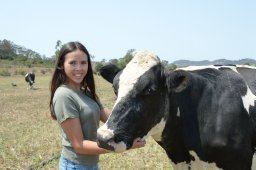 Alexandra C Green合作论文数Sydney School of Veterinary Science, The University of Sydney2
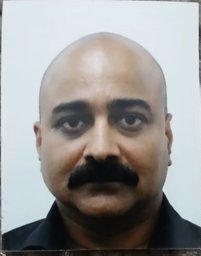 Harish Kumar Tiwari合作论文数Corresponding author.2Stewart Sutherland合作论文数Medical School, College of Health and Medicine, The Australian National University2
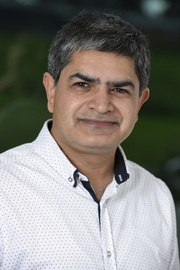 Navneet Dhand合作论文数Faculty of Science, The University of Sydney2
 Annette Burgess合作论文数School of Medicine, Faculty of Medicine and Health, The University of Sydney2Ingrid van Gelderen合作论文数1Paul Damien McGreevy合作论文数1Ruth Laxton合作论文数RL Learning Designs1
 Matthew Pye合作论文数1
 Anke Wiethoelter合作论文数Univ Melbourne, Fac Vet & Agr Sci, Melbourne, Vic, Australia1
 Peter White合作论文数Faculty of Science, The University of Sydney1Anne Quain合作论文数Sydney School of Veterinary Science, Faculty of Science, The University of Sydney1
 Jacqueline Norris合作论文数Sydney School of Veterinary Science, Faculty of Science, The University of Sydney1
 Katrina Bosward合作论文数Sydney School of Veterinary Science, Faculty of Science, The University of Sydney1
 Michael Ward合作论文数Sydney School of Veterinary Science, Faculty of Science, The University of Sydney1Matthew Susan合作论文数1
 Siobhan M Mor合作论文数Marie Bashir Institute for Infectious Diseases and Biosecurity, University of Sydney1Cogger Naomi合作论文数1
 Hannah Forsyth合作论文数The University of Sydney1
 Sarah Ellen Graham合作论文数max planck society1




