This chapter reviews some of the fundamentalproperties of high-temperature superconductors (HTSC), which include crystal structures, phase diagrams, superconducting properties, mechanisms, material processing and some newly developing superconductor. These would show a strong trait behavior of the high-temperature superconductivity that has been the subject of intensive study. It has received much attention due to its industrial applications.
Zircaloy-4 alloy specimens consisting of α-Zr grains were irradiated on a tandem accelerator with 5 MeV He ions to a fluence of 5 × 10²¹ ions m − 2 at different temperatures. Defect clusters and He bubbles were observed in the TEM micrographs of the irradiated microstructure. The small defect clusters and He bubbles were found to exhibit spherical shapes whereas the large defect clusters showed plate-like shapes. Molecular dynamics simulations and crystallography analyses revealed that the defect clusters are mainly composed of Zr interstitials. During He-ion irradiation, the clustering of Zr dumbbell interstitials results in the formation of small and spherical defect clusters. With further irradiation, the Zr interstitials prefer to occupy the octahedral sites that align along the {12¯14} planes with other site interstitials, forming cluster sections. These initial planar clusters then grow by extending along the <101¯0> directions and by forming more cluster sections along the <12¯16> directions, leading to large plate-like defect clusters on the {1¯21¯1}planes. He bubbles nucleate by the clustering of He atoms and vacancies that are formed by kicking out the lattice atoms, and then grow by the migration and coalescence of helium-vacancy clusters. Small He atoms have many interstitial sites to occupy in the α-Zr HCP crystal, allowing He bubbles to grow to spherical shapes. In addition, grain boundaries induce the accumulation of primary point defects and He atoms and high irradiation temperature accelerates diffusion, and hence larger defect clusters and He bubbles form in the grain boundary regions and at higher irradiation temperature.
By combining experimental observations on Gd doped fuel with a theoretical understanding, the variation in thermal conductivity with Gd concentration and accommodation mechanism has been modelled. Four types of Gd accommodation mechanisms have been studied. In UO2-x, isolated substitutional Gd3+ ions are compensated by oxygen vacancies and {2Gd(U)' : V-O(center dot center dot)}(x) defect clusters. In UO2, isolated substitutional Gd3+ ions are compensated by U5+ ions and {Gd-U' : U-U(center dot)}(x) defect clusters. The results indicate that defect clusters can be considered as less effective phonon scatterers and therefore result in less thermal conductivity degradation. The thermal conductivity predicted for UO2 with {Gd-U' : U-U(center dot)}(x) defect clusters is in good agreement with experimental data for UO2 with 5 wt% Thermal conductivity variation in uranium dioxide with gadolinia additions . This supports the previous theoretical results that Gd is accommodated through defect clusters {Gd-U' : U-U(center dot)}(x) in UO2 in the presence of excess oxygen. (C) 2020 Elsevier B.V. All rights reserved.
A transmission electron microscopy (TEM) specimen of a titanium aluminide (TiAl) alloy was irradiated in-situ, at the IVEM-TANDEM facility, with 1 MeV Kr ions to a maximum fluence of 1.25 x 10(19) ions m(-2) at room temperature. The irradiated microstructure was then investigated ex-situ using advanced analytical TEM in combination with TEM image simulations and molecular dynamics (MD) simulations. The TEM examination showed that dot-like defects first formed in both the alpha(2)-Ti3Al and gamma-TiAl phases of the irradiated microstructure. With increasing irradiation dose planar defects formed and propagated within the gamma phase, and most of the planar defects were accompanied by the dot-like defects. The TEM image simulations and MD irradiation simulations revealed that the origins of the dot-like and planar defects were interstitial clusters and stacking faults, respectively, and large interstitial clusters were surrounded by dislocation loops. The interstitial clusters formed and grew in the irradiated microstructure due to much faster diffusion of interstitials than that of vacancies at room temperature. Local stress concentrations increased near large interstitial clusters and lamellar interfaces, which resulted in the nucleation and propagation of stacking faults. Moreover, the configurations of the lamellar interfaces in the start microstructure were found to play an important role in the formation and accumulation of the radiation-induced interstitial clusters and stacking faults at room temperature. (C) 2020 Acta Materialia Inc. Published by Elsevier Ltd. All rights reserved.
The irradiation microstructure of a titanium aluminide (TiAl) alloy subjected to in situ transmission electron microscope (TEM) irradiation with 1 MeV Kr ions at the elevated temperature of 873 K was investigated. Triangle and large hexagon shaped volume defects were observed within the gamma-TiAl phase in the TEM images of the irradiated microstructure. High resolution TEM images and composition analyses revealed that the volume defects were vacancy-type stacking fault tetrahedra (SFTs). Molecular dynamic simulations showed that the increased diffusion coefficient at the elevated temperature promoted the movement and aggregation of vacancies, leading to the formation and growth of SFTs in the irradiated FCC gamma phase. The lamellar interfaces in the irradiation microstructure were more effective for acting as strong sinks to absorb the primary point defects and defect clusters at the elevated temperature. The initial defects at the interfaces of the TiAl alloy enhanced the sink strength of the material and played an important role in refining SFTs near the lamellar interfaces. (C) 2019 Acta Materialia Inc. Published by Elsevier Ltd. All rights reserved.
The irradiation microstructure of the additively manufactured titanium aluminide (TiAl) alloy subjected to in situ transmission electron microscope (TEM) irradiation with 1 MeV Kr ions at the elevated temperature of 873K was investigated. Triangle and large hexagon shaped volume defects were observed within the γ-TiAl phase in the TEM images of the irradiated microstructure. High resolution TEM images and composition analyses revealed the volume defects were vacancy-type stacking fault tetrahedrals (SFTs). Molecular dynamic simulations showed that the increased diffusion coefficient at the elevated temperature promoted the movement and aggregation of vacancies, leading to the formation and growth of SFTs in the irradiated FCC γ phase. The lamellar interfaces in the irradiation microstructure were more effective for acting as strong sinks to absorb the primary point defects and defect clusters at the elevated temperature. The initial defects at the interfaces of the additively manufactured TiAl alloy enhanced the sink strength of the material and greatly refined SFTs near the lamellar interfaces.
Oxide powders of Zr1-xTixO2(x=0-1) solid solutions with micron-sized particles were synthesized via a solution combustion method. The synthesis process and Zr/Ti molar ratio were optimized to produce powders with the tetragonal crystal structure. X-ray diffraction, Raman spectroscopy and transmission electron spectroscopy results confirm that a full crystallization microstructure with the single tetragonal phase is obtained after calcination at 600 degrees C while maintaining the crystallite size <30 nm. Zr/Ti oxide mixtures with Zr >= 67 mol% exhibit a tetragonal crystal structure and the embedding Ti in ZrO2 improves the structure stability. The nitrogen sorption results indicate that the powders possess meso-porous morphology with medium specific surface areas (similar to 10-50 m(2)/g). Chemical stability tests show that these powders are relatively stable with negligible removal of titanium and zirconium after elution by 0.5 mol/L HCl. Density functional theory was used to calculate the most stable structure with low energy for the selected composition. (C) 2019 Published by Elsevier Ltd on behalf of The editorial office of Journal of Materials Science & Technology.
The stability of a series of ABO(4) minerals incorporating radioactive Tc-99 during the latter's beta-decay to Ru-99 was investigated theoretically using density functional theory (DFT) computations. The compounds investigated were KTcO4, RbTcO4 and CsTcO4. The stability of the latter, CsTcO4, during transmutation, when the caesium consists of the radioactive isotope Cs-137, was also investigated. For each of the compounds, two similar possible crystal structure types-scheelite and pseudoscheelite-were considered. As the Tc-99 decays, or the Cs-137 decays to Ba-137, reaction enthalpies were calculated for possible decompositions or precipitations of the transmuting compounds. All the possible decompositions or precipitations investigated had positive reaction enthalpies, suggesting that the transmuting compounds are all chemically stable. Volume and lattice parameter changes, however, suggest that KTcO4 would also be structurally stable during transmutation to KRuO4, but that CsTcO4 would not be structurally stable during its transmutation to BaRuO4.
The ternary compound Al2Cu3Dy has been synthesized by stoichiometric elemental constituents. The X-ray powder diffraction data for the Al2Cu3Dy compound are presented. The structure type and precise lattice constants have been determined by pattern indexing and Rietveld refinement. The Al2Cu3Dy compound tends to crystallize systemmatically into hexagonal structure type with the space group P6/mmm and the lattice parameters of a = b = 5.1524 angstrom, c = 4.1481 angstrom, V = 95.37 angstrom(3), Z = 1, Density = 7.091 g/cm(3), and the RIR value is 1.70.
Raman spectra of synthetic non-substituted and U/Np/Pu- substituted thorutite (ThTi2O6) samples were collected. Factor group analysis was used to analyse the possible vibration modes. Theoretical simulations based on density functional theory (DFT) were performed on both CeTi2O6 and ThTi2O6. All possible vibrational modes for thorutite have been identified and assigned to the measured spectra. The presence and the effect of higher valence of U in thorutite has been discussed and the U–O bond lengths have been calculated by using the measured wavenumbers of ν1 (UO2)2+ symmetric stretching vibrations. The presence of U6+ in uranyl form can be inferred from the wavenumbers of U–O vibrations. Corresponding Np–O and Pu–O vibrations were not observed in the Raman spectra. Thus the presence of Np6+ and Pu6+ in the studied samples was not established.
Classical molecular dynamics simulations have been performed on uranium dioxide (UO2) employing a recently developed many-body potential model. Thermal conductivities are computed for a defect free UO2 lattice and a radiation-damaged, defect containing lattice at 300 K, 1000 K and 1500 K. Defects significantly degrade the thermal conductivity of UO2 as does the presence of amorphous UO2, which has a largely temperature independent thermal conductivity of similar to 1.4 Wm(-1) K-1. The model yields a pre-melting superionic transition temperature at 2600 K, very close to the experimental value and the mechanical melting temperature of 3600 K, slightly lower than those generated with other empirical potentials. The average threshold displacement energy was calculated to be 37 eV. Although the spatial extent of a 1 keV U cascade is very similar to those generated with other empirical potentials and the number of Frenkel pairs generated is close to that from the Basak potential, the vacancy and interstitial cluster distribution is different.
Raman spectra of a well-characterized natural brannerite and some synthetic brannerite samples have been collected and analysed. For the first time, all 12 theoretical Raman vibrational modes of CeTi2O6 with brannerite structure have been positively identified by using quantum chemical calculations based on density functional theory (DFT) and assigned to the spectra. For synthetic samples with Y or Ca substitution on the U site and Fe substitution on the Ti site, Y–O, Fe–O and U–O vibrational modes are tentatively assigned. The U–O bond lengths for the uranyl (UO2)2+ groups, have been calculated by using the measured wavenumbers of ν1 (UO2)2+ symmetric stretching vibrations and compared with the published U–O bond lengths of a natural brannerite.
We have employed a variety of computational methods to understand the behaviour of Pu, generated by neutron capture reactions in UO2 fuel, with Cr2O3 and Al2O3, two common UO2 fuel dopants. Structure search calculations using density functional theory and empirical potentials show that PuCrO3 and PuAlO3 are likely to form in these systems. The lowest energy structure adopted by both compounds is predicted to be the orthorhombic (Pnma) GdFeO3-type perovskite structure. Relative to UO2, the thermal conductivity of PuCrO3 was calculated to be approximately three times smaller over the explored temperature range and therefore the presence of this phase will impact the microstructure, fission product distribution and gas release properties of UO2-based fuels. In contrast, the PuAlO3 phase had a similar thermal conductivity to UO2. Calculated defect energies suggest that defects in both PuCrO3 and PuAlO3 will be dominated by antisite defects and that their radiation tolerances are similar to that of UO2. Calculation of the solution and partition energies of a range of trivalent cations indicate that minor actinides are likely to substitute for Pu in the perovskite structure having an impact on the in-reactor behaviour of Cr-containing fuels and subsequently the waste reprocessing route.
The radiation response of TiO2 has been studied using molecular dynamics. The simulations are motivated by experimental observations that the three low-pressure polymorphs, rutile, brookite and anatase, exhibit vastly different tolerances to amorphization under ion-beam irradiation. To understand the role of structure we perform large numbers of simulations using the small thermal spike method. We quantify to high statistical accuracy the number of defects created as a function of temperature and structure type, and reproduce all the main trends observed experimentally. To evaluate a hypothesis that volumetric strain relative to the amorphous phase is an important driving force for defect recovery, we perform spike simulations in which the crystalline density is varied over a wide range. Remarkably, the large differences between the polymorphs disappear once the density difference is taken into account. This finding demonstrates that density is an important factor which controls radiation tolerance in TiO2.
The incorporation of TcO2 into the rutile phase of TiO2 has been theoretically examined to understand the potential of the system for use as a wasteform. The effects of defect clustering and the transmutation of Tc into Ru were considered. Results suggest that as a single defective species, Tc has a temperature-dependent, moderate solubility into rutile TiO2, which increases when clustering is considered. The {2TcTi} cluster that preferentially forms was found to have a Tc–Tc bond length similar to the cation distance in TcO2. The transmutation of Tc to Ru has two effects: first, the preferred binary cluster morphology changes from that of first nearest neighbour for {2TcTi} to that of second nearest neighbour for {2RuTi}. Second, the defect solubility is lower for single RuTi defects and Ru-containing defect clusters. This will likely result in the formation of a secondary phase as transmutation proceeds, if Tc is added to rutile TiO2 to its solution limit. The varying solubility of RuO2 in TiO2 with temperature was compared with previously published experimental data with encouraging results. The use of two different DFT codes (one plane-wave and one local-orbital) was used to find the correct magnetic ordering in the defective lattices, which increased the confidence in the methods and therefore the results.
Metal Insulator transition(MIT) is characterized by the conductivity which will be zero in the insulator phase. In this term paper, we focus on Mott insulator, and a simple theoritical way to describe this MIT is the Hubbard Model .Finally, we will look at the experiments of Mott insulator transition .
The effect of various sintering conditions on the phase transformation and critical current density of multifilament Bi-2223 PIT tapes with AgMg sheaths has been investigated. A two stage sintering process was used comprising a first (HT1) and second (HT2) heat treatment with an intermediate roll pass between each stage. The sintering atmosphere during each stage was a mixture of nitrogen and oxygen with a N/O percentage ratio of either 80/20% (in N80/O20%) or 92.5/7.5% (in N92.5/O7.5%). It was found that the conversion of 2212 precursor phase to 2223 was significantly influenced by the sintering atmosphere of HT1. Sintering in N80/O20% tended to produce larger 2223 grains and a higher degree of texturing compared to sintering in N97.5/O7.5%. The lower partial pressure of O promoted faster and more complete conversion of 2212 and smaller 2223 grain size, however, retained much more 2201 phase. It was observed that conditions of HT2 had less of an impact on the conversion of 2212 phase but influenced the proportion and size of secondary phases, specially influenced that of the lead-rich secondary phase. A possible explanation for the differences in phase transformation and the effect on the critical current was discussed.
A triple-to-double coincidence ratio (TDCR) liquid scintillation counting system has been recently constructed at Australian Nuclear Science and Technology Organization (ANSTO). A description of the system and measured activities for sources such as (3)H, (14)C, and (241)Am are presented.
Pulsed magnetic field was first employed in the study on MgB2 superconductors. Superconductivity properties and microstructures of Zn and SiC doped MgB2 were discussed in this paper. The superconductors showed different superconductivities after magnetic sintering. Critical current density and flux pinning force were relevant to the dopants properties in MgB2. Grains in the pulsed magnetic processed MgB2 matrix were smaller than those in the normal processed one. The refinement microstructures have caused the critical current density (Jc) anisotropy in both the Zn and SiC doped MgB2.
 Shi Xue Dou (窦世学)合作论文数School of Energy and Power Engineering, University of Shanghai For Science and Technology;Institute of Energy Materials Science, University of Shanghai for Science and Technology;Australian Institute for Innovative Materials, Institute for Superconducting and Electronic Materials, University of Wollongong45
 Huakun Liu (刘化鹍)合作论文数Institute for Superconducting and Electronic Materials, Australian Institute of Innovative Materials, University of Wollongong;Institute of Energy Materials Science, University of Shanghai for Science and Technology28
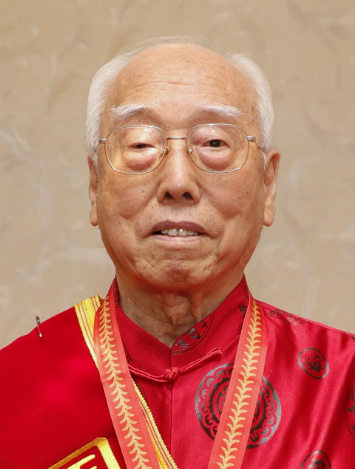 Xixian Yao (姚希贤)合作论文数The Second Hospital of Hebei Medical University25
 Xin Jin合作论文数20
 Xiaolin Wang合作论文数Institute for Superconducting and Electronic Materials, University of Wollongong15
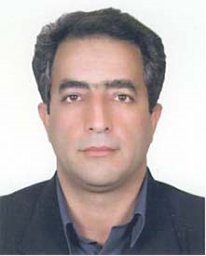 Saeid Soltanian合作论文数Institute for Superconducting and Electronic Materials;University of Wollongong;Institute for Superconducting and Electronic Materials, University of Wollongong13
 Xiaonong Xu (徐小农)合作论文数School of Physics, Nanjing University12
 Gregory R. Lumpkin合作论文数Department of Earth Sciences, University of Cambridge11
 James (Hong-Long) Ji合作论文数Department of Surgery, Burn Shock Trauma Research Institute, Stritch School of Medicine, Loyola University Chicago;Department of Computer Science, Burn Shock Trauma Research Institute, Stritch School of Medicine, Loyola University Chicago;Department of Microbiology and Immunology, Burn Shock Trauma Research Institute, Stritch School of Medicine, Loyola University Chicago10
 J. Horvat合作论文数Institute for Superconducting and Electronic Materials;University of Wollongong;Institute for Superconducting and Electronic Materials, University of Wollongong10
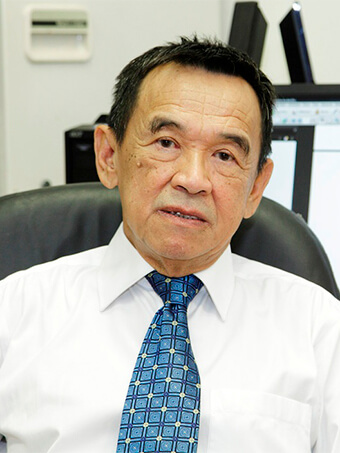 Chong Kim Ong合作论文数Department of Physics, Faculty of Science, National University of Singapore10Xiseng Rong合作论文数9Paul Munroe合作论文数School of Materials Science and Engineering, Faculty of Science, The University of New South Wales8
 Alexey V Pan合作论文数Institute for Superconducting and Electronic Materials;University of Wollongong;Institute for Superconducting and Electronic Materials, University of Wollongong8
 Haoshen Zhou (周豪慎)合作论文数College of Engineering and Applied Sciences, Nanjing University7
 S. Keshavarzi合作论文数7S. C. Middleburgh合作论文数6
 ye Rui合作论文数6Fu Yao-xian (傅耀先)合作论文数6
 Jung Ho Kim合作论文数6ShiYing Ding (丁世英)合作论文数6H.M. Shao合作论文数6Xun Xu合作论文数6Eugenia Y Kuo合作论文数6
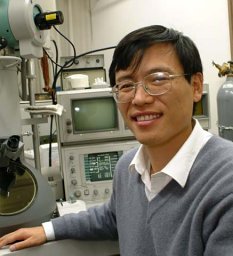 Hanliang Zhu合作论文数University of Queensland Materials Engineering6Am Sun合作论文数5W. K. Yeoh合作论文数Institute for Superconducting and Electronic Materials;University of Wollongong;Institute for Superconducting and Electronic Materials, University of Wollongong5
 Tao Wei合作论文数4
 Huijun Li合作论文数School of Mechanical, Materials & Mechatronics Engineering, Faculty of Engineering and Information Sciences, University of Wollongong4
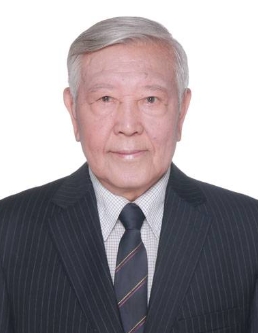 Zhongxian Zhao (赵忠贤)合作论文数Institute of Physics, Chinese Academy of Sciences4Jiying Zhang (张吉英)合作论文数4Yongming Ni合作论文数4
 Robert D. Aughterson合作论文数Institute of Materials Engineering, Australian Nuclear Science and Technology Organisation4M. Ionescu合作论文数4
 x l wang合作论文数3
 Yan Ma合作论文数3
 Yongting Yu (余永廷)合作论文数Institute of Bast Fiber Crops, Chinese Academy of Agricultural Sciences3
 Konstantinov Konstantin合作论文数Inst Superconducting & Elect Mat, Univ Wollongong3
 Chonghe Li (李重河)合作论文数School of Materials Science and Engineering, Shanghai University3A. H. Li合作论文数3Senzu Yang合作论文数3Xuekui Fu (付雪奎)合作论文数3
 Dayse Dos Santos合作论文数UNESP-State University of São Paulo–Advanced Materials Group (MAV), (Departamento de Física), Bauru-SP, Brazil3L. Li合作论文数2L. Xiao合作论文数2My Zhu合作论文数2Yu-qiao Shan合作论文数2ZHUANG Rui-fang (庄瑞舫)合作论文数2Xie Hui合作论文数2




