Trichloro-1,2,4-triazine reacts with cycloheptene and cyclododecene to give the 2,6-dichloropyridine derivatives 6 and 7 via an intermediate dihydropyridine formed by Diels-Alder addition and loss of N-2, and with cyclopenta-1,3-diene and indene by addition of a second molecule of alkene to the intermediate dihydropyridine. Bicyclo[2.2.1] hepta-2,5-diene and quadricyclane give mainly 2,3,6-trichloropyridine by loss of cyclopentadiene from the intermediate dihydropyridine. With hexa-1,5-diene, the dihydropyridine is trapped by an intramolecular Diels-Alder reaction, forming tricyclic compounds 17 and 18. With diallyl ether, the dihydropyridine partly undergoes intramolecular cycloaddition to give 23 and partly [1,5]-sigmatropic shift of hydrogen before intramolecular cycloaddition to give 25. With cyclododeca-1,5,9-triene formation of pyridine derivatives is incomplete and the immediate precursor can be trapped with water.
ChemInform is a weekly Abstracting Service, delivering concise information at a glance that was extracted from about 100 leading journals. To access a ChemInform Abstract of an article which was published elsewhere, please select a “Full Text” option. The original article is trackable via the “References” option.
Thermal reaction of the acetylenic ester CF3CCCO2Et (1) with cyclopentadiene (4), buta-1,3-diene (5) and 1,4-diphenylbuta-1,3-diene (6) gave the corresponding Diels-Alder 1:1 cycloadducts 10, 11 and 12, respectively in high yield (73%–97%). With norbornadiene (7), the homo Diels-Alder adduct (13) was formed. The reaction with 3-carboethoxyfuran gave a mixture (55%) of the isomeric Diels-Alder 1:1 adducts 14 and 15 (ratio 55:45), together with four 2:1 adducts, i.e., the exo,endo compounds 16a (10%) and 16b (9%) and the exo,exo compounds 17a (8%) and 17b (9%), resulting from Diels-Alder cycloaddition of the furan to the least substituted double bond in the 1:1 adducts 14 and 15. The cycloadditions to the 1:1 adducts were regioselective with the two CO2Et groups on the unsaturated bonds involved in the cycloadditions being 1,4 to each other in the 2:1 adducts. The products from reaction of ester 1 with cycloheptatriene (9) were formed via two competing reaction paths; (a) cycloaddition of ester 1 to norcaradiene (23) which gave the Diels-Alder adduct 18 (74%) and (b) an initial regioselective ‘ene’ reaction followed by isomerisation of the resulting 1:1 adduct 24 to the corresponding norcaradiene 25, which then underwent both rearrangement to afford 1:1 adduct 19 (15%) and Diels-Alder cycloaddition with ester 1 to give the 2:1 adduct 20 (6%).
Thermal reaction of ethyl 4,4,4-trifluorobut-2-ynoate (1) and hexafluorobut-2-yne (2) with quadricyclane (3) gave the exo-1:1 adducts (4a) and (4b), respectively, by a (σ2s+σ2s+η2s) cycloaddition pathway. Hydrogenation (1 mol equiv. of hydrogen) of adducts 4a and 4b using a PdC catalyst resulted in addition to the least substituted double bond to afford the alkenes 5a and 5b, respectively, and further hydrogenation of alkene 5a gave the alkane 6. Flow pyrolysis of adduct 4a at 450 °C yielded cis,cis,cis-3-carboethoxy-4-trifluoromethylbicyclo[4.2.1]nona-2,4,7-triene (7a) (30%) and a ca. 1:1 mixture (55%) of cis,cis,cis-4-carboethoxy-3-trifluoromethylbicyclo[4.3.0]nona-2,4,7-triene (8a) and its 3-carboethoxy-4-trifluoromethyl isomer (8b). Compound 7a arose by a non-concerted ring-opening of adduct 4a, and compounds 8a and 8b were formed via an intramolecular Diels-Alder reaction of 7a followed by rearrangement involving a 1,2-hydrogen shift. On flow pyrolysis under identical conditions, adduct 4b afforded the rearranged triene 8c exclusively, while flow pyrolysis of alkenes 5a and 5b gave the corresponding cis,cis-bicyclo[4.2.1]nona-2,4-dienes 9a and 9b, respectively. Attempted 1,3-dipolar cycloaddition between diene 9a and dia-zomethane, and Diels-Alder reactions between diene 9b and alkyne 1 or ethyl propynoate, were unsuccessful.
AbstractChemInform is a weekly Abstracting Service, delivering concise information at a glance that was extracted from about 100 leading journals. To access a ChemInform Abstract of an article which was published elsewhere, please select a “Full Text” option. The original article is trackable via the “References” option.
Reaction of 3-carboethoxyfuran (4) with hexafluorobut-2-yne (5) (1:2 molar ratio) at room temperature in dichloromethane afforded the Diels-Alder 1:1 adduct (3) (7%) and three 2:1 adducts formed by further addition of the furan 4 across the least substituted double bond of 1:1 adduct 3, i.e. the exo,endo- (8a) (39.5%), exo,exo- (9a) (24%) and exo,exo- (10a) (24%) isomers in which the two CO2Et groups are 1,4, 1,4 and 1,3 to each other, respectively. A mixture of furan 4 and the 1:1 adduct 3, heated at 50 °C in dichloromethane, gave the 2:1 adducts 8a (38%), 9a (25%) and 10a (28%). A comparison reaction of furan 4 with dimethyl acetylenedicarboxylate (DMAD) (6) at 80 °C vielded the corresponding 2:1 adducts 8b (33%), 9b (14%) and 10b (30%); reaction did not occur at room temperature. A mixture of cycloheptatriene (7) and butyne 5 heated at 80 °C gave only the 1:1 adduct (13) (93%) of the isomeric norcaradiene (18) and butyne 5.
Reaction of quadricyclane (6) with the azine CF3CCl = NN = CClCF3 (1a) in dichloromethane at 70 °C afforded the expected exo-[2 + 2 + 2] cycloadduct 8a (70%), and the unexpected exo-1,3-dipolar cycloadduct 3a, formed by a non-concerted pathway and isolated as the hydrolysed compound, amide 4a (19%). The corresponding reaction of 6 with hexafluoroacetone azine (CF3)2C=NN=C(CF3)2 (1b) at 70 °C yielded the exo-[2 + 2 + 2] cycloadduct 8b (54%), the bis-[2 + 2 + 2] 2:1 cycloadduct 9b (8%), formed by further reaction of 8b with 6, and the exo,exo-2:2 cycloadduct 10 (31%), which arose via concerted 1,3-dipolar cycloaddition of azine 1b to the olefinic double bond of 1:1 adduct 8b to give the 1:2 adduct, azomethine imide 14, followed by non-concerted 1,3-dipolar cycloaddition of 14 to quadricyclane 6. In contrast, the corresponding reaction of 6 with the azines CF3CCl = NN = CFCF3 (1c) (at 55 °C) and CF3CF = NN = CFCF3 (1d) (at 50 °C) gave only the exo-[2 + 2 + 2] 1:1 cycloadducts, i.e. the compounds 8c (65%) (formed by reaction involving the CF3CF=N grouping in 1c) and 8d (20%) (formed by reaction involving the CF3CCl = N grouping in 1c) and the compound 8e (88%), as a mixture of two isomers in the ratio 72:16, respectively. Treatment of 6 with the azomethine imide (CF3)2C=N+−N−C(CF3)2CH2⎴CMePh (7) at 70 °C in dichloromethane afforded the exo-1,3-dipolar 1:1 cycloadduct 11 as two stereoisomers [11a (12%) and 11b (17%)], the 1-pyrazoline (CF3)2C−N=N−CMePh−⎴CH2 (12) (26%) and the symmetrical 1:2 cycloadduct 13b (32%) formed by further reaction of 11b with azomethine imide 7. Reaction of 6 with the azine CF3(NH2) = NN = C(NH2)CF3 (1e) at 100 °C was unsuccessful, as was reaction with 1:1 cycloadduct 8a at 100 °C.
AbstractChemInform is a weekly Abstracting Service, delivering concise information at a glance that was extracted from about 100 leading journals. To access a ChemInform Abstract of an article which was published elsewhere, please select a “Full Text” option. The original article is trackable via the “References” option.
Vapour-phase ultraviolet irradiation of hexafluorobenzene in the presence of oxygen slowly yields hexafluoro-3-oxatricyclo[3.2.0.02,4]hept-6-ene (2) (10%). The CFCF bond in 2 adds (yields of adducts given) the dienes; cyclopentadiene (74%), furan (61%) and 2,5-diphenylisobenzofuran (59%); benzonitrile oxide (58%); chlorine (59%) and bromine (71%) photochemically. Heptene 2 isomerises thermally to hexafluorocyclohexa-2,4-dienone (6) (60%) at 50 °C, and reacts with diethyl ether at room temperature yielding ethylfluoride (89%) and 2-ethoxypentafluorocyclohexa-2,5-dienone (21%). The benzonitrile oxide adduct, upon flow pyrolysis at 440 °C, yields an isomeric oxepin derivative and the cyclohexadienone 6 with longer contact times. The chlorine adduct similarly yields a dichloro-oxepin derivative; attempts to dechlorinate this to hexafluoro-oxepin were unsuccessful. Benzonitrile oxide adds tone or both of the CC bonds of hexafluorobicyclo[2.2.0]hexa-2,5-diene; the 1:1 adduct isomerises thermally to the benzonitrile oxide-hexafluorobenzene adduct.
Although the title molecule, C 9 H 11 Cl 2 NO, is close to being symmetric about the plane contaning the Cl and N atoms, it lies in a general position. This contrasts with the related molecule, 1,8-dichloro-5-oxa- 10-azatricyclo[5.3.1.0 3.8 ]undecan-9-one [Barlow, Pritchard, Sibous & Tipping (1992). Acta Cryst. C48, 1908-1909], which is bisected by a crystallographic mirror plane. However, both systems form hydrogen-bonded dimers linked via the amine H and ketonic O atoms [N-H...O 2.08 (3) A, N-H...O 173 (2) o ]
AbstractChemInform is a weekly Abstracting Service, delivering concise information at a glance that was extracted from about 100 leading journals. To access a ChemInform Abstract of an article which was published elsewhere, please select a “Full Text” option. The original article is trackable via the “References” option.
Although the title molecule, C9H11Cl2NO, is close to being symmetric about the plane containing the Cl and N atoms, it lies in a general position. This contrasts with the related molecule, 1,8-dichloro-5-oxa-10-azatricyclo[5.3.1.0(3,8)]undecan-9-one [Barlow, Pritchard, Sibous & Tipping (1992). Acta Cryst. C48, 1908-1909], which is bisected by a crystallographic mirror plane. However, both systems form hydrogen-bonded dimers linked via the amine H and ketonic O atoms [N-H...O 2.08 (3) angstrom, N-H...O 173 (2)-degrees].
AbstractChemInform is a weekly Abstracting Service, delivering concise information at a glance that was extracted from about 100 leading journals. To access a ChemInform Abstract of an article which was published elsewhere, please select a “Full Text” option. The original article is trackable via the “References” option.
ChemInform is a weekly Abstracting Service, delivering concise information at a glance that was extracted from about 100 leading journals. To access a ChemInform Abstract of an article which was published elsewhere, please select a “Full Text” option. The original article is trackable via the “References” option.
The title compound, C26H16F24N4, Crystallizes as a racemic mixture with two crystallographically independent molecules in the asymmetric unit, which differ only slightly in conformation. In both cases, the central diazo region bears a close resemblence to the structure of diethyl trans-4,4,8,8-tetrakis(trifluoromethyl)-1,5-diazabicyclo[3.3.0]octane-2,6-dicarboxylate [Burger, Schickaneder, Hein, Gieren, Lamm & Engelhardt (1992). Liebigs Ann. Chem. pp. 845-852], in which the N-N bond is bisected by a crystallographic inversion centre.
The structures of the title compounds, two isomers of C24H18F6N4O2, may be compared by considering the geometry about the tetrahedral benzyl C atoms. In each compound the planar phenyl and benzoate systems are aligned approximately parallel to the ester C-O bond with the latter substituent projecting between the phenyl and 1-methyl-4-trifluoromethylpyrazolyl rings. However, while both CF3 substituents in the first molecule project away from the ester C-0 bond [O-C-C-C(CF3) -138.5 (5), -122.2 (6)-degrees], removal of a methyl group to an outer N atom has reversed the situation in the second compound [O-C-C-C(CF3) -63 (1), -41 (1) and 65 (1), 34 (1)-degrees for the two molecules in the asymmetric unit, respectively].
The title molecule {alternative IUPAC names: 5,11,14-trichloro-4b,5,5a,10a,11,11a-hexahydro-10H-5,11-(methanonitrilo)indeno[2,1-b]fluorene or 1,11,22-trichloro-22-azahexacyclo[9.9.2.0(2,10).o(3,8).0(12,20).0(14,19)]docosa-3(8),4,6,14(19),15,17,21-heptaene; C21H16C13N} adopts a gull-wing shape and is orientated so that it is symmetric about a plane perpendicular to c. Both phenyl rings overlap those of neighbouring molecules via crystallographic inversion centres leading to pi interactions, with nearest inter-ring C...C distances of 3.504 (8) and 3.795 (9) angstrom. As expected, the Cl-C bond to the sp2 C atom is significantly shorter than those at the tetrahedral sites [1.729 (4) cf 1.809 (4) and 1.771 (4) angstrom].
[(Z)-5-(Benzoyloxybenzylidene)]-1,4-bis(trifluorome-thyl)-8-oxatricyclo[4.3.0.0(2,9)]nona-3,6-diene (4) and 11, 12-benzo-10-benzoyloxy-2,8-bis(trifluoromethyl)-5-oxapentacyclo[7.3.0.0(1,6).0(2,4).0(3,7)]dodec-8-ene (5) are two of four main (1: 1) adducts of the title reactants. The crystallographical characterization of (4) and (5) assists in establishing the mechanistic pathways of the reaction. The ring strain in isomer (4) is particularly marked at double-bonded C6 where the three angles sum to 344.4 (7)-degrees; in the three-membered ring, C2-C9 [1.542 (7) angstrom] is significantly longer than C1-C2 and C1-C9 [1.479 (6) and 1.470 (6) angstrom respectively] and the angles C2-C1-C9, C1-C2-C9 and Cl-C9-C2 [63.1 (3), 58.2(3) and 58.8 (3)-degrees respectively] are all significantly different from 60-degrees. The strain in isomer (5), which has two molecules of the same chirality in the asymmetric unit, does not distort the three-membered ring but gives rise to a long bond [C1-C6 = 1.59 (2) and 1.62 (2) angstrom in molecules 1 and 2, respectively], angles around C1 considerably distorted from tetrahedral, and a large angle at double-bonded C9 [C8-C9-C10 = 142 (1), 138 (1)-degrees].
AbstractChemInform is a weekly Abstracting Service, delivering concise information at a glance that was extracted from about 100 leading journals. To access a ChemInform Abstract of an article which was published elsewhere, please select a “Full Text” option. The original article is trackable via the “References” option.
The thermal reaction of furan with the ester CF3CCCHMeO2CCH2Ph (2a) (1.1:1 molarratio) at 100 °C gives a mixture of Diels-Alder 1:1 (3) (51%), 2:1 (4) (20%) and 3:1(5) (5%) adducts (each as two diastereomers). The 2:1 adducts are the exo-endo isomersarising from exo-addition to the least substituted double bond in the 1:1 adducts andthe complete stereochemistry of both diastereomers has been established by X-raycrystallography; the 3:1 adducts are formed analogously by exo-addition to the 2:1adducts. It is calculated that the 1:1 adduct diastereomers are initially formed in theratio c. 55:45. Similarly, reaction of furan with the ester CF3CCCHPhO2CCH2Ph (2b)(c. 1.5:1 molar ratio) affords as major products the corresponding 1:1 (10) (44%) and2:1 (11) (38%) adducts (each as two diastereomers).
 Anthony E Tipping合作论文数24Ronald E. Banks合作论文数16S. TAJAMMAL合作论文数16
 Robin Gavin Pritchard合作论文数14
 Lakhdar Sibous合作论文数Chemistry Department, University of Manchester Institute of Science and Technology11Ae Tipping合作论文数9
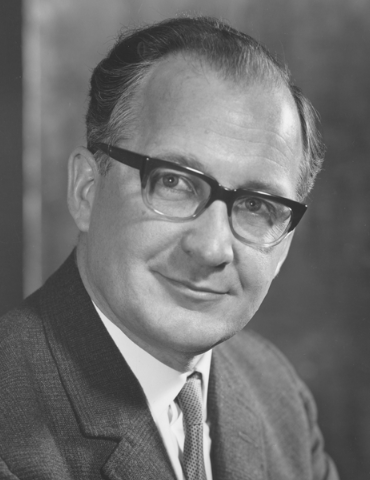 Robert Haszeldine合作论文数Institute of Science and Technology, University of Manchester9Haszeldi.Rn合作论文数5N. N. E. Suliman合作论文数5W.D. Morton合作论文数4R. N. Haszeldine合作论文数3E. Phillips合作论文数3G. L. FLEMING合作论文数3M. K. Mccreath合作论文数3N. S. Suliman合作论文数2D. R. Taylor合作论文数2H. G. Higson合作论文数2Andrew P. Wright合作论文数2Brian Beagley合作论文数2Anthony E. Tipping合作论文数2John G Dingwall合作论文数2David R Woodward合作论文数2J. C. Massey合作论文数1A. E. Tipping合作论文数1Rn Haszeldine合作论文数1Peter Shaw-Luckman合作论文数1M. Lappin合作论文数1J. Lee合作论文数1R. Hubbard合作论文数1N. I. Tucker合作论文数1Nadia N.E. Suliman合作论文数1John a Pickett合作论文数1R. R. Dean合作论文数1W. R. Deem合作论文数1B.A. McConachie合作论文数1W.D. Davies合作论文数1C.J. Peck合作论文数1




