Tattooing has become an increasingly popular phenomenon in the twenty first century, with growing numbers of sports stars and celebrities choosing to go 'under the needle' and tattooing regularly featuring in mainstream media. Based on interviews and participant observation at tattoo studios and tattoo conventions, this book investigates the reasons why so many people choose this form of body modification among all the options available to construct their identity. Drawing on Norbert Elias' figurational sociology, the author considers the importance of the desire to create community with others and to claim an authentic identity among the various reasons for choosing to be tattooed. A study of the connection between body and identity, richly illustrated with empirical material, this book will appeal to sociologists and scholars of cultural studies.
Single-center reports suggest incompatible live donor kidney transplant (ILDKT) outcomes are worse than compatible transplants. However, while almost 100 U.S. centers report performing ILDKT, outcomes studies are limited to a handful of the largest volume, most experienced centers. Furthermore, CMS holds ILDKT outcomes to the same standard as compatible ones, potentially penalizing centers performing ILDKT. We amassed 22 centers' DSA data—(+)Luminex (-)flow (PLNF, n=185), (+) flow (-)cytotoxic (PFNC, n=536), and (+)cytotoxic crossmatch (PCC, n=304). We tested associations of DSA, graft loss, and death compared to 9,669 non-ILDKTs.Figure: No Caption available.PLNF had similar graft loss and mortality. PFNC (adjusted HR=1.6, 95%CI:1.1-2.2, P<.01) and PCC (aHR=5.0, 95%CI:3.7-6.8, P<.001) were associated with increased graft loss in the first year.Table: No Caption available.PFNC (aHR=2.0;95%CI: 1.3-3.3; P<.01) and PCC (aHR=4.6; 95%CI:3.0-7.1; P<.001) were associated with increased mortality. We simulated CMS flagging to examine ILDKT's effect on it. Compared to equal-quality centers performing no ILDKT, centers doing 5, 10, or 20% PFNC or PCC had a 1.2, 1.3, and 1.7-fold and 2.2, 4.1, and 10.7-fold higher odds of flagging, respectively. Failure to account for ILDKT places centers offering this life-saving treatment at high risk of regulatory action.
 M. Aeder合作论文数5D. Goldfarb合作论文数5E. Steve Woodle合作论文数5
 Mitchell L. Henry合作论文数Department of Internal Medicine, Division of Nephrology;Department of Surgery, Division of Transplantation;and the Department of Pathology, The Ohio State University;Division of Transplantation; and the Department of Pathology, The Ohio State University5M Alonso合作论文数4
 Anne W Taylor合作论文数University of Adelaide4A Bohnengle合作论文数3
 Hans Nauwynck合作论文数Laboratory of Virology, Faculty of Veterinary Medicine, Ghent University;Department of Translational Physiology, Infectiology and Public Health, Faculty of Veterinary Medicine, Ghent University2
 Amy D Waterman合作论文数School of Medicine, Washington University2Peter L. Delputte合作论文数Faculty of Veterinary Medicine, Ghent University2J. Kopke合作论文数2J. Montgomery合作论文数1D. Sudan合作论文数1J. Garonzik Wang合作论文数1R. Shapiro合作论文数1Bashir R Sankari合作论文数1A O. Gaber合作论文数1
 Prabhsimranjot Singh合作论文数1MH Alonso合作论文数1
 Paul W Nelson合作论文数1
 Allan B. Massie合作论文数Department of Surgery, Grossman School of Medicine, New York University;Department of Population Health, Grossman School of Medicine, New York University;Department of Surgery, Johns Hopkins School of Medicine;Center for Surgical and Transplant Applied Research Quantitative Core, New York University1
 Mark D. Stegall合作论文数Department of Surgery, Mayo Clinic;Children's Center, Mayo Clinic1
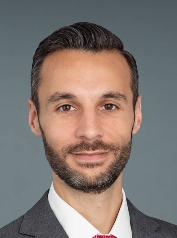 Babak J. Orandi合作论文数Department of Surgery, School of Medicine, NYU Langone Health;Department of Medicine, School of Medicine, NYU Langone Health1
 J.R. Wellen合作论文数1
 Kyle Jon Van Arendonk合作论文数1
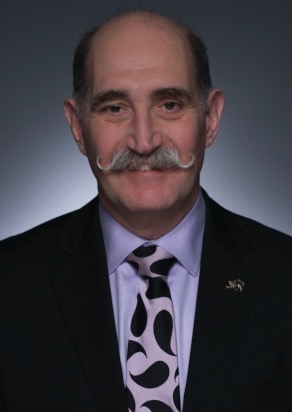 Lloyd E. Ratner合作论文数Department of Surgery, Columbia University Irving Medical Center1
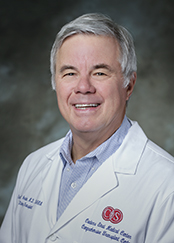 Stanley C. Jordan合作论文数Division of Nephrology, Cedars-Sinai Medical Center;Human Leukocyte Antigen and Transplant Immunology Laboratory, Cedars-Sinai Medical Center;Kidney Transplant Program, Cedars-Sinai Medical Center;David Geffen School of Medicine, University of California, Los Angeles1
 Robert Montgomery合作论文数Department of Surgery, NYU Grossman School of Medicine;NYU Langone Health/NYU Transplant Associates;550 First Avenue, 7th Floor, New York, NY 10016/403 East 34th Street;Third Floor;New York, NY 100161
 Marc P Posner合作论文数1
 Andrea A. Zachary合作论文数School of Medicine, Johns Hopkins University1
 Dorry L. Segev合作论文数Department of Surgery, Grossman School of Medicine, New York University;Department of Population Health, Grossman School of Medicine, New York University1
 Adel Bozorgzadeh合作论文数1
 Ty Blink Dunn合作论文数Medical College of Wisconsin1Jose Oberholzer合作论文数1Jose M. El-Amm合作论文数Division of Nephrology, Department of Medicine, Detroit, Mich1
 John Roberts合作论文数Department of Surgery, School of Medicine, University of California, San Francisco1
 Sandip Kapur合作论文数1George S. Lipkowitz合作论文数1
 Ronald P. Pelletier合作论文数Department of Internal Medicine, Division of Nephrology;Department of Surgery, Division of Transplantation;and the Department of Pathology, The Ohio State University;Division of Transplantation; and the Department of Pathology, The Ohio State University1
 Marc L Melcher合作论文数From the Department of Surgery, Stanford University Medical Center;National Institute of Diabetes and Digestive and Kidney Diseases, National Institutes of Health;National Institutes of Health, Stanford University Medical Center1
 Christopher L. Marsh合作论文数Department of Medicine, and Department of Surgery, University of Washington1




