Endonuclease EcoRII is one of a group of type II restriction enzymes, including NaeI, NarI, BspMI. HpaII, and SacII, that require binding of an enhancer sequence to cleave DNA. Comparison of the EcoRII amino-acid sequence with the amino-acid consensus motifs that differentiate between recombinase families uncovered similarity between a 29 amino-acid sequence in the carboxyl end of EcoRII and the motif defining the integrase family of recombinases. This similarity implied that EcoRII tyrosine 308 should be involved in catalyzing hydrolysis of the scissile bond. Site-directed mutagenesis was used to mutate Tyr308 to Phe. The phenylalanine-substituted enzyme could not cleave T5 DNA under conditions in which wild-type enzyme completely cleaved this DNA. The Tyr308 to Phe mutation abolished cleavage activity but not specific binding to DNA. No evidence was found for the existence during the cleavage reaction of a covalent linkage between Tyr308 and DNA.
Endonuclease NaeI cleaves DNA using a two-site mechanism. The DNA-binding sites are nonidentical: they recognize different families of flanking sequences. A unique NaeI site that is resistant to cleavage resides in M13 double-stranded DNA. NaeI can be activated to cleave this site by small DNA fragments containing one or more NaeI sites. These activators are not practical for genetic engineering because unphosphorylated activators that are consumed during the cleavage of substrate give ends that may interfere with subsequent ligations. We show that a DNA fragment containing phosphorothioate linkages at the NaeI scissile bonds (S-activator) is not cleaved by NaeI, even though this S-activator binds to the substrate site. The S-activator activates NaeI to cleave M13 DNA under conditions that completely exhaust unsubstituted activator. These results demonstrate that activation is not coupled to cleavage of activator, that NaeI reverts to its inactive state soon after dissociation of the EA complex, and that S-activator makes for a nondepletable activator during prolonged incubations.
Previous work has demonstrated the existence of both resistant and cleavable NaeI sites. Cleavable sites introduced on exogenous DNA can act in trans to increase the catalysis of NaeI endonuclease cleavage at resistant sites without affecting the apparent binding affinity of the enzyme for the resistant site [Conrad, M., & Topal, M. D. (1989) Proc. Natl. Acad. Sci. U.S.A. 86, 9707-9711]. This activation suggests allosteric regulation of NaeI cleavage by distant cis- and trans-acting sites in DNAs containing both resistant and cleavable sites. Plasmid pBR322 contains four NaeI sites, at least one of which is resistant to cleavage. Electron microscopy is used here to demonstrate that NaeI endonuclease simultaneously binds to multiple recognition sites in pBR322 DNA to form loops with NaeI protein bound at the loop's base. The maximum number of loops formed with a common base suggests four binding sites per enzyme molecule. Looping was inhibited by addition of enzyme-saturating amounts of double-stranded oligonucleotide containing an NaeI site, whereas another double-strand oligonucleotide without the NaeI site had no effect. The number of loops seen was not above background when double-stranded M13 DNA, which contains only a single NaeI recognition site, was used as substrate.
Previous work has described the novel ability to modulate in vitro the activity of restriction endonuclease NaeI from Nocardia aerocoligenes by using cleavable DNA and spermidine [Conrad & Topal (1989) Proc. Natl. Acad. Sci. U.S.A. 86, 9707-9711]. In this paper we report the results of a study of 49 type II restriction enzymes from a variety of bacterial species. On the basis of the rates of cleavage observed, we found that in addition to expected cleavable sites a number of enzymes had slow and resistant cognate recognition sites. Resistant sites were identified for BspMI, NaeI, and NarI; slow sites were identified for HpaII, NaeI, and SacII. Cleavage of these sites was found to be significantly enhanced by the addition of cleavable DNA or spermidine. We demonstrate that for BspMI, as for NaeI, activator DNAs increased V(max) without altering K(m), whereas for HpaII, NarI, and SacII activator DNAs decreased K(m) without changing V(max). Comparison among the K(m)s for NaeI cleavage of several different substrates demonstrated that distant DNA sequences can affect DNA recognition by the activated enzyme. Our observations extend DNA activation of the Nocardia NaeI endonuclease to restriction endonucleases from Nocardia argentinensis (NarI), Bacillus species M (BspMI), Haemophilus parainfluenza (HpaII), and Streptomyces achromogenes (SacII). In addition, activation has now been found to affect slow as well as resistant recognition sites.
Sequence-specific DNA-protein interactions are basic to DNA function. To better understand these interactions, we studied the effect of position on cleavage of DNA by the type II restriction enzyme (EC 3.1.21.4) Nae I. We discovered two classes of Nae I restriction sites: sites susceptible and sites resistant to cleavage. Kinetic analysis showed that Nae I was activated by DNA containing cleavable Nae I sites to rapidly cleave resistant Nae I sites by a noncompetitive mechanism with a Km for substrate DNA of about 2 nM and a KA for activating DNA of about 6 nM; activation increased catalysis but not substrate binding. Deletion mutagenesis in vitro showed that sequences flanking the Nae I recognition site were responsible for the differences between activating and nonactivating Nae I sites. The polyamine spermidine had a dramatic effect on the interaction of Nae I with DNA; in the presence of 1 mM spermidine, resistant sites were cleaved rapidly and cleavable DNA inhibited cleavage. The direct regulation of enzymatic activity by DNA sequences in trans, and the modulation of this regulation by a polyamine that is sensitive to the cell cycle, provides a regulatory switch mechanism. The implications of this switch for biological control functions are discussed.
O6-methylguanine (O6-methylG) is believed to be the premutagenic lesion responsible for mutational activation of the H-ras proto-oncogene in rats treated with N-methyl-N-nitrosourea (MNU). Research on the repair of O6-methylG has primarily focused on the methyltransferases. Potentially, other repair proteins may be involved in repair of O6-methylG. We have investigated the effect of Escherichia coli UvrABC excision repair on O6-methylG synthesized at the rat H-ras MNU activation site in a partial rat H-ras sequence constructed in an M13mp vector. An oligonucleotide self-selection technique was used to identify progeny phage containing DNA replicated from the O6-methylG-containing strand. We found that excision repair can help protect against mutation by O6-methylG at the rat H-ras MNU activation site.
Mutations were induced in the ampicillinase gene of a bacteriophage flJpBR322 chimera both by incorporation of OB-methyl-dGTP opposite T during DNA replication in vitro and by site-directed mutagenesis using 0%-methylguanine-containing oligonucleotides.After passage of the DNA through Escherichia coli, analysis of 151 Os-methyl-dGTP-induced mutations indicated a significantly greater number of unmutated mutation sites than expected, whereas the mutated sites generally fit a Poisson distribution.The unmutated sites are assumed to be caused by the inability of some sequences to tolerate the presence of a tetrahedral methyl group within the confines of a Watson-Crick helix (Toorchen, D., and Topal, M. D. (1983) Carcinogenesis 4, 1591-1597).A consensus of the DNA sequences surrounding unmutated mutation sites was derived.The consensus sequence had significant similarity to the region of the rat Harvey ras oncogene containing the N-methyl-Nnitrosourea activated site for transformation (Zarbl, H., Sukumar, S., Arthur, A. V., Dionisio, M.-Z., and Barbacid, M. (1985) Nature 315, 382-385).We propose that direct alkylation at OB of a guanine present within the consensus sequence may produce a DNA conformation less subject to repair.Mutation by OBmethylguanine-containing oligonucleotides demonstrated that repair of the OB-methylguanine lesions varied at least 3-4-fold with position of the lesion.
The ability of 9-aminoacridine to induce mutagenic lesions during DNA replication in vitro was investigated. The ampicillinase gene of pBR322 was replicated in vitro in the presence of 9-aminoacridine. Transfection of the replicated DNA into Escherichia coli gave Amps mutants. Determination of the base changes in 76 of these mutants indicated that the spectrum of mutations induced by 9-aminoacridine was consistent with its action in vivo. Both large (407-base) and small (1- and 2-base) deletions were induced at repetitive sequences. The frequency of deletion mutations depended on the identity of the base deleted and sequences surrounding the deletions. The characteristics of the frameshift mutations induced were consistent with the interactions of 9-aminoacridine with DNA. These results establish that 9-aminoacridine can induce frameshift mutations during the replication process and provide an in vitro model of frameshift induction for mechanistic studies.
O6-methylguanine (O6meG) lesions of double-stranded DNA have been associated with mutation and neoplastic transformation. These lesions can, in principle, be produced by at least three different mechanisms: direct alkylation of G X C base pairs in double-stranded DNA; alkylation of guanine residues in single-stranded regions of DNA associated with replication forks; and alkylation of the DNA precursor pool followed by incorporation of O6-methyl deoxyguanosine triphosphate (O6-medGTP) during DNA replication. DNA biosynthesis subsequent to all three events will generate predominantly O6-meG X T base pairs as O6meG preferentially pairs with T. We show here that O6meG X T base pairs are mutagenic; that transalkylase repair has a direct role in the generation of mutations induced by alkylated pool nucleotides; and that the Escherichia coli mismatch repair system is capable of repairing mutagenic G X T intermediates.
 Michael D. Topal合作论文数Lineberger Comprehensive Cancer Center;Department of Pathology;University of North Carolina Medical School;Medical School, University of North Carolina10J. Scott Eadie合作论文数2Rossi S C合作论文数1Voigt J M合作论文数1Oller A R合作论文数1
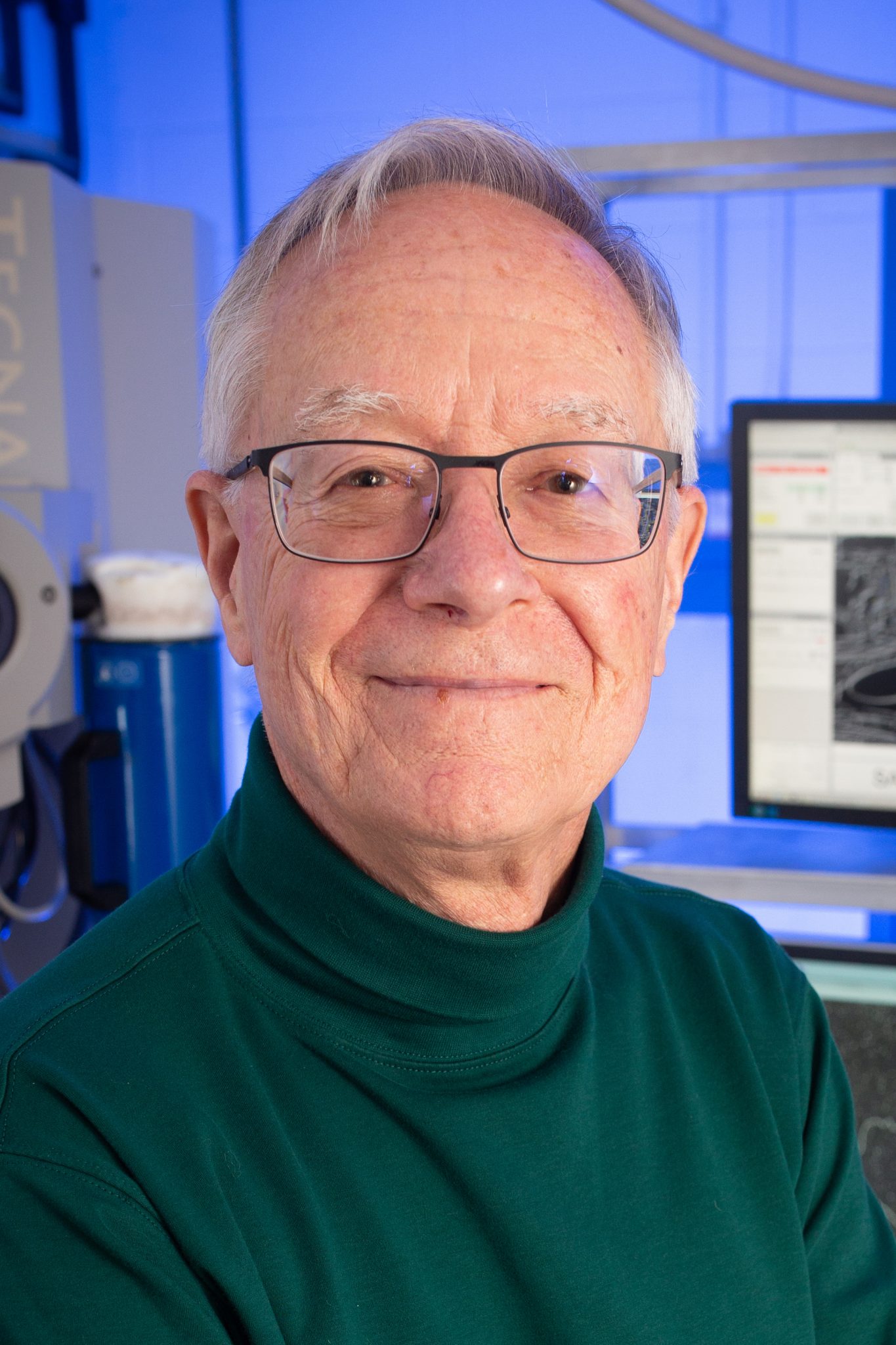 Jack Griffith合作论文数Lineberger Comprehensive Cancer Center, School of Medicine, University of North Carolina at Chapel Hill;Department of Microbiology and Immunology, University of North Carolina at Chapel Hill1David Toorchen合作论文数1Randy J. Thresher合作论文数1




