An intense laser pulse focused onto a plasma can excite nonlinear plasma waves. Under appropriate conditions, electrons from the background plasma are trapped in the plasma wave and accelerated to ultra-relativistic velocities. This scheme is called a laser wakefield accelerator. In this work, we present results from a laser wakefield acceleration experiment using a petawatt-class laser to excite the wakefields as well as nanoparticles to assist the injection of electrons into the accelerating phase of the wakefields. We find that a 10-cm-long, nanoparticle-assisted laser wakefield accelerator can generate 340 pC, 10 ± 1.86 GeV electron bunches with a 3.4 GeV rms convolved energy spread and a 0.9 mrad rms divergence. It can also produce bunches with lower energies in the 4–6 GeV range.
On December 5, 2022, an indirect drive fusion implosion on the National Ignition Facility (NIF) achieved a target gain G_{target} of 1.5. This is the first laboratory demonstration of exceeding "scientific breakeven" (or G_{target}>1) where 2.05 MJ of 351 nm laser light produced 3.1 MJ of total fusion yield, a result which significantly exceeds the Lawson criterion for fusion ignition as reported in a previous NIF implosion [H. Abu-Shawareb et al. (Indirect Drive ICF Collaboration), Phys. Rev. Lett. 129, 075001 (2022)PRLTAO0031-900710.1103/PhysRevLett.129.075001]. This achievement is the culmination of more than five decades of research and gives proof that laboratory fusion, based on fundamental physics principles, is possible. This Letter reports on the target, laser, design, and experimental advancements that led to this result.
We present experimental observation of above-threshold ionization (ATI) electrons produced by ionization of the neon K shell in a laser field where intensity exceeds 10(20) W/cm(2). An array of plastic scintillating calorimeter detectors was used to measure the high-energy electrons at four angles in the laser forward direction. Coarse energy resolution was obtained using aluminum filters of several thicknesses to block lower-energy electrons. A threshold intensity around 2 x 10(20) W/cm(2) is observed for production of energetic ATI electrons in the laser forward direction, with maximum electron energy exceeding 10 MeV. L-shell electrons with energies <1.4 MeV are scattered farther forward along the laser direction than expected. We present comparisons of the measured total electron energies to the predictions of Monte Carlo models employing the ADK-PPT ionization model and the Augst barrier suppression ionization model.
We present measurements of integrated electron energies produced by above-threshold ionization (ATI) of neon in a laser field with intensity exceeding 10$^{20}$ W/cm$^{2}$. We observe electrons with energy exceeding 10 MeV ejected in the laser forward direction above a threshold intensity of $2 \times 10^{20}$ W/cm$^{2}$. We compare to ATI models using both tunneling (ADK-PPT) and barrier suppression ionization and observe the onset of ATI at a higher threshold intensity than predicted by these models.
We present the first experimental observation of above-threshold ionization (ATI) electrons produced by ionization of the neon K-shell in a laser field where intensity exceeds 10$^{20}$ W/cm$^{2}$. An array of plastic scintillating calorimeter detectors was used to measure the high-energy electrons at four angles in the laser forward direction. Coarse energy resolution was obtained using aluminum filters of several thicknesses to block lower-energy electrons. A threshold intensity around $2 \times 10^{20}$ W/cm$^{2}$ is observed for production of energetic ATI electrons in the laser forward direction, with maximum electron energy exceeding 10 MeV. L-shell electrons with energies<1.4 MeV are scattered further forward along the laser direction than expected. We present comparisons of the measured total electron energies to the predictions of a Monte Carlo models employing the ADK-PPT ionization model and the Augst barrier suppression ionization model.
The interaction of an intense laser with a solid foil target can drive [Formula: see text] TV/m electric fields, accelerating ions to MeV energies. In this study, we experimentally observe that structured targets can dramatically enhance proton acceleration in the target normal sheath acceleration regime. At the Texas Petawatt Laser facility, we compared proton acceleration from a [Formula: see text] flat Ag foil, to a fixed microtube structure 3D printed on the front side of the same foil type. A pulse length (140-450 fs) and intensity ((4-10) [Formula: see text] W/cm[Formula: see text]) study found an optimum laser configuration (140 fs, 4 [Formula: see text] W/cm[Formula: see text]), in which microtube targets increase the proton cutoff energy by 50% and the yield of highly energetic protons ([Formula: see text] MeV) by a factor of 8[Formula: see text]. When the laser intensity reaches [Formula: see text] W/cm[Formula: see text], the prepulse shutters the microtubes with an overcritical plasma, damping their performance. 2D particle-in-cell simulations are performed, with and without the preplasma profile imported, to better understand the coupling of laser energy to the microtube targets. The simulations are in qualitative agreement with the experimental results, and show that the prepulse is necessary to account for when the laser intensity is sufficiently high.
Intense lasers interacting with solid foils can drive ~TV/m electric fields, accelerating ions to MeV energies. Simulations and experimental data [1] , [2] show that the ion energies and numbers can increase using structured targets. In this study, we experimentally observe that structured targets can dramatically enhance proton acceleration in the target normal sheath acceleration (TNSA) regime. At the Texas Petawatt Laser, we compared proton acceleration from a 1µm Ag flat foil, to microtube structures 3D printed on the front side of Ag foils. A pulse length (140 – 500 fs) and intensity ( [6 – 20] ×10 20 W/cm 2 ) study optimized laser parameters, where microtube targets increase the proton cutoff energy by ~2× and the energetic proton yield (>1.5 MeV) by ~3×. Radiation-hydrodynamic simulations indicate that for sufficiently high laser energy, the pre-pulse shutters the microtubes with an overcritical plasma, damping their performance, in good agreement with the experimental optimum. 2D EPOCH simulations are performed, with and without the pre-plasma profile imported, to better understand the coupling of laser energy to the microtube targets.
We describe results of an experiment conducted on the Texas Petawatt Laser using compound parabolic concentrators affixed to Cu targets. We demonstrate enhancements in the peak proton energy and measured dose compared to flat targets.
In an electron wakefield accelerator, an intense laser pulse or charged particle beam excites plasma waves. Under proper conditions, electrons from the background plasma are trapped in the plasma wave and accelerated to ultra-relativistic velocities. We present recent results from a proof-of-principle wakefield acceleration experiment that reveal a unique synergy between a laser-driven and particle-driven accelerator: a high-charge laser-wakefield accelerated electron bunch can drive its own wakefield while simultaneously drawing energy from the laser pulse via direct laser acceleration. This process continues to accelerate electrons beyond the usual decelerating phase of the wakefield, thus reaching much higher energies. We find that the 10-centimeter-long nanoparticle-assisted wakefield accelerator can generate 340 pC, 10.4+-0.6 GeV electron bunches with 3.4 GeV RMS convolved energy spread and 0.9 mrad RMS divergence. It can also produce bunches with lower energy, a few percent energy spread, and a higher charge. This synergistic mechanism and the simplicity of the experimental setup represent a step closer to compact tabletop particle accelerators suitable for applications requiring high charge at high energies, such as free electron lasers or radiation sources producing muon beams.
For more than half a century, researchers around the world have been engaged in attempts to achieve fusion ignition as a proof of principle of various fusion concepts. As recently reported, a burning plasma state, where the alpha-heating in the plasma is the primary source of heating, was achieved in laboratory experiments. Following the Lawson criterion, an ignited plasma is one where the fusion heating power is high enough to overcome all the physical processes that cool the fusion plasma, creating a positive thermodynamic feedback loop with rapidly increasing temperature. In inertially confined fusion, ignition is a state where the fusion plasma can begin ``burn propagation'' into surrounding cold fuel, enabling the possibility of high energy gain. While ``scientific breakeven'' (i.e. unity target gain) has not yet been achieved, this talk reports the first controlled fusion experiment on the National Ignition Facility to produce capsule gain greater than unity (here 5.8) and reach ignition by many different formulations of the Lawson criterion. In the talk, we will discuss some key basic physics inertial confinement fusion (ICF) principles behind the burning plasma and ignition results as well as discuss future challenges.
We report on the increase in the accelerated electron number and energy using compound parabolic concentrator (CPC) targets from a short-pulse (∼150 fs), high-intensity (>10^{18} W/cm^{2}), and high-contrast (∼10^{8}) laser-solid interaction. We report on experimental measurements using CPC targets where the hot-electron temperature is enhanced up to ∼9 times when compared to planar targets. The temperature measured from the CPC target is 〈T_{e}〉=4.4±1.3 MeV. Using hydrodynamic and particle in cell simulations, we identify the primary source of this temperature enhancement is the intensity increase caused by the CPC geometry that focuses the laser, reducing the focal spot and therefore increasing the intensity of the laser-solid interaction, which is also consistent with analytic expectations for the geometrical focusing.
Radiographic imaging with x-rays and protons is an omnipresent tool in basic research and applications in industry, material science and medical diagnostics. The information contained in both modalities can often be valuable in principle, but difficult to access simultaneously. Laser-driven solid-density plasma-sources deliver both kinds of radiation, but mostly single modalities have been explored for applications. Their potential for bi-modal radiographic imaging has never been fully realized, due to problems in generating appropriate sources and separating image modalities. Here, we report on the generation of proton and x-ray micro-sources in laser-plasma interactions of the focused Texas Petawatt laser with solid-density, micrometer-sized tungsten needles. We apply them for bi-modal radiographic imaging of biological and technological objects in a single laser shot. Thereby, advantages of laser-driven sources could be enriched beyond their small footprint by embracing their additional unique properties, including the spectral bandwidth, small source size and multi-mode emission.
We report on the status of the re-commissioning of a high energy OPCPA laser system with programmable spectrum that serves as a frontend for a 10 PW laser at ELI-Beamlines. The OPCPA chain was developed by a consortium of National Energetics and Ekspla along with scientists of ELI-Beamlines.1 The laser system, consisting of three picosecond OPCPA stages, pulse cleaner, Offner stretcher, and 5 nanosecond OPCPA stages pumped by Nd:YAG lasers with programmable pulse shape (NL944, Ekspla), allows for precise spectral shaping while achieving high nonlinear conversion efficiency. Employing a subsequent Nd:glass power amplifiers (PA), the system was demonstrated to yield>1 kJ of energy, while maintaining broad spectrum of > 13 nm (FWHM). After recommissioning the OPCPA frontend in Dolní Břežany, an output energy of 4.3 J, flat beam-profile and good far-field quality has been demonstrated. The spectral shape has been optimized to support > 15 nm bandwidth and >1.5 kJ, consistent with 10 PW operation of the fully integrated laser system after compression.
Calibrated diagnostics for energetic particle detection allow for the systematic study of charged particle sources. The Fujifilm BAS-TR imaging plate (IP) is a reusable phosphorescent detector for radiation applications such as x-ray and particle beam detection. The BAS-TR IP has been absolutely calibrated to many low-Z (low proton number) ions, and extending these calibrations to the mid-Z regime is beneficial for the study of laser-driven ion sources. The Texas Petawatt Laser was used to generate energetic ions from a 100 nm titanium foil, and charge states Ti10+ through Ti12+, ranging from 6 to 27 MeV, were analyzed for calibration. A plastic detector of CR-39 with evenly placed slots was mounted in front of the IP to count the number of ions that correspond with the IP levels of photo-stimulated luminescence (PSL). A response curve was fitted to the data, yielding a model of the PSL signal vs ion energy. Comparisons to other published response curves are also presented, illustrating the trend of PSL/nucleon decreasing with increasing ion mass.
We reconstruct spectra of secondary x-rays generated from a 500 MeV - 2 GeV laser plasma electron accelerator. A compact (7.5 $\times$ 7.5 $\times$ 15 cm), modular x-ray calorimeter made of alternating layers of absorbing materials and imaging plates records the single-shot x-ray depth-energy distribution. X-rays range from few-MeV inverse Compton scattered x-rays to $\sim$100 MeV average bremsstrahlung energies and are characterized individually by the same calorimeter detector. Geant4 simulations of energy deposition from mono-energetic x-rays in the stack generate an energy-vs-depth response matrix for the given stack configuration. A fast, iterative reconstruction algorithm based on analytic models of inverse Compton scattering and bremsstrahlung photon energy distributions then unfolds x-ray spectra in $\sim10$ seconds.
When an ultrashort laser pulse is tightly focused to a size approaching its central wavelength, the properties of the focused spot diverge from the diffraction-limited case. Here, we report on this change in behavior of a tightly focused petawatt-class laser beam by an f/1 off-axis parabolic mirror (OAPM). Considering the effects of residual aberration, the spatial profile of the near-field, and pointing error, we estimate the deviation in peak intensities of the focused spot from the ideal case. We verify that the estimated peak intensity values are within an acceptable error range of the measured values. With the added uncertainties in target alignment, we extend the estimation to infer on-target peak intensities of ≥1022 W/cm2 for a target at the focal plane of this f/1 OAPM.
 Todd Ditmire合作论文数Department of Physics, College of Natural Sciences, The University of Texas at Austin;Institute for Fusion Studies, The University of Texas at Austin;Center for High Energy Density Physics, The University of Texas at Austin;National Energetics70
 Gilliss Dyer合作论文数SLAC Natl Accelerator Lab, Linac Coherent Light Source58
 Erhard Gaul合作论文数57H. J. Quevedo合作论文数39Mikael Martinez合作论文数34m spinks合作论文数Univ Texas Austin, Dept Phys, Austin, TX 78712 USA30Bernstein Aaron合作论文数30Bjorn Hegelich合作论文数19Zgadzaj Rafal合作论文数18
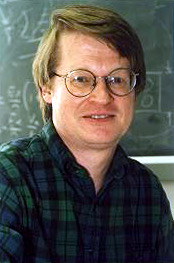 Michael Downer合作论文数Department of Physics, College of Natural Sciences, The University of Texas at Austin;Center for High Energy Density Physics, The University of Texas at Austin;Institute for Fusion Studies, The University of Texas at Austin18
 Neil Fazel合作论文数14
 Yen-Yu Chang合作论文数Cornell Tech, Cornell University14
 Woosuk Bang合作论文数14Watson Henderson合作论文数14
 Hai-En Tsai合作论文数Accelerator Technology & Applied Physics Division, Berkeley Lab Laser Accelerator Center, Lawrence Berkeley National Laboratory13
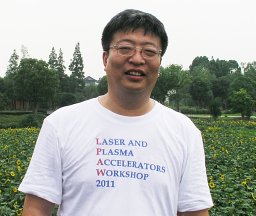 Xiaoming Wang合作论文数Department of Physics, The University of Texas12Marina Barbui合作论文数Laboratori Nazionali di Legnaro, viale dell'Università 2 INFN12J. Gordon合作论文数11
 Edward Mccary合作论文数Univ Texas Austin, Ctr High Energy Dens Sci, Austin, TX 78712 USA11
 Gennady Shvets合作论文数Laboratory of Plasma Studies, Cornell University;Department of Applied and Engineering Physics, College of Engineering, Cornell University11Aldo Bonasera合作论文数11
 Korzekwa R合作论文数10Katarzyna Schmidt合作论文数Institute of Physics;University of Silesia;Institute of Physics, University of Silesia10
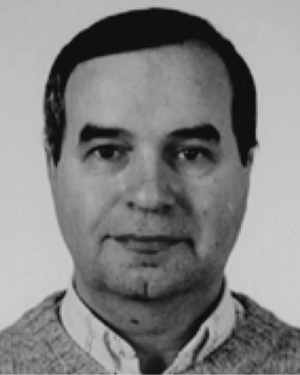 Vladimir Khudik合作论文数Physics and Astronomy Department, University of Toledo;Department of Physics, The University of Texas at Austin10
 Fabrizio Consoli合作论文数ENEA10t borger合作论文数9
 Shinhyon Yi合作论文数9Sachie Kimura合作论文数Department of Physics;Tohoku University;Department of Physics, Tohoku University9
 Joseph B. Natowitz合作论文数Texas A&M University9
 H. Smith合作论文数Ctr High Energy Dens Sci, Univ Texas Austin8Bruce S合作论文数8Kris Hagel合作论文数8
 Chih-Hao Pai (白植豪)合作论文数High-Field Physics and Ultrafast Technology Laboratory, Department of Physics, National Central University8P. Andreoli合作论文数7M. Barbarino合作论文数7
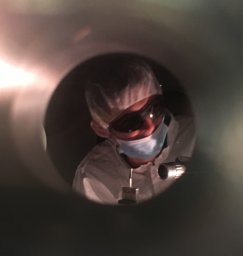 Andrew Yandow合作论文数Dept Phys, Univ Texas Austin7
 Edison Liang合作论文数Department of Physics and Astronomy, Wiess School of Natural Sciences, Rice University7Zhang Xi合作论文数7
 Marco Mazzocco合作论文数7
 Toma Toncian合作论文数Helmholtz-Zentrum Dresden-Rossendorf7Michael Spinks合作论文数6Kristina Serratto合作论文数6Alexander Henderson合作论文数6
 Hui Chen (陈浩哲)合作论文数6Petr Chaguine合作论文数6
 Christopher Mcguffey合作论文数6
 Zhengyan Li (李政言)合作论文数School of Optical and Electronic Information, Huazhong University of Science and Technology6
 Riccardo De angelis合作论文数6N. Riley合作论文数6




