We characterize all compact embedded stable minimal capillary surfaces with capillary angle close to either 0 or π that are supported on a complete embedded minimal surface with finite total curvature that is not an affine plane. Moreover, we characterize all compact embedded weakly stable minimal capillary surfaces with capillary angle close to either 0 or π that are supported on a closed surface whose mean curvature is positive and has no degenerate maxima. An important ingredient in our work are curvature estimates for sequences of weakly stable minimal capillary surfaces with capillary angles tending to 0 or π that enable us to analyze the tangential limits of such sequences at suitable scales.
We construct a sequence {Sigma(l)}(infinity)(t=1) of closed, axially symmetric surfaces Sigma(l )subset of R-3 that converges to unit sphere in W-2,W-p boolean AND C-1 for every p is an element of [1, infinity) and such that, for every l, integral(Sigma l ) H-Sigma l - root 16 pi |Sigma(l) | < 0, where H Sigma(l ) is the mean curvature of Sigma(l ).This shows that unless additional convexity are imposed, the Minkowski inequality with optimal constant fails even for perturbations of a round sphere that are small in W-2,W-p boolean AND C-1.
We prove that weakly stable solutions of Serrin's problem are compact and therefore round balls.
Let (M, g) be an n-dimensional asymptotically flat Riemannian manifold with nonnegative scalar curvature that admits a noncompact area-minimizing hypersurface Sigma subset of M. In the case where n = 3, O. Chodosh and the first-named author have proven that (M, g) is necessarily isometric to Euclidean space, confirming a conjecture of R. Schoen. In this paper, we extend this result to dimension 3 < n <= 7 provided that Sigma arises as a limit of isoperimetric surfaces. By contrast, we prove that when 3 < n <= 7, there is no such result for general noncompact area-minimizing Sigma subset of M, even when additional assumptions on the stability of Sigma are imposed.
Let (M, g) be an asymptotically flat Riemannian 3-manifold. We provide a short new proof based on Lyapunov-Schmidt reduction of the existence of an asymptotic foliation of (M, g) by constant mean curvature spheres. In the case where the scalar curvature of (M, g) is non-negative, we prove that the leaves of this foliation are the only large stable constant mean curvature spheres that enclose the center of (M, g). This had been shown previously under more restrictive assumptions and using a different method by S. Ma. We also include a new proof of the fact that the geometric center of mass of the foliation agrees with the Hamiltonian center of mass of (M, g).
We apply the method of Lyapunov-Schmidt reduction to study large area-constrained Willmore surfaces in Riemannian 3-manifolds asymptotic to Schwarzschild. In particular, we prove that the end of such a manifold is foliated by distinguished area-constrained Willmore spheres. The leaves are the unique area-constrained Willmore spheres with large area, non-negative Hawking mass, and distance to the center of the manifold at least a small multiple of the area radius. Unlike previous related work, we only require that the scalar curvature satisfies mild asymptotic conditions. We also give explicit examples to show that these conditions on the scalar curvature are necessary.
The Riemannian Penrose inequality is a fundamental result in mathematical relativity. It has been a long-standing conjecture of G. Huisken that an analogous result should hold in the context of extrinsic geometry. In this paper, we resolve this conjecture and show that the exterior mass m of an asymptotically flat support surface S⊂ℝ^3 with nonnegative mean curvature and outermost free boundary minimal surface D is bounded in terms of m≥√(|D|/π). If equality holds, then the unbounded component of S∖∂ D is a half-catenoid. In particular, this extrinsic Penrose inequality leads to a new characterization of the catenoid among all complete embedded minimal surfaces with finite total curvature. To prove this result, we study minimal capillary surfaces supported on S that minimize the free energy and discover a quantity associated with these surfaces that is nondecreasing as the contact angle increases.
Persona development techniques are a well-established method to create relatable descriptions of representatives of target users of digital systems. In the field of education, research on learner characteristics has yielded comprehensive results that can help advance educational approaches. Nonetheless, these results often remain abstract and distant for researchers and practitioners. Personas offer a bridge to make this knowledge more accessible and to facilitate user-centred design processes. This study focuses on creating personas of mathematics school students to ease such accessibility. These personas are constructed based on an understanding of learners’ goals, needs, challenges and problems, joys, fears, feelings and emotions, and strategies. Data collection was conducted through a multifaceted approach, encompassing qualitative and quantitative data from web surveys, think-aloud protocols, and interviews. The target demographic comprised upper secondary school mathematics students in Austria. We found five distinct patterns of characteristics prevalent in this target group. The patterns of characteristics reflected by the personas complement the scientific body of knowledge obtained from traditional approaches investigating characteristics and needs of learners. In practical terms, these personas empower the development of user-centred digital systems, learning materials, and lessons, thus fostering an enriched educational experience for mathematics students.
Abstract Background To master the secondary–tertiary transition into fields of science, technology, engineering, and mathematics (STEM), academic self-beliefs play a pivotal role, especially those related to learning mathematics. The framework of expectancy-value theory has been used widely in primary and secondary education and partly in tertiary education to assess the self-beliefs of students in terms of expectancy of success and perceived value of mathematics. Based on this framework, we measured how the intrinsic value, the attainment value, the utility value, and the cost of learning mathematics as well as the expectancy of success when learning mathematics developed during the secondary–tertiary transition of students into STEM fields. Data were collected in a quantitative repeated-measures questionnaire study with two measurement points (measurement point 1: n = 710, measurement point 2: n = 487, listwise: n = 409). We conducted a latent profile analysis to identify the prevalent patterns of mathematics self-beliefs, called profiles, at each of the two measurement points. We studied the relation of these profiles to prior education, achievement at school, and achievement at university. By performing a latent transition analysis, we determined the probabilities of transitioning from the initial profiles to the posterior profiles. Results Our analysis revealed four distinct prevalent profiles at each measurement point, ranging from highly favorable (i.e., high expectancy, high value, low cost) to highly unfavorable with respect to learning mathematics. The profiles with favorable manifestations remained stable over time, while those with undesirable manifestations deteriorated further. We observed a sharp increase in cost across all profiles. Prior achievement correlated strongly with profile membership. Conclusions The expenditure of time and energy increased sharply during the secondary–tertiary transition, independently of the students’ initial motivational patterns. The perceived utility of mathematics for potential future careers was shown to be a significant source of motivation. The role of mathematics in future careers should thus be made visible in university teaching. Keeping the detrimental development of initially undesirable motivational profiles in mind, university teachers should create ample opportunities for students to gain a sense of accomplishment.
We discuss several classical and recent proofs of the isoperimetric inequality and the Sobolev inequality.
Let $(M,g)$ be a Riemannian $3$-manifold that is asymptotic to Schwarzschild. We study the existence of large area-constrained Willmore spheres $\Sigma \subset M$ with non-negative Hawking mass and inner radius $\rho$ dominated by the area radius $\lambda$. If the scalar curvature of $(M,g)$ is non-negative, we show that no such surfaces with $\log \lambda \ll \rho$ exist. This answers a question of G. Huisken.
Building on previous works of Bray, of Miao, and of Almaraz, Barbosa, and de Lima, we develop a doubling procedure for asymptotically flat half-spaces ( M , g ) with horizon boundary Σ⊂ M and mass m∈ℝ . If 3≤ (M)≤ 7 , ( M , g ) has non-negative scalar curvature, and the boundary ∂ M is mean-convex, we obtain the Riemannian Penrose-type inequality m≥( 1/2) ^n/n-1 ( |Σ |/ω _n-1) ^n-2/n-1 as a corollary. Moreover, in the case where ∂ M is not totally geodesic, we show how to construct local perturbations of ( M , g ) that increase the scalar curvature. As a consequence, we show that equality holds in the above inequality if and only if the exterior region of ( M , g ) is isometric to a Schwarzschild half-space. Previously, these results were only known in the case where (M)=3 and Σ is a connected free boundary hypersurface.
We give an alternative proof of the Michael-Simon-Sobolev inequality using techniques from optimal transport. The inequality is sharp for submanifolds of codimension $2$.
The transition from secondary to tertiary education is an exciting and yet challenging event in the educational biography of students. During this transition, students often meet with unexpected challenges, which may cause them to drop out from their degree program. Many universities offer bridging courses or longer-term interventions to support their incoming students in this period. To examine the effect of a bridging course designed to reduce gaps in prior mathematical knowledge, promote social-emotional well-being, and foster learning skills, we implement a repeated-measures intervention study. We analyze the outcomes of the intervention, which features tutors with special training, autonomous choice of topic areas, peer learning, and materials for self-directed learning. We measure the development of motivational beliefs reflecting the will to learn (achievement goals, satisfaction of basic psychological needs, implicit theories, self-efficacy) and the skills to learn (reactions to errors, self-regulated learning) at the secondary-tertiary transition. These aspects are captured at multiple measurement points among students (N = 679) who participate in the bridging course (intervention group) and those who do not (control group). The intervention boosts motivational beliefs related to social embeddedness and learning skills in the short term. The observed decrease in autonomy, competence, and self-efficacy might be explained by higher standards that students use for their self-assessment in the new peer group. In the long term, all aspects of the will to learn, except for social relatedness, show stable to strongly negative developments in both groups. Among those students who do not participate in the bridging course, mostly strongly negative developments are observed. The results suggest that the peer tutoring strategy is highly effective and the need for longer-term interventions to uphold the positive short-term effects.
To benefit from the quickly expanding range of new possibilities of technology-enhanced education, school systems, schools, and teachers need to adapt quickly. Conversely, the needs of students and teachers in a technology-enhanced classroom require technology developers to provide and improve suitable technologies. In this paper, we aim to show how to make the professional knowledge of mathematics teachers accessible to developers of technologies and also to teacher trainers and trainees by the use of student personas, i.e., portraits of archetypical students with particular characteristics and needs. We have collected qualitative data from pre-service and in-service mathematics teachers in Austrian academic upper secondary schools about the characteristics and needs of their students. We have analysed these data using a grounded theory approach to derive demands of students on technology-enhanced learning environments (TELEs). We have identified and presented five personas, each with specific demands on TELEs, to represent this target group. By introducing this approach that combines techniques from mathematics education research and from user experience research, we are able to represent user groups of a mathematics technology-enhanced learning environment in a more relatable way than was previously possible. These relatable representations of students in Austrian academic upper secondary schools could be of particular importance for developers of technology-enhanced learning environments for teaching and learning mathematics. The methodology presented in this paper is adaptable to other contexts.
We construct a sequence {Σ_ℓ}_ℓ=1^∞ of closed, axially symmetric surfaces Σ_ℓ⊂ℝ^3 that converges to the unit sphere in W^2,p∩ C^1 for every p∈[1,∞) and such that, for every ℓ, ∫_Σ_ℓH_Σ_ℓ-√(16 π |Σ_ℓ|)<0 where H_Σ_ℓ is the mean curvature of Σ_ℓ. This shows that the Minkowski inequality with optimal constant fails even for perturbations of a round sphere that are small in W^2,p∩ C^1 unless additional convexity assumptions are imposed.
Information technology plays an increasingly prominent role in our personal and professional lives. It also plays an important role in schools, and especially in mathematics education. To realise their full potential in education, technologies should be designed in a way that addresses the characteristics of the target students. In the context of learning mathematics, students often experience anxiety with regard to the content that needs to be learnt; therefore, this work considers mathematics anxiety as a characteristic that should be particularly relevant when designing technologies that assist with teaching and learning mathematics. The development of personas, i.e., prototypical and simplified user descriptions, is a widely used tool in user experience (UX) research that supports design processes. In this methodological paper, we combine this UX methodology with a grounded theory approach. This combination of methodologies could facilitate the establishment of guidelines for developing personas representing secondary school mathematics students, which constitutes the goal of this paper. We review existing persona development techniques in other fields and adapt them to the context of secondary mathematics education using qualitative secondary data. Our aim is to provide a research approach that produces a better understanding of students' characteristics, needs, and fears. Despite limitations in terms of the amount of data included in developing and piloting this methodology, this work forms the basis for increasing the usability of educational technologies and for adapting them to individual learning styles to reduce mathematics anxiety.
Let (M, g) be a complete Riemannian 3-manifold that is asymptotic to Schwarzschild with positive mass and whose scalar curvature vanishes. We unconditionally characterize the large, embedded stable constant mean curvature (CMC) spheres in (M, g).
 Thomas Korber合作论文数Fac Math, Univ Vienna11
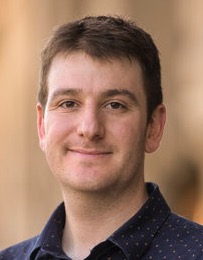 Otis Chodosh合作论文数Department of Mathematics, School of Humanities & Sciences, Stanford University10
 Martin Mayerhofer合作论文数Dept Math, Univ Vienna7
 Jan Metzger合作论文数7
 Simon Brendle合作论文数Department of Mathematics, Columbia University6
 Zsolt Lavicza合作论文数4
 Robert Weinhandl合作论文数Johannes Kepler University of Linz4
 Markus Hohenwarter合作论文数Center for Research in Science, Technology, Engineering, and Mathematics, Florida State University Florida4
 Tony Houghton合作论文数Johannes Kepler University of Linz3
 Marko Luftenegger合作论文数University of Vienna3Pengzi Miao合作论文数3
 Hubert Lewis Bray合作论文数3
 Xiaodong Wang合作论文数2
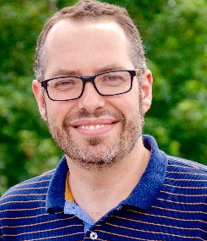 André Arroja Neves合作论文数Department of Mathematics, University of Chicago2Lan-Hsuan Huang合作论文数2
 Greg Galloway合作论文数Department of Mathematics, College of Arts and Sciences, University of Miami;Simons Laufer Mathematical Sciences Institute2
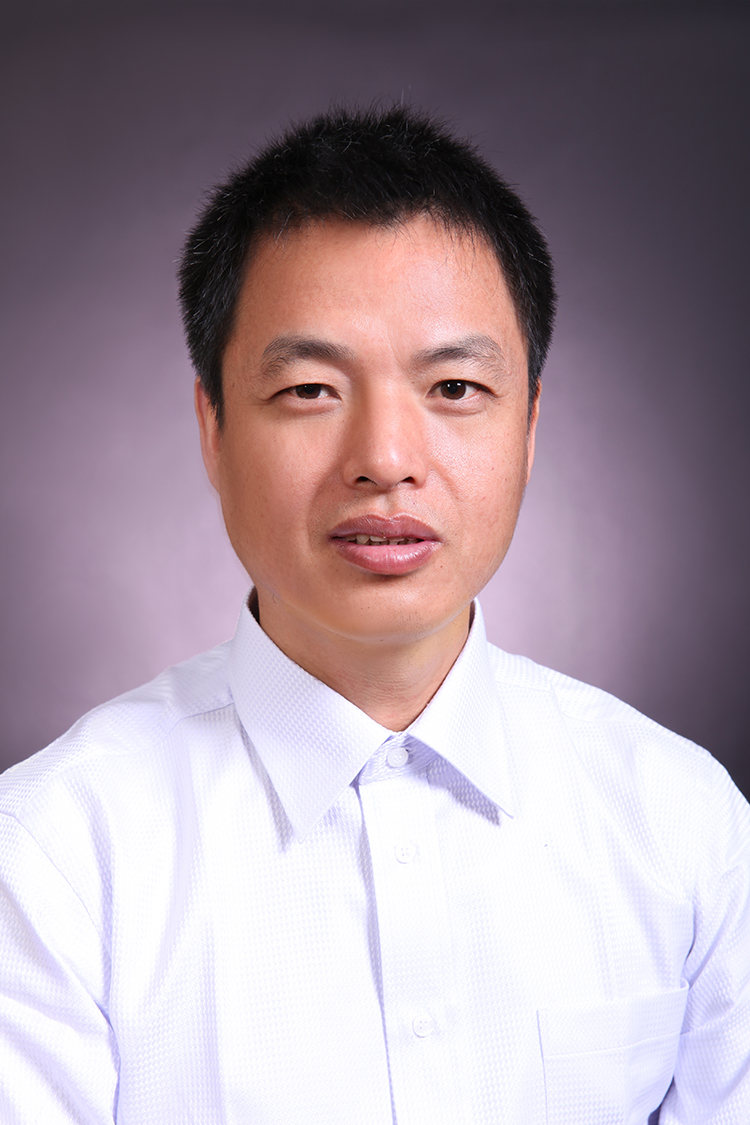 Yuguang Shi (史宇光)合作论文数School of Mathematical Sciences, Peking University2vlad moraru合作论文数1
 Branko Anđić合作论文数Dept STEM Educ, Johannes Kepler Univ Linz1
 Alexander Volkmann合作论文数Sch Business & Econ, Humboldt Univ1Haobin Yu合作论文数1
 Lars Andersson (拉尔斯·安德森)合作论文数Beijing Institute of Mathematical Sciences and Applications1
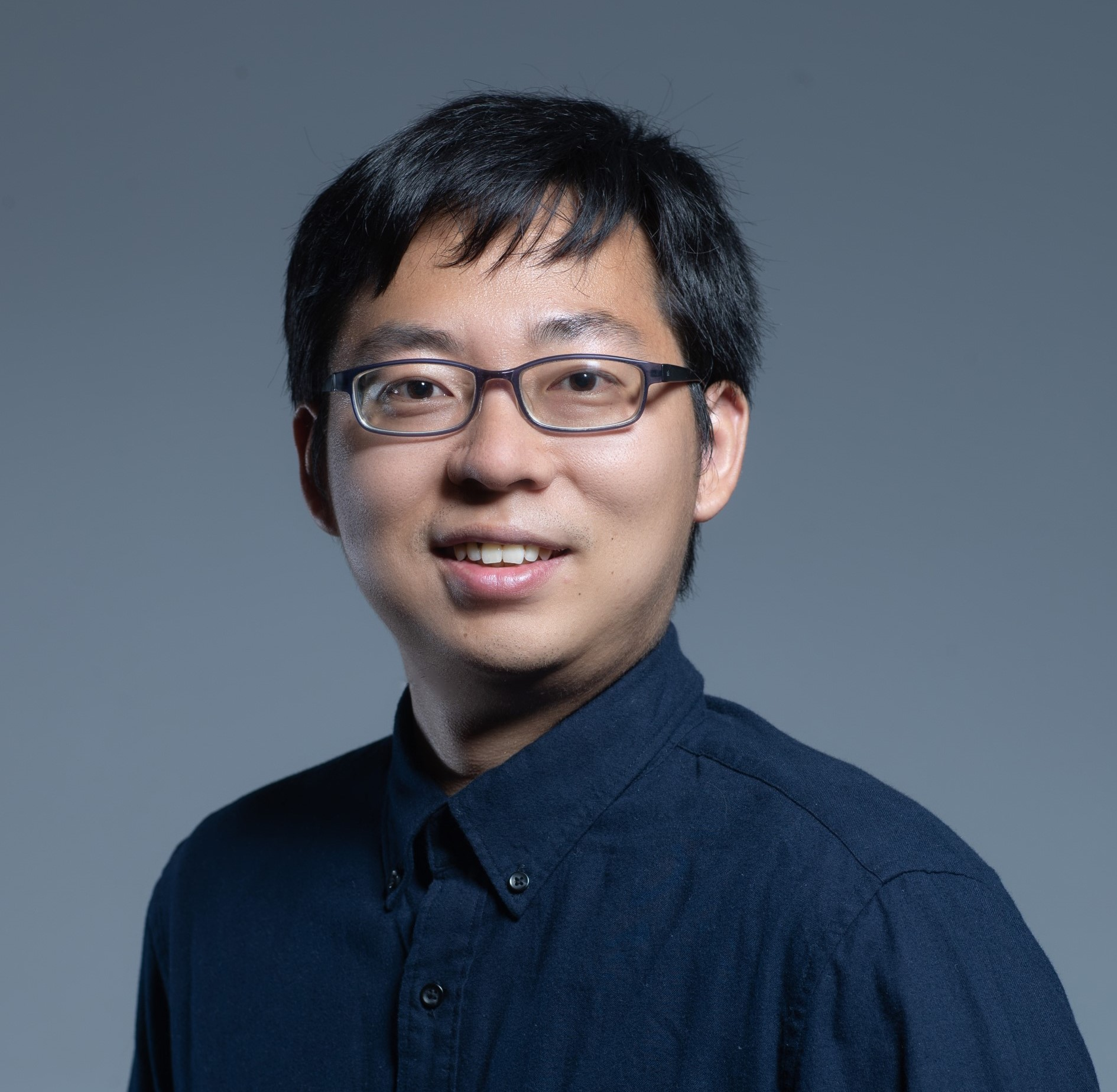 Jintian Zhu (朱锦天)合作论文数School of Science, Westlake University1
 Abraao Mendes合作论文数Instituto de Matemática, Universidade Federal de Alagoas1Dan A. Lee合作论文数City University of New York1
 Ailana Fraser合作论文数Department of Mathematics, Faculty of Science, The University of British Columbia1
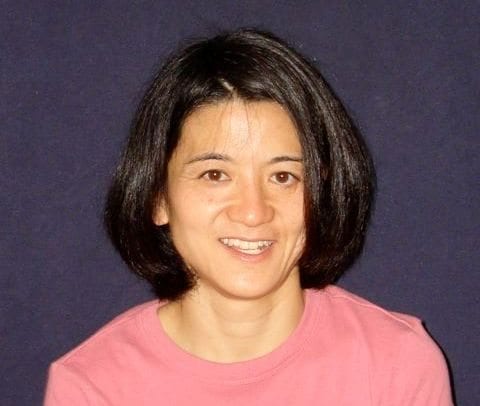 Chikako Mese合作论文数Department of Mathematics, Krieger School of Arts & Sciences, Johns Hopkins University1Alessandro Carlotto合作论文数Department of Mathematics, Eidgenössische Technische Hochschule Zürich1Felix Schulze合作论文数1Justin Corvino合作论文数1
 Daniel Pollack合作论文数Department of Mathematics, University of Washington1
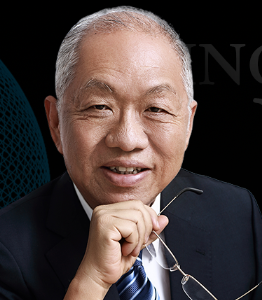 Shing-Tung Yau (丘成桐)合作论文数Yau Mathematical Sciences Center, Tsinghua University;Department of Mathematics, Harvard University;The Institute of Mathematical Sciences, The Chinese University of Hong Kong1
 Karen K. Uhlenbeck合作论文数Department of Mathematics, University of Texas at Austin;School of Mathematics, Institute for Advanced Study1
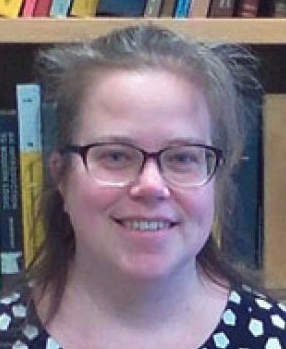 Christina Sormani合作论文数Department of Mathematics, Lehman College, City University of New York;Graduate Center, City University of New York1
 Rob Kusner合作论文数Dept. of Mathematics, University of Massachusetts1
 William Minicozzi合作论文数Department of Mathematics, Massachusetts Institute of Technology1
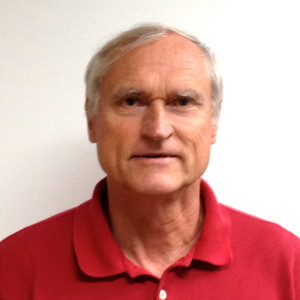 Richard Schoen合作论文数Department of Mathematics, Stanford University1




