The Amah Mutsun Tribal Band (AMTB) has stewarded terrestrial and aquatic resources in central California since time immemorial. Successive waves of European and Euro-American colonization have sought to suppress and erode AMTB's relationship with land, stewardship, and natural resources. The Tribe has mobilized anthropological and historical ecological data that demonstrate the effect of long-term Indigenous stewardship through cultural burning and other resource stewardship strategies. These Indigenous landscape legacies have influenced ecosystem structure and the sustainability of culturally important species. This paper focuses on the process of bridging archaeological research with contemporary stewardship efforts related to protecting, preserving, and caring for Tribal cultural heritage that exists from a landscape perspective. The collaborative research has helped clarify the record of Tribal relationships with the environment and how those relationships have changed due to colonial land use regimes. In doing so, we highlight how an archaeological research program can be a building point of access to ancestral places, which is a critical step in Tribal-led initiatives of restoring traditional resource management and ecological resilience of plant and animal life on public lands. In addition, we discuss the benefits and limitations of applying eco-archaeological research toward Tribal environmental stewardship.
Indigenous people have profoundly influenced terrestrial and marine ecosystems by modifying coastal habitats to increase the productivity of target species and altering local biotas through their harvesting practices. In some cases, these actions led to local resource depression, while in other instances, Indigenous people engaged with terrestrial and marine resources in sustainable ways, increasing the resilience of ecosystems. In this paper, we interrogate human-environmental relationships that span the last ∼7,000 years of Indigenous engagement with coastal resources on the central California coast. Through a historical ecological framework, we assess how Indigenous peoples interacted with terrestrial and marine ecosystems differently across space and through time. In the Middle Holocene, the region’s archaeology is typified by mobile populations using diverse terrestrial and marine resources. By the Late Holocene, Indigenous peoples intensified their economies towards a limited number of marine and terrestrial species. During this time, Indigenous people initiated sustained fire management practices that created habitat mosaics still reflected in the contemporary landscape. In the Late Holocene, people also developed resource harvesting strategies for California mussels and forage fishes geared towards long-term productivity.
Historical ecology has revolutionized our understanding of fisheries and cultural landscapes, demonstrating the value of historical data for evaluating the past, present, and future of Earth's ecosystems. Despite several important studies, Indigenous fisheries generally receive less attention from scholars and managers than the 17th-20th century capitalist commercial fisheries that decimated many keystone species, including oysters. We investigate Indigenous oyster harvest through time in North America and Australia, placing these data in the context of sea level histories and historical catch records. Indigenous oyster fisheries were pervasive across space and through time, persisting for 5000-10,000 years or more. Oysters were likely managed and sometimes "farmed," and are woven into broader cultural, ritual, and social traditions. Effective stewardship of oyster reefs and other marine fisheries around the world must center Indigenous histories and include Indigenous community members to co-develop more inclusive, just, and successful strategies for restoration, harvest, and management.
This paper summarizes over a decade of collaborative eco-archaeological research along the central coast of California involving researchers from the University of California, Berkeley, tribal citizens from the Amah Mutsun Tribal Band, and California Department of Parks and Recreation archaeologists. Our research employs remote sensing methods to document and assess cultural resources threatened by coastal erosion and geophysical methods to identify archaeological deposits, minimize impacts on sensitive cultural resources, and provide tribal and state collaborators with a suite of data to consider before proceeding with any form of invasive archaeological excavation. Our case study of recent eco-archaeological research developed to define the historical biogeography of threatened and endangered anadromous salmonids demonstrates how remote sensing technologies help identify dense archaeological deposits, remove barriers, and create bridges through equitable and inclusive research practices between archaeologists and the Amah Mutsun Tribal Band. These experiences have resulted in the incorporation of remote sensing techniques as a central approach of the Amah Mutsun Tribal Band when conducting archaeology in their traditional territories.
In addressing the question of how and why Indigenous people initiated diverse kinds of engagements with colonial agents, this chapter highlights two crucial variables that should be considered in any archaeological investigation of colonialism. One concerns Indigenous sociopolitical and economic organizations, including dimensions such as polity size, polity structure, landscape management practices, and regional sociopolitical relationships. The other involves the various permutations of colonial programs that encroached on tribal lands, as exemplified by managerial, missionary, and settler colonies. A significant challenge in the study of colonialism is that Indigenous people did not encounter one type of colonial program over time but rather a plethora of colonial agents with divergent policies and practices. This chapter argues for archaeological investigations of colonialism that take a long-term perspective in examining the full range of colonial succession patterns that unfolded in tribal lands and how Native people created innovative strategies for mitigating colonialism and making the most of new technologies, trade connections, settlement arrangements, and economic opportunities. The chapter concludes with several examples of resourceful pathways that Native people initiated in their entanglements with colonial agents.
This paper summarizes over a decade of collaborative eco-archaeological research along the central coast of California involving researchers from the University of California, Berkeley, tribal citizens from the Amah Mutsun Tribal Band, and California Department of Parks and Recreation archaeologists. Our research employs remote sensing methods to document and assess cultural resources threatened by coastal erosion and geophysical methods to identify archaeological deposits, minimize impacts on sensitive cultural resources, and provide tribal and state collaborators with a suite of data to consider before proceeding with any form of invasive archaeological excavation. Our case study of recent eco-archaeological research developed to define the historical biogeography of threatened and endangered anadromous salmonids demonstrates how remote sensing technologies help identify dense archaeological deposits, remove barriers, and create bridges through equitable and inclusive research practices between archaeologists and the Amah Mutsun Tribal Band. These experiences have resulted in the incorporation of remote sensing techniques as a central approach of the Amah Mutsun Tribal Band when conducting archaeology in their traditional territories.
Archaeological sites represent long-term biological repositories, relevant for understanding ancient economies and ways of life that can provide historical baseline data for contemporary conservation biology, restoration ecology, and fisheries management. Small-scale excavations at nine archaeological sites within Point Reyes National Seashore, on the central California coast, led to the recovery of a large assemblage of fish remains from deposits dated from 800 to 770 cal BC to the historical era. These assemblages contained over 9000 fish remains identified to at least a family. Applying quantitative analysis and morphometric studies, these data suggest the indigenous fishery of Point Reyes in the homeland of the Coast Miwok people was directed toward the acquisition of mass-captured forage fish from the families Clupeidae, Atherinopsidae, and Engraulidae in addition to Embiotocidae. Perceived declines in contemporary forage fish populations within Point Reyes National Seashore, specifically Pacific herring (Clupea pallasii), an important keystone, indicator, and umbrella species, suggest further protections are needed to ensure continued ecosystem services and prevent ecological extinction.
 Gabriel Sanchez合作论文数7Alec Apodaca合作论文数6
 Kent G. Lightfoot合作论文数Department of Anthropology, Archaeological Research Facility, University of California, Berkeley5Roberta A. Jewett合作论文数4valentin lopez合作论文数3Scott Byram合作论文数2rob q cuthrell合作论文数2
 Margo Schwadron合作论文数1Arthur Spiess合作论文数1
 Karen Y Smith合作论文数1Taylor Vollman合作论文数1Alexii Sigona合作论文数1Turner W. Hunt合作论文数1
 Emma A. Elliott Smith合作论文数Natl Museum Nat Hist, Smithsonian Inst1
 Marco Hatch合作论文数Environm Sci, Western Washington Univ1
 Bonnie Newsom合作论文数Dept Anthropol, Univ Maine1Leslie Reeder-Myers合作论文数Dept Anthropol, Temple Univ1
 Elic Weitzel合作论文数Dept Anthropol, Univ Connecticut1Carey J Garland合作论文数1
 Carla S Hadden合作论文数Ctr Appl Isotope Studies, Univ Georgia1
 Todd J. Braje合作论文数Department of Anthropology, San Diego State University1
 Courtney A Hofman合作论文数Department of Anthropology, Dodge Family College of Arts and Sciences, University of Oklahoma1
 Torben Rick合作论文数Department of Anthropology, National Museum of Natural History, Smithsonian Institution1
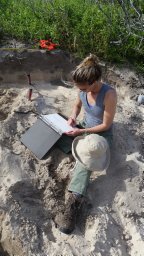 Michelle Lefebvre合作论文数1
 Victor Thompson合作论文数Department of Anthropology, Franklin College of Arts and Sciences, University of Georgia;Laboratory of Archaeology, University of Georgia;Smithsonian Institution, National Museum of Natural History;University of Florida;Florida Museum of Natural History;Georgia Museum of Natural History1
 Iain McKechnie合作论文数1Kenneth W. Gobalet合作论文数1Tam Smith合作论文数1
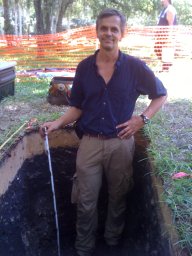 Thomas J. Pluckhahn合作论文数Department of Anthropology, University of South Florida1
 Ian McNiven合作论文数Monash Indigenous Studies Centre, Monash University1
 Alice R. Kelley合作论文数Department of Anthropology, University of Maine1




