What emotions do people prefer in their leaders, and do these emotional preferences vary depending on how their organizations are performing? In three studies conducted between 2018 and 2023 with European American, East Asian American, and Hong Kong Chinese participants, we predicted that people would choose leaders whose emotional expressions matched their culture's ideal affect (the affective states they value) more during growth, when conditions are favorable and people default to cultural ideals, than during decline, when conditions are unfavorable, and people are more open to other options. In Study 1 (N = 304), participants imagined that their own organizations were undergoing growth or decline and rated the emotions they would ideally like their leaders to have. In Studies 2 (N = 449) and 3 (N = 558), participants read hypothetical scenarios of student organizations undergoing growth and decline, and chose a leader among excited, calm, and neutral candidates. Across the studies, during growth, European Americans and East Asian Americans chose excited candidates more and calm candidates less than did Hong Kong Chinese, consistent with cultural differences in the valuation of high arousal positive affect. During decline, however, these cultural differences disappeared. Moreover, in Study 3, participants' ideal high arousal positive affect predicted their positive judgments of the excited candidate when conditions were favorable but not when they were unfavorable, suggesting one mechanism underlying these cultural differences in leader choice. Together, these studies suggest that people prefer leaders who express culturally ideal emotions more during organizational growth than decline. (PsycInfo Database Record (c) 2026 APA, all rights reserved).
What affective states do people ideally want to feel and why? In Affect Valuation Theory, Tsai et al. (2006) proposed and observed that (a) how people would ideally like to feel (their "ideal affect") differs from how they actually feel (their "actual affect"), and (b) cultural factors shape people's ideal affect even more than their actual affect. In this individual participant data meta-analysis, we reexamined these two premises in a combined data file of over 31,000 participants from 124 data sets collected by different research teams across the world. Consistent with Tsai et al., we observed that (a) actual affect and ideal affect are empirically distinct constructs, and (b) cultural differences in ideal affect are larger in magnitude than cultural differences in actual affect. These findings held across research teams, participant populations, and publication status. Importantly, most cultural differences in ideal affect endured over time, including European Americans' greater valuation of high arousal positive states compared to East Asian Americans and East Asians. New patterns also emerged: European Americans valued low arousal positive states more over time; differences in ideal affect emerged among specific East Asian cultural groups; and socioeconomic status, gender, and age were also associated with differences in ideal affect. (PsycInfo Database Record (c) 2026 APA, all rights reserved).
As social media becomes a key channel for news consumption and sharing, proliferating partisan and mainstream news sources must increasingly compete for users’ attention. While affective qualities of news content may promote engagement, it is not clear whether news source bias influences affective content production or virality, or whether any differences have changed over time. We analyzed the sentiment of ~30 million posts (on twitter.com) from 182 U.S. news sources that ranged from extreme left to right bias over the course of a decade (2011-2020). Biased news sources (on both left and right) produced more high arousal negative affective content than balanced sources. High arousal negative content also increased reposting for biased versus balanced sources. The combination of increased prevalence and virality for high arousal negative affective content was not evident for other types of affective content. Over a decade, the virality of high arousal negative affective content also increased, particularly in balanced news sources, and in posts about politics. Together, these findings reveal that high arousal negative affective content may promote the spread of news from biased sources, and conversely imply that sentiment analysis tools might help social media users to counteract these trends.
When playing single-shot behavioral economic games like the Trust and Dictator Games, European Americans and East Asians invested in and gave more to targets whose smiles matched their culture's ideal affect (the affective states they value; Blevins et al., 2024; Park et al., 2017), suggesting that smiles signal something about targets' traits. But what happens when participants are given direct information about targets' traits; do targets' smiles still matter for resource sharing? To answer this question, we conducted four studies from 2019 to 2022 in which 429 European Americans and 413 Taiwanese played single-shot Trust Games with open, toothy "excited" smiling targets, closed "calm" smiling targets, and nonsmiling "neutral" targets that varied in their reputations for being trustworthy, competent, and emotionally stable. When targets' reputations were ambiguous (e.g., "50% of previous players said they were trustworthy"), European American and Taiwanese participants invested more in targets whose smiles matched their culture's ideal affect. However, when targets' reputations were clearly good (e.g., "80% of previous players said they were trustworthy") or bad (e.g., "20% of previous players said they were trustworthy"), European Americans invested equally in all targets, suggesting that reputational information about targets' traits mattered more than targets' smiles. The pattern for Taiwanese, however, differed: Taiwanese invested equally in calm and neutral targets when targets' reputations were clear, but regardless of their reputations, Taiwanese invested in excited targets the least. We discuss the implications of these findings for understanding cultural differences in the meaning of an excited smile in the context of resource sharing.
Gait retraining has been studied as an intervention to improve osteoarthritis symptoms but has a variety of limitations. An alternative approach may be muscle strengthening interventions that have known impacts on gait changes. However, limited studies have examined the quantitative relationships between muscle strengthening and gait. Here, we combine a rapid MRI protocol with wearable sensors to determine that a 12-week exercise intervention induced significant changes in both quadricep muscle morphology and gait kinematics. Morphological changes in different muscles were related to different kinematic changes, which may inform future strengthening interventions that aim to achieve specific changes in gait kinematics.
Measures of human movement dynamics can predict outcomes like injury risk or musculoskeletal disease progression. However, these measures are rarely quantified in large-scale research studies or clinical practice due to the prohibitive cost, time, and expertise required. Here we present and validate OpenCap, an open-source platform for computing both the kinematics (i.e., motion) and dynamics (i.e., forces) of human movement using videos captured from two or more smartphones. OpenCap leverages pose estimation algorithms to identify body landmarks from videos; deep learning and biomechanical models to estimate three-dimensional kinematics; and physics-based simulations to estimate muscle activations and musculoskeletal dynamics. OpenCap's web application enables users to collect synchronous videos and visualize movement data that is automatically processed in the cloud, thereby eliminating the need for specialized hardware, software, and expertise. We show that OpenCap accurately predicts dynamic measures, like muscle activations, joint loads, and joint moments, which can be used to screen for disease risk, evaluate intervention efficacy, assess between-group movement differences, and inform rehabilitation decisions. Additionally, we demonstrate OpenCap's practical utility through a 100-subject field study, where a clinician using OpenCap estimated musculoskeletal dynamics 25 times faster than a laboratory-based approach at less than 1% of the cost. By democratizing access to human movement analysis, OpenCap can accelerate the incorporation of biomechanical metrics into large-scale research studies, clinical trials, and clinical practice.
European Americans view high-intensity, open-mouthed ‘excited’ smiles more positively than Chinese because they value excitement and other high arousal positive states more. This difference is supported by reward-related neural activity, with European Americans showing greater Nucleus Accumbens (NAcc) activity to excited (vs calm) smiles than Chinese. But do these cultural differences generalize to all rewards, and are they related to real-world social behavior? European American (N = 26) and Chinese (N = 27) participants completed social and monetary incentive delay tasks that distinguished between the anticipation and receipt (outcome) of social and monetary rewards while undergoing Functional Magnetic Resonance Imaging (FMRI). The groups did not differ in NAcc activity when anticipating social or monetary rewards. However, as predicted, European Americans showed greater NAcc activity than Chinese when viewing excited smiles during outcome (the receipt of social reward). No cultural differences emerged when participants received monetary outcomes. Individuals who showed increased NAcc activity to excited smiles during outcome had friends with more intense smiles on social media. These findings suggest that culture plays a specific role in modulating reward-related neural responses to excited smiles during outcome, which are associated with real-world relationships.
Current evaluation methods of rehabilitation following acute musculoskeletal injuries are largely qualitative. MRI and biomechanics tools can provide sensitive, quantitative measures of knee joint and lower extremity muscle changes, but the relationship between MRI and gait markers is not well characterized. We combined an MRI protocol with wearable sensors in healthy participants to characterize the relationship between gait kinematic asymmetries and thigh muscle and cartilage morphology and composition. We show that vastus lateralis (VL) muscle microstructure assessed via Diffusion Tensor Imaging (DTI) may be sensitive to gait variations. Future work may further explore these correlations in patients with musculoskeletal injuries.
This paper describes a novel synthetic approach for the conversion of zero-valent copper metal into a conductive two-dimensional layered metal–organic framework (MOF) based on 2,3,6,7,10,11-hexahydroxytriphenylene (HHTP) to form Cu3(HHTP)2. This process enables patterning of Cu3(HHTP)2 onto a variety of flexible and porous woven (cotton, silk, nylon, nylon/cotton blend, and polyester) and non-woven (weighing paper and filter paper) substrates with microscale spatial resolution. The method produces conductive textiles with sheet resistances of 0.1–10.1 MΩ/cm2, depending on the substrate, and uniform conformal coatings of MOFs on textile swatches with strong interfacial contact capable of withstanding chemical and physical stresses, such as detergent washes and abrasion. These conductive textiles enable simultaneous detection and detoxification of nitric oxide and hydrogen sulfide, achieving part per million limits of detection in dry and humid conditions. The Cu3(HHTP)2 MOF also demonstrated filtration capabilities of H2S, with uptake capacity up to 4.6 mol/kgMOF. X-ray photoelectron spectroscopy and diffuse reflectance infrared spectroscopy show that the detection of NO and H2S with Cu3(HHTP)2 is accompanied by the transformation of these species to less toxic forms, such as nitrite and/or nitrate and copper sulfide and Sx species, respectively. These results pave the way for using conductive MOFs to construct extremely robust electronic textiles with multifunctional performance characteristics.
Although social media plays an increasingly important role in communication around the world, social media research has primarily focused on Western users. Thus, little is known about how cultural values shape social media behavior. To examine how cultural affective values might influence social media use, we developed a new sentiment analysis tool that allowed us to compare the affective content of Twitter posts in the United States (55,867 tweets, 1,888 users) and Japan (63,863 tweets, 1,825 users). Consistent with their respective cultural affective values, U.S. users primarily produced positive (vs. negative) posts, whereas Japanese users primarily produced low (vs. high) arousal posts. Contrary to cultural affective values, however, U.S. users were more influenced by changes in others’ high arousal negative (e.g., angry) posts, whereas Japanese were more influenced by changes in others’ high arousal positive (e.g., excited) posts. These patterns held after controlling for differences in baseline exposure to affective content, and across different topics. Together, these results suggest that across cultures, while social media users primarily produce content that supports their affective values, they are more influenced by content that violates those values. These findings have implications for theories about which affective content spreads on social media, and for applications related to the optimal design and use of social media platforms around the world.
This paper describes a joint experiment-theory investigation of the formation and cyclization of 2'-alkynylacetophenone oxime radical cations using photoinduced electron transfer (PET) with DCA as the photosensitizer. Using a combination of experimental 1H and 13C nuclear magnetic resonance (NMR) spectra, high-resolution mass spectrometry, and calculated NMR chemical shifts, we identified the products to be isoindole N-oxides. The reaction was found to be stereoselective; only one of the two possible stereoisomers is formed under these conditions. A detailed computational investigation of the cyclization reaction mechanism suggests facile C-N bond formation in the radical cation leading to a 5-exo intermediate. Back-electron transfer from the DCA radical anion followed by barrierless intramolecular proton transfer leads to the final product. We argue that the final proton transfer step in the mechanism is responsible for the stereoselectivity observed in experiment. As a whole, this work provides new insights into the formation of complex heterocycles through oxime and oxime ether radical cation intermediates produced via PET. Moreover, it represents the first reported formation of isoindole N-oxides.
Although social media plays an increasingly important role in communication around the world, social media research has primarily focused on Western users. Thus, little is known about how cultural values shape social media behavior. To examine how cultural affective values might influence social media use, we developed a new sentiment analysis tool that allowed us to compare the affective content of Twitter posts in the United States (55,867 tweets, 1,888 users) and Japan (63,863 tweets, 1,825 users). Consistent with their respective cultural affective values, U.S. users primarily produced positive (vs. negative) posts, whereas Japanese users primarily produced low (vs. high) arousal posts. Contrary to cultural affective values, however, U.S. users were more influenced by changes in others' high arousal negative (e.g., angry) posts, whereas Japanese were more influenced by changes in others' high arousal positive (e.g., excited) posts. These patterns held after controlling for differences in baseline exposure to affective content, and across different topics. Together, these results suggest that across cultures, while social media users primarily produce content that supports their affective values, they are more influenced by content that violates those values. These findings have implications for theories about which affective content spreads on social media, and for applications related to the optimal design and use of social media platforms around the world. (PsycInfo Database Record (c) 2021 APA, all rights reserved).
Structured Abstract Importance Machine learning (ML) models for allocating readmission-mitigating interventions are typically selected according to their discriminative ability, which may not necessarily translate into utility in allocation of resources. Objective To determine whether ML models for allocating readmission-mitigating interventions are ranked differently based on their overall utility and their discriminative ability. Design A retrospective analysis of ML models using claims data acquired from the Optum Clinformatics Data Mart. Setting Health plan claims from all 50 states for commercially-insured individuals. Participants 513,495 patients who were admitted as inpatients over the period January 2016 through January 2017. Main Outcomes and Measures Maximum utility achieved by three machine learning models for allocating readmission-mitigating interventions, determined using cost accrued in the 90 days post-discharge of an index admission and estimated counterfactual cost. Data were analyzed between April 2019 and March 2020. Results The study sample consisted of 513,495 patients (mean [SD] age 69 [19] years; 294,895 [57%] Female) mean 90 day cost of $11,552 for the study period. Allocating readmission-mitigating interventions based on a LightGBM model trained to predict readmissions achieved a maximum utility of $-12,645 per patient, and an AUC of 0.74 (95% CI 0.74, 0.75); allocating interventions based on a model trained to predict cost as a proxy achieved a higher maximum utility of $-12,472 per patient, and an AUC of 0.63 (95% CI 0.62, 0.63). A hybrid model combining both intervention strategies achieved a maximum utility of $-12,472, and an AUC of 0.71 (95% CI 0.71, 0.71), comparable with the best models on either metric. Conclusion and Relevance We demonstrate that machine learning models may be ranked differently based on overall utility and discriminative ability. Machine learning models for allocation of limited health resources should consider directly optimizing for utility. Key points Question Do machine learning models for allocating readmission-mitigating interventions rank differently based on overall utility and discriminative performance? Finding A machine learning model predicting a patient’s future cost of care was able to achieve higher utility than a readmission risk prediction model, even though it had a lower discriminative performance in predicting readmissions. Meaning Our study suggests that machine learning models guiding allocation of limited health resources may consider evaluating and optimizing on utility.
This paper describes the first implementation of an array of two-dimensional (2D) layered conductive metal-organic frameworks (MOFs) as drop-casted film electrodes that facilitate voltammetric detection of redox active neurochemicals in a multianalyte solution. The device configuration comprises a glassy carbon electrode modified with a film of conductive MOF (M3HXTP2; M = Ni, Cu; and X = NH, 2,3,6,7,10,11-hexaiminotriphenylene (HITP) or O, 2,3,6,7,10,11-hexahydroxytriphenylene (HHTP)). The utility of 2D MOFs in voltammetric sensing is measured by the detection of ascorbic acid (AA), dopamine (DA), uric acid (UA), and serotonin (5-HT) in 0.1 M PBS (pH = 7.4). In particular, Ni3HHTP2 MOFs demonstrated nanomolar detection limits of 63 ± 11 nM for DA and 40 ± 17 nM for 5-HT through a wide concentration range (40 nM-200 μM). The applicability in biologically relevant detection was further demonstrated in simulated urine using Ni3HHTP2 MOFs for the detection of 5-HT with a nanomolar detection limit of 63 ± 11 nM for 5-HT through a wide concentration range (63 nM-200 μM) in the presence of a constant background of DA. The implementation of conductive MOFs in voltammetric detection holds promise for further development of highly modular, sensitive, selective, and stable electroanalytical devices.
Background Risk adjustment models are employed to prevent adverse selection, anticipate budgetary reserve needs, and offer care management services to high-risk individuals. We aimed to address two unknowns about risk adjustment: whether machine learning (ML) and inclusion of social determinants of health (SDH) indicators improve prospective risk adjustment for health plan payments. Methods We employed a 2-by-2 factorial design comparing: (i) linear regression versus ML (gradient boosting) and (ii) demographics and diagnostic codes alone, versus additional ZIP code-level SDH indicators. Healthcare claims from privately-insured US adults (2016–2017), and Census data were used for analysis. Data from 1.02 million adults were used for derivation, and data from 0.26 million to assess performance. Model performance was measured using coefficient of determination (R 2 ), discrimination (C-statistic), and mean absolute error (MAE) for the overall population, and predictive ratio and net compensation for vulnerable subgroups. We provide 95% confidence intervals (CI) around each performance measure. Results Linear regression without SDH indicators achieved moderate determination (R 2 0.327, 95% CI: 0.300, 0.353), error ($6992; 95% CI: $6889, $7094), and discrimination (C-statistic 0.703; 95% CI: 0.701, 0.705). ML without SDH indicators improved all metrics (R 2 0.388; 95% CI: 0.357, 0.420; error $6637; 95% CI: $6539, $6735; C-statistic 0.717; 95% CI: 0.715, 0.718), reducing misestimation of cost by $3.5 M per 10,000 members. Among people living in areas with high poverty, high wealth inequality, or high prevalence of uninsured, SDH indicators reduced underestimation of cost, improving the predictive ratio by 3% (~$200/person/year). Conclusions ML improved risk adjustment models and the incorporation of SDH indicators reduced underpayment in several vulnerable populations.
Large, labeled datasets have driven deep learning methods to achieve expert-level performance on a variety of medical imaging tasks. We present CheXpert, a large dataset that contains 224,316 chest radiographs of 65,240 patients. We design a labeler to automatically detect the presence of 14 observations in radiology reports, capturing uncertainties inherent in radiograph interpretation. We investigate different approaches to using the uncertainty labels for training convolutional neural networks that output the probability of these observations given the available frontal and lateral radiographs. On a validation set of 200 chest radiographic studies which were manually annotated by 3 board-certified radiologists, we find that different uncertainty approaches are useful for different pathologies. We then evaluate our best model on a test set composed of 500 chest radiographic studies annotated by a consensus of 5 board-certified radiologists, and compare the performance of our model to that of 3 additional radiologists in the detection of 5 selected pathologies. On Cardiomegaly, Edema, and Pleural Effusion, the model ROC and PR curves lie above all 3 radiologist operating points. We release the dataset to the public as a standard benchmark to evaluate performance of chest radiograph interpretation models.
Two-dimensional (2D) conductive metal-organic frameworks (MOFs) have emerged as a unique class of multifunctional materials due to their compositional and structural diversity accessible through bottom-up self-assembly. This feature article summarizes the progress in the development of 2D conductive MOFs with emphasis on synthetic modularity, device integration strategies, and multifunctional properties. Applications spanning sensing, catalysis, electronics, energy conversion, and storage are discussed. The challenges and future outlook in the context of molecular engineering and practical development of 2D conductive MOFs are addressed.
 damon w finney合作论文数8Renato J. Recio合作论文数8James T Brady合作论文数8michael howard hartung合作论文数7
 Katherine A. Mirica合作论文数Department of Chemistry, Faculty of Arts and Sciences, Dartmouth College7jaishankar m menon合作论文数6
 Brian Knutson合作论文数Department of Psychology, School of Humanities and Sciences, Stanford University;Institute for Human-Centered Artificial Intelligence (HAI), Stanford University6david r nowlen合作论文数5
 Jeanne L. Tsai合作论文数Department of Psychology, Stanford University5noah r mendelsohn合作论文数4jacobo a vargas合作论文数4Lukasz Mendecki合作论文数Burke Laboratory, Dartmouth College4malcolm heaven合作论文数3douglas j joseph合作论文数3donald j lang合作论文数3gregory francis pfister合作论文数3richard f freitas合作论文数3john lewis hufferd合作论文数3william todd boyd合作论文数3alan f benner合作论文数3Aylin Aykanat合作论文数3
 Tiffany W. Hsu合作论文数Stanford University, Stanford, CA, USA3
 Scott L. Delp合作论文数Bioengineering Department, Stanford University;Department of Mechanical Engineering, Stanford University3
 Pranav Rajpurkar合作论文数Department of Biomedical Informatics, Harvard Medical School, Harvard University3Binny S. Gill合作论文数3
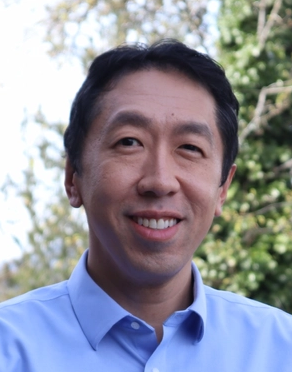 Andrew Ng (吳恩達)合作论文数Landing AI;Deeplearning. Ai;AI Fund;Coursera;Computer Science Department, Stanford University3
 Akshay Chaudhari合作论文数Department of Biomedical Data Science, School of Medicine, Stanford University3
 Peter de Lijser合作论文数Department of Chemistry;Center for Photoinduced Charge Transfer;UniVersity of Rochester;Center for Photoinduced Charge Transfer, UniVersity of Rochester3
 Wendy Belluomini合作论文数Department of Electrical Engineering, Universty of Utah, Salt Lake City, UT
Kip Kallpack Department of Electrical Engineering, Universty of Utah, Salt Lake City, UT
Eric Peskin Department of Electrical Engineering, Universty of Utah, Salt Lake City, UT
Hao Zheng Department of Electrical Engineering, Universty of Utah, Salt Lake City, UT
Sponsors SIGDA: ACM Special Interest Group on Design Automation3Laurel Hales合作论文数2michael t benhase合作论文数2john p greelis合作论文数2mikxay sirivong合作论文数2Aileen M. Eagleton合作论文数2Victor M Espinoza Castro合作论文数2Amanda Abiad合作论文数2Ashley Council合作论文数2narasimhareddy l annapareddy合作论文数2Elizabeth Blevins合作论文数2
Wendy Belluomini合作论文数Department of Electrical Engineering, Universty of Utah, Salt Lake City, UT
Kip Kallpack Department of Electrical Engineering, Universty of Utah, Salt Lake City, UT
Eric Peskin Department of Electrical Engineering, Universty of Utah, Salt Lake City, UT
Hao Zheng Department of Electrical Engineering, Universty of Utah, Salt Lake City, UT
Sponsors SIGDA: ACM Special Interest Group on Design Automation3Laurel Hales合作论文数2michael t benhase合作论文数2john p greelis合作论文数2mikxay sirivong合作论文数2Aileen M. Eagleton合作论文数2Victor M Espinoza Castro合作论文数2Amanda Abiad合作论文数2Ashley Council合作论文数2narasimhareddy l annapareddy合作论文数2Elizabeth Blevins合作论文数2 Lauren E Watkins合作论文数Steadman Philippon Research Institute2
 BoKyung Park合作论文数Corresponding author.2
 Valentina Mazzoli合作论文数Orthopaedic Research Lab, Radboud Institute for Health Sciences, Radboud University Medical Center, Nijmegen, the Netherlands2
 Elka Rubin合作论文数Stanford Univ, Stanford, CA 94305 USA2Ying-Chun Chen合作论文数2
 Jeremy Irvin合作论文数Inception2
 Yang Qu合作论文数Human Development and Social Policy, School of Education and Social Policy, Northwestern University2
 Behzad Haghgoo合作论文数2
 Sanjay Basu合作论文数Waymark;HealthRIGHT 3602
 Petit Andrew S合作论文数Department of Chemistry, University of Pennsylvania2