This study investigates turbulent channel flow with condensation at a friction Reynolds number of $$Re_*=590$$ R e ∗ = 590 , focusing on the influence of longwave radiation on fog formation. Two setups are analyzed: one incorporating ground cooling without direct radiative effects, and the other including cooling due to longwave radiation emitted by the fog. The cooling rate and radiative coefficient are varied independently to assess their impacts. In scenarios with excessive ground cooling, turbulence is suppressed, leading to laminarization and delayed condensation higher up. Additionally, longwave radiation is found to either invigorate or dampen turbulence dynamics, depending on the radiative coefficients. At high radiative coefficients, longwave radiation counterbalances ground cooling effects, producing uniform temperature profiles that drive fog formation. These findings underscore the critical role of longwave radiation in atmospheric dynamics.
Accurate modeling of large-sphere motion in vertical turbulent pipe flow is pivotal for designing efficient and safe deep-sea mining operations. In this study, we perform a six-degree-of-freedom (6-DOF) computational fluid dynamics (CFD) analysis to investigate the terminal velocity and drag characteristics of single spheres in fully developed turbulent flow. The sphere's terminal velocity is validated against experimental data, demonstrating good agreement with an average systematic error of 6.6 %. A key finding is that traditional drag models relying on the particle Reynolds number fail to predict the abrupt decrease in drag-known as the drag crisis-observed in the experiments. Instead, the pipe Reynolds number emerges as a more effective descriptor, capturing the sudden dip in drag coefficient and subsequent rise. Further analysis of the flow field and sphere velocities reveals that the onset of drag crisis correlates with freestream turbulence in the pipe. Additionally, we explore the effects of transport parameters such as the fluid velocity, particle diameter, pipe diameter, particle density, and fluid density on terminal velocity. Overall, this work advances the understanding of drag behavior and sphere dynamics under real-world deep-sea mining conditions and underscores the importance of considering pipe-scale turbulence effects.
Using direct numerical simulations, we systematically investigate the inner-layer turbulence of a turbulent vertical buoyancy layer (a model for a vertical natural convection boundary layer) at a constant Prandtl number of $0.71$ . Near-wall streaky structures of streamwise velocity fluctuations, synonymous with the buffer layer streaks of canonical wall turbulence, are not evident at low and moderate Reynolds numbers ( ${\textit{Re}}$ ) but manifest at high ${\textit{Re}}$ . At low ${\textit{Re}}$ , the turbulent production in the near-wall region is negligible; however, this increases with increasing ${\textit{Re}}$ . By using domains truncated in the streamwise, spanwise and wall-normal directions, we demonstrate that the turbulence production in the near-wall region at moderate and high ${\textit{Re}}$ is largely independent of large-scale motions and outer-layer turbulence. On a fundamental level, the near-wall turbulence production is autonomous and self-sustaining, and a well-developed bulk is not needed to drive the inner-layer turbulence. Near-wall streaks are also not essential for this autonomous process. The type of thermal boundary condition only marginally influences the velocity fluctuations, revealing that the turbulence dynamics are primarily governed by the mean-shear induced by the buoyancy field and not by the thermal fluctuations, despite the current flow being solely driven by buoyancy. In the inner layer, the spanwise wavelength of the eddies responsible for positive shear production is remarkably similar to that of canonical wall turbulence at moderate and high ${\textit{Re}}$ (irrespective of near-wall streaks). Based on these findings, we propose a mechanistic model that unifies the near-wall shear production of vertical buoyancy layers and canonical wall turbulence.
This paper investigates the turbulent structure of stratified open-channel flow subjected to a radiative volumetric heat source modelled by the Beer-Lambert law, for Prandtl numbers (Pr) varying from 0.07 to Pr=7. Direct Numerical Simulation (DNS) was employed to model the open-channel flow. To overcome the increased computational resources required to resolve the thermal fields when Pr>1, a multi-resolution method using quadratic interpolation was employed to resolve the temperature and momentum fields on different spatial and temporal resolutions. This scheme was implemented in an in-house computational fluid dynamics (CFD) code. To further reduce the computation cost, the DNS of Pr=2.2 and 7 fluids were initialised using the outputs of minimal channel simulations. The simulations were conducted for Pr=0.07, 0.22, 0.71, 2.2, and 7 under neutral (lambda=0), near-neutral (lambda=0.1), and stable (lambda=0.5) thermal stratification. The results demonstrate that Pr significantly affects the flow structure and turbulence characteristics of stratified flows, particularly near the free surface. This includes higher velocity, temperature gradient, and buoyancy effects for Pr=7 compared to lower Pr values. For stratified Pr=7 flow, examination of the Reynolds stresses and turbulent heat flux reveals significant damping of turbulence near the surface, with flow displaying near-laminar behaviour.
Direct numerical simulations (DNS) of turbulent open channel flow are performed to study and compare momentum and scalar internal boundary layers (IBL). An internal boundary layer (IBL) forms when a turbulent boundary layer is subjected to heterogeneous surface conditions. For example, a momentum IBL forms with a change in surface roughness and a scalar IBL forms due to a localised heat flux. Momentum IBLs are simulated using both a streamwise-varying roughness body forcing technique and a streamwise-varying wall shear stress. Passive scalar IBLs are simulated using both streamwise-varying scalar wall values and wall fluxes, for a homogeneous smooth wall. The roughness body forcing model is shown to reproduce the same IBL features as with the explicitly resolved roughness study of Rouhi et al. (2019), but at a reduced cost. Three common IBL detection methods are employed to estimate the power-law exponents in the growth rates of the IBL. The exponents for the momentum IBL cases are typically less than 0.7 for these methods, smaller than for the scalar-analogues of these methods. Furthermore, we analyse the streamwise variation of the root-mean-square wall-normal (vertical) velocity. We find that the ‘diffusion analogy’, or that momentum and scalar IBLs behave similarly, may not be an appropriate assumption, especially for rough-to-smooth transitions for momentum IBLs.
Measurements were conducted within the flow field of a buoyancy-induced vortex at laboratory scale with a constant heat flux as input at the ground with swirl vanes set at 30 degrees and 60 degrees to the radial. Time-averaged velocity data were obtained using two-dimensional Particle Image Velocimetry (PIV). The velocity profiles in both crosssectional and vertical planes were measured at heights of 0.3 m, 0.45 m, and 0.6 m above the ground level, and the time-averaged tangential, radial and vertical velocity components were derived. Two types of the vortex structures are identified based on the core swirl ratio, showing one-cell and two-cell type vortex structures with 30 degrees and 60 degrees swirl vane angles, respectively. Vortex wandering effects have also been investigated, including the centre distributions for different types of flow structures, and its impact on flow strength and vortex core sizes have also been quantified. Detailed turbulence statistics have been measured after removing the wandering effect, which show high level of turbulence intensities within the vortex core.
A review has been conducted to understand buoyancy-induced vortex flow behaviour, establish control parameters, and to assess the possibility of harnessing kinetic energy in the flow for electricity production. To create and maintain a vortex, a buoyancy force generated by a relatively large heat flux over a large surface area is required, such that warmed air is concentrated at the centre and rise. This flow induces an inward swirl and large angular momentum. These two contributions need to overcome surface friction and ambient shear flow. A single-cell vortex possesses the highest energy flux to circulation strength ratio. Even though a two-cell vortex at the base corner possesses a higher incoming tangential velocity which would translate to a larger change in angular momentum for higher aerodynamic torque, it is less stable due to high shear between the core downdraft and peripheral updraft swirl. The atmospheric vortex engine should be designed and controlled such that the buoyancy vortex can be generated and anchored, the guide vanes and other vortex station features create minimal flow shear, and the vortex stability is minimally affected by the physical presence of the turbine, saturated steam, air influx and energy extraction.
A scaling or nondimensionalisation of atmospheric buoyancy vortices for power generation (based on the Oberbeck-Boussinesq assumption) is proposed that uses a published formulation from the study of Rotating Rayleigh-Benard Convection. This is combined with assumptions that the vortex flows are pseudo-cyclostrophic and that a radial Richardson number can serve as a predictor of the onset of Kelvin-Helmholtz instability leading to a transition to a turbulent plume, in order to locate the cold reservoir of the vortex when viewed as a heat engine. This permits the prediction of the behaviour of large vortices in atmosphere using data from experiments on small vortices.
We present a turbulent kinetic energy (TKE) closure scheme for the stably stratified atmosphere in which the mixing lengths for momentum and heat are not parameterized in the same manner. The key difference is that, while the mixing length for heat tends toward the stability independent mixing length for momentum in neutrally stratified conditions, it tends toward one based on the Brunt–Väisälä time scale and square root of the TKE in the limit of large stability. This enables a unique steady-state solution for TKE to be obtained, which we demonstrate would otherwise be impossible if the mixing lengths were the same. Despite the model’s relative simplicity, it is shown to perform reasonably well with observational data from the 1999 Cooperative Atmosphere–Surface Exchange Study (CASES-99) using commonly employed model constants. Analyzing the scaling behavior of the nondimensional velocity and potential temperature gradients, or of the stability (correction) functions, reveals that for large stability the present model scales in the same manner as the first-order operational scheme of Viterbo et al. Alternatively, it appears as a blend of two cases of the TKE closure scheme of Baas et al. Critically, because a unique steady-state TKE can be obtained, the present model avoids the nonphysical behavior identified in one of the cases of Baas et al.
We investigate the effects of condensation and liquid water loading on the stably stratified surface layer, with an eye towards understanding the influence of turbulent mixing on fog formation. Direct numerical simulations of dry and moist open-channel flows are conducted, where in both a constant cooling rate is applied at the ground to mimic longwave radiative cooling. Depending on the cooling rate, this can lead to either turbulent (weakly stable) or laminar (very stable) flows. Compared to the completely dry case, the condensation of liquid water in the moist case enables slightly higher cooling rates to be achieved before leading to turbulence collapse. In the very stable cases, runaway cooling leads to the substantial condensation of liquid water close to the ground and fog (visibility less than 1 km) results over much of the domain. In the weakly stable cases, turbulent mixing narrowly yields visibilities of 1 km close to the ground over a similar time period. However, despite the idealized nature of the system, the present results suggest that turbulence impedes, although will not necessarily inhibit, fog formation. A possible mechanism for fog formation within turbulent flows is identified, wherein regions of increased liquid water content form within the low-speed streaks of the near-wall cycle. These streaks are energized in the moist cases due to reduced dissipation of turbulence kinetic energy compared to the dry case, although in both cases the streaks are less energetic and persistent than in neutrally-stratified flow.
Riblets reduce skin-friction drag until their viscous-scaled size becomes large enough for turbulence to approach the wall, leading to the breakdown of drag-reduction. In order to investigate inertial-flow mechanisms that are responsible for the breakdown, we employ the minimal-span channel concept for cost-efficient direct numerical simulation (DNS) of rough-wall flows (MacDonald et al. in J Fluid Mech 816: 5–42, 2017). This allows us to investigate six different riblet shapes and various viscous-scaled sizes for a total of 21 configurations. We verify that the small numerical domains capture all relevant physics by varying the box size and by comparing to reference data from full-span channel flow. Specifically, we find that, close to the wall in the spectral region occupied by drag-increasing Kelvin–Helmholtz rollers (García-Mayoral and Jiménez in J Fluid Mech 678: 317–347, 2011), the energy-difference relative to smooth-wall flow is not affected by the narrow domain, even though these structures have large spanwise extents. This allows us to evaluate the influence of the Kelvin–Helmholtz instability by comparing fluctuations of wall-normal and streamwise velocity, pressure and a passive scalar over riblets of different shapes and viscous-scaled sizes to those over a smooth wall. We observe that triangular riblets with a tip angle $$\alpha =30^{\circ }$$ and blades appear to support the instability, whereas triangular riblets with $$\alpha =60^{\circ }$$ – $$90^{\circ }$$ and trapezoidal riblets with $$\alpha =30^{\circ }$$ show little to no evidence of Kelvin–Helmholtz rollers.
We investigate the effects of shear-driven turbulence on fog formation in the stably stratified surface layer, using recent direct numerical simulations (DNS) of dry and moist open-channel flows.A constant cooling rate applied at the ground mimics longwave radiative cooling, leading to either turbulent (weakly stable) or laminar (very stable) flows.The transition of the Obukhov, Ozmidov and buoyancy length scales are investigated for different cooling rates and Reynolds numbers.Compared to the dry case, the condensation of liquid water in the moist case supports slightly higher cooling rates before leading to turbulence collapse.In the very stable moist cases, runaway cooling leads to substantial condensation of liquid water close to the ground and fog (visibility less than 1 km) results over much of the domain.In the weakly stable cases, turbulent mixing narrowly yields visibilities of 1 km close to the ground over a similar time period.Despite the idealised nature of the system, the present results suggest that turbulence impedes, although will not necessarily inhibit, fog formation.
Heat and momentum transfer in wall-bounded turbulent flow, coupled with the effects of wall-roughness, is one of the outstanding questions in turbulence research. In the standard Rayleigh-B\'enard problem for natural thermal convection, it is notoriously difficult to reach the so-called ultimate regime in which the near-wall boundary layers are turbulent. Following the analyses proposed by Kraichnan [Phys. Fluids vol 5., pp. 1374-1389 (1962)] and Grossmann & Lohse [Phys. Fluids vol. 23, pp. 045108 (2011)], we instead utilize recent direct numerical simulations of forced convection over a rough wall in a minimal channel [MacDonald, Hutchins & Chung, J. Fluid Mech. vol. 861, pp. 138--162 (2019)] to directly study these turbulent boundary layers. We focus on the heat transport (in dimensionless form, the Nusselt number $Nu$) or equivalently the heat transfer coefficient (the Stanton number $C_h$). Extending the analyses of Kraichnan and Grossmann & Lohse, we assume logarithmic temperature profiles with a roughness-induced shift to predict an effective scaling of $Nu \sim Ra^{0.42}$, where $Ra$ is the dimensionless temperature difference, corresponding to $C_h \sim Re^{-0.16}$, where $Re$ is the centerline Reynolds number. This is pronouncedly different from the skin-friction coefficient $C_f$, which in the fully rough turbulent regime is independent of $Re$, due to the dominant pressure drag. In rough-wall turbulence the absence of the analog to pressure drag in the temperature advection equation is the origin for the very different scaling properties of the heat transfer as compared to the momentum transfer. This analysis suggests that, unlike momentum transfer, the asymptotic ultimate regime, where $Nu\sim Ra^{1/2}$, will never be reached for heat transfer at finite $Ra$.
We conducted direct numerical simulations of turbulent flow over three-dimensional sinusoidal roughness in a channel. A passive scalar is present in the flow with Prandtl number $Pr=0.7$ , to study heat transfer by forced convection over this rough surface. The minimal-span channel is used to circumvent the high cost of simulating high-Reynolds-number flows, which enables a range of rough surfaces to be efficiently simulated. The near-wall temperature profile in the minimal-span channel agrees well with that of the conventional full-span channel, indicating that it can be readily used for heat-transfer studies at a much reduced cost compared to conventional direct numerical simulation. As the roughness Reynolds number, $k^{+}$ , is increased, the Hama roughness function, $\unicode[STIX]{x0394}U^{+}$ , increases in the transitionally rough regime before tending towards the fully rough asymptote of $\unicode[STIX]{x1D705}_{m}^{-1}\log (k^{+})+C$ , where $C$ is a constant that depends on the particular roughness geometry and $\unicode[STIX]{x1D705}_{m}\approx 0.4$ is the von Kármán constant. In this fully rough regime, the skin-friction coefficient is constant with bulk Reynolds number, $Re_{b}$ . Meanwhile, the temperature difference between smooth- and rough-wall flows, $\unicode[STIX]{x0394}\unicode[STIX]{x1D6E9}^{+}$ , appears to tend towards a constant value, $\unicode[STIX]{x0394}\unicode[STIX]{x1D6E9}_{FR}^{+}$ . This corresponds to the Stanton number (the temperature analogue of the skin-friction coefficient) monotonically decreasing with $Re_{b}$ in the fully rough regime. Using shifted logarithmic velocity and temperature profiles, the heat-transfer law as described by the Stanton number in the fully rough regime can be derived once both the equivalent sand-grain roughness $k_{s}/k$ and the temperature difference $\unicode[STIX]{x0394}\unicode[STIX]{x1D6E9}_{FR}^{+}$ are known. In meteorology, this corresponds to the ratio of momentum and heat-transfer roughness lengths, $z_{0m}/z_{0h}$ , being linearly proportional to the inner-normalised momentum roughness length, $z_{0m}^{+}$ , where the constant of proportionality is related to $\unicode[STIX]{x0394}\unicode[STIX]{x1D6E9}_{FR}^{+}$ . While Reynolds analogy, or similarity between momentum and heat transfer, breaks down for the bulk skin-friction and heat-transfer coefficients, similar distribution patterns between the heat flux and viscous component of the wall shear stress are observed. Instantaneous visualisations of the temperature field show a thin thermal diffusive sublayer following the roughness geometry in the fully rough regime, resembling the viscous sublayer of a contorted smooth wall.
We study the effect on near-wall turbulence of tangential slip and wall-normal transpiration, typically produced by textured surfaces and other surface manipulations. For this, we conduct direct numerical simulations (DNSs) with different virtual origins for the different velocity components. The different origins result in a relative wall-normal displacement of the near-wall, quasi-streamwise vortices with respect to the mean flow, which in turn produces a change in drag. The objective of this work is to extend the existing understanding on how these virtual origins affect the flow. In the literature, the virtual origins for the tangential velocities are typically characterised by slip boundary conditions, while the wall-normal velocity is assumed to be zero at the boundary plane. Here we explore different techniques to define and implement the three virtual origins, with special emphasis on the wall-normal one. We investigate impedance conditions relating the wall-normal velocity to the pressure, and linear relations between the velocity components and their wall-normal gradients, as is typically done to impose slip conditions. These models are first tested to represent a smooth wall below the boundary plane, with all virtual origins equal, and later for different tangential and wall-normal origins. Our results confirm that the change in drag is determined by the offset between the origins perceived by mean flow and the quasi-streamwise vortices or, more generally, the near wall turbulent cycle. The origin for the latter, however, is not set by the spanwise virtual origin alone, as previously proposed, but by a combination of the spanwise and wall-normal origins, and mainly determined by the shallowest of the two. These observations allow us to extend the existing expression to predict the change in drag, accounting for the wall-normal effect when the transpiration is not negligible.
© 2018 Australasian Fluid Mechanics Society. All rights reserved. Recent research on turbulent flow over heterogeneous rough walls have reported the occurrence of secondary motions which extend to the edge of the boundary layer. In this study, direct numerical simulations (DNSs) of turbulent flow in a rough-wall pipe are conducted where the pipe surface consists of a three-dimensional sinusoidal surface. The roughness semi-amplitude height (h+) is fixed at 60 viscous units while the wavelength of the roughness elements is varied to investigate the effects of solidity or effective slope (ES). The rough-wall cases, which vary from the wavy regime (ES = 0.18 with a viscous roughness wavelength, λ+ of 848) to the closely packed roughness/dense regime (ES = 0.72, λ+ = 212), have a staggered arrangement. Using the triple decomposition, the time-independent dispersive stresses, which arise due to the stationary features of the flow, are found to increase in magnitude with roughness wavelength. These dispersive stresses, which are maximum in the roughness canopy, are due to the occurrence of secondary flows. These secondary flows transport high-speed fluid from the outer region to the near-wall region and pump low-speed fluid from the near-wall region to the outer region. For the range of cases simulated here, the wall-normal and spanwise extent of these secondary motions are found to scale with the roughness spanwise wavelength. This gives an indication of how the roughness sublayer is related to the degree of surface heterogeneity, with spanwise homogeneous flow only observed once the distance from the wall exceeds the spanwise spacing of the roughness. For the case with the largest wavelength (ES = 0.18), the secondary flows occupy a significant portion of the pipe cross-section.
The occurrence of secondary flows is investigated for three-dimensional sinusoidal roughness where the wavelength and height of the roughness elements are systematically altered. The flow spanned from the transitionally rough regime up to the fully rough regime and the solidity of the roughness ranged from a wavy, sparse roughness to a dense roughness. Analysing the time-averaged velocity, secondary flows are observed in all of the cases, reflected in the coherent stress profile which is dominant in the vicinity of the roughness elements. The roughness sublayer, defined as the region where the coherent stress is non-zero, scales with the roughness wavelength when the roughness is geometrically scaled (proportional increase in both roughness height and wavelength) and when the wavelength increases at fixed roughness height. Premultiplied energy spectra of the streamwise velocity turbulent fluctuations show that energy is reorganised from the largest streamwise wavelengths to the shorter streamwise wavelengths. The peaks in the premultiplied spectra at the streamwise and spanwise wavelengths are correlated with the roughness wavelength in the fully rough regime. Current simulations show that the spanwise scale of roughness determines the occurrence of large-scale secondary flows.
We conduct minimal-channel direct numerical simulations of turbulent flow over two-dimensional rectangular bars aligned in the spanwise direction. This roughness has often been described as $d$ -type, as the roughness function $\unicode[STIX]{x0394}U^{+}$ is thought to depend only on the outer-layer length scale (pipe diameter, channel half-height or boundary layer thickness). This is in contrast to conventional engineering rough surfaces, named $k$ -type, for which $\unicode[STIX]{x0394}U^{+}$ depends on the roughness height, $k$ . The minimal-span rough-wall channel is used to circumvent the high cost of simulating high Reynolds number flows, enabling a range of bars with varying aspect ratios to be investigated. The present results show that increasing the trough-to-crest height, $k$ , of the roughness while keeping the width between roughness bars, ${\mathcal{W}}$ , fixed in viscous units, results in non- $k$ -type behaviour although this does not necessarily indicate $d$ -type behaviour. Instead, for deep surfaces with $k/{\mathcal{W}}\gtrsim 3$ , the roughness function appears to depend only on ${\mathcal{W}}$ in viscous units. In these situations, the flow no longer has any information about how deep the roughness is and instead can only ‘see’ the width of the fluid gap between the bars.
 Daniel Chung合作论文数Department of Mechanical Engineering, School of Electrical, Mechanical and Infrastructure Engineering, Faculty of Engineering and Information Technology, The University of Melbourne17
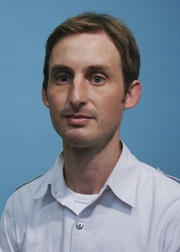 Nicholas Hutchins合作论文数Department of Mechanical Engineering, School of Electrical, Mechanical and Infrastructure Engineering, Faculty of Engineering and Information Technology, The University of Melbourne17
 Andrew Ooi合作论文数Department of Mechanical Engineering, Faculty of Engineering and Information Technology, The University of Melbourne;School of Engineering, The University of Melbourne13
 Leon Chan合作论文数Department of Mechanical Engineering, School of Electrical, Mechanical and Infrastructure Engineering, Faculty of Engineering and Information Technology, The University of Melbourne11
 John Cater合作论文数5
 Richard George James Flay合作论文数Department of Mechanical Engineering, Faculty of Engineering, The University of Auckland4
 Ricardo Garcia Mayoral合作论文数Department of Engineering, University of Cambridge3
 Joao Teixeira合作论文数Center for Climate Sciences, Jet Propulsion Laboratory, California Institute of Technology3R. Garćıa-Mayoral合作论文数2
 Neil Hawkes合作论文数2Marcin J. Kurowski合作论文数Institute of Meteorology and Water Management, National Research Institute2M.D. Finn合作论文数1C-L Hung合作论文数1Ziyang Wang合作论文数1Jasper Tromp合作论文数1Chris T. Fairhall合作论文数Dept Engn, Univ Cambridge1
 Garazi Gomez-de-Segura合作论文数Dept Engn, Univ Cambridge1Sebastian Endrikat合作论文数Dept Mech Engn, Univ Melbourne1
 Khay-Wai Leong合作论文数Corresponding author.1
 Wataru Shimizu (清水渉)合作论文数Department of Cardiovascular Medicine, Nippon Medical School;Graduate School, Nippon Medical School1
 Inder S Anand合作论文数Department of Cardiovascular Medicine, University of Minnesota;University of Minnesota Twin Cities;VA Medical Center1
 Michael Zile合作论文数Department of Medicine, College of Medicine, Medical University of South Carolina1Stuart Norris合作论文数1
 Haixiao Liu (刘海笑)合作论文数School of Civil Engineering, Tianjin University1
 Richard J Clarke合作论文数1
 Detlef Lohse合作论文数Max Planck-University of Twente Center for Complex Fluid Dynamics1Wan Ting Tay合作论文数Singapore National Eye Centre, Singapore Eye Research Institute1
 Teng Tiew Hwa Katherine合作论文数School of Population Health, University of Western Australia;National Heart Research Institute Singapore, National Heart Centre Singapore1
 Carolyn Lam合作论文数Baim Institute for Clinical Research;Duke-NUS Graduate Medical School;Department of Cardiology, National Heart Centre Singapore;SingHealth Duke-NUS Global Health Institute;Clinical Trials Coordinating Centre, SingHealth Scientific;National University Hospital (S) Pte Ltd1
 Priyanka Dhopade合作论文数Department of Mechanical Engineering, Faculty of Engineering, The University of Auckland1




