Unmanned underwater vehicles are increasingly employed for maintenance and surveying tasks at sea, but their operation in shallow waters is often hindered by hydrodynamic disturbances such as waves, currents, and turbulence. These unsteady flows can induce rapid changes in direction and speed, compromising vehicle stability and manoeuvrability. Marine organisms contend with such conditions by combining proprioceptive feedback with flexible fins and tails to reject disturbances. Inspired by this strategy, we propose soft morphing wings endowed with proprioceptive sensing to mitigate environmental perturbations. The wings continuous deformation provides a natural means to infer dynamic disturbances: sudden changes in camber directly reflect variations in the oncoming flow. By interpreting this proprioceptive signal, a disturbance observer can reconstruct flow parameters in real time. To enable this, we develop and experimentally validate a dynamic model of a hydraulically actuated soft wing with controllable camber. We then show that curvature-based sensing allows accurate estimation of disturbances in the angle of attack. Finally, we demonstrate that a controller leveraging these proprioceptive estimates can reject disturbances in the lift response of the soft wing. By combining proprioceptive sensing with a disturbance observer, this technique mirrors biological strategies and provides a pathway for soft underwater vehicles to maintain stability in hazardous environments.
Differentiable simulation can accelerate contact-rich trajectory optimisation by exposing local sensitivities of task outcomes to controls. Existing approaches either use finite differences, which are expensive and step-size sensitive; differentiate iterative contact solvers by unrolling automatic differentiation (AD), which stores a growing computation trace; or require intricate, solver-specific KKT sensitivity derivations. We introduce an AD-assisted implicit derivative for regularised smooth contacts and apply it to Mujoco MJX, based on the Implicit Function Theorem (IFT). The method differentiates the stationarity residual at the tolerance-converged solution, avoiding both solver unrolling and hand-assembled KKT systems. IFT keeps compiled temporary memory nearly constant with solver effort, changing by less than 4% from one to ten iterations versus 10.6× growth for unrolled AD. IFT memory grows slower with active contacts and model dimension, using 20× less memory at 256 contacts and 6× less at 16 contacts and 96 DoF. We further introduce optimiser distillation for residual MPC, amortising batched full-horizon iLQR into a policy that guides short-horizon residual iLQR. Across Finger, Franka, and Unitree, this raises six-step success by 28-98 percentage points over standard iLQR.
Medical robotics can help improve the reach of healthcare services. A challenge for medical robots is their complex physical interaction. This work evaluates a recently introduced control architecture based on Fractal Impedance Control (FIC) in medical applications. The deployed FIC architecture is robust to delay between the master and the replica robots and can switch online between an admittance and impedance behavior. Our experiments analyze three scenarios: teleoperated surgery, rehabilitation, and remote ultrasound scan. The experiments did not require any adjustment of the robot tuning, which is essential in medical applications where the operators do not have an engineering background. Our results show that it is possible to teleoperate the robot to perform remote occupational therapy, operate a scalpel, and use an ultrasound scan. However, our experiments also highlighted the need for a better robot embodiment to control the system precisely in 3D dynamic tasks.
Long-horizon contact-rich tasks are challenging to learn with reinforcement learning, due to ineffective exploration of high-dimensional state spaces with sparse rewards. The learning process often gets stuck in local optimum and demands task-specific reward fine-tuning for complex scenarios. In this work, we propose a structured framework that leverages privileged actions with curriculum learning, enabling the policy to efficiently acquire long-horizon skills without relying on extensive reward engineering or reference trajectories. Specifically, we use privileged actions in simulation with a general training procedure that would be infeasible to implement in real-world scenarios. These privileges include relaxed constraints and virtual forces that enhance interaction and exploration with objects. Our results successfully achieve complex multi-stage long-horizon tasks that naturally combine non-prehensile manipulation with grasping to lift objects from non-graspable poses. We demonstrate generality by maintaining a parsimonious reward structure and showing convergence to diverse and robust behaviors across various environments. Additionally, real-world experiments further confirm that the skills acquired using our approach are transferable to real-world environments, exhibiting robust and intricate performance. Our approach outperforms state-of-the-art methods in these tasks, converging to solutions where others fail.
Fast trajectory planning and control frameworks improve locomotion robustness against disturbances and uncertainties. In this paper, dynamic motions are optimized under the constraint of a decoupled spring-loaded inverted pendulum model. Subsequently, a hierarchical Quadratic Programming whole-body controller is employed to execute the planned trajectories while ensuring compliance with all physical feasibility constraints. Both the motion planner and the whole-body controller operate within the same high-frequency control loop. Furthermore, the unified whole-body controller governs all gait phases, including flight phases. The proposed algorithms are evaluated through simulation and real experiments, showcasing dynamic gaits such as hopping, twist jumping, and trotting in challenging environments. The algorithms demonstrate resilience against external disturbances and environmental uncertainties.
In recent years, the need for robots to transition from isolated industrial tasks to shared environments, including human-robot collaboration and teleoperation, has become increasingly evident. Building on the foundation of Fractal Impedance Control (FIC) introduced in our previous work, this paper presents a novel extension to dual-arm tele-cooperation, leveraging the non-linear stiffness and passivity of FIC to adapt to diverse cooperative scenarios. Unlike traditional impedance controllers, our approach ensures stability without relying on energy tanks, as demonstrated in our prior research. In this paper, we further extend the FIC framework to bimanual operations, allowing for stable and smooth switching between different dynamic tasks without gain tuning. We also introduce a telemanipulation architecture that offers higher transparency and dexterity, addressing the challenges of signal latency and low-bandwidth communication. Through extensive experiments, we validate the robustness of our method and the results confirm the advantages of the FIC approach over traditional impedance controllers, showcasing its potential for applications in planetary exploration and other scenarios requiring dexterous telemanipulation. This paper's contributions include the seamless integration of FIC into multi-arm systems, the ability to perform robust interactions in highly variable environments, and the provision of a comprehensive comparison with competing approaches, thereby significantly enhancing the robustness and adaptability of robotic systems.
Despite impressive results, reinforcement learning (RL) suffers from slow convergence and requires a large variety of tuning strategies. In this paper, we investigate the ability of RL algorithms on simple continuous control tasks. We show that without reward and environment tuning, RL suffers from poor convergence. In turn, we introduce an optimal control (OC) theoretic learning-based method that can solve the same problems robustly with simple parsimonious costs. We use the Hamilton-Jacobi-Bellman (HJB) and first-order gradients to learn optimal time-varying value functions and therefore, policies. We show the relaxation of our objective results in time-varying Lyapunov functions, further verifying our approach by providing guarantees over a compact set of initial conditions. We compare our method to Soft Actor Critic (SAC) and Proximal Policy Optimisation (PPO). In this comparison, we solve all tasks, we never underperform in task cost and we show that at the point of our convergence, we outperform SAC and PPO in the best case by 4 and 2 orders of magnitude.
Animals are capable of robust and reliable control in unstructured environments, where they effortlessly overcome the uncertainty of interaction and are capable of exploiting singularities. These conditions are a well-known challenge for robots due to the limitations of projected dynamics, which requires accurate modelling and is susceptible to singularities. This work proposes a compliant passive control method for redundant manipulators based on a superimposition of multiple passive task-space controllers in a hierarchy without requiring any knowledge of the robot dynamics. The proposed control framework of passive controllers is inherently stable, numerically well-conditioned (as no matrix inversions are required), and computationally inexpensive (as no optimisation is used). This method leverages and introduces a novel stiffness profile for a recently proposed passive controller with smooth transitions between the divergence and convergence phases making it particularly suitable when multiple passive controllers are combined through superimposition. The experimental results demonstrate that the proposed method achieves sub-centimetre tracking performance during demanding dynamic tasks with fast-changing references, while remaining safe to interact with and robust to singularities. The data further show that the robot can fully take advantage of the redundancy to maintain the primary task accuracy while compensating for unknown environmental interactions, which is not possible from current frameworks that require accurate contact information.
This article presents a robust and reliable human-robot collaboration (HRC) framework for bimanual manipulation. We propose an optimal motion adaptation method to retarget arbitrary human commands to feasible robot pose references while maintaining payload stability. The framework comprises three modules: 1) a task-space sequential equilibrium and inverse kinematics optimization (task-space SEIKO) for retargeting human commands and enforcing feasibility constraints, 2) an admittance controller to facilitate compliant human-robot physical interactions, and 3) a low-level controller improving stability during physical interactions. Experimental results show that the proposed framework successfully adapted infeasible and dangerous human commands into continuous motions within safe boundaries and achieved stable grasping and maneuvering of large and heavy objects on a real dual-arm robot via teleoperation and physical interaction. Furthermore, the framework demonstrated the capability in the assembly task of building blocks and the insertion task of industrial power connectors.
To achieve highly dynamic jumps of legged robots, it is essential to control the rotational dynamics of the robot. In this paper, we aim to improve the jumping performance by proposing a unified model for planning highly dynamic jumps that can approximately model the centroidal inertia. This model abstracts the robot as a single rigid body for the base and point masses for the legs. The model is called the Lump Leg Single Rigid Body Model (LL-SRBM) and can be used to plan motions for both bipedal and quadrupedal robots. By taking the effects of leg dynamics into account, LL-SRBM provides a computationally efficient way for the motion planner to change the centroidal inertia of the robot with various leg configurations. Concurrently, we propose a novel contact detection method by using the norm of the average spatial velocity. After the contact is detected, the controller is switched to force control to achieve a soft landing. Twisting jump and forward jump experiments on the bipedal robot SLIDER and quadrupedal robot ANYmal demonstrate the improved jump performance by actively changing the centroidal inertia. These experiments also show the generalization and the robustness of the integrated planning and control framework.
Optimal control (OC) is an effective approach to controlling complex dynamical systems. However, typical approaches to parameterising and learning controllers in optimal control have been ad-hoc, collecting data and fitting it to neural networks. This two-step approach can overlook crucial constraints such as optimality and time-varying conditions. We introduce a unified, function-first framework that simultaneously learns Lyapunov or value functions while implicitly solving OC problems. We propose two mathematical programs based on the Hamilton-Jacobi-Bellman (HJB) constraint and its relaxation to learn time varying value and Lyapunov functions. We show the effectiveness of our approach on linear and nonlinear control-affine problems. The proposed methods are able to generate near optimal trajectories and guarantee Lyapunov condition over a compact set of initial conditions. Furthermore We compare our methods to Soft Actor Critic (SAC) and Proximal Policy Optimisation (PPO). In this comparison, we never underperform in task cost and, in the best cases, outperform SAC and PPO by a factor of 73 and 22, respectively.
The attention given to impedance control in recent years does not match a similar focus on the choice of impedance values that the controller should execute. Current methods are hardly general and often compute fixed controller gains relying on the use of expensive sensors. In this article, we address the problem of online impedance planning for Cartesian impedance controllers that do not assign the closed-loop inertia. We propose an optimization-based algorithm that, given the Cartesian inertia, computes the stiffness and damping gains without relying on force/torque measurements and so that the effects of perturbations are less than a maximum acceptable value. By doing so, we increase robot resilience to unexpected external disturbances while guaranteeing performance and robustness. The algorithm provides an analytical solution in the case of impedance-controlled robots with diagonally dominant inertia matrix. Instead, established numerical methods are employed to deal with the more common case of nondiagonally dominant inertia. Our work attempts to create a general impedance planning framework, which needs no additional hardware and is easily applicable to any robotic system. Through experiments on real robots, including a quadruped and a robotic arm, our method is shown to be employable in real time and to lead to satisfactory behaviors.
This work developed collaborative bimanual manipulation for reliable and safe human-robot collaboration, which allows remote and local human operators to work interactively for bimanual tasks. We proposed an optimal motion adaptation to retarget arbitrary commands from multiple human operators into feasible control references. The collaborative manipulation framework has three main modules: (1) contact force modulation for compliant physical interactions with objects via admittance control; (2) task-space sequential equilibrium and inverse kinematics optimization, which adapts interactive commands from multiple operators to feasible motions by satisfying the task constraints and physical limits of the robots; and (3) an interaction controller adopted from the fractal impedance control, which is robust to time delay and stable to superimpose multiple control efforts for generating desired joint torques and controlling the dual-arm robots. Extensive experiments demonstrated the capability of the collaborative bimanual framework, including (1) dual-arm teleoperation that adapts arbitrary infeasible commands that violate joint torque limits into continuous operations within safe boundaries, compared to failures without the proposed optimization; (2) robust maneuver of a stack of objects via physical interactions in presence of model inaccuracy; (3) collaborative multi-operator part assembly, and teleoperated industrial connector insertion, which validate the guaranteed stability of reliable human-robot co-manipulation.
Planning and execution of agile locomotion maneu-vers have been a longstanding challenge in legged robotics. Itrequires to derive motion plans and local feedback policies inreal-time to handle the nonholonomy of the kinetic momenta.To achieve so, we propose a hybrid predictive controller thatconsiders the robot’s actuation limits and full-body dynamics. Itcombines the feedback policies with tactile information to locally predict future actions. It converges within a few millisecondsthanks to a feasibility-driven approach. Our predictive controllerenables ANYmal robots to generate agile maneuvers in realisticscenarios. A crucial element is to track the local feedback policiesas, in contrast to whole-body control, they achieve the desiredangular momentum. To the best of our knowledge, our predictivecontroller is the first to handle actuation limits, generate agilelocomotion maneuvers, and execute optimal feedback policies forlow level torque control without the use of a separate whole-bodycontroller.
Medical robotics can help improve and extend the reach of healthcare services. A major challenge for medical robots is the complex physical interaction between the robot and the patients which is required to be safe. This work presents the preliminary evaluation of a recently introduced control architecture based on the Fractal Impedance Control (FIC) in medical applications. The deployed FIC architecture is robust to delay between the master and the replica robots. It can switch online between an admittance and impedance behaviour, and it is robust to interaction with unstructured environments. Our experiments analyse three scenarios: teleoperated surgery, rehabilitation, and remote ultrasound scan. The experiments did not require any adjustment of the robot tuning, which is essential in medical applications where the operators do not have an engineering background required to tune the controller. Our results show that is possible to teleoperate the robot to cut using a scalpel, do an ultrasound scan, and perform remote occupational therapy. However, our experiments also highlighted the need for a better robots embodiment to precisely control the system in 3D dynamic tasks.
Robotics research into multi-robot systems so far has concentrated on implementing intelligent swarm behavior and contact-less human interaction. Studies of haptic or physical human-robot interaction, by contrast, have primarily focused on the assistance offered by a single robot. Consequently, our understanding of the physical interaction and the implicit communication through contact forces between a human and a team of multiple collaborative robots is limited. We here introduce the term Physical Human Multi-Robot Collaboration (PHMRC) to describe this more complex situation, which we consider highly relevant in future service robotics. The scenario discussed in this article covers multiple manipulators in close proximity and coupled through physical contacts. We represent this set of robots as fingers of an up-scaled agile robot hand. This perspective enables us to employ model-based grasping theory to deal with multi-contact situations. Our torque-control approach integrates dexterous multi-manipulator grasping skills, optimization of contact forces, compensation of object dynamics, and advanced impedance regulation into a coherent compliant control scheme. For this to achieve, we contribute fundamental theoretical improvements. Finally, experiments with up to four collaborative KUKA LWR IV+ manipulators performed both in simulation and real world validate the model-based control approach. As a side effect, we notice that our multi-manipulator control framework applies identically to multi-legged systems, and we execute it also on the quadruped ANYmal subject to non-coplanar contacts and human interaction.
There is increasing interest in control frameworks capable of moving robots from industrial cages to unstructured environments and coexisting with humans. Despite significant improvement in some specific applications (e.g., medical robotics), there is still the need for a general control framework that improves interaction robustness and motion dynamics. Passive controllers show promising results in this direction; however, they often rely on virtual energy tanks that can guarantee passivity as long as they do not run out of energy. In this paper, a Fractal Attractor is proposed to implement a variable impedance controller that can retain passivity without relying on energy tanks. The controller generates a Fractal Attractor around the desired state using an asymptotic stable potential field, making the controller robust to discretization and numerical integration errors. The results prove that it can accurately track both trajectories and end-effector forces during interaction. Therefore, these properties make the controller ideal for applications requiring robust dynamic interaction at the end-effector.
Robust dynamic interactions are required to move robots in daily environments alongside humans. Optimisation and learning methods have been used to mimic and reproduce human movements. However, they are often not robust and their generalisation is limited. This work proposed a hierarchical control architecture for robot manipulators and provided capabilities of reproducing human-like motions during unknown interaction dynamics. Our results show that the reproduced end-effector trajectories can preserve the main characteristics of the initial human motion recorded via a motion capture system, and are robust against external perturbations. The data indicate that some detailed movements are hard to reproduce due to the physical limits of the hardware that cannot reach the same velocity recorded in human movements. Nevertheless, these technical problems can be addressed by using better hardware and our proposed algorithms can still be applied to produce imitated motions.
Derivative based optimization methods are efficient at solving optimal control problems near local optima. However, their ability to converge halts when derivative information vanishes. The inference approach to optimal control does not have strict requirements on the objective landscape. However, sampling, the primary tool for solving such problems, tends to be much slower in computation time. We propose a new method that combines second order methods with inference. We utilise the Kullback Leibler (KL) control framework to formulate an inference problem that computes the optimal controls from an adaptive distribution approximating the solution of the second order method. Our method allows for combining simple convex and non convex cost functions. This simplifies the process of cost function design and leverages the strengths of both inference and second order optimization. We compare our method to Model Predictive Path Integral (MPPI) and iterative Linear Quadratic Gaussian controller (iLQG), outperforming both in sample efficiency and quality on manipulation and obstacle avoidance tasks.
Robots are moving towards applications in less structured environments, but their model-based controllers are challenged by the tasks’ complexity and intrinsic environmental unpredictability. Studying biological motor control can provide insights into overcoming these limitations due to the high dexterity and stability observable in humans and animals. This work presents a geometrical solution to the postural optimisation of 7-DoF limbs-like mechanisms, which are robust to singularities and computationally efficient. The theoretical formulation identified two separate decoupled optimisation strategies. The shoulder and elbow strategy align the plane of motion with the expected plane of motion and guarantee the reachability of the end-posture. The wrist strategy ensures the end-effector orientation, which is essential to retain manipulability when nearing a singular configuration. The numerical results confirmed the theoretical observations and allowed us to identify the effect of different grasp strategies on system manipulability. The geometrical method was numerically tested in thousands of configurations proving to be both robust and accurate. The tested scenarios include left and right arm postures, singular configurations, and walking scenarios. The proposed geometrical approach can find application in developing efficient and robust interaction controllers that could be applied in computational neuroscience and robotics.
 Stefan Schaal合作论文数Intrinsic;SKS Autonomous Systems38
 Carlo Tiseo合作论文数Institute of Perception, Action and Behaviour, School of Informatics, The University of Edinburgh21
 Guiyang Xin (辛桂阳)合作论文数School of Information and Communication Engineering, Dalian University of Technology15
 Jun Nakanishi合作论文数Computational Brain Project15
 Hsiu-Chin Lin合作论文数Department of Electrical and Computer Engineering, Faculty of Engineering, McGill University14
 Jan Peters合作论文数Department of Computer Science, Technische Universität Darmstadt14
 Jonas Buchli合作论文数DeepMind13
 Sethu Vijayakumar合作论文数School of Informatics, University of Edinburgh;Edinburgh Centre for Robotics13
 Joshua Smith合作论文数Iowa State University12Morteza Azad合作论文数11
 Valerio Ortenzi合作论文数Extreme Robotics Lab ERL, University of Birmingham10
 Rustam Stolkin合作论文数School of Metallurgy and Materials, College of Engineering and Physical Sciences, University of Birmingham8
 Jeffrey A. Kuo合作论文数8
 Ludovic Righetti合作论文数Department of Electrical and Computer Engineering, New York University;Department of Mechanical and Aerospace Engineering, Tandon School of Engineering, New York University;Max-Planck Institute for Intelligent Systems8Jan Babic合作论文数7
 Keyhan Kouhkiloui Babarahmati合作论文数Institute of Perception, Action and Behaviour, School of Informatics, University of Edinburgh7
 Wouter Wolfslag合作论文数Institute for Perception Action and Behaviour School of Informatics, University of Edinburgh7Quentin Rouxel合作论文数School of Informatics, The University of Edinburgh6
 Mrinal Kalakrishnan合作论文数Meta6
 Evangelos Theodorou合作论文数Daniel Guggenheim School of Aerospace Engineering, College of Engineering, Georgia Institute of Technology6
 Zhibin Li合作论文数Department of Computer Science, University College London;School of Informatics, University of Edinburgh6
 Wolfgang Merkt合作论文数Institute of Perception Action and Behaviour School of Informatics, University of Edinburgh Edinburgh5
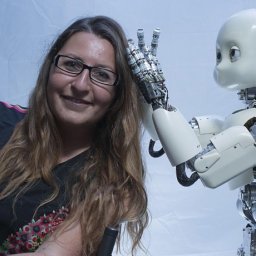 Serena Ivaldi合作论文数Brain and Cognitive Science Department, Italian Institute of Technology Robotics5
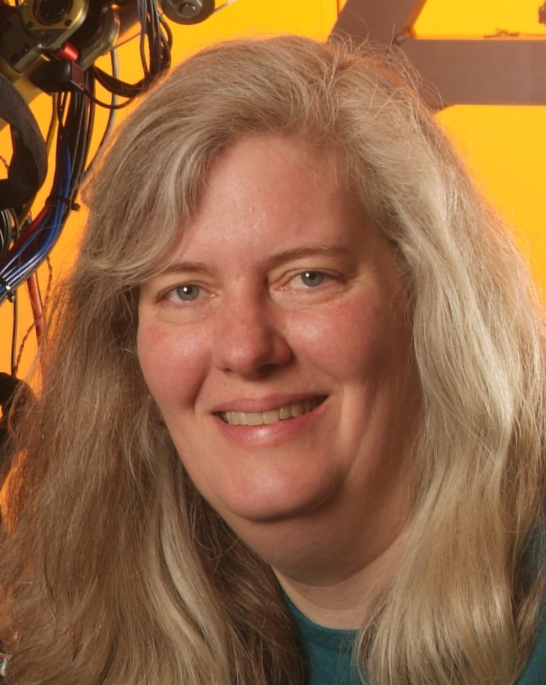 Jessica K. Hodgins合作论文数Robotics Institute, School of Computer Science, Carnegie Mellon University5Sydney Rebecca Charitos合作论文数4Steve Tonneau合作论文数School of Informatics, The University of Edinburgh4
 Oguzhan Cebe合作论文数Institute for Perception Action and Behaviour School of Informatics, University of Edinburgh4
 Niels Dehio合作论文数Bielefeld University4
 Katsu Yamane合作论文数Path Robotics4
 Vincent Padois合作论文数Institut des Systèmes Intelligents et de Robotique, Université Pierre et Marie Curie - Paris64
 Peter Pastor合作论文数Computational Learning and Motor Control Lab, University of Southern California4
 Paola Ardón合作论文数Technol Innovat Inst TII3
 Èric Pairet合作论文数Univ Edinburgh, Edinburgh Ctr Robot, Edinburgh EH14 4AS, Midlothian, Scotland3
 Gordon Cheng合作论文数Institute for Cognitive Systems, TUM School of Computation, Information and Technology, Technical University of Munich;Centre of Competence NeuroEngineering, Department of Electrical and Computer Engineering, TUM School of Computation, Information and Technology, Technical University of Munich;Intouch-Robotics GmbH;Georgetown University3
 Dennis Wigand合作论文数3
 Murai Akihiko合作论文数3
 Mitsuo Kawato (川人光男)合作论文数Center for Information and Neural Networks;Brain Information Communication Research Laboratory Group, Advanced Telecommunications Research Institute International;Center for AdvancedIntegrated intelligence Research, Institute of Physical and Chemical Research3
 Freek Stulp合作论文数Department of Cognitive Robotics, German Aerospace Center (DLR)3
 Franco Angelini合作论文数Sezione di Pisa, Università di Pisa and INFN3
 Ales Leonardis合作论文数Intelligent Robotics Laboratory, Centre for Computational Neuroscience and Cognitive Robotics, School of Computer Science, University of Birmingham3
 Yvan Petillot合作论文数School of Engineering and Physical Sciences, Heriot-Watt University;Oceans Systems Laboratory, Heriot-Watt University;Edinburgh University3R Ick Cory合作论文数3
 Francesco Nori合作论文数Google DeepMind3
 Manolo Garabini合作论文数university of pisa3
 Ioannis Havoutis合作论文数Oxford Robotics Institute, Department of Engineering Science, University of Oxford3
 Firdaus E. Udwadia合作论文数Department of Aerospace and Mechanical Engineering, Viterbi School of Engineering, University of Southern California;Departments of Civil Engineering, University of Southern California;Department of Mathematics, School of Letters, Arts, and Sciences, University of Southern California;Department of Information and Operations Management, Marshall School of Business, University of Southern California;Department of Systems Architecture Engineering, Viterbi School of Engineering, University of Southern California3
 Gabriella Pizzuto合作论文数2
 Ruoshi Wen合作论文数Dept Control Sci & Engn, Harbin Inst Technol2
 Mathew Jose Pollayil合作论文数University of Pisa, Research center "E. Piaggio", Pisa, ITALY2




