Prairie streams of North America support native fishes that are adapted to the dynamic environment that characterizes these ecologically and economically important ecosystems. However, prairie streams have been altered by landscape changes that may affect the proportions of native and introduced species in fish communities. Herein, we investigate drivers of introduced fish in prairie streams, detail common introduced species and their traits and effects, investigate how climate change may alter the balance between native and introduced species, and summarize management options. Commonly introduced fishes are those with the ability to tolerate extreme variations in temperature, hydrology, and salinity and, as a result, most of the introduced fishes were native to other prairie streams within the Great Plains ecoregion. This suggests environmental extremes may act as a filter for establishment or that short-distance translocations are more common than introductions from other ecoregions. The mechanisms or extent to which introduced species affect native fishes is often assumed or understudied. Climate change may amplify environmental disturbances in ways that may favor native or introduced fishes depending on species traits and biotic interactions. Actions such as habitat modifications or disturbances may favor introduced fishes over native fishes. Research to understand the relative roles of trait preadaptation and spatial proximity of source populations in introduced species establishment could benefit future management. Moreover, patterns observed in other ecosystems may not be transferrable to prairie streams, highlighting the need to understand the context dependency of effects of introduced species.
The aquatic fauna of large river systems have been the cornerstones of multiple civilizations throughout human history.Today,they remain critically important as pri-mary resources for humans as well as indicators of gen-eral ecosystem structure and function.Unfortunately,nearly all large-river systems globally are at risk from over-exploitation,pollution,large-scale development,navigation,dredging,climate change,and other threats.
Rehabilitation of large Anthropocene rivers requires engagement of diverse stakeholders across a broad range of sociopolitical boundaries. Competing objectives often constrain options for ecological restoration of large rivers whereas fewer competing objectives may exist in a subset of tributaries. Further, tributaries contribute toward building a “portfolio” of river ecosystem assets through physical and biological processes that may present opportunities to enhance the resilience of large river fishes. Our goal is to review roles of tributaries in enhancing mainstem large river fish populations. We present case histories from two greatly altered and distinct large-river tributary systems that highlight how tributaries contribute four portfolio assets to support large-river fish populations: 1) habitat diversity, 2) connectivity, 3) ecological asynchrony, and 4) density-dependent processes. Finally, we identify future research directions to advance our understanding of tributary roles and inform conservation actions. In the Missouri River United States, we focus on conservation efforts for the state endangered lake sturgeon, which inhabits large rivers and tributaries in the Midwest and Eastern United States. In the Colorado River, Grand Canyon United States, we focus on conservation efforts for recovery of the federally threatened humpback chub. In the Missouri River, habitat diversity focused on physical habitats such as substrate for reproduction, and deep-water habitats for refuge, whereas augmenting habitat diversity for Colorado River fishes focused on managing populations in tributaries with minimally impaired thermal and flow regimes. Connectivity enhancements in the Missouri River focused on increasing habitat accessibility that may require removal of physical structures like low-head dams; whereas in the Colorado River, the lack of connectivity may benefit native fishes as the disconnection provides refuge from non-native fish predation. Hydrologic variability among tributaries was present in both systems, likely underscoring ecological asynchrony. These case studies also described density dependent processes that could influence success of restoration actions. Although actions to restore populations varied by river system, these examples show that these four portfolio assets can help guide restoration activities across a diverse range of mainstem rivers and their tributaries. Using these assets as a guide, we suggest these can be transferable to other large river-tributary systems.
Spatio‐temporal movement patterns of aquatic organisms drive many ecological processes. However, dams block migrations and alter the hydrologic and thermal regimes influencing movement behaviour of freshwater fishes. In North America, many recovering southern Lake Sturgeon populations occur in rivers with hydroelectric dams, but few studies have examined the impact of hydrologic alteration on their seasonal movements. We conducted a 3‐year telemetry study of 96 adult and subadult Lake Sturgeon to compare their migratory responses to temperature and hydrology in adjacent regulated and unregulated tributaries of the Missouri River. Many other populations of Lake Sturgeon use tributaries primarily for spring spawning; however, in our study, Lake Sturgeon used Missouri River tributaries during 78% of the year. Differences in river size, hydrologic and thermal regimes in the regulated Osage River may have contributed to the greater year‐round residency, later initiation, more frequent directional changes and longer duration of spring migrations compared to the unregulated Gasconade River. Lake Sturgeon made spring upstream migrations at temperatures of 13–19°C and elevated discharges in both rivers. However, Osage River migrants responded less to changes in discharge or temperature during spring migrations, especially those that overwintered at upstream locations. Fall tributary migrations occurred in the Osage River at rising or high discharges but were uncommon in the Gasconade River. Our identification of the influences of abiotic variables on the timing, duration and extent of Lake Sturgeon seasonal migrations can help guide management of habitat and hydrology in regulated rivers to recover migratory fishes globally.
Despite ongoing Lake Sturgeon recovery efforts, little is known about the role of stocking location on survival and dispersal to nursery habitats. We stocked age‐0 Lake Sturgeon at four sites in two adjacent Missouri River tributaries and used telemetry to examine whether survival and dispersal differed among stocking sites and rivers. Survival estimates from Barker Cormack‐Jolly‐Seber models that incorporated both receiver detections and auxiliary manual detections were higher than spatial capture‐recapture models that only included receiver detections. Barker model overwinter survival averaged 53% and provided information to adjust individual censoring in spatial capture‐recapture model dispersal estimates. Within the two rivers, stocking site had little effect on activity centers with individuals from both sites converging upon similar locations by the end of the study period. However, dispersal distance and direction differed among stocking locations. Our overwinter survival estimates of stocked age‐0 Lake Sturgeon in Missouri River tributaries were equal to or higher than other studied populations suggesting stocked juveniles may be contributing to the recovering population. Tributaries were important overwintering nursery locations with high stream fidelity that may contribute to future homing among adults.
Successful species reintroduction requires restoration of receiving habitats to support growth, survival, and reproduction that reverse the initial causes of decline. Little is known about whether present habitat conditions can support all life stages of reintroduced southern Lake Sturgeon populations that were possibly extirpated by the mid‐1900s due to overharvest and habitat degradation. Therefore, we conducted a telemetry study to assess annual adult and subadult and overwinter age‐0 Lake Sturgeon habitat selection and suitability in two Missouri River U.S. tributaries near the southern edge of the species range. Spring habitat selection models were unable to define spawning habitat criteria, but criteria from other studies suggest that substrate and depths for spawning are suitable in both rivers. In the summer and winter, adult and subadult Lake Sturgeon exhibited strong selection for pools greater than 8 m deep, which comprised less than 5% of our study streams. Habitat selection in the fall and winter by age‐0 Lake Sturgeon differed from adults with age‐0s selecting shallower habitats both rivers and swifter current velocities in the Gasconade River. General habitat patterns persisted for both life stages in each river regardless of habitat availability, suggesting specialized habitat requirements in southern Lake Sturgeon that differ from previously studied populations further north. These results may be used to direct sampling for validation of reproduction and restoration of not only spawning habitats, but age‐0 and summer and winter refugia that may be potential restoration bottlenecks for southern Lake Sturgeon populations.
Crayfish serve critical roles in aquatic ecosystems as engineers, omnivores, and prey. It is unclear how increasingly frequent extreme-flow events and warming air temperatures will affect crayfish populations, partly because there are few long-term crayfish monitoring datasets. Using a unique 10-y dataset, we asked 1) whether recruitment of crayfishes in summer responded to extreme-flow events and air temperature during spring brooding and summer growing periods and 2) whether responses were similar among 3 co-occurring crayfish species. Golden (Faxonius luteus [Creaser, 1933]), Ozark (Faxonius ozarkae [Williams, 1952]), and Spothand (Faxonius punctimanus [Creaser, 1933]) crayfishes were sampled in quadrats at 2 sites each in the Big Piney (1993–2000) and Jacks Fork (1992–2001) rivers (Missouri, USA; n = 3355 1-m2 quadrats). We used zero-inflated generalized linear models to relate variability in quadrat-level age-0 counts to mean daily maximum air temperatures and flow metrics (variability, magnitude, and frequency of extreme high- and low-flow events). Species ranged from a small-bodied, abundant habitat generalist (Golden Crayfish) to large-bodied, uncommon habitat specialists (Ozark and Spothand crayfishes). Golden Crayfish occurred in higher-velocity habitats (riffles, runs) and had variable recruitment that increased during years with few spring and summer high-flow events and summers with lower flows and warmer temperatures. In contrast, annual recruitment variability of Ozark and Spothand crayfishes was low and explained by positive effects of cooler summers and by different flow metrics. Spothand Crayfish recruitment decreased in years with frequent spring and summer high-flow events, whereas lower summer minimum flow was the only flow metric that explained slight increases in Ozark Crayfish recruitment. Relationships with the preceding year’s recruitment were quadratic for Ozark and Spothand crayfishes, suggesting potential density dependence at higher recruitment levels. Species-specific responses suggest that closely related crayfishes could respond idiosyncratically to changes in temperature and flow. Temperature- and flow-related disturbances may be key mechanisms mediating competition and, thus, may help maintain crayfish diversity. However, warming air temperatures and increasingly frequent extreme-flow events could disadvantage some species, thereby altering future crayfish assemblages.
Ecologists have a limited understanding of the rangewide variation in movement behavior in freshwater fishes, but recent expansion of biotelemetry allows biologists to investigate how fish movement can help to predict behavioral shifts in response to changing environments. The Lake SturgeonAcipenser fulvescensis a wide-ranging, migratory, coolwater species, making it a candidate species for studying patterns in movement ecology. We conducted a literature review and meta-analysis of seasonal movement data compiled from 38 Lake Sturgeon telemetry studies in North America to build an understanding of spatiotemporal variation in movement behavior. Lake Sturgeon movement studies were underrepresented for low-latitude populations in the Mississippi, Missouri, and Ohio/Tennessee River basins. Highest movement usually occurred during spring spawning migrations, whereas other populations exhibited their highest movement in the fall, potentially in order to overwinter near spawning grounds. Our meta-regression analysis indicated that latitude or summer maximum temperature best predicted standardized mean difference between spring and summer movement in Lake Sturgeon populations across the species' range. Our results suggest that Lake Sturgeon populations at lower latitudes and those that experience warmer summer temperatures have lower summer movement relative to spring movement. Managers may use this information to prioritize actions promoting the conservation of seasonally important habitats for the continued recovery of migratory coolwater fish (e.g., Lake Sturgeon) that potentially experience stressful thermal conditions.
FisheriesVolume 43, Issue 12 p. 575-576 Essay Stories Worth Sharing M. J. Moore, Corresponding Author M. J. Moore mjmhx5@mail.missouri.edu School of Natural Resources, 302 Anheuser-Busch Natural Resources Building, University of Missouri, Columbia, Missouri, 65211Search for more papers by this authorD. J. Orth, D. J. Orth Department of Fish and Wildlife Conservation, Virginia Polytechnic Institute and State University, Blacksburg, VirginiaSearch for more papers by this author M. J. Moore, Corresponding Author M. J. Moore mjmhx5@mail.missouri.edu School of Natural Resources, 302 Anheuser-Busch Natural Resources Building, University of Missouri, Columbia, Missouri, 65211Search for more papers by this authorD. J. Orth, D. J. Orth Department of Fish and Wildlife Conservation, Virginia Polytechnic Institute and State University, Blacksburg, VirginiaSearch for more papers by this author First published: 08 September 2018 https://doi.org/10.1002/fsh.10169Citations: 1Read the full textAboutPDF ToolsRequest permissionExport citationAdd to favoritesTrack citation ShareShare Give accessShare full text accessShare full-text accessPlease review our Terms and Conditions of Use and check box below to share full-text version of article.I have read and accept the Wiley Online Library Terms and Conditions of UseShareable LinkUse the link below to share a full-text version of this article with your friends and colleagues. Learn more.Copy URL Share a linkShare onFacebookTwitterLinkedInRedditWechat No abstract is available for this article.Citing Literature Volume43, Issue12December 2018Pages 575-576 RelatedInformation
FisheriesVolume 43, Issue 12 p. 577-578 2018 Student Writing Contest Winning Essay Strangers in their Own Streams: Restoring Lake Sturgeon Populations to the Lower Missouri River Basin Michael J. Moore, Corresponding Author Michael J. Moore mjmhx5@mail.missouri.edu School of Natural Resources, 302 Anheuser-Busch Natural Resources Building, University of Missouri, Columbia, MO, 65211Search for more papers by this author Michael J. Moore, Corresponding Author Michael J. Moore mjmhx5@mail.missouri.edu School of Natural Resources, 302 Anheuser-Busch Natural Resources Building, University of Missouri, Columbia, MO, 65211Search for more papers by this author First published: 18 December 2018 https://doi.org/10.1002/fsh.10199Read the full textAboutPDF ToolsRequest permissionExport citationAdd to favoritesTrack citation ShareShare Give accessShare full text accessShare full-text accessPlease review our Terms and Conditions of Use and check box below to share full-text version of article.I have read and accept the Wiley Online Library Terms and Conditions of UseShareable LinkUse the link below to share a full-text version of this article with your friends and colleagues. Learn more.Copy URL Share a linkShare onFacebookTwitterLinked InRedditWechat No abstract is available for this article. Volume43, Issue12December 2018Pages 577-578 RelatedInformation
Life-history knowledge is central to basic and applied ecology, but recent reviews show that knowledge of life histories of many freshwater invertebrates is incomplete because of difficulty in conducting such studies or a general decline of interest in natural-history research. We review and summarize published life histories for crayfishes native to the USA and Canada. We document the rate of accumulation of crayfish life-history knowledge and biases and gaps in life-history knowledge by taxonomic group, geography, habitat preference, and conservation status. A total of 78 published studies (59 papers; several included life-history information for multiple species) covering 42 (12%) of the 347 USA and Canadian crayfishes recognized as of 2007 met our criteria for crayfish life-history studies. Life-history studies were lacking for crayfishes of conservation concern and stygobitic or primary burrowing-habitat specialists. Life-history knowledge is relatively complete for low-diversity freshwater ecoregions of northern and western North America, but lacking for high-diversity freshwater ecoregions of the southeastern USA. From 1972 to 2007, an average of 3.40 new crayfish species/y were described, whereas 0.63 species/y were added to the list of crayfishes with published life-history studies. Thus, taxonomic knowledge is expanding faster than ecological or life-history knowledge of these same species, inevitably limiting our ability to manage and conserve them. We conclude with suggestions for increasing publication of crayfish life-history studies, and priorities for regions, taxonomic groups, and life-history traits that require urgent attention. We also present a database of existing crayfish life-history studies for researchers interested in life-history questions and to provide a foundation for traits-based inquiries into crayfish macroecology and applied questions in conservation like the prediction of extinction and invasion risk.
The Eleven Point River drainage in the Ozarks ecoregion of North America contains the largest known populations of and critical habitat for the globally imperiled coldwater crayfish (Orconectes eupunctus). We present here the discovery of an introduced population of alien ringed crayfish (Orconectes neglectus neglectus) in Jolliff Spring Branch in the upper reaches of the drainage. Sampling was conducted at eight sites throughout the tributary to determine the extent of the alien species’ range in the stream. Orconectes n. neglectus were found at four sites extending along 3.4 km of stream, with reproducing populations confirmed at two upstream sites, and few individuals found at two others. This invasion represents a threat to O. eupunctus, which occurs a few kilometers further downstream in the drainage and has been recorded from only the lower reaches of Barren Fork and throughout the mainstem Eleven Point River. Introduced O. neglectus were previously associated with localized extirpation of O. eupunctus in another drainage. Study results warrant monitoring of the invasion and possible reassessment of the conservation status for O. eupunctus.
General strategies to obtain inactive kinases have utilized mutation of key conserved residues in the kinase core, and the equivalent Lys(72) in cAMP-dependent kinase has often been used to generate a "dead" kinase. Here, we have analyzed the consequences of this mutation on kinase structure and function. Mutation of Lys(72) to histidine (K72H) generated an inactive enzyme, which was unphosphorylated. Treatment with an exogenous kinase (PDK-1) resulted in a mutant that was phosphorylated only at Thr(197) and remained inactive but nevertheless capable of binding ATP. Ser(338) in K72H cannot be autophosphorylated, nor can it be phosphorylated in an intermolecular process by active wild type C-subunit. The Lys(72) mutant, once phosphorylated on Thr(197), can bind with high affinity to the RIalpha subunits. Thus a dead kinase can still act as a scaffold for binding substrates and inhibitors; it is only phosphoryl transfer that is defective. Using a potent inhibitor of C-subunit activity, H-89, Escherichia coli-expressed C-subunit was also obtained in its unphosphorylated state. This protein is able to mature into its active form in the presence of PDK-1 and is able to undergo secondary autophosphorylation on Ser(338). Unlike the H-89-treated wild type protein, the mutant protein ( K72H) cannot undergo the subsequent cis autophosphorylation following phosphorylation at Thr(197). Using these two substrates and mammalian-expressed PDK-1, we can elucidate a possible two-step process for the activation of the C-subunit: initial phosphorylation on the activation loop at Thr(197) by PDK-1, or a PDK-1-like enzyme, followed by second cis autophosphorylation step at Ser(338).
For optimal activity the catalytic subunit of cAMP-dependent protein kinase requires a phosphate on Thr-197. This phosphate anchors the activation loop in the proper conformation and contributes to catalytic efficiency by enhancing the phosphoryl transfer rate and increasing the affinity for ATP (1). The crystal structure of the catalytic subunit bound to ATP, and the inhibitor peptide, IP20, highlights the contacts made by the Thr-197 phosphate as well as the role adjacent residues play in contacting the substrate peptide. Glu-203 and Tyr-204 interact with arginines in the consensus sequence of PKA substrates at the P-6 and P-2 positions, respectively. To assess the contribution that each residue makes to peptide recognition, the kinetic properties of three mutant proteins (E203A, Y204A, and Y204F) were monitored using multiple peptide substrates. The canonical peptide substrate, Kemptide, as well as a longer 9-residue peptide and corresponding peptides with alanine substitutions at the P-6 and P-2 positions were used. While the effect of Glu-203 is more localized to the P-6 site, Tyr-204 contributes to global peptide recognition. An aromatic hydrophobic residue is essential for optimal peptide recognition and is conserved throughout the protein kinase family.
The identification of phosphoinositide-dependent kinase-1 (PDK-1) as an activating kinase for members of the AGC family of kinases has. led to its implication as the activating kinase for cAMP-dependent protein kinase. It has been established in vitro that PDK-1 can phosphorylate the catalytic (C) subunit (19), but the Escherichia coli-expressed C-subunit undergoes autophosphorylation. To assess which of these mechanisms occurs in mammalian cells, a set of mutations was engineered flanking the site of PDK-1 phosphorylation, Thr-197, on the activation segment of the C-subunit. Two distinct requirements appeared for autophosphorylation and phosphorylation by PDK-1. Autophosphorylation was disrupted by mutations that compromised activity (Thr-201 and Gly-200) or altered substrate recognition (Arg-194). Conversely, only residues peripheral to Thr-197 altered PDK-1 phosphorylation, including a potential hydrophobic PDK-1 binding site at the C terminus. To address the in vivo requirements for phosphorylation, select mutant proteins were transfected into COS-7 cells, and their phosphorylation state was assessed with phospho-specific antibodies. The phosphorylation pattern of these mutant proteins indicates that autophosphorylation is not the maturation mechanism in the eukaryotic cell; instead, a heterologous kinase with properties resembling the in vitro characteristics of PDK-1 is responsible for in vivo phosphorylation of PKA.
 Craig P. Paukert合作论文数Department of Wildlife and Fisheries Sciences;South Dakota State University;Department of Wildlife and Fisheries Sciences, South Dakota State University6
 Travis L. Moore合作论文数4
 Susan Taylor合作论文数Division of Neuropharmacology & Neurological Disorders, Department of Pharmacology, School of Medicine, University of California, San Diego;Howard Hughes Medical Institute;San Diego Supercomputer Center4
 Robert J DiStefano合作论文数3
 Brandon Brooke合作论文数2
 Corey Dunn合作论文数US Geol Survey, Mississippi State Univ2Joan Ruth Kanter合作论文数Departments of Pharmacology and Medicine, University of California2p w lambert合作论文数1Ganesh H. Iyer合作论文数1Ss Taylor合作论文数1VL WOODS合作论文数1
 Nicholas A. Sievert合作论文数School of Natural Resources, University of Missouri1S Garrod合作论文数1
 Jonathan J. Spurgeon合作论文数US Geol Survey, Univ Nebraska Lincoln1J. Kim合作论文数1
 Kristen L. Bouska合作论文数US Geol Survey, Upper Midwest Environm Sci Ctr1
 Alison Coulter合作论文数South Dakota State University1
 Frank J. Rahel合作论文数Department of Zoology and Physiology, College of Agriculture, Life Sciences and Natural Resources, University of Wyoming1
 Joseph Adams合作论文数Department of Pharmacology, School of Medicine, University of California, San Diego1
 Michael Eggleton合作论文数1
 Thomas W. Bonnot合作论文数Department of Fisheries and Wildlife Sciences;University of Missouri;Department of Fisheries and Wildlife Sciences, University of Missouri1
 Yushun Chen合作论文数Institute of Hydrobiology, Chinese Academy of Sciences1
 Quinton E. Phelps合作论文数Department of Zoology;Southern Illinois University;Department of Zoology, Southern Illinois University1
 Shannon Brewer合作论文数USGS Missouri Cooperative Fish and Wildlife Research Unit, University of Missouri Department of Fisheries and Wildlife Sciences1
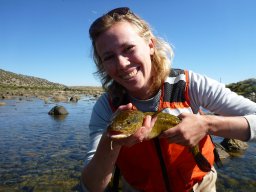 Annika W. Walters合作论文数Department of Ecology;Yale University;Department of Ecology, Yale University1
 Donald J. Orth合作论文数Oklahoma Cooperative Fishery Research Unit;Oklahoma State University;Oklahoma Cooperative Fishery Research Unit, Oklahoma State University1
 Eric Larson合作论文数Southern Methodist University.1
 Alexander Y. Karatayev合作论文数Great Lakes Center, Buffalo State College1Emily M. Imhoff合作论文数1
 Brian D. Healy合作论文数1




