Our Chief Editor Ali Bilge made an interview with Michael Musa, former Chief Economist of the IMF, in Washington DC. They spoke about the cause of the global economic crises effecting the world, its possible results, its effects on financial markets and goods, also neo-liberal economic policies, impacts of weakness in regulating financial markets. Comments and suggestions of the economists arround the world about the crisis, performances of IMF and other International foundations, their future and their strategies were covered. Interview consists of analysis of former Chief Economist of IMF, once a great actor for lots of countries economies.
Thank you very much Mr. Chairman. It is a great pleasure to participate in this Conference honoring Bill White on the occasion of his retirement as the Chief Economist of the BIS. I have known Bill for seventeen years, first when he was Deputy Governor of the Bank of Canada and more recently in his role at the BIS. Like most of you here, I have not always agreed with Bill on every point, although I have agreed with him far more often than not. Even when we have disagreed, I have always admired that Bill’s papers and comments made important points clearly and succinctly, leaving no doubt about the facts and analysis backing Bill’s position.
The U.S. current account deficit is unsustainable and will need to fall by half as a share of GDP in coming years. The adjustment process will necessarily involve (1) substantial further real effective depreciation of the U.S. dollar, (2) slowing of U.S. demand growth below potential output growth, and (3) acceleration of demand growth relative to output growth in the rest of the world. Adjustment is likely to be reasonably orderly, with only modest risks of a “dollar crash”. Policy, including more aggressive fiscal consolidation in the U.S. and more rapid appreciation of key Asian currencies, can help assure orderly adjustment.
In the six years since the advent of the euro, short-term exchange rate volatility against the U.S. dollar is unchanged from that of predecessor currencies. The wide down/up swing of the euro/dollar exchange over six years is no greater than that seen in earlier periods, especially 1980–1987. Part of this wide swing is plausibly explained by movements in economic fundamentals and was desirable; but the swing was too wide and somewhat hampered appropriate macroeconomic policies. The euro/dollar exchange rate is not now clearly undervalued or overvalued. Its further course should generally be left to market forces while policy attention focuses on other key adjustments needed to reduce external payments imbalances to more sustainable levels.
The introduction of the euro provides an improved public good that will prove beneficial both within the euro area and to external users of the new monetary unit, including virtually all those doing business in and with the euro area. The rest of the world will also likely benefit indirectly from the euro’s effect in improving the economic performance of the euro area and, more broadly, from the cooperative and peaceful integration that the new currency symbolizes.
This paper examines the consequences of heightened capital mobility and of the integration of developing economies in increasingly globalized markets for the exchange rate regimes of the industrial, developing, and transition economies. It builds upon previous studies by IMF staff on various aspects of the exchange rate arrangements of member countries, consistent with the IMF's role of surveillance over its members exchange rate policies.
This paper examines the consequences of heightened capital mobility and of the integration of developing economies in increasingly globalized markets for the exchange rate regimes of the industrial, developing, and transition economies. It builds upon previous studies by IMF staff on various aspects of the exchange rate arrangements of member countries, consistent with the IMF's role of surveillance over its members exchange rate policies.
This paper examines the consequences of heightened capital mobility and of the integration of developing economies in increasingly globalized markets for the exchange rate regimes of the industrial, developing, and transition economies. It builds upon previous studies by IMF staff on various aspects of the exchange rate arrangements of member countries, consistent with the IMF's role of surveillance over its members exchange rate policies.
This paper studies the impact of a broadening of the SDR basket to the Chinese currency on the composition and volatility of the basket. Although, in the past, RMB inclusion would have had negligible impact due to its limited weight, a much more significant impact can be expected in the next decades. If the objective is to reinforce the attractiveness of the SDR as a unit of account and a store of value through more stability, then a broadening of the SDR to the RMB could be appropriate, provided some flexibility is introduced in the Chinese exchange-rate regime. This issue of flexibility is de facto more important than that of “freely usable” to make the SDR more stable, at least in the short and medium run.
This paper examines the consequences of heightened capital mobility and of the integration of developing economies in increasingly globalized markets for the exchange rate regimes of the industrial, developing, and transition economies. It builds upon previous studies by IMF staff on various aspects of the exchange rate arrangements of member countries, consistent with the IMF's role of surveillance over its members exchange rate policies.
This paper explains the IMF approach to economic stabilization, with emphasis on its quantitative aspects. It argues that a Fund-supported program is a process, comprising six broadly defined phases, that evolves along a multiplicity of potential pathways delimited by the Fund's policies governing assistance to members and by the member's resolve to implement the measures needed to restore external payments viability. The paper discusses the three-pronged approach to stabilization that is at the core of all IMF programs, stresses the iterative character of the Fund's "financial programming" framework, and explains the rationale for setting quantitative performance criteria for fiscal and monetary policy in all Fund arrangements. A main theme of the paper is that IMF programs contain a great deal of flexibility to respond both to differences in circumstances and to changes in conditions in individual cases.
This paper examines the consequences of heightened capital mobility and of the integration of developing economies in increasingly globalized markets for the exchange rate regimes of the industrial, developing, and transition economies. It builds upon previous studies by IMF staff on various aspects of the exchange rate arrangements of member countries, consistent with the IMF's role of surveillance over its members exchange rate policies.
Global economic integration is not a new phenomenon. Some communication and trade took place between distant civilizations even in ancient times. Since the travels of Marco Polo seven centuries ago, global economic integration—through trade, factor movements, and communication of economically useful knowledge and technology—has been on a generally rising trend. This process of globalization in the economic domain has not always proceeded smoothly. Nor has it always benefited all whom it has affected. But, despite occasional interruptions, such as following the collapse of the Roman Empire or during the interwar period in this century, the degree of economic integration among different societies around the world has generally been rising. Indeed, during the past half century, the pace of economic globalization (including the reversal of the interwar decline) has been particularly rapid. And, with the exception of human migration, global economic integration today is greater than it ever has been and is likely to deepen going forward. 1
 Jacob A. Frenkel合作论文数University of Chicago7
 Paul Robert Masson合作论文数5Esteban Jadresic合作论文数3
 Paolo Mauro合作论文数Economic and Market Research Department, International Finance Corporation3Andrew Berg合作论文数International Monetary Fund3rudiger dornbusch合作论文数1WILLIAM H BRANSON合作论文数1RUDIGER DORNBUSCH合作论文数1MURRAY C KEMP合作论文数1Rn Cooper合作论文数1Paul A. Samuelson合作论文数1RICHARD COOPER合作论文数1WOLFGANG MAYER合作论文数1
 Edward Emory Leamer合作论文数Anderson School of Management, University of California, Los Angeles1
 Alan V. Deardorff合作论文数International Institute, College of Literature, Science, and the Arts, University of Michigan/Ford School of Public Policy, University of Michigan1
 Assar Lindbeck合作论文数Institute for International Economic Studies, Stockholm University1Barry Eichengreen合作论文数1
 Elhanan Helpman合作论文数International Trade, Harvard University;Department of Economics, Faculty of Arts and Sciences, Harvard University;Tel Aviv University1Peter Isard合作论文数1Robert P. Flood合作论文数Northwestern University1James Boughton合作论文数1Richard A. Brecher合作论文数1David Folkerts-Landau合作论文数1
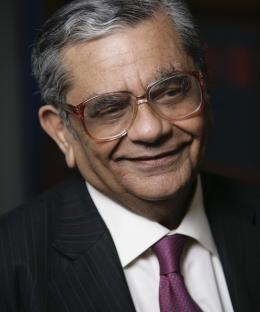 Jagdish N. Bhagwati合作论文数Economics Department, Columbia University1Miguel A. Savastano合作论文数NATIONAL BUREAU OF ECONOMIC RESEARCH1
 Rudi Dornbusch合作论文数Department of Economics, Massachusetts Institute of Technology1Michael P. Dooley合作论文数1




