Reproducibility is an important goal in computer science research, e.g., for artifact evaluation and to build upon experimental results of prior work. Recently, LLM agents are being used to automatically reproduce research results, but they fail to provide executable evidence of reproduction and do not consider the method of reproduction, which limits their usefulness. We present Artisan, an LLM agent that reproduces tables of numeric results, given a paper and its artifact. The approach is enabled by two key contributions: First, we frame the reproduction problem as a code generation task, enabling users to audit and re-run the resulting reproduction script independently of the agent. Second, we design automated judging mechanisms that steer the agent toward correct results without exposing them, while preventing shortcuts like copying precomputed results. To evaluate Artisan, we introduce Artisan-Bench, the first benchmark assessing the ability to generate code that reproduces research results. Artisan-Bench comprises 60 tasks derived from 23 software engineering papers. Our experiments show that Artisan is effective and efficient, with the added benefit of aiding the discovery of 20 new errors in either the paper or artifact.
Regression test selection reduces the cost of regression testing by executing only those tests affected by a code change. Despite extensive study of RTS in statically typed languages, achieving effective and safe RTS in Python is challenging. Python's dynamic typing makes precise call-graph construction difficult, which can cause call-graph-based RTS to miss affected tests. Python's eager importing mechanism, in contrast, renders file-level dependency analysis overly conservative. This paper presents NameRTS, the first Python RTS approach based on fine-grained dependency analysis. NameRTS models a Python program as a bipartite graph of code element nodes and name nodes, with edges capturing definitions and references. RTS is formulated as a reachability problem on this graph: a test is selected if any modified code element is reachable from the names used in that test. This design avoids call-graph construction, enabling a conservative analysis amenable to safety. To control dependency cascades introduced by coarse name matching, NameRTS applies two pruning strategies that leverage prior test executions and context information to refine name matching. To evaluate NameRTS, we construct the first Python RTS dataset with a ground truth indicating which test files are affected by each commit. We compare NameRTS with the best-performing baseline, BabelRTS, an RTS technique based on coarse file-level dependencies. On this benchmark, NameRTS skips 69.90
Security vulnerabilities in software packages are a significant concern for developers and users alike. Patching these vulnerabilities in a timely manner is crucial to restoring the integrity and security of software systems. However, previous work has shown that vulnerability reports often lack proof-of-concept (PoC) exploits, which are essential for fixing the vulnerability, testing patches, and avoiding regressions. Creating a PoC exploit is challenging because vulnerability reports are informal and often incomplete, and because it requires a detailed understanding of how inputs passed to potentially vulnerable APIs may reach security-relevant sinks. In this paper, we present PoCGen, a novel approach to autonomously generate and validate PoC exploits for vulnerabilities in npm packages. The approach combines the complementary strengths of LLMs (e.g., understanding informal vulnerability reports), static analysis (e.g., identifying taint paths), and dynamic analysis (e.g., validating generated exploits). PoCGen successfully generates exploits for 71% of the vulnerabilities in the SecBench.js dataset. This success rate significantly outperforms a recent baseline (by 38 absolute percentage points), while imposing an average cost of only $0.02 per generated exploit. Moreover, PoCGen generates successful exploits for 60% of 126 recent real-world vulnerabilities, which helped augment five recent vulnerability reports in the GitHub Security Advisories database with PoCGen-generated PoC exploits.
As software evolves over time, it is important to ensure that any behavioral changes occur as intended by developers. A promising approach for this goal is to generate tests that expose behavioral differences between the old and new versions of a program. However, current approaches fail to trigger behavioral differences for many code changes. This paper presents DiffTestGen, a novel change-directed, LLM-based differential testing approach specifically designed to expose behavioral differences introduced by a code change. The approach is enabled by two key contributions: First, DiffTestGen leverages static call graph analysis and project documentation to identify valid entry points for test generation and to guide the LLM toward reaching the changed code. Second, DiffTestGen iteratively improves our newly introduced union coverage metric, which combines coverage of modified code in the old and the new version, by providing targeted coverage feedback to the LLM. We evaluate DiffTestGen on two datasets comprising a total of 463 PRs. DiffTestGen exposes behavioral differences in 78.2
Software development agents powered by large language models (LLMs) have shown great promise in automating tasks like environment setup, issue solving, and program repair. Unfortunately, understanding and debugging such agents remain challenging due to their complex and dynamic nature. Developers must reason about trajectories of LLM queries, tool calls, and code modifications, but current techniques reveal little of this intermediate process in a comprehensible format. The key insight of this paper is that debugging software development agents shares many similarities with conventional debugging of software programs, yet requires a higher level of abstraction that raises the level from low-level implementation details to high-level agent actions. Drawing on this insight, we introduce AgentStepper, the first interactive debugger for LLM-based software engineering agents. AgentStepper enables developers to inspect, control, and interactively manipulate agent trajectories. AgentStepper represents trajectories as structured conversations among an LLM, the agent program, and tools. It supports breakpoints, stepwise execution, and live editing of prompts and tool invocations, while capturing and displaying intermediate repository-level code changes. Our evaluation applies AgentStepper to three state-of-the-art software development agents, ExecutionAgent, SWE-Agent, and RepairAgent, showing that integrating the approach into existing agents requires minor code changes (39-42 edited lines). Moreover, we report on a user study with twelve participants, indicating that AgentStepper improves the ability of participants to interpret trajectories (64
Software is in constant evolution, with developers frequently submitting pull requests (PRs) to introduce new features or fix bugs. Testing PRs is critical to maintaining software quality. Yet, even in projects with extensive test suites, some PR-modified lines remain untested, leaving a "last-mile" regression test gap. Existing test generators typically aim to improve overall coverage, but do not specifically target the uncovered lines in PRs. We present Change And Cover (ChaCo), an LLM-based test augmentation technique that addresses this gap. It makes three contributions: (i) ChaCo considers the PR-specific patch coverage, offering developers augmented tests for code just when it is on the developers' mind. (ii) We identify providing suitable test context as a crucial challenge for an LLM to generate useful tests, and present two techniques to extract relevant test content, such as existing test functions, fixtures, and data generators. (iii) To make augmented tests acceptable for developers, ChaCo carefully integrates them into the existing test suite, e.g., by matching the test's structure and style with the existing tests, and generates a summary of the test addition for developer review. We evaluate ChaCo on 145 PRs from three popular and complex open-source projects - SciPy, Qiskit, and Pandas. The approach successfully helps 30% of PRs achieve full patch coverage, at the cost of $0.11, showing its effectiveness and practicality. Human reviewers find the tests to be worth adding (4.53/5.0), well integrated (4.2/5.0), and relevant to the PR (4.7/5.0). Ablations show test context is crucial for context-aware test generation, leading to 2x coverage. We submitted 12 tests, of which 8 have already been merged, and two previously unknown bugs were exposed and fixed. We envision our approach to be integrated into CI workflows, automating the last mile of regression test augmentation.
Documentation changes in mature software projects often describe newly introduced or modified behavior. This makes them a natural basis for documentation-driven feature addition, where software engineering agents implement features from public-facing documentation updates. However, existing benchmarks for agentic software development primarily rely on issue reports written for maintainer coordination and often contain implementation-level details. Motivated by this observation, this work introduces Doc2Feat-bench, a benchmark for documentation-driven feature addition. Doc2Feat-bench consists of 634 tasks across 10 mature open-source software projects, involving about 114k code changes in total. Each task pairs a documentation change with the corresponding implementation and developer-written tests, enabling evaluation of whether a software engineering agent can implement the feature described by the documentation diff. The benchmark is constructed through a five-phase pipeline, starting from release notes, and offers broad coverage across libraries, developer tools, and frameworks while preserving real-world development settings. To facilitate lightweight and reliable evaluation under limited resources, we further curate a human-validated subset named Doc2Feat-bench Verified. It contains 114 high-quality instances whose task clarity and evaluation validity are manually verified. We use Doc2Feat-bench to assess a range of state-of-the-art software engineering agents with two widely used scaffolds. Experimental results show that despite significant token consumption, the best task success rate remains as low as 37.72
Numerous software analysis tools exist today, yet applying them to diverse open-source projects remains challenging due to environment setup, dependency resolution, and tool configuration. LLM-based agents offer a potential solution, yet no prior work has systematically studied their effectiveness on the specific task of automated software analysis, which, unlike issue solving or general environment setup, requires installing and configuring a separate analysis tool alongside the target project, generating tool-specific prerequisites, and validating that the tool produces meaningful analysis outputs. We introduce AnalysisBench, a benchmark of 35 tool-project pairs spanning seven analysis tools and ten diverse C/C++ and Java projects, each with a manually constructed reference setup. Using AnalysisBench, we evaluate four agent architectures across four LLM backends. Our custom agent, AnalysisAgent, achieves manually verified success rates of 94
Static analysis tools are widely used to detect bugs, vulnerabilities, and code smells. Traditionally, developers must resolve these warnings manually. Because this process is tedious, developers sometimes ignore warnings, leading to an accumulation of warnings and a degradation of code quality. This paper presents CodeCureAgent, an approach that harnesses LLM-based agents to automatically analyze, classify, and repair static analysis warnings. Unlike previous work, our method does not follow a predetermined algorithm. Instead, we adopt an agentic framework that iteratively invokes tools to gather additional information from the codebase (e.g., via code search) and edit the codebase to resolve the warning. CodeCureAgent detects and suppresses false positives, while fixing true positives when identified. We equip CodeCureAgent with a three-step heuristic to approve patches: (1) build the project, (2) verify that the warning disappears without introducing new warnings, and (3) run the test suite. We evaluate CodeCureAgent on a dataset of 1,000 SonarQube warnings found in 106 Java projects and covering 291 distinct rules. Our approach produces plausible fixes for 96.8
Source code documentation is an integral part of software development and maintenance, as it helps in understanding the code and facilitates communication among developers. However, existing documentation is often incomplete, outdated, or inaccurate, which can lead to misunderstandings and errors. In the era of large language models (LLMs), which are being extensively used for software engineering tasks, the quality of documentation becomes even more critical, as documentation provides important context for the models. In this paper, we introduce the notion of documentation-to-code equivalence, a novel property that captures whether documentation accurately and completely describes the code it documents. We present a novel approach, called Documentary, to automatically generate equivalent documentation for a given code snippet. Our evaluation shows that Documentary can generate equivalent documentation for 53.4
Complex software systems often suffer from silent failures, i.e., violations of the intended semantics that do not cause explicit errors. A promising approach to detect such errors is to use system-specific runtime checkers that monitor the execution of a system and check for violations of the intended semantics. However, writing such checkers for a given software system is challenging and time-consuming, and hence, rarely done in practice. This work presents FlyCatcher, an automated approach to derive runtime checkers from existing tests, i.e., from a resource available for most software systems. The critical challenge of such an approach is to generalize the behavioral properties encoded in a test case to arbitrary executions of a system. FlyCatcher addresses this challenge through a combination of LLM-based synthesis, static analysis, and dynamic validation, which infers a checker that monitors specific method calls and asserts properties that should hold when they are called. The inferred checkers are stateful, i.e., they reason about the system's behavior by maintaining a shadow state that abstracts the actual system state as needed by the checker. Our evaluation applies FlyCatcher to 400 tests from four widely used, complex software systems. The approach infers 334 checkers, out of which 300 are found to be correct via cross-validation. Compared with a state-of-the-art approach, our approach infers 2.6x more correct checkers, which enables it to detect 5.2x more errors. By contributing to the automated inference of runtime checkers from tests, this work enables the broader adoption of runtime checking as a practical approach to detect silent failures in complex software systems.
Software systems evolve continuously through frequent code changes, yet such changes often introduce unintended bugs despite extensive testing and code review. Existing testing approaches are largely constrained to predefined execution paths or rely on unguided exploration, leaving many change-induced issues undetected. To address this challenge, we present RippleGUItester, a change-driven testing system that treats a code change as the epicenter of a ripple effect and explores its broader, user-visible impacts via the GUI. Given a code change, RippleGUItester performs LLM-based change-impact analysis to generate and enrich realistic test scenarios, executes these scenarios on both pre-change and post-change versions of the system, and applies differential analysis to identify behavioral differences. Crucially, RippleGUItester employs multimodal bug detection, comparing visual GUI changes and interpreting them in the context of natural-language change intents to distinguish unintended bugs from intended behavioral updates. We evaluate our approach on hundreds of real-world code changes across four widely used software systems: Firefox, Zettlr, JabRef, and Godot. Our results show that the proposed approach uncovers bugs introduced by code changes that were missed by existing test suites, CI pipelines, and code review. In total, we identify 26 previously unknown bugs that still exist in the latest versions of the evaluated systems. After reporting, 16 bugs have been fixed, 2 have been confirmed, 6 are still under discussion, and 2 were marked as intended. We envision RippleGUItester being applied before or shortly after a code change is merged, enabling earlier detection of regressions.
Repository-level documentation, such as READMEs, is often the first point of contact between users and a repository. When this documentation is incorrect, users may encounter runtime errors or waste their time debugging. We call such mistakes in repository-level documentation README bugs. Addressing README bugs is challenging because documentation mixes prose with code, its connection to the source of truth is loose, and finding a bug still leaves developers to craft a repair. This paper presents READU, an inconsistency-driven technique for just-in-time detection and repair of README bugs. The key insight behind READU is that README bugs often manifest as inconsistencies between documentation and another source of truth: either repository-internal facts, such as source code, or repository-external facts, such as external dependencies. READU applies a high-recall commit filter, runs internal and external consistency checkers in parallel, uses an alert judge to remove false positives, and automatically synthesizes documentation patches. On 6,000 recent commits from six popular repositories including Linux and Spring Boot, READU detects 244 true positives with 75
Replacing hand-written code with library API calls is a common refactoring that can reduce code size, make code more idiomatic, and reuse well-tested implementations. Yet many library-adoption opportunities are hard to find automatically: the original code often does not mention the target library and may resemble the library API only in behavior, with little syntactic overlap. Existing tools, such as linters and static modernizers, cover only a small set of manually specified patterns. LLMs and LLM-based agents, on the other hand, can generalize to more patterns, but they are costly, difficult to reproduce and to apply systematically at scale. This paper introduces Prefactory, an automated approach for library-adoption refactoring in Python. The key idea is to use an LLM to synthesize executable search heuristics rather than relying on repeated LLM prompting over a codebase. Given a target project and a target library name, Prefactory collects library metadata and project vocabulary, then generates lexical and structural detectors. Prefactory executes the detectors during a scan phase to find candidate functions. It then heuristically ranks the candidate functions, generates refactorings for the highest-ranked ones using an LLM, and validates the results with project tests and newly generated differential tests. We evaluate Prefactory on PrefactoryBench, a benchmark of 100 real-world library-adoption refactorings from 61 open-source Python projects and 18 libraries. Prefactory detects 75 instances at the file level and 56 at the function level, compared with 35 and 32 for the strongest baseline (Codex CLI). From the 56 detected functions, Prefactory produces 40 test-validated refactorings.
Software defect datasets, which are collections of software bugs, are essential resources to facilitate empirical research and enable standardized benchmarking for a wide range of software engineering techniques, including emerging areas like agentic AI-based software development. Over the years, numerous software defect datasets have been developed, providing rich resources for the community, yet making it increasingly difficult to navigate the landscape. This article provides a comprehensive survey of 151 software defect datasets, covering their scope, construction, availability, usability, and practical uses. We also suggest potential opportunities for future research based on our findings, such as addressing underrepresented kinds of defects. A complete catalog of all surveyed software defect datasets is available at https://defect-datasets.github.io/.
How LLM agents present AI software engineering workflows of the future, and whether the focus of programming will shift from scale to trust.
Code changes are an integral part of the software development process. Many code changes are meant to improve the code without changing its functional behavior, e.g., refactorings and performance improvements. Unfortunately, validating whether a code change preserves the behavior is non-trivial, particularly when the code change is performed deep inside a complex project. This paper presents ChangeGuard, an approach that uses learning-guided execution to compare the runtime behavior of a modified function. The approach is enabled by the novel concept of pairwise learning-guided execution and by a set of techniques that improve the robustness and coverage of the state-of-the-art learning-guided execution technique. Our evaluation applies ChangeGuard to a dataset of 224 manually annotated code changes from popular Python open-source projects and to three datasets of code changes obtained by applying automated code transformations. Our results show that the approach identifies semantics-changing code changes with a precision of 77.1% and a recall of 69.5%, and that it detects unexpected behavioral changes introduced by automatic code refactoring tools. In contrast, the existing regression tests of the analyzed projects miss the vast majority of semantics-changing code changes, with a recall of only 7.6%. We envision our approach being useful for detecting unintended behavioral changes early in the development process and for improving the quality of automated code transformations.
Quantum computing platforms are susceptible to quantum-specific bugs (e.g., incorrect ordering of qubits or incorrect implementation of quantum abstractions), which are difficult to detect and require specialized expertise. The field faces challenges due to a fragmented landscape of platforms and rapid development cycles that often prioritize features over the development of robust platform testing frameworks, severely hindering the reliability of quantum software. To address these challenges, we present QITE, the first cross-platform testing framework for quantum computing platforms, which leverages QASM, an assembly-level representation, to ensure consistency across different platforms. QITE introduces the novel ITE process to generate equivalent quantum programs by iteratively (I)mporting assembly into platform representations, (T)ransforming via platform optimization and gate conversion, and (E)xporting back to assembly. It uses a crash oracle to detect failures during cross-platform transformations and an equivalence oracle to validate the semantic consistency of the final sets of assembly programs, which are expected to be equivalent by construction. We evaluate QITE on four widely-used quantum computing platforms: Qiskit, PennyLane, Pytket, and BQSKit, revealing 17 bugs, 14 of which are already confirmed or even fixed. Our results demonstrate QITE's effectiveness, its complementarity to existing quantum fuzzers in terms of code coverage, and its ability to expose bugs that have been out of reach for existing testing techniques.
As software is evolving, code changes can introduce regression bugs or affect the behavior in other unintended ways. Traditional regression test generation is impractical for detecting unintended behavioral changes, because it reports all behavioral differences as potential regressions. However, most code changes are intended to change the behavior in some way, e.g., to fix a bug or to add a new feature. This paper presents Testora, the first automated approach that detects regressions by comparing the intentions of a code change against behavioral differences caused by the code change. Given a pull request (PR), Testora queries an LLM to generate tests that exercise the modified code, compares the behavior of the original and modified code, and classifies any behavioral differences as intended or unintended. For the classification, we present an LLM-based technique that leverages the natural language information associated with the PR, such as the title, description, and commit messages -- effectively using the natural language intent to detect behavioral regressions. Applying Testora to PRs of complex and popular Python projects, we find 19 regression bugs and 11 PRs that, despite having another intention, coincidentally fix a bug. Out of 13 regressions reported to the developers, 11 have been confirmed and 9 have already been fixed. The costs of using Testora are acceptable for real-world deployment, with 12.3 minutes to check a PR and LLM costs of only $0.003 per PR. We envision our approach to be used before or shortly after a code change gets merged into a code base, providing a way to early on detect regressions that are not caught by traditional approaches.
Machine learning models are widely used, but can also often be wrong. Users would benefit from a reliable indication of whether a given output from a given model should be trusted, so a rational decision can be made whether to use the output or not. For example, outputs can be associated with a confidence measure; if this confidence measure is strongly associated with likelihood of correctness, then the model is said to be well-calibrated. A well-calibrated confidence measure can serve as a basis for rational, graduated decision-making on how much review and care is needed when using generated code. Calibration has so far been studied in mostly non-generative (e.g., classification) settings, especially in software engineering. However, generated code can quite often be wrong: Given generated code, developers must decide whether to use directly, use after varying intensity of careful review, or discard model-generated code. Thus, calibration is vital in generative settings. We make several contributions. We develop a framework for evaluating the calibration of code-generating models. We consider several tasks, correctness criteria, datasets, and approaches, and find that, by and large, generative code models we test are not well-calibrated out of the box. We then show how calibration can be improved using standard methods, such as Platt scaling. Since Platt scaling relies on the prior availability of correctness data, we evaluate the applicability and generalizability of Platt scaling in software engineering, discuss settings where it has good potential for practical use, and settings where it does not. Our contributions will lead to better-calibrated decision-making in the current use of code generated by language models, and offers a framework for future research to further improve calibration methods for generative models in software engineering.
 Cristian-Alexandru Staicu合作论文数Tech Univ Darmstadt, Dept Comp Sci, Darmstadt, Germany12
 Thomas Gross合作论文数Department of Computer Science, Eidgenössische Technische Hochschule Zürich11
 Daniel Lehmann合作论文数Google11
 Matteo Paltenghi合作论文数GitHub;Software Lab, Institut für Software Engineering, University of Stuttgart;Women EIT10
 Koushik Sen合作论文数Computer Sciences Division, Department of Electrical Engineering and Computer Sciences, University of California, Berkeley9
 Aryaz Eghbali合作论文数University of Stuttgart8
 Jibesh Patra合作论文数TU Darmstadt, Germany8
 Marija Selakovic合作论文数TU Darmstadt8
 Abhik Roychoudhury合作论文数Computer Science Department, School of Computing, National University of Singapore7
 Islem Bouzenia合作论文数5
 Andrew Habib合作论文数SnT, University of Luxembourg5
 Beatriz Souza合作论文数Department of Computing and Systems, UFCG5
 Satish Chandra合作论文数Google;Stanford University5
 Baishakhi Ray合作论文数Data Science Institute, Columbia University5
 Zhongxin Liu (刘忠鑫)合作论文数College of Computer Science and Technology, Zhejiang University4
 Luca Di Grazia合作论文数Department of Computer Science, University of Stuttgart4
 Frank Tip合作论文数IBM T.J. Watson Research Center4
 Luca Della Toffola合作论文数Spaulding Rehabilitation Hospital4
 Claire Le Goues合作论文数Software and Societal Systems Department, School of Computer Science, Carnegie Mellon University4
 Moiz Rauf合作论文数3
 Prem Devanbu合作论文数Department of Computer Science, College of Engineering, University of California, Davis3
 Nikos Vasilakis合作论文数University Of Pennsylvania3
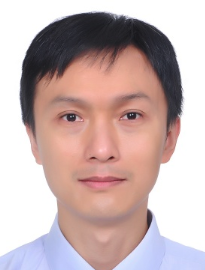 Yingfei Xiong (熊英飞)合作论文数Programming Languages Lab, Peking University;Institute of Software, School of Computer Science, Peking University3
 Tingting Yu (于婷婷)合作论文数Computer Science and Engineering Department, University of Connecticut3Jakob Henriksson合作论文数Dresden - Technical University3Liang Gong合作论文数3
 Sukyoung Ryu合作论文数School of Computing, Korea Advanced Institute of Science and Technology3Yiu Wai Chow合作论文数2Yaza Wainakh合作论文数2Sebastian Harner合作论文数2
 Yu Nong合作论文数2Yuzhe Ou合作论文数Univ Texas Dallas, Dept Comp Sci, Richardson, TX 75080 USA2
 Konstantinos Kallas合作论文数University of Pennsylvania, USA2
 Ellen Arteca合作论文数Northeastern University2
 Toufique Ahmed合作论文数IBM2
 Martin Toldam Torp合作论文数Aarhus University2
 André DeHon合作论文数Department of Electrical and Systems Engineering, School of Engineering and Applied Science, University of Pennsylvania;Department of Computer and Information Science, School of Engineering and Applied Science, University of Pennsylvania2
 Junjie Chen (陈俊洁)合作论文数School of Computer Software, College of Intelligence and Computing, Tianjin University2
 Liu, Q.合作论文数2
 Lu Zhang (张路)合作论文数School of Computer Science, Peking University2
 Cristian Alexandru Staicu合作论文数CISPA Helmholtz Center for Information Security2
 Hui Liu (刘辉)合作论文数School of Computer Science and Technology, Beijing Institute of Technology2
 Manu Sridharan合作论文数Computer Science and Engineering, University of California, Riverside2
 Hongyu Zhang (张洪宇)合作论文数School of Big Data & Software Engineering, Chongqing University2
 Martin Hirzel合作论文数AI Programming Models Team, IBM Research AI2Yue Luo (罗月)合作论文数2
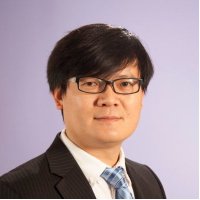 Feng Chen合作论文数University of Texas at Dallas2
 Martin Odersky合作论文数School of Computer and Communication Sciences, Swiss Federal Institute of Technology in Lausanne2