We study the quantum-mechanical uncertainty relation originating from the successive measurement of two observables  and B̂, with eigenvalues a_n and b_m, respectively, performed on the same system. We use an extension of the von Neumann model of measurement, in which two probes interact with the same system proper at two successive times, so we can exhibit how the disturbing effect of the first interaction affects the second measurement. Detecting the statistical properties of the second probe variable Q_2 conditioned on the first probe measurement yielding Q_1 we obtain information on the statistical distribution of the system variable b_m conditioned on having found the system variable a_n in the interval δ a around a^(n). The width of this statistical distribution as function of δ a constitutes an uncertainty relation. We find a general connection of this uncertainty relation with the commutator of the two observables that have been measured successively. We illustrate this relation for the successive measurement of position and momentum in the discrete and in the continuous cases and, within a model, for the successive measurement of a more general class of observables.
Von Neumann use 4 assumptions to derive the Hilbert space (HS) formulation of quantum mechanics (QM). Within this theory dispersion free ensembles do not exist. To accommodate a theory of quantum mechanics that allow dispersion free ensemble some of the assumptions need be modified. An existing formulation of QM, the phase space (PS) formulation allow dispersion free ensembles and thus is qualifies as an hidden variable theory. Within the PS theory we identify the violated assumption (dubbed I in the text) to be the one that requires that the value r for the quantity $\mathbb{R}$ implies the value f(r) for the quantity $f(\mathbb{R})$. We note that this violation arise due to tracking within c-number hidden variable theory of the operator ordering involved in HS theory as is required for a 1-1 correspondence between the theories.
We study the Weyl–Wigner transform in the case of discrete variables defined in a Hilbert space of finite prime-number dimensionality N. We define a family of Weyl–Wigner transforms as function of a phase parameter. We show that it is only for a specific value of the parameter that all the properties we have examined have a parallel with the case of continuous variables defined in an infinite-dimensional Hilbert space. A geometrical interpretation is briefly discussed.
Wigner function is a quasi-distribution that provides a representation of the state of a quantum mechanical system in the phase space of position and momentum. In this paper we find a relation between Wigner function and appropriate measurements involving the system position and momentum which generalize the von Neumann model of measurement. We introduce two probes coupled successively in time to projectors associated with the system position and momentum. We show that one can relate Wigner function to Kirkwood joint quasi-distribution of position and momentum, the latter, in turn, being a particular case of successive measurements. We first consider the case of a quantum mechanical system described in a continuous Hilbert space, and then turn to the case of a discrete, finite-dimensional Hilbert space.
In our paper, Eq. (2.5) gives the matrix elements in the coordinate basis of the line operator P̂ (q,p) defined in Eq. (2.3). In Eq. (2.5) a factor 2 is missing on the right-hand side. The correct equation should read 〈q|P̂ (q ′,p′)|q̄〉 = 2eip(q−q̄)δ(q + q̄ − 2q ′). (2.5) This error has no consequences on the results of the paper. It was discovered thanks to discussions with Professor Mann from the Department of Physics, Technion, Haifa (Israel).
In classical mechanics, performing a measurement without reading the measurement outcome is equivalent to not exploiting the measurement at all. A nonselective measurement in the classical realm carries no information. Here we show that the situation is remarkably different when quantum mechanical systems are concerned. A nonselective measurement on one part of a maximally entangled pair can allow communication between two parties. In the proposed protocol, the signal is encoded in the choice of the measurement basis of one of the communicating parties, while the outcomes of the measurement are irrelevant for the communication and therefore may be discarded. Different choices for the (nonselective) measurement correspond to different signals. The implication of the study of measurements in quantum mechanics is considered. The scheme is studied in a Hilbert space of prime dimension.
Finite geometry is used to underpin finite, d^2, dimensional Hilbert space accommodating two particles, d dimensional each. d=prime 2. Central role is allotted to states with mutual unbiased bases (MUB) labelling underpinned with points of finite dual affine plane geometry (DAPG). The DAPG lines are shown to underpin maximally entangled states which form an orthonormal basis spanning the space and provide a novel, geometrical view to a new solution of the Mean King Problem (MKP). Brief expositions to the topics considered: MUB, DAPG and the MKP are included rendering the paper self contained.
Finite Geometry is used to underpin operators acting in finite, d, dimensional Hilbert space. Quasi distribution and Radon transform underpinned with finite dual affine plane geometry (DAPG) are defined in analogy with the continuous (d →∞) Hilbert space case. An essntial role in these definitions play the projectors of states of mutual unbiased bases (MUB) and their Wigner function-like mapping onto the generalized phase space that lines and points of DAPG constitutes.
We study the possibility of giving a classical interpretation to quantum projective measurements for a particle described by a pure Gaussian state whose Wigner function is non-negative. We analyze the case of a projective measurement which gives rise to a proper Wigner function---i.e., taking on, as its values, the eigenvalues of the projector. We find that, despite having this property, this kind of projector produces a state whose Wigner function ceases to be non-negative and hence precludes its interpretation as a classical probability density. We also study the general case in which the projected state has a non-negative Wigner function, but then we find that the Wigner function of the projector is not a proper one. Thus, we conclude that a non-negative Wigner function is inadequate to serve as a hidden-variable model for quantum processes in which projective measurements take place.
Weyl's unitary operators for displacement in position and momentum commute with one another if the product of the elementary displacements equals Planck's constant. Then, their common eigenstates constitute the Zak basis, with each state specified by two phase parameters. Accordingly, the transformation function from the position basis to the Zak basis maps the Hilbert space on the line onto the Hilbert space on the torus. This mapping is one to one provided that the Zak basis states are periodic functions of their phase parameters, but then the mapping cannot be continuous on the whole torus. With the periodicity of the Zak basis enforced, the basis has a double Fourier series. The Fourier coefficients identify a discrete basis which complements the periodic Zak basis to form a pair of mutually unbiased bases. The discrete basis states are the common eigenstates of the two complementary partners to the two unitary displacement operators. These partner operators are of angular-momentum type, with integer eigenvalues, and generate the fundamental rotations of the torus. Conversely, the displacement operators are the ladder operators for their partners. For each consistent phase convention for the periodic Zak basis, and thus for the line-onto-torus mapping, there is a corresponding discrete Zak basis and a corresponding pair of partner operators. Examples of particular interest are the conventions that give a continuous mapping in one phase parameter or are symmetric in both phase parameters. The latter emphasizes the Heisenberg-Weyl symmetry between position and momentum. We discuss briefly the relation between the Zak bases and Aharonov's modular operators. Finally, as an application of the Zak operators for the torus, we mention how they can be used to associate with the single degree of freedom of the line a pair of genuine qubits that are potentially entangled.
Bell’s inequality is predicated on the joint requirements of locality and the existence of joint probability for a single particle’s observables. A theory based on Hilbert space formalism (such as is quantum mechanics) does not allow, in general, joint probabilities. Hence deduction from the validity (or not) of the inequality is inapplicable to quantum mechanics. Indeed we show that the violation of the inequality by quantum mechanics is given quantitatively by local commutators which are relevant to the nonexistence of certain joint probabilities. It is argued that in quantum mechanics counterfactual considerations are not always allowed.
Relations between Bell's inequality and noncommutativity of operators are discussed via the four operators involved in the Clauser et al inequality. The case of all operators commuting (i.e. the six commutators vanish) and the case of three out of the four operators mutually commuting (i.e. five commutators vanish) is shown to abide by the inequality. In the latter case a novel insight is unravelled. The Bell quantum bound (2 root 2) is obeyed for the case when four commutators vanish. The probabilistic upper limit of the inequality is reviewed and shown to be 4. In any theory based on Hilbert space, the upper limit is 2 root 3.
Cramer's theorem is formulated in the context of quantum optics. A physical meaning for the theorem is given and is illustrated by the generation of thermal noise from a pure quantum state
Violation of Bell's inequality for mixed states is considered. We show that a mixture of states that are macroscopically essentially equivalent may suppress the violation. Thus in general the inequality will not be violated by mixed states (except very special ones).
A relation between quantum and thermal fluctuations, called the generalized uncertainty relation, is derived and discussed. It is given in the terminology of thermo field dynamics. The relation enables us to separate the purely thermal fluctuation from the total fluctuation.
The characterization of coherent states as the quantum states that split into two uncorrelated beams is considered. The characterization leads to the study of coherent states at finite temperature—thermal coherent states (TCS’s). These TCS’s are defined within the formalism of thermo field dynamics (TFD). TFD allows a generalization of the uncertainty relation that accounts for both thermal and quantum fluctuations. The TCS is shown to be a minimal state for the generalized uncertainty relation.
Given two independent systems A and Ã, let them interact briefly at t=0. With proper choice of interaction, the resultant correlation between the systems will cause measurements performed on system A to be indistinguishable from measurements of system A performed at finite temperature—provided the measurements are coupled to the system A only. This holds while the total system (A and Ã) is in a pure state.
 Ady Mann合作论文数8alfred k mann合作论文数5Pier A. Mello合作论文数4C.G. Kuper合作论文数3Amiram Ron合作论文数3
 Berthold-Georg (Berge) Englert合作论文数Department of Physics, Faculty of Science, National University of Singapore;Centre for Quantum Technologies, National University of Singapore2Hiroomi Umezawa合作论文数2
 Aharon (Rony) Casher合作论文数School of Physics and Astronomy, Tel Aviv University2
 Sylvia Cremer合作论文数Centre for Social Evolution;Department of Biology;University of Copenhagen;Behaviour & Genetics;University of Regensburg;Chemical Ecology Group;School of Physical and Geographical Sciences;Keele University;Institute of Ecology;Innsbruck University;Department of Integrative Biology and Biodiversity Research;University of Natural Resources and Applied Life Sciences;Department of Forest and Soil Sciences;University of Natural Resources;University of Natural Resources and Applied Life Sciences, University of Natural Resources2Kean Loon Lee合作论文数2Isadore Rudnick合作论文数2
 Amir Kalev合作论文数Department of Physics;Technion - Israel Institute of Technology;Department of Physics, Technion - Israel Institute of Technology2Y. Yamanaka合作论文数1m lokajicek合作论文数1
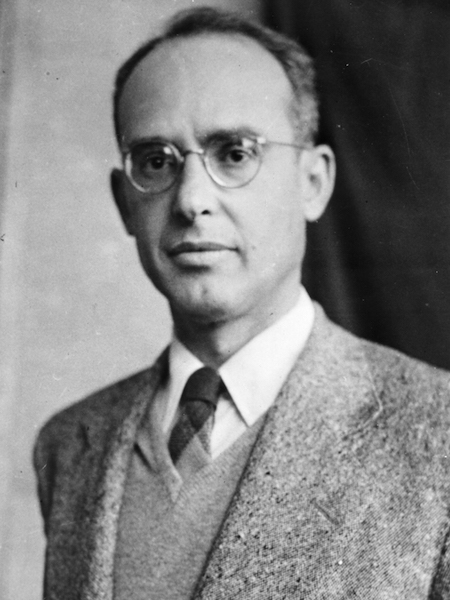 Nathan Rosen合作论文数Technion - Israel Institute of Technology1K. Nakamura合作论文数1H. Umezawa合作论文数1Aharon Casher合作论文数1W. De Baere合作论文数1David J Lurie合作论文数1
 Gabor Kunstatter合作论文数1Yoshiya Yamanaka合作论文数1Josuah Zak合作论文数1L. E. H. Trainor合作论文数1M FIBICH合作论文数1roberto r mendel合作论文数1




