Suppose you receive a sequence of qubits where each qubit is guaranteed to be in one of two pure states, but you do not know what those states are. Your task is to determine the states. This can be viewed as a kind of quantum state learning, or quantum state estimation. The problem is that, without more information, all that can be determined is the density matrix of the sequence and, in general, density matrices can be decomposed into pure states in many different ways. To solve the problem, additional information, either classical or quantum, is required. We show that if an additional copy of each qubit is supplied (that is, one receives pairs of qubits, both in the same state, rather than single qubits) the task can be accomplished. This is possible because the mixed two-qubit state has a unique decomposition into pure product states. For illustration purposes, we numerically simulate the symmetric, informationally complete measurement of a sequence of qubit pairs and show that the unknown states and their respective probabilities of occurrence can be inferred from the data with high accuracy. Finally, we propose an experiment that employs a product measurement and can be realized with existing technology, and we demonstrate how the data tell us the states and their probabilities. We find that it is enough to detect a few thousand qubit pairs.
Introductory courses on quantum mechanics usually include lectures on uncertainty relations, typically the inequality derived by Robertson and, perhaps, other statements. For the benefit of the lecturers, we present a unified approach -- well suited for undergraduate teaching -- for deriving all standard uncertainty relations: those for products of variances by Kennard, Robertson, and Schrödinger, as well as those for sums of variances by Maccone and Pati. We also give a brief review of the early history of this topic and try to answer why the use of variances for quantifying uncertainty is so widespread, while alternatives are available that can be more natural and more fitting. It is common to regard the states that saturate the Robertson inequality as "minimum uncertainty states" although they do not minimize the variance of one observable, given the variance of another, incompatible observable. The states that achieve this objective are different and can be found systematically.
Density functional theory is usually formulated in terms of the density in configuration space. Functionals of the momentum-space density have also been studied, and yet other densities could be considered. We offer a unified view from a second-quantized perspective and introduce a version of density functional theory that treats all single-particle contributions to the energy exactly. An appendix deals with semiclassical eigenvalues.
ly, the Heisenberg group Hn is generated by two n-parameter abelian subgroups euX = e Pn k=1 ukx k , evY = e Pn k=1 v yk and a one-parameter center eαc, which satisfy the relations ee = ee e , where uv = n ∑
At the limit of an infinite confinement strength ω, the ground state of a system that comprises two fermions or bosons in harmonic confinement interacting through the Fermi-Huang pseudopotential remains strongly correlated. A detailed analysis of the one-particle description of this "contactium" reveals several peculiarities that are not encountered in conventional model systems (such as the two-electron harmonium atom, ballium, and spherium) involving Coulombic interparticle interactions. First of all, none of the natural orbitals (NOs) {ψn(ω;r)} of the contactium is unoccupied, which implies nonzero collective occupancies for all the angular momenta. Second, the NOs and their non-ascendingly ordered occupation numbers {νn} turn out to be related to the eigenfunctions and eigenvalues of a zero-energy Schrödinger equation with an attractive Gaussian potential. This observation enables the derivation of their properties, such as the n-4/3 asymptotic decay of νn at the n→∞ limit (which differs from that of n-8/3 in the Coulombic systems), the independence of the confinement energy vn=⟨ψn(ω;r)|12ω2r2|ψn(ω;r)⟩ of n, and the n-2/3 asymptotic decay of the respective contribution νntn to the kinetic energy. Upon suitable scaling, the weakly occupied NOs of the contactium turn out to be virtually identical to those of the two-electron harmonium atom at the ω → ∞ limit, despite the entirely different interparticle interactions in these systems.
We showcase the advantages of orbital-free density-potential functional theory (DPFT), a more flexible variant of Hohenberg-Kohn density functional theory. DPFT resolves the usual trouble with the gradient-expanded kinetic energy functional by facilitating systematic semiclassical approximations in terms of an effective potential energy that incorporates all interactions. With the aid of two systematic approximation schemes we demonstrate that DPFT is not only scalable, universally applicable in both position and momentum space, and allows kinetic and interaction energy to be approximated consistently, but can also compete with highly accurate, yet restricted, methods. As two- and three-dimensional geometries are extensively covered elsewhere, our focus here is on one-dimensional settings, with semiclassical observables systematically derived from both the Wigner function formalism and a split-operator approach. The high quality of our results for Fermi gases in Morse potentials invites the use of DPFT for describing more exotic systems, such as trapped large-spin fermion mixtures with contact or dipole-dipole interactions.
We introduce ‘single-particle-exact density functional theory’ (1pEx-DFT), a novel density functional approach that represents all single-particle contributions to the energy with exact functionals. Here, we parameterize interaction energy functionals by utilizing two new schemes for constructing density matrices from ‘participation numbers’ of the single-particle states of quantum many-body systems. These participation numbers play the role of the variational variables akin to the particle densities in standard orbital-free density functional theory. We minimize the total energies with the help of evolutionary algorithms and obtain ground-state energies that are typically accurate at the one-percent level for our proof-of-principle simulations that comprise interacting Fermi gases as well as the electronic structure of atoms and ions, with and without relativistic corrections. We thereby illustrate the ingredients and practical features of 1pEx-DFT and reveal its potential of becoming an accurate, scalable, and transferable technology for simulating mesoscopic quantum many-body systems.
Upon entangling a spatial binary alternative of a photon with its polarization, one can use single photons to study arbitrary 2-qubit states. Sending the photon through a Mach-Zehnder interferometer, equipped with sets of wave plates that change the polarization, amounts to performing a unitary transformation on the 2-qubit state. We show that any desired unitary gate can be realized by a judicious choice of the parameters of the set-up and discuss a number of applications. They include the diagnosis of an unknown 2-qubit state, an optical Grover search, and the realization of a thought experiment invented by Vaidman, Aharonov, and Albert.
Any Bayesian analysis involves combining information represented through different model components, and when different sources of information are in conflict it is important to detect this. Here we consider checking for prior-data conflict in Bayesian models by expanding the prior used for the analysis into a larger family of priors, and considering a marginal likelihood score statistic for the expansion parameter. Consideration of different expansions can be informative about the nature of any conflict, and extensions to hierarchically specified priors and connections with other approaches to prior-data conflict checking are discussed. Implementation in complex situations is illustrated with two applications. The first concerns testing for the appropriateness of a LASSO penalty in shrinkage estimation of coefficients in linear regression. Our method is compared with a recent suggestion in the literature designed to be powerful against alternatives in the exponential power family, and we use this family as the prior expansion for constructing our check. A second application concerns a problem in quantum state estimation, where a multinomial model is considered with physical constraints on the model parameters. In this example, the usefulness of different prior expansions is demonstrated for obtaining checks which are sensitive to different aspects of the prior.
Characterizing the noise in the set of gate operations that form the building blocks of a quantum computational device is a necessity for assessing the quality of the device. Here, we introduce randomized linear gate set tomography, an easy-to-implement gate set tomography procedure that combines the idea of state-preparation-and-measurement-error-free characterization of standard gate set tomography with no-design randomized tomographic circuits and computational ease brought about by an appropriate linear approximation. We demonstrate the performance of our scheme through simulated examples as well as experiments done on the IBM Quantum Experience Platform. In each case, we see that the performance of our procedure is comparable with that of standard gateset tomography, while requiring no complicated tomographic circuit design and taking much less computational time in deducing the estimate of the noise parameters. This allows for straightforward on-the-fly characterization of the gate operations in an experiment.
Random samples of quantum states are an important resource for various tasks in quantum information science, and samples in accordance with a problem-specific distribution can be indispensable ingredients. Some algorithms generate random samples by a lottery that follows certain rules and yield samples from the set of distributions that the lottery can access. Other algorithms, which use random walks in the state space, can be tailored to any distribution, at the price of autocorrelations in the sample and with restrictions to low-dimensional systems in practical implementations. In this paper, we present a two-step algorithm for sampling from the quantum state space that overcomes some of these limitations. We first produce a CPU-cheap large proposal sample, of uncorrelated entries, by drawing from the family of complex Wishart distributions, and then reject or accept the entries in the proposal sample such that the accepted sample is strictly in accordance with the target distribution. We establish the explicit form of the induced Wishart distribution for quantum states. This enables us to generate a proposal sample that mimics the target distribution and, therefore, the efficiency of the algorithm, measured by the acceptance rate, can be many orders of magnitude larger than that for a uniform sample as the proposal. We demonstrate that this sampling algorithm is very efficient for one-qubit and two-qubit states, and reasonably efficient for three-qubit states, while it suffers from the "curse of dimensionality" when sampling from structured distributions of four-qubit states.
Multinomial models can be difficult to use when constraints are placed on the probabilities. An exact model checking procedure for such models is developed based on a uniform prior on the full multinomial model. For inference, a nonuniform prior can be used and a consistency theorem is proved concerning a check for prior-data conflict with the chosen prior. Applications are presented and a new elicitation methodology is developed for multinomial models with ordered probabilities.
We embed the somewhat unusual multiplicative function, which was serendipitously discovered in 2010 during a study of mutually unbiased bases in the Hilbert space of quantum physics, into two families of multiplicative functions that we construct as generalizations of that particular example. In addition, we report yet another multiplicative function, which is also suggested by that example; it can be used to express the squarefree part of an integer in terms of an exponential sum.
Originally conceived as a thought experiment, an apparatus consisting of two Stern–Gerlach apparatuses joined in an inverted manner touched on the fundamental question of the reversibility of evolution in quantum mechanics. Theoretical analysis showed that uniting the two partial beams requires an extreme level of experimental control, making the proposal in its original form unrealizable in practice. In this work, we revisit the above question in a numerical study concerning the possibility of partial-beam recombination in a spin-coherent manner. Using the Suzuki–Trotter numerical method of wave propagation and a configurable, approximation-free magnetic field, a simulation of a transversal Stern–Gerlach interferometer under ideal conditions is performed. The result confirms what has long been hinted at by theoretical analyses: the transversal Stern–Gerlach interferometer quantum dynamics is fundamentally irreversible even when perfect control of the associated magnetic fields and beams is assumed.
Random samples of quantum states with specific properties are useful for various applications, such as Monte Carlo integration over the state space. In the high-dimensional situations that one encounters already for a few qubits, the quantum state space has a very complicated boundary, and it is challenging to incorporate the specific properties into the sampling algorithm. In this paper, we present the Sequentially Constrained Monte Carlo (SCMC) algorithm as a powerful and versatile method for sampling quantum states in accordance with any desired properties that can be stated as inequalities. We apply the SCMC algorithm to the generation of samples of bound entangled states; for example, we obtain nearly ten thousand bound entangled two-qutrit states in a few minutes – a colossal speed-up over independence sampling, which yields less than ten such states per day. In the second application, we draw samples of high-dimensional quantum states from a narrowly peaked target distribution and observe that SCMC sampling remains efficient as the dimension grows. In yet another application, the SCMC algorithm produces uniformly distributed quantum states in regions bounded by values of the problem-specific target distribution; such samples are needed when estimating parameters from the probabilistic data acquired in quantum experiments.
Chau et al. [New J. Phys. 20, 073003 (2018)] presented a new and straight-forward derivation of a fourth-order approximation '$U_7$' of the time-evolution operator and hinted at its potential value as a symplectic integrator. $U_7$ is based on the Suzuki-Trotter split-operator method and leads to an algorithm for numerical time propagation that is superior to established methods. We benchmark the performance of $U_7$ and other algorithms, including a Runge-Kutta method and another recently developed Suzuki-Trotter-based scheme, that are exact up to fourth order in the evolution parameter, against various classical and quantum systems. We find $U_7$ to deliver any given target accuracy with the lowest computational cost, across all systems and algorithms tested here. This study is accompanied by open-source numerical software that we hope will prove valuable in the classroom.
When using complex Bayesian models to combine information, the checking for consistency of the information being combined is good statistical practice. Here a new method is developed for detecting prior-data conflicts in Bayesian models based on comparing the observed value of a prior to posterior divergence to its distribution under the prior predictive distribution for the data. The divergence measure used in our model check is a measure of how much beliefs have changed from prior to posterior, and can be thought of as a measure of the overall size of a relative belief function. It is shown that the proposed method is intuitive, has desirable properties, can be extended to hierarchical settings, and is related asymptotically to Jeffreys' and reference prior distributions. In the case where calculations are difficult, the use of variational approximations as a way of relieving the computational burden is suggested. The methods are compared in a number of examples with an alternative but closely related approach in the literature based on the prior predictive distribution of a minimal sufficient statistic.
With the current interest in building quantum computers, there is a strong need for accurate and efficient characterization of the noise in quantum gate implementations. A key measure of the performance of a quantum gate is the minimum gate fidelity, i.e., the fidelity of the gate, minimized over all input states. Conventionally, the minimum fidelity is estimated by first accurately reconstructing the full gate process matrix using the experimental procedure of quantum process tomography (QPT). Then, a numerical minimization is carried out to find the minimum fidelity. QPT is, however, well known to be costly, and it might appear that we can do better, if the goal is only to estimate one single number. In this work, we propose a hybrid numerical-experimental scheme that employs a numerical gradient-free minimization (GFM) and an experimental target-fidelity estimation procedure to directly estimate the minimum fidelity without reconstructing the process matrix. We compare this to an alternative scheme, referred to as QPT fidelity estimation, that does use QPT, but directly employs the minimum gate fidelity as the termination criterion. Both approaches can thus be considered as direct estimation schemes. General theoretical bounds suggest a significant resource savings for the GFM scheme over QPT fidelity estimation; numerical simulations for specific classes of noise, however, show that both schemes have similar performance, reminding us of the need for caution when using general bounds for specific examples. The GFM scheme, however, presents potential for future improvements in resource cost, with the development of even more efficient GFM algorithms.
Random samples of quantum channels have many applications in quantum information processing tasks. Due to the Choi-Jamiolkowski isomorphism, there is a well-known correspondence between channels and states, and one can imagine adapting state sampling methods to sample quantum channels. Here, we discuss such an adaptation, using the Hamiltonian Monte Carlo method, a well-known classical method capable of producing high-quality samples from arbitrary, user-specified distributions. Its implementation requires an exact parametrization of the space of quantum channels, with no superfluous parameters and no constraints. We construct such a parametrization, and demonstrate its use in three common channel sampling applications.
 herbert walther合作论文数30
 Ng Hui Khoon合作论文数Yale-National University of Singapore College29
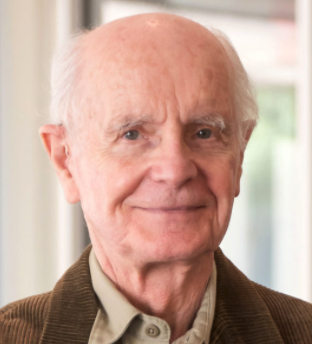 Marlan Scully (司嘉理)合作论文数Department of Physics and Astronomy, Texas A&M University;Princeton University27Rui Han合作论文数10
 Hans J. Briegel合作论文数Institut für Theoretische Physik, Universität Innsbruck10
 Jiangwei Shang (尚江伟)合作论文数School of Physics, Beijing Institute of Technology10Jaroslav Rehacek合作论文数Department of Optics and Quantum Optics Laboratory, Palacký University Olomouc;Department of Optics, Faculty of Science, Palacky University10
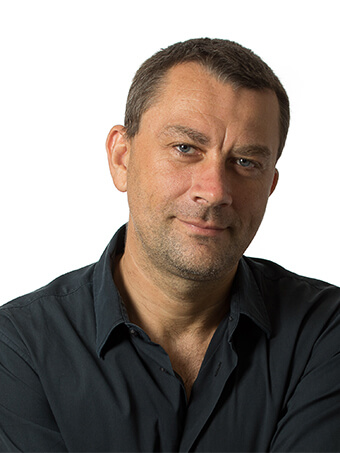 Dagomir Kaszlikowski合作论文数Department of Physics, Faculty of Science, National University of Singapore10
 Yong Siah Teo合作论文数NUS Graduate School for Integrative Sciences and Engineering, Singapore 117597, Singapore10Martin-Isbjörn Trappe合作论文数9
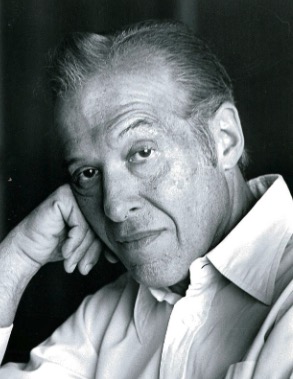 Julian Schwinger合作论文数University of California, Los Angeles9
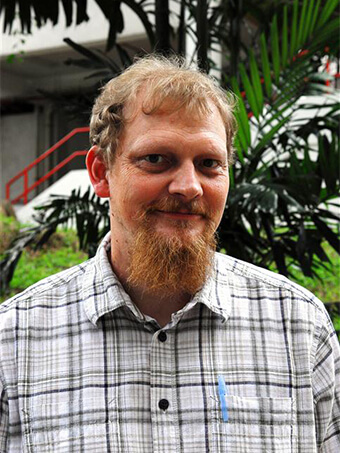 Christian Kurtsiefer合作论文数Department of Physics, Faculty of Science, National University of Singapore;Centre for Quantum Technologies, National University of Singapore9
 Harald Weinfurter合作论文数Faculty of Physics, Ludwig-Maximilians-Universität München;Max Planck Institute of Quantum Optics;Munich Center for Quantum Science and Technology8Jun Suzuki合作论文数7
 Leong Chuan Kwek (郭龙泉)合作论文数Quantum Science and Engineering Centre, Nanyang Technological University;Center for Quantum Technologies, National University of Singapore7Jun Hao Hue合作论文数Ctr Quantum Technol, Natl Univ Singapore6Len Yink Loong合作论文数National University of Singapore, National University of Singapore6
 Yakir Aharonov合作论文数Institute for Quantum Studies, Chapman University;School of Physics and Astronomy Tel Aviv University6
 Zdeněk Hradil合作论文数Department of Optics, Palacky University Olomouc6
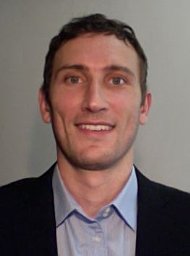 Philippe Raynal合作论文数Quantum Information Theory Group;Institut fur Theoretische Physik;Institut fur Optik;Institut fur Theoretische Physik, Institut fur Optik6
 Christian Miniatura合作论文数Laboratoire Ondes et Desordre6
 Michael John Evans合作论文数Biostatistics Division, Dalla Lana School of Public Health, University of Toronto5
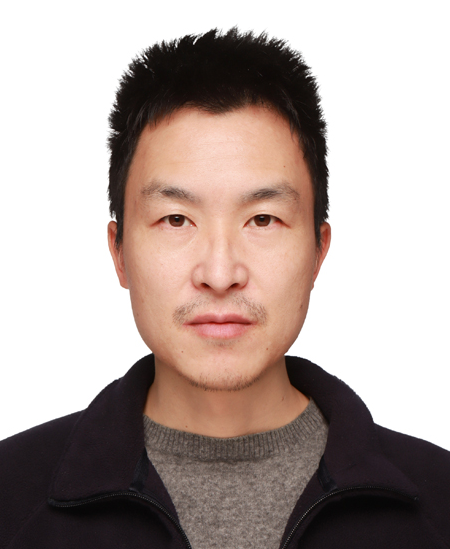 Huangjun Zhu (朱黄俊)合作论文数Department of Physics, Fudan University5David Nott合作论文数Department of Statistics and Data Science, Faculty of Science, National University of Singapore5
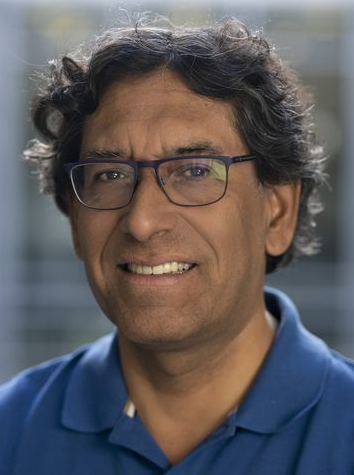 Enrique Solano合作论文数Kipu Quantum5Kean Loon Lee合作论文数5Georg Sussmann合作论文数5
 Leonid A. Krivitsky合作论文数Institute of Materials Research and Engineering (IMRE), 2 Fusionopolis Way, #08-03 Innovis,
Singapore5
Leonid A. Krivitsky合作论文数Institute of Materials Research and Engineering (IMRE), 2 Fusionopolis Way, #08-03 Innovis,
Singapore5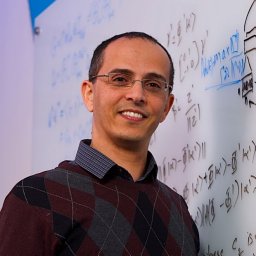 Amir Kalev合作论文数Department of Physics;Technion - Israel Institute of Technology;Department of Physics, Technion - Israel Institute of Technology5
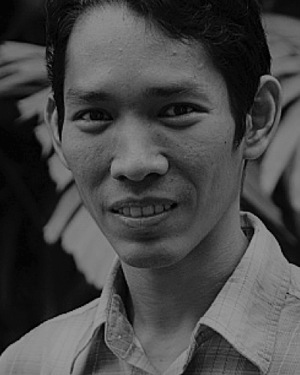 Syed M. Assad合作论文数4Goong Chen合作论文数Texas A&M University4
 Dai Jibo合作论文数Data Storage Institute, National University of Singapore4
 Arun Sehrawat合作论文数4
 Ben Varcoe合作论文数Department of Physics and Astronomy;University of Sussex;Department of Physics and Astronomy, University of Sussex4Bernd Rohwedder合作论文数4
 Luis Lorenzo Sánchez Soto合作论文数Departamento de Óptica, Facultad de Ciencias Físicas, Universidad Complutense de Madrid4Mikołaj M. Paraniak合作论文数3Yi-Lin Seah合作论文数3Weijun Li合作论文数3
 Paul G Kwiat合作论文数Department of Physics, The Grainger College of Engineering, University of Illinois Urbana-Champaign3
 Almut Beige合作论文数School of Physics and Astronomy, University of Leeds3
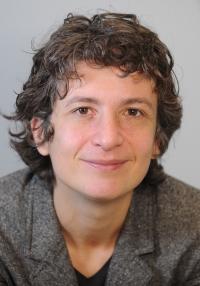 Giovanna Morigi合作论文数Department of Physics, Faculty of Natural Sciences and Technology, Saarland University3
 M. Suhail Zubairy合作论文数Department of Physics & Astronomy, College of Arts & Sciences, Texas A&M University3
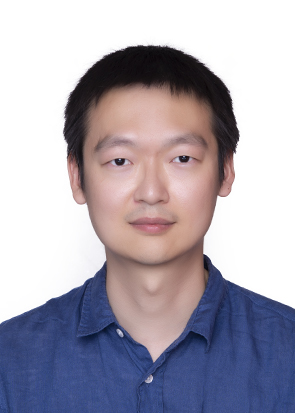 Xikun Li (李曦坤)合作论文数School of Physics and Materials Science, Anhui University3
 Wolfgang Domcke合作论文数Department of Chemistry, School of Natural Sciences, Technical University of Munich3Oliver Schulz合作论文数3
 Markus Weber合作论文数Fakultät für Physik3Carsten Henkel合作论文数Institut fur Physik;Universitat Potsdam;Institut fur Physik, Universitat Potsdam3Wee Kang Chua合作论文数3




