This article explores working-class housing schemes and urban planning to gain a new angle for viewing successive national political crises in Spain in the 1920s and 1930s. It focuses on the southern city of M & aacute;laga through a micro-study of the Ciudad Jard & iacute;n development begun during the military dictatorship of the 1920s. Using a range of archival and newspaper sources, the article demonstrates how political struggle over affordable housing had become central to emerging modern public opinion, moving center-stage at a municipal level, just as the democratic Second Republic arrived in 1931. The basis of this contest was laid during the preceding oligarchic monarchy, an era marked by economic fragility, mass inward migration, and lack of urban planning. The model of the transnational Garden City movement subsequently served two competing political discourses about economic progress, hygiene, and social utility in M & aacute;laga: one "top-down" and for profit, the other based on social utility. Their lack of success had much to do with power and how it was publicly contested within state-municipal relations. This struggle was among the broader roots of the Republic's descent into civil war.
Recent accounting for disease in the aftermath of the Spanish Civil War has been contained within study of hunger in the early 1940s. Historians have cited the typhus epidemic which hit Spain between 1939 and 1945 as demonstrating a causal link between widespread semi-starvation and disease. Though important, the focus on hunger risks losing sight of other vital elements in the onset and transmission of typhus, however, as well as the way the epidemic's progress sheds light on population movement as central to the broader social history of the war and its aftermath.By paying close attention to epidemiological records, this article argues that the direct causes of typhus and its vertiginous spread were primarily ideological and spatial. It shows first how the war's victors used the language of political and bacterial contagion to claim spuriously that the wartime Republic was responsible for the epidemic. It then demonstrates how the intense confinement on a huge scale of those linked to the Republic was at the root of the disease. Transmission depended on this mass imprisonment and on the increased circulation of families to support those in captivity. Finally, typhus influenced the social imagination of the Franco regime and its anxiety about hygiene, prisons, and control of the movement of the urban poor.
This paper presents the main findings of a qualitative research project. The aim of the research was to explore undergraduate students' perceived knowledge acquisition and awareness of the Holocaust, after visiting Auschwitz concentration camp in Poland. The qualitative study (focus groups & semi-structured questionnaires) involved three cohorts of students and lecturers from a university in the North West of England. The participants visited the Holocaust-related sites in Poland from 2016 to 2019. Findings indicate that students' who actively engaged in visits to Holocaust related sites developed knowledge and awareness of the Holocaust. For many participants, this knowledge and awareness was facilitated via a reflective process that enabled empathic connection between these historical events and the students. The study also highlighted practical strategies that could be implemented to enhance the experience for future cohorts of undergraduate students visiting holocaust related sites. By adding to the limited literature on Holocaust education with undergraduate students, the study highlighted the importance and directions for future research in this area to inform future pedagogic practice.
Caregiver-led interventions have been implemented to improve food selectivity in autistic children. This systematic review assesses the meaningfulness of improvements in food, behaviour, and family outcomes, alongside the acceptability of said interventions. Four key academic databases were searched using key terms related to autism, food selectivity, and parent-led interventions. Thirsty-six studies were reviewed and improvements in food outcomes were reported in all studies, but it was unclear how meaningful this was for the child’s nutritional status. In addition, it was difficult to draw meaningful conclusions about the acceptability of interventions in the family environment. Future parent-led interventions should measure food outcomes in a standardised way that considers the nutritional status of the child and include detailed exploration of intervention acceptability.
Bisexual+ people (those romantically or sexually attracted to more than one gender) make up the largest group within the LGBTQ+ umbrella yet are often positioned as an invisible minority within a minority. Bisexual+ people are at greater risk of many poor health and social outcomes than their gay, lesbian and heterosexual peers. Prejudice towards bisexual+ people is pervasive both in heteronormative society and LGBTQ+ communities with bisexuals+ being seen as greedy, confused or secretly gay/straight. Our research aimed to explore experiences of bisexuality through the lens of social representation theory and investigate how social representations of bisexuality are managed by bisexual+ people. Qualitative survey responses from 784 bisexual+ individuals were analysed using thematic analysis through the lens of social representation theory. We identified how bisexual+ people adopted one of two strategies in order to manage the socio-cultural torrent of binegativity in society – avoidance or resistance. Each of these strategies go some way to explaining both the individual ill effects of being bisexual and the persistence of negative social representations of bisexuality while pointing to a need to better understand representations of bisexuality under the LGBTQ+ umbrella as well as above it.
This article analyses the conditions and ideas motivating cross-border connectivity among young Roman Catholic intellectuals during the trans-war era of the 1930s and 1940s. It examines Pax Romana, the Swiss-based international association of Catholic students and graduates, as it navigated between fascism and resistance in the aftermath of the Spanish Civil War and during the global conflict of 1939-45. The organisation was headed successively by two young activists from Spain, Joaquin Ruiz-Gimenez, a legal scholar from Madrid who fought for Franco, and Ramon Sugranyes de Franch, a Catalan literary specialist who went into exile in 1936. Comparison of their parallel careers forms the central narrative cord of the article, illuminating the complex relationship of national to global Catholic fractures between conservative nation-statists and political and social pluralists. The Pax Romana congress held in Spain in 1946 was pivotal in accounting for the transnational legacy of that country's civil war. The wartime 'humanist' critique of Franco's 'crusade' made by key Catholic public thinkers was both disseminated and challenged and its relevance to Europe's future assessed. Ruiz-Gimenez, as its president, used the organisation from Spain to legitimate the country's regime, aided by sympathetic foreign nation-statists. Sugranyes, in contrast, gravitated in the early 1940s to Fribourg in Switzerland, Pax Romana's headquarters-via Geneva, Paris and southern France-encountering and allying with progressive Catholic exiles from Italy and Spain and French anti-fascist resisters. Although taking different routes, both men ultimately transcended their nationally rooted religious and political assumptions through dialogue across boundaries.
Background Dementia is a collective name for different degenerative brain syndromes which, according to Alzheimer's Disease International, affects approximately 35.6 million people worldwide. The latest NICE guideline for dementia highlights the value of diverse treatment options for the different stages and symptoms of dementia including non-pharmacological treatments. Relevant literature also argues for the value of interventions that acknowledge the complexity of the condition and address the person as a whole, including their physical, emotional, social and cognitive processes. At the same time, there is growing literature that highlights the capacity of the arts and embodied practices to address this complexity. Dance movement therapy is an embodied psychological intervention that can address complexity and thus, may be useful for people with dementia, but its effectiveness remains unclear. Objectives To assess the effects of dance movement therapy on behavioural, social, cognitive and emotional symptoms of people with dementia in comparison to no treatment, standard care or any other treatment. Also, to compare different forms of dance movement therapy (e.g. Laban-based dance movement therapy, Chacian dance movement therapy or Authentic Movement). Search methods Searches took place up to March 2016 through ALOIS, Cochrane Dementia and Cognitive Improvement's Specialized Register, which covers CENTRAL, a number of major healthcare databases and trial registers, and grey literature sources. We checked bibliographies of relevant studies and reviews, and contacted professional associations, educational programmes and experts from around the world. Selection criteria We considered randomised controlled trials (RCTs) in any language, including cross-over design and cluster-RCTs for inclusion. Studies considered had to include people with dementia, in any age group and in any setting, with interventions delivered by a dance movement therapy practitioner who (i) had received formal training (ii) was a dance movement therapist in training or (iii) was otherwise recognised as a dance movement therapist in the country in which the study was conducted. Data collection and analysis The two review authors independently reviewed studies on an abstract/title level and again after reading the full paper, and we independently evaluated methodological quality. Main results Of the 102 studies identified through electronic searches and personal communication, after de-duplication we screened 80 at title/abstract level. We then reviewed 19 full papers, none of which met the inclusion criteria. Although three studies mentioned dance movement therapy as their intervention, they were excluded because they were not delivered by a qualified dance movement therapy practitioner. As a result, no studies were included in this review. Authors' conclusions Trials of high methodological quality, large sample sizes and clarity in the way the intervention is put together and delivered are needed to assess whether dance movement therapy is an effective intervention for dementia.
We introduce the idea of interconnected global crises affecting the lives of peoples, including economic, sociocultural, political and ecological crises as well as the crisis of violence. They are all situated at the intersection of public policy and lived experiences, whether this is in families, communities or workplaces and influence how social institutions operate in different places. They also, paradoxically, present opportunities for resistance and hope, and it is this complexity and potential that is addressed in the handbook. We consider lessons learnt from the COVID-19 pandemic about the pervading nature of social inequality but also the potential of solidarity movements ranging from local to international levels. We overview all the chapters, viewed through four different perspectives or lenses: a critical lens; a praxis lens; an ecological lens; and a reflective lens.
This chapter will consider three projects that were influenced by Critical Community Psychology approaches that were facilitated and created with local organisations/partners and their members with learning disabilities. The projects will be explored in the context of the relationship between Critical Community Psychology and people with learning disabilities, which is significant because the historic relationship between psychology and people with learning disabilities has been complex and troubled. I argue that Critical Community Psychology has the potential to build a strong relationship with people with learning disabilities, and through this it may help to build bridges and provide spaces where the voices of people with learning disabilities can be heard and have influence.
Community Psychology has seemingly been left behind on the digital front. For one reason or another, the connections between Community Psychology, digital technologies and social media remain unplugged. We are calling for a new "Digital Community Psychology". In this chapter, we apply a digital autoethnographic method to generate knowledge about Community Psychology, social media and digital technologies. We reflect on what "Digital Community Psychology" might entail in email "call and response" exchanges. We use our emails to one another as data to explore and outline the disconnect between Community Psychology, digital technologies and social media. Second, we examine Community Psychology's existence against "mainstream psychology" to make the case for critical forms of psychology to interrogate and render accountable the powerful advances in the digitalisation and datafication of society, institutions and social practices. To push community psychological work around human-technology relations further, we draw upon ideas and concepts from transdisciplinary fields of knowledge, mainly from the scholarly work that is being badged together as feminist new materialism and posthumanism. Then we theorise social media communities: what are they becoming and what new subjectivities reflect our networked lives? Lastly, we include a case study that highlights how making social media for social activism falls within the remit of practicing Digital Community Psychology.
Qualitative research methods and participatory action research (PAR) share many intrinsic and complementary qualities. We present two cases, one adopted a broader PAR approach, a health promotion project with men with intellectual disabilities, and the other used participatory methods within a longitudinal qualitative study exploring the benefits of community choir participation. We discuss the nature of the methods adopted and how they helped and hindered both research projects. We conclude that despite some common challenges, qualitative studies can benefit from drawing on PAR principles.
Richards’s article is a reflection on comparative history inspired by the pulling down of the statue of the slave-trader Edward Colston in Bristol in June 2020. It explores the evolution in Spain of state policies and civil society activism to do with public spaces and symbolic objects related to the Spanish Civil War and the Franco dictatorship. First, the performative element of the Bristol protest invites analogy with celebrations in public spaces of the arrival through the ballot box in 1931 of the reforming Second Republic, a democratic regime subsequently overthrown in the civil war. Second, the dialectic of remembering and forgetting British imperialism and the slave trade is compared to the struggle to make the past visible in post-war Spain in the twentieth and twenty-first centuries. Bringing the concealed past into open discourse in Spain through civil society activism since 2000 has been focused on three elements: making public the affective consequence of significant objects; gaining the support of politicians with access to the state; and broadening youthful activism to encompass supranational needs based on human rights and the environment. The argument is that conflict over collective memory in the twenty-first century is largely one between backward-looking narratives of the nation and forward-oriented ideas and practices that eclipse the national by linking the local and the global.
Based on focus group discussions of self-generated photographs of individuals aged 19-67 resident in urban Northwest England, this article examines the health narratives of men facing disadvantage because of economic hardship and/or mental health difficulty (mhd). In contrast to stereotypes of men as uncomfortable with emotions linked to vulnerability, we explore how such men can develop within self-help groups the kind of emotional resources that encourage health-seeking behaviours. Our argument contrasts with theories that risk denying/diminishing working-class men's emotional reflexivity or that frame reflexivity (thought on feelings and behaviour to effect life changes) as individualised and more available to middle-class (younger) men. We argue that participant accounts indicate development of more collective emotional and epistemic resources from a position of subordinated masculinity. This argument challenges stereotypes of working-class men as lacking in knowledge/skill in health and self-care. Collective reflexivity over health/wellbeing was particularly visible in three main accounts that emerged during focus groups: involvement in self-help 'communities of practice', use of local aesthetic spaces and negotiation with/qualified challenge to healthy eating discourse.
Outdoor learning experiences in Higher Education (HE) provide students with the opportunity for emotional development, cognitive development and learning. Despite this, the literature exploring the impact of emotive outdoor learning experiences on students’ development and learning is scarce. The aim of this paper is to present an overview of the key factors important for the delivery of outdoor learning experiences in HE. The paper will also incorporate the authors personal experience of delivering emotive outdoor learning in HE (visiting Holocaust sites with undergraduate students). Broad recommendations for the future design and delivery of emotive outdoor learning experiences is also discussed.
 Rebecca Lawthom合作论文数School of Education, Faculty of Social Sciences, The University of Sheffield6
 Carolyn Kagan合作论文数Manchester Metropolitan University6
 Peter Leadbetter合作论文数4
 Anna Bussu合作论文数Dept Law & Criminol, Edge Hill Univ4
 Paul Simpson合作论文数Edge Hill University3
 Ryan Woolrych合作论文数Simon Fraser University3
 Judith Sixsmith合作论文数Institute for Health and Social Change;Department Psychology;Manchester Metropolitan University;Institute for Health and Social Change, Manchester Metropolitan University3Jacqueline Akhurst合作论文数2
 Sean Creaney合作论文数Edge Hill University2
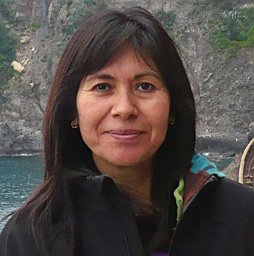 Alba Zambrano合作论文数University of La Frontera2
 Vicky Karkou合作论文数2
 Bonnie Meekums合作论文数2
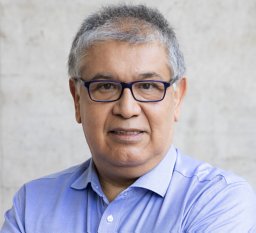 Jaime Alfaro Inzunza合作论文数2
 Emily H. Castellanos合作论文数1
 Steven Lyons合作论文数1
 Claire Blennerhassett合作论文数1Katie Wright-Bevans合作论文数1
 Katherine Runswick-Cole合作论文数School of Education, Faculty of Social Sciences, The University of Sheffield1
 Jenna Condie合作论文数School of Social Sciences and Psychology, University of Western Sydney1
 Stephen Clayton合作论文数University of Liverpool1Brenda Roe合作论文数1Karen Duggan合作论文数1Asiya Siddiquee合作论文数1




