The following discussion presents initial results of tests of the most recent version of the National Infrastructure Simulation and Analysis Center Dynamic Computable General Equilibrium (CGE) model developed by Los Alamos National Laboratory (LANL). The intent of this is to test and assess the model’s behavioral properties. The test evaluated whether the predicted impacts are reasonable from a qualitative perspective. This issue is whether the predicted change, be it an increase or decrease in other model variables, is consistent with prior economic intuition and expectations about the predicted change. One of the purposes of this effort is to determine whether model changes are needed in order to improve its behavior qualitatively and quantitatively.
Los Alamos National Laboratory has developed two types of models to compute the economic impact of infrastructure disruptions. FastEcon is a fast running model that estimates first-order economic impacts of large scale events such as hurricanes and floods and can be used to identify the amount of economic activity that occurs in a specific area. LANL’s Computable General Equilibrium (CGE) model estimates more comprehensive static and dynamic economic impacts of a broader array of events and captures the interactions between sectors and industries when estimating economic impacts.
We investigate the direct enstrophy cascade of two-dimensional decaying turbulence in a flowing soap film channel. We use a coarse-graining approach that allows us to resolve the nonlinear dynamics and scale-coupling simultaneously in space and in scale. From our data, we verify an exact relation due to Eyink [“Local energy flux and the refined similarity hypothesis,” J. Stat. Phys. 78, 335–351 (1995); Eyink “Exact results on scaling exponents in the 2D enstrophy cascade,” Phys. Rev. Lett. 74, 3800–3803 (1995)] between traditional 3rd-order structure function and the enstrophy flux obtained by coarse-graining. We also present experimental evidence that enstrophy cascades to smaller (larger) scales with a 60% (40%) probability, in support of theoretical predictions by Merilees and Warn [“On energy and enstrophy exchanges in two-dimensional non-divergent flow,” J. Fluid Mech. 69, 625–630 (1975)] which appear to be valid in our flow owing to the ergodic nature of turbulence. We conjecture that their kinematic arguments break down in quasi-laminar 2D flows. We find some support for these ideas by using an Eulerian coherent structure identification technique, which allows us to determine the effect of flow topology on the enstrophy cascade. A key finding is that “centers” are inefficient at transferring enstrophy between scales, in contrast to “saddle” regions which transfer enstrophy to small scales with high efficiency.
The granular jamming transition is experimentally investigated in a two-dimensional system of frictional, bidispersed disks subject to quasistatic, uniaxial compression without vibrational disturbances (zero granular temperature). Three primary results are presented in this experimental study. First, using disks with different static friction coefficients (μ), we experimentally verify numerical results that predict jamming onset at progressively lower packing fractions with increasing friction. Second, we show that the first compression cycle measurably differs from subsequent cycles. The first cycle is fragile-a metastable configuration with simultaneous jammed and unjammed clusters-over a small packing fraction interval (φ(1)<φ<φ(2)) and exhibits simultaneous exponential rise in pressure and exponential decrease in disk displacements over the same packing fraction interval. This fragile behavior is explained through a percolation mechanism of stressed contacts where cluster growth exhibits spatial correlation with disk displacements and contributes to recent results emphasizing fragility in frictional jamming. Control experiments show that the fragile state results from the experimental incompatibility between the requirements for zero friction and zero granular temperature. Measurements with several disk materials of varying elastic moduli E and friction coefficients μ show that friction directly controls the start of the fragile state but indirectly controls the exponential pressure rise. Finally, under repetitive loading (compression) and unloading (decompression), we find the system exhibits pressure hysteresis, and the critical packing fraction φ(c) increases slowly with repetition number. This friction-induced hysteretic creep is interpreted as the granular pack's evolution from a metastable to an eventual structurally stable configuration. It is shown to depend on the quasistatic step size Δφ, which provides the only perturbative mechanism in the experimental protocol, and the friction coefficient μ, which acts to stabilize the pack.
Shear-induced vertical mixing in a stratified flow is a key ingredient of thermohaline circulation. We experimentally determine the vertical flux of momentum and density of a forced gravity current using high-resolution velocity and density measurements. A constant eddy-viscosity model provides a poor description of the physics of mixing, but a Prandtl mixing length model relating momentum and density fluxes to mean velocity and density gradients works well. For the average gradient Richardson number Ri(g) approximately 0.08 and a Taylor Reynolds number Re(lambda) approximately 100, the mixing lengths are fairly constant, about the same magnitude, comparable to the turbulent shear length.
Although time-periodic fluid flows sometimes produce mixing via Lagrangian chaos, the additional contribution to mixing caused by nonperiodicity has not been quantified experimentally. Here, we do so for a quasi-two-dimensional flow generated by electromagnetic forcing. Several distinct measures of mixing are found to vary continuously with the Reynolds number, with no evident change in magnitude or slope at the onset of nonperiodicity. Furthermore, the scaled probability distributions of the mean Lyapunov exponent have the same form in the periodic and nonperiodic flow states.
Submitted for the MAR06 Meeting of The American Physical Society Coherent Structures in Decaying Two-Dimensional Turbulence MICHAEL RIVERA, Los Alamos National Laboratory, MICHAEL TWARDOS, ROBERT ECKE — We revisit the matter of coherent structures, such as vortices, and their role in decaying two-dimensional turbulence. These experiments take place in an electromagnetically forced stratified layer within a square container with no slip boundaries and a linear dissipation with the container bottom. Results relating the energy and enstrophy of the bulk flow with the number and strength of coherent vortices are compared with earlier numerical and experimental work. Michael Rivera Los Alamos National Laboratory Date submitted: 30 Nov 2005 Electronic form version 1.4
We study the physical mechanisms of the two-dimensional inverse energy cascade using theory, numerics, and experiment. Kraichnan's prediction of a -5/3 spectrum with constant, negative energy flux is verified in our simulations of 2D Navier-Stokes equations. We observe a similar but shorter range of inverse cascade in laboratory experiments. Our theory predicts, and the data confirm, that inverse cascade results mainly from turbulent stress proportional to small-scale strain rotated by 45 degrees. This "skew-Newtonian" stress is explained by the elongation and thinning of small-scale vortices by large-scale strain which weakens their velocity and transfers their energy upscale.
 Robert Ecke合作论文数Center for Nonlinear Studies, Los Alamos National Laboratory36
 W. Brent Daniel合作论文数14
 Philippe Odier合作论文数Laboratoire de Physique, Ecole Normale Supérieure9Walter Goldburg合作论文数5
 Xiao-Lun Wu合作论文数5
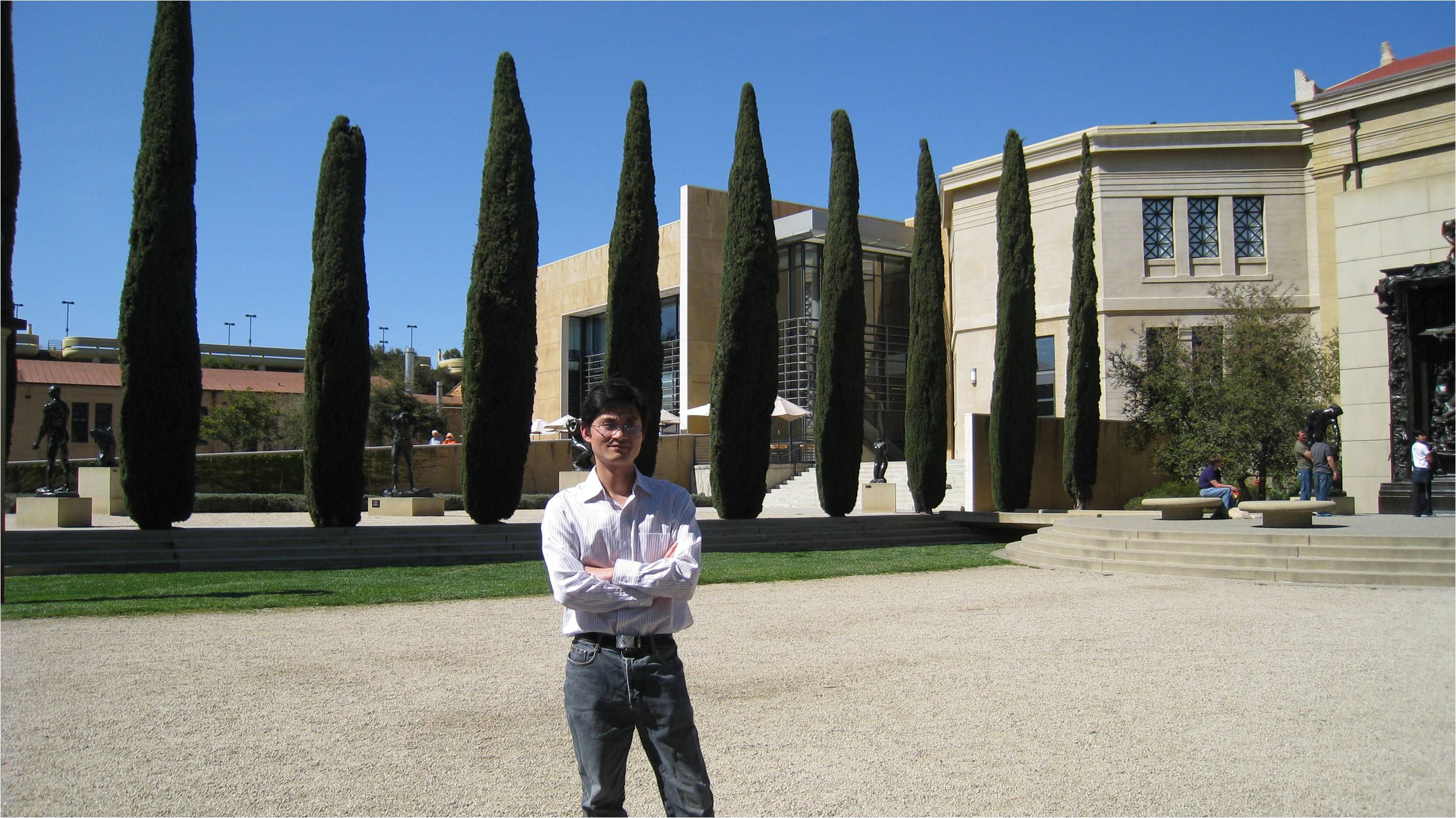 Jun Chen (陈军)合作论文数厦门大学海洋与地球学院4
 Andrew Belmonte合作论文数Department of Mathematics, Eberly College of Science, The Pennsylvania State University;Huck Institutes of the Life Sciences, The Pennsylvania State University4X-l. Wu合作论文数3Michael Twardos合作论文数3
 Shiyi Chen (陈十一)合作论文数Eastern Institute for Advanced Study;Ningbo Institute of Digital Twin, Eastern Institute of Technology, Ningbo3Brian Keith Edwards合作论文数2jyhcheng chen合作论文数2
 Paulo E. Arratia合作论文数Department of Chemical and Biomolecular Engineering, School of Engineering and Applied Science, University of Pennsylvania2
 Eli Ben-Naim合作论文数Center for Nonlinear Studies, Theoretical Division, Los Alamos National Laboratory2
 Zuoli Xiao (肖左利)合作论文数College of Engineering, Peking University2
 Jerry Gollub合作论文数Haverford College2
 Minping Wan (万敏平)合作论文数Department of Mechanics and Aerospace Engineering, College of Engineering, Southern University of Science and Technology2
 Gregory L. Eyink合作论文数Department of Applied Mathematics & Statistics, Whiting School of Engineering, The Johns Hopkins University;William H. Miller III Department of Physics & Astronomy, Krieger School of Arts & Sciences, The Johns Hopkins University2
 Riccardo Boero合作论文数Department of Economics, University of Pavia2Zahir A. Daya合作论文数2mahesh m bandi合作论文数1xiang wu合作论文数1
 Daniel Aaron Brent合作论文数Agricultural & Applied Economics Association1Chuck Yeung合作论文数1Twardos M J合作论文数1
 Matthew Hastings合作论文数Department of Physics, University of Washington1
 Shengyong Chen (陈胜勇)合作论文数School of Computer Science and Engineering, Tianjin University of Technology1
 Donatella Pasqualini合作论文数Los Alamos National Laboratory1
 Peter Vorobieff合作论文数Department of Mechanical Engineering;University of New Mexico;Department of Mechanical Engineering, University of New Mexico1
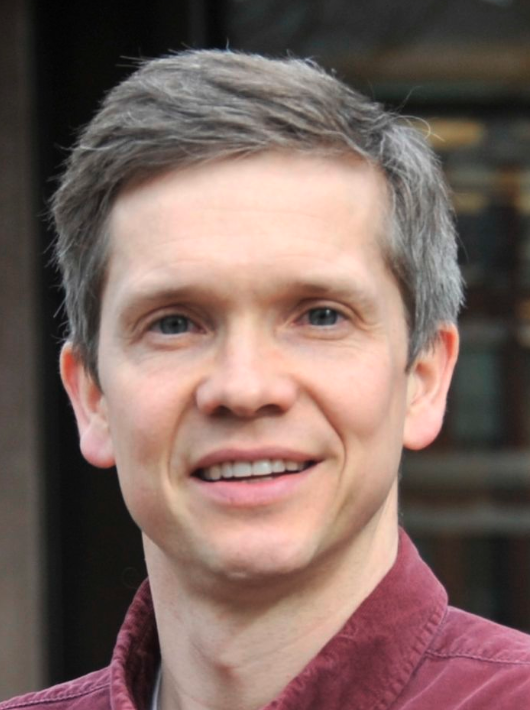 Greg A. Voth合作论文数Department of Physics, College of Integrative Sciences, Wesleyan University;College of Design and Engineering Studies, Wesleyan University1
 Hamid Kellay合作论文数Centre de Physique Moleculaire Optique et Hertzienne;Cours de la Liberation;Centre de Physique Moleculaire Optique et Hertzienne, Cours de la Liberation1
 Hussein Aluie合作论文数Department of Mechanical Engineering, Hajim School of Engineering & Applied Sciences, University of Rochester;Department of Mathematics, University of Rochester1
 Florent Krzakala合作论文数Information, Learning & Physics Laboratory, École Polytechnique Fédérale De Lausanne1W. I. Goldburg合作论文数1




