Abstract We experimentally investigate hysteresis, aging, and memory formation in a quasi-two-dimensional assembly of bi-disperse frictional granular disks subjected to uniaxial compression–decompression cycles. Using controlled interparticle friction, sub-micron boundary displacements, and spatially homogeneous acoustic excitation, we measure global stress and grain-scale contact forces—via photoelastic imaging—to directly consider how macroscopic hysteretic response relates to microscopic frictional rearrangements. After initial aging, the system settles into a statistically-stationary hysteresis loop that robustly exhibits two of the three hallmark features of Preisach hysteresis: sub-loop nesting, return-point memory. The third property of inner-loop congruence agrees within statistical uncertainty with regards to areal congruence but the loops are at different angles so shape congruence is not satisfied. When one rotates the inner loops onto a common axis, however, and applies a slightly anisotropic stretching of about 6\%, the data collapse extremely well. Thus, shape congruence is weakly preserved modulo a simple rotation and with a small but statistically significant anisotropy. Deviation of hysteretic signatures from the Preisach model presents interesting features, which we discuss in some detail as they provide questions that remain to be answered by the community. Quantitative measurements of sub-loop scaling and Barkhausen-like stress avalanches demonstrate a correspondence between frictional granular mechanics and classical models of disordered hysteretic systems. As an example, we present one specific solution on the source of local slope of return point memory in sedimentary rock hysteresis using a combination of surfactant coating and surface force measurements.
The Center for Nonlinear Studies (CNLS) was an integral part of my scientific career starting as a Postdoctoral Fellow in 1983 up to my tenure as CNLS Director from 2004 to 2015. As such, I experienced a number of scientific phases of CNLS through almost four decades of foundation, evolution, and transition. Throughout this entire interval, the inspiration and influence of David Campbell guided my way. A proper history of CNLS encompassing all of the many contributors to the CNLS story is beyond my means or purpose here. Instead, I present the history as I experienced it. I emphasize the main scientific accomplishments achieved at CNLS over more than 40 years, but I will also attempt to describe and quantify the attributes that made and continue to make the Center for Nonlinear Studies a special institution of remarkable impact and longevity. Throughout its existence, CNLS owes much to the enduring legacy of David Campbell who laid down the foundations and operating principles that have made it so successful.
We investigate states of rapidly rotating Rayleigh-Bénard convection in a cylindrical cell over a range of Rayleigh numbers 3×10⁵≤Ra≤5×10⁹ and Ekman numbers 10−6≤Ek≤10−4 for Prandtl number Pr=0.8 and aspect ratios 1/5≤Γ≤5 using direct numerical simulations. We characterize, for perfectly insulating sidewall boundary conditions, the first transition to convection via wall mode instability and the nonlinear growth and instability of the resulting wall mode states, including a secondary transition to time dependence. We show how the radial structure of the vertical velocity uz and the temperature T is captured well by the linear eigenfunctions of the wall mode instability where the radial width of uz is δuz∼Ek1/3r/H whereas δT∼e−kr (k is the wave number of a laterally infinite wall mode state). The disparity in spatial scales for Ek=10−6 means that the heat transport is dominated by the radial structure of uz since T varies slowly over the radial scale δuz. We further describe how the transition to a state of bulk convection is influenced by the presence of the wall mode states. We use temporal and spatial scales as measures of the local state of convection and the Nusselt number Nu as representative of global transport. Our results elucidate the evolution of the wall state of rotating convection and confirm that wall modes are strongly linked with the boundary zonal flow being the robust remnant of nonlinear wall mode states. We also show how the heat transport (Nu) contributions of wall modes and bulk modes are related and discuss approaches to disentangling their relative contributions. Published by the American Physical Society 2024
Rotation with thermally induced buoyancy governs many astrophysical and geophysical processes in the atmosphere, ocean, sun, and Earth's liquid-metal outer core. Rotating Rayleigh–Bénard convection (RRBC) is an experimental system that has features of rotation and buoyancy, where a container of height H and temperature difference Δ between its bottom and top is rotated about its vertical axis with angular velocity Ω. The strength of buoyancy is reflected in the Rayleigh number (∼ H3Δ) and that of the Coriolis force in the Ekman and Rossby numbers (∼Ω−1). Rotation suppresses the convective onset, introduces instabilities, changes the velocity boundary layers, modifies the shape of thermal structures from plumes to vortical columns, affects the large-scale circulation, and can decrease or enhance global heat transport depending on buoyant and Coriolis forcing. RRBC is an extremely rich system, with features directly comparable to geophysical and astrophysical phenomena. Here we review RRBC studies, suggest a unifying heat transport scaling approach for the transition between rotation-dominated and buoyancy-dominated regimes in RRBC, and discuss non-Oberbeck–Boussinesq and centrifugal effects.
Using direct numerical simulations, we study rotating Rayleigh-Bénard convection in a cylindrical cell for a broad range of Rayleigh, Ekman, and Prandtl numbers from the onset of wall modes to the geostrophic regime, an extremely important one in geophysical and astrophysical contexts. We connect linear wall-mode states that occur prior to the onset of bulk convection with the boundary zonal flow that coexists with turbulent bulk convection in the geostrophic regime through the continuity of length and time scales and of convective heat transport. We quantitatively collapse drift frequency, boundary length, and heat transport data from numerous sources over many orders of magnitude in Rayleigh and Ekman numbers. Elucidating the heat transport contributions of wall modes and of the boundary zonal flow are critical for characterizing the properties of the geostrophic regime of rotating convection in finite, physical containers and is crucial for connecting the geostrophic regime of laboratory convection with geophysical and astrophysical systems.
Using direct numerical simulations, we study rotating Rayleigh-Benard convection in a cylindrical cell for a broad range of Rayleigh, Ekman, and Prandtl numbers from the onset of wall modes to the geostrophic regime, an extremely important one in geophysical and astrophysical contexts. We connect linear wall-mode states that occur prior to the onset of bulk convection with the boundary zonal flow that coexists with turbulent bulk convection in the geostrophic regime through the continuity of length and time scales and of convective heat transport. We quantitatively collapse drift frequency, boundary length, and heat transport data from numerous sources over many orders of magnitude in Rayleigh and Ekman numbers. Elucidating the heat transport contributions of wall modes and of the boundary zonal flow are critical for characterizing the properties of the geostrophic regime of rotating convection in finite, physical containers and is crucial for connecting the geostrophic regime of laboratory convection with geophysical and astrophysical systems.
Recently, in Zhang et al. (Phys. Rev. Lett., vol. 124, 2020, 084505), it was found that, in rapidly rotating turbulent Rayleigh-Benard convection in slender cylindrical containers (with diameter-to-height aspect ratio Gamma = 1/2) filled with a small-Prandtl-number fluid (Pr approximate to 0.8), the large-scale circulation is suppressed and a boundary zonal flow (BZF) develops near the sidewall, characterized by a bimodal probability density function of the temperature, cyclonic fluid motion and anticyclonic drift of the flow pattern (with respect to the rotating frame). This BZF carries a disproportionate amount (>60 %) of the total heat transport for Pr < 1, but decreases rather abruptly for larger Pr to approximately 35 %. In this work, we show that the BZF is robust and appears in rapidly rotating turbulent Rayleigh-Benard convection in containers of different Gamma and over a broad range of Pr and Ra. Direct numerical simulations for Prandtl number 0.1 <= Pr <= 12.3, Rayleigh number 10(7) <= Ra <= 5 x 10(9), inverse Ekman number 10(5) <= 1/Ek <= 10(7) and Gamma = 1/3, 1/2, 3/4, 1 and 2 show that the BZF width delta(0) scales with the Rayleigh number Ra and Ekman number Ek as delta(0)/H similar to Gamma(0)Pr({-1/4,0})Ra(1/4)Ek(2/3) ({Pr < 1, Pr > 1}) and with the drift frequency scales as omega/Omega similar to Gamma(Pr-4/3Ra)-Pr-0 Ek(5/3), where H is the cell height and Omega the angular rotation rate. The mode number of the BZF is 1 for Gamma less than or similar to 1 and 2 Gamma for Gamma = (1, 2} independent of Ra and Pr. The BZF is quite reminiscent of wall mode states in rotating convection.
For rapidly rotating turbulent Rayleigh-Bénard convection in a slender cylindrical cell, experiments and direct numerical simulations reveal a boundary zonal flow (BZF) that replaces the classical large-scale circulation. The BZF is located near the vertical side wall and enables enhanced heat transport there. Although the azimuthal velocity of the BZF is cyclonic (in the rotating frame), the temperature is an anticyclonic traveling wave of mode one, whose signature is a bimodal temperature distribution near the radial boundary. The BZF width is found to scale like Ra^{1/4}Ek^{2/3} where the Ekman number Ek decreases with increasing rotation rate.
How do the laws of physics change with changes in spatial dimension? Maybe not at all in some cases, but in important cases, the changes are dramatic. Fluid turbulence – the fluctuating, intermittent and many-degree-of-freedom state of a highly forced fluid – determines the transport of heat, mass and momentum and is ubiquitous in nature, where turbulence is found on spatial scales from microns to millions of kilometres (turbulence in stars) and beyond (galactic events such as supernovae). When the turbulent degrees of freedom are suppressed in one spatial dimension, the resulting turbulent state in two dimensions (2D) is remarkably changed compared with the turbulence in three dimensions (3D) – energy flows to small scales in 3D but towards large scales in 2D. Although this result has been known since the 1960s due to the pioneering work of Kraichnan, Batchelor and Leith, how one transitions between 3D and 2D turbulence has remained remarkably unexplored. For real physical systems, this is a highly significant question with important implications about transport in geophysical systems that determine weather on short time scales and climate on longer scales. Is the transition from 3D to 2D smooth or are there sharp transitions that signal a threshold of the dominance of one type of turbulence over another? Recent results by Benavides & Alexakis (J. Fluid Mech., vol. 822 (2017), pp. 364–385) suggest that the latter may be the case – a surprising and provocative discovery.
We model laboratory earthquakes in a biaxial shear apparatus using the Shear‐Transformation‐Zone (STZ) theory of dense granular flow. The theory is based on the observation that slip events in a granular layer are attributed to grain rearrangement at soft spots called STZs, which can be characterized according to principles of statistical physics. We model lab data on granular shear using STZ theory and document direct connections between the STZ approach and rate‐and‐state friction. We discuss the stability transition from stable shear to stick‐slip failure and show that stick slip is predicted by STZ when the applied shear load exceeds a threshold value that is modulated by elastic stiffness and frictional rheology. We also show that STZ theory mimics fault zone dilation during the stick phase, consistent with lab observations.
Stratified shear flows occur in many geophysical contexts, from oceanic overflows and river estuaries to wind-driven thermocline layers. We explore a turbulent wall-bounded shear flow of lighter miscible fluid into a quiescent fluid of higher density with a range of Richardson numbers$0.05\lesssim Ri\lesssim 1$. In order to find a stability parameter that allows close comparison with linear theory and with idealized experiments and numerics, we investigate different definitions of$Ri$. We find that a gradient Richardson number defined on fluid interface sections where there is no overturning at or adjacent to the maximum density gradient position provides an excellent stability parameter, which captures the Miles–Howard linear stability criterion. For small$Ri$the flow exhibits robust Kelvin–Helmholtz instability, whereas for larger$Ri$interfacial overturning is more intermittent with less frequent Kelvin–Helmholtz events and emerging Holmboe wave instability consistent with a thicker velocity layer compared with the density layer. We compute the perturbed fraction of interface as a quantitative measure of the flow intermittency, which is approximately 1 for the smallest$Ri$but decreases rapidly as$Ri$increases, consistent with linear theory. For the perturbed regions, we use the Thorpe scale to characterize the overturning properties of these flows. The probability distribution of the non-zero Thorpe length yields a universal exponential form, suggesting that much of the overturning results from increasingly intermittent Kelvin–Helmholtz instability events. The distribution of turbulent kinetic energy, conditioned on the intermittency fraction, has a similar form, suggesting an explanation for the universal scaling collapse of the Thorpe length distribution.
Rock materials often display long‐time relaxation, commonly termed aging or “slow dynamics,” after the cessation of acoustic perturbations. In this paper, we focus on unconsolidated rock materials and propose to explain such nonlinear relaxation through the shear‐transformation‐zone theory of granular media, adapted for small stresses and strains. The theory attributes the observed relaxation to the slow, irreversible change of positions of constituent grains and posits that the aging process can be described in three stages: fast recovery before some characteristic time associated with the subset of local plastic events or grain rearrangements with a short time scale, log linear recovery of the elastic modulus at intermediate times, and gradual turnover to equilibrium steady state behavior at long times. We demonstrate good agreement with experiments on aging in granular materials such as simulated fault gouge after an external disturbance. These results may provide insights into observed modulus recovery after strong shaking in the near surface region of earthquake zones.
Mass transport in multi-species porous media is through molecular diffusion and plume dynamics. Predicting the rate of mass transport has application in determining the efficiency of the storage and sequestration of carbon dioxide. We study a water and propylene–glycol system enclosed in a Hele-Shaw cell with variable permeability that represents a laboratory analogue of the general properties of porous media convection. The interface between the fluids, tracked using an optical shadowgraph technique, is used to determine the mass transport rate, the spatial separation of solutal plumes, and the velocity and width characteristics of those plumes. One finds that the plume dynamics are closely related to the mass transport rate. This article is part of the themed issue ‘Energy and the subsurface’.
A filtering approach for analyzing turbulent stratified shear flows Robert E. Ecke 1 and Philippe Odier 2 Condensed Matter and Magnetic Science and CNLS, Los Alamos National Laboratory, Los Alamos, NM USA: ecke@lanl.gov Laboratoire de Physique, Ecole Normale Sup´erieure de Lyon, Lyon France Abstract Stably stratified shear layers are present in many geophysical contexts from oceanic over- flows to river estuaries and have been studied in many contexts in both laboratory exper- iments and numerical simulations. We consider here laboratory experiments on a gravity current where the current itself is turbulent [1] with a Reynolds number of a few thousand (Taylor Reynolds number of about 100) whereas the surrounding fluid is quiescent. The stability of the current is governed by the Richardson number Ri 0 = g(δρ/ρ)H/U 0 2 where g is gravity, H is the current thickness, U 0 is the current velocity, and ∆ρ << ρ is the density difference between the two fluids. Evaluating this system at the exit of our wall- bounded wall jet, we have 0.25 < Ri 0 < 1.0. The interface between lighter and heavier fluid can be disrupted by local instability, see Fig. 1(a), where turbulent kinetic energy (a) (b) l (c) (d) l Figure 1: Spatial fields of turbulent gravity current: (a) density ρ, (b) filtered ρ, (c) downstream velocity u, and (d) filtered u. The filter length scale ` is indicated in (a) and (c). False color imaging where blue is low, red is high and white is intermediate. The filtered fields are smaller by 2` in each direction than the unfiltered fields. resident in the current or generated by shear at the interface produces overturning and
 Michael K. Rivera合作论文数36
 Peter Vorobieff合作论文数Department of Mechanical Engineering;University of New Mexico;Department of Mechanical Engineering, University of New Mexico20W. Brent Daniel合作论文数16Michael Rivera合作论文数16
 Philippe Odier合作论文数Laboratoire de Physique, Ecole Normale Supérieure14
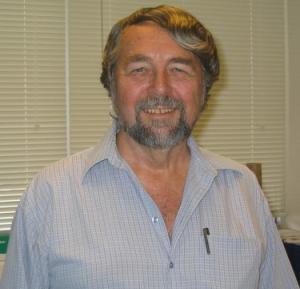 Guenter Ahlers合作论文数University of California, Santa Barbara13YC HU合作论文数11
 Scott Backhaus合作论文数Center for Leadership, University of Colorado Boulder;Department of Physics, University of Colorado Boulder;National Institute of Standards and Technology;Camus Energy10
 Tamas Borzsonyi合作论文数Condensed Matter and Thermal Physics and Center for Nonlinear Studies;Los Alamos National Lab;Condensed Matter and Thermal Physics and Center for Nonlinear Studies, Los Alamos National Lab10H. Haucke合作论文数9
 Eli Ben-Naim合作论文数Center for Nonlinear Studies, Theoretical Division, Los Alamos National Laboratory7Mahesh Bandi合作论文数7
 Yoshi Maeno (前野悦輝)合作论文数Department of Physics, Graduate School of Science, Kyoto University7John C Wheatley合作论文数7Drew A. Geller合作论文数7
 Olga Shishkina合作论文数Laboratory for Fluid Physics, Pattern Formation and Biocomplexity, Max Planck Institute for Dynamics and Self-Organization;Göttingen Graduate Center for Neurosciences, Biophysics, and Molecular Biosciences, Georg-August-Universität Göttingen7
 Victor Steinberg合作论文数Department of Physics of Complex Systems, Weizmann Institute of Science6
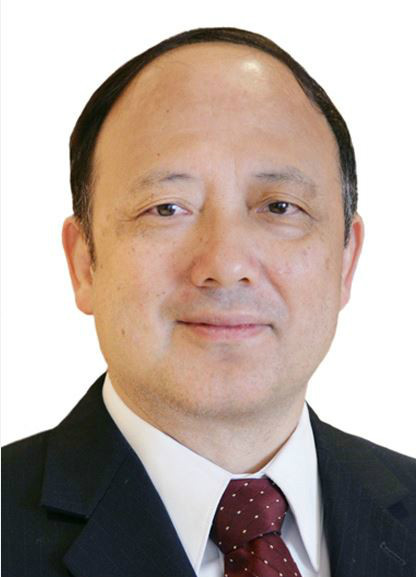 Shiyi Chen (陈十一)合作论文数Eastern Institute for Advanced Study;Ningbo Institute of Digital Twin, Eastern Institute of Technology, Ningbo6Zahir A. Daya合作论文数6R. Mainieri合作论文数5Z. A. Daya合作论文数5
 Xuan Zhang合作论文数5Ning Li合作论文数5J Gregory Dash合作论文数5Fang Zhong合作论文数5Ts Sullivan合作论文数4
 Eberhard Bodenschatz合作论文数Max Planck Institute For Dynamics And Self-Organization;Georg August University;Department of Physics, College of Arts & Sciences, Cornell University4
 Paul A. Johnson合作论文数Los Alamos National Laboratory4Werner Pesch合作论文数Institut für Festkörperforschung der Kernforschungsanlage Jülich Jülich4
 Andras Libal合作论文数Theoretical Division;Los Alamos National Laboratory;Theoretical Division, Los Alamos National Laboratory4
 Timothy S. Sullivan合作论文数Southern Illinois University Edwardsville4Yuanming Liu (刘沅明)合作论文数4
 Gregory L. Eyink合作论文数Department of Applied Mathematics & Statistics, Whiting School of Engineering, The Johns Hopkins University;William H. Miller III Department of Physics & Astronomy, Krieger School of Arts & Sciences, The Johns Hopkins University4Eric G. Daub合作论文数Physics Department;University of California , Santa Barbara;Physics Department, University of California , Santa Barbara4J. Stoltenberg合作论文数3hans haucke合作论文数3
 Matthew Hastings合作论文数Department of Physics, University of Washington3Charles Lieou合作论文数Department of Physics, University of California3
 Jun Chen (陈军)合作论文数School of Mechanical Engineering, Purdue University3
 Ioannis Kevrekidis合作论文数Department of Chemical and Biomolecular Engineering, Whiting School of Engineering, Johns Hopkins University3Ilarion V. Melnikov合作论文数3
 C. Randall Truman合作论文数Department of Mechanical Engineering, University of New Mexico3
 Darek Bogucki合作论文数3Michael Twardos合作论文数3
 David Egolf合作论文数Department of Physics, College of Arts & Sciences, Georgetown University3Sergiy Gerashchenko合作论文数3OJ WHITTEMORE合作论文数3
 Julian A. Domaradzki合作论文数3
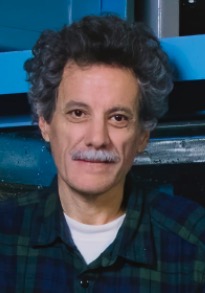 Roberto Camassa合作论文数Department of Mathematics, University of North Carolina at Chapel Hill/Carolina Center For Interdisciplinary Applied Mathematics, University of North Carolina at Chapel Hill3




