The time-consuming formation process critically impacts the longevity of sodium-ion coin cells and End Of Life (EOL) performance. This study aims to optimize formation protocols for duration efficiency, targeting high-performance outcomes while minimizing the number of experiments to reduce resource consumption and accelerate discovery. Specifically, we consider two potentially competing objectives: minimizing formation time and maximizing EOL performance. Beyond this application focus, we also present a methodological contribution: a framework designed to enable interoperability between the FINALES and Kadi RDM ecosystems, which we employ to tackle our optimization problem. In this setup, the FINALES framework orchestrates experiment planning and execution on the POLiS MAP, while an active-learning agent implemented within Kadi4Mat guides experiment selection, using multi-objective batched Bayesian optimization to efficiently explore the parameter space. This interoperability enhancement enables coordinated, distributed collaboration across automated systems and human-operated workflows, bridging multiple research centers. Using this approach, we iteratively explore the trade-off between formation time and EOL performance and identify candidate solutions approximating the Pareto front. The resulting workflow demonstrates the capability of interoperable infrastructures to facilitate data-driven optimization in battery research, and establishes a transferable framework applicable to diverse materials science and engineering optimization tasks.
We present a prototype implementation of a framework for hybrid workflows that integrates automated computation and analysis with manual experimental measurements. Leveraging the pyiron workflow engine, we introduce a lightweight, parameterized procedure description layer that can adjust instrument settings and orchestrate human interventions. Rather than replacing the existing execution engine, we add a minimal abstraction layer that translates procedure descriptions into executable steps for manual operations, enabling seamless handoffs between automated tasks and manual experimental tasks. We demonstrate the approach on a use case that combines manual tensile testing with subsequent analytical evaluation and result aggregation, illustrating how parameters and metadata propagate through the workflow and how instrument state changes and measurement results are captured. We also report a usability study that quantifies the ease with which lab scientists can create and modify workflows. Finally, we summarize lessons learned from this prototype, including improved provenance capture and streamlined experimental orchestration, as well as current limitations. We conclude that the proposed lightweight hybrid workflow description offers a promising path to bridging automation, computation and manual experimentation, and we outline directions for future work.
Extracting a digital representation of a material from images is a prerequisite for any quantitative structure-property analysis. Supervised convolutional neural networks (CNNs) now deliver state-of-the-art segmentation accuracy, but their performance depends on large, manually annotated training sets-an impractical requirement for most bulk micro-computed-tomography (mu CT) studies. Classical unsupervised techniques such as Hidden-Markov Random Fields (HMRF) avoid the need for ground-truth labels, yet they are typically slow and yield lower-quality segmentations. Here, we introduce HMRF-UNet, a hybrid framework that embeds the probabilistic neighborhood model of HMRF directly into the U-Net's loss function. The loss simultaneously (i) enforces spatial smoothness through higher-order neighborhood terms, (ii) respects class-wise intensity distributions, and (iii) benefits from data-driven feature learning. By combining HMRF's label-free regularization with the fast inference of CNNs, the method delivers unsupervised segmentation at a speed comparable to that of supervised networks. We evaluate the approach on a mu CT dataset of polyurethane (PU) foam. An ablation study quantifies the con tribution of each neighborhood term, and the HMRF-UNet attains a Dice similarity coefficient of 0.957 +/- 0.017, while processing a 256 x 256 slice in 200 ms on a single GPU; performance that rivals supervised baselines. To further diminish the reliance on annotated data, we propose a two-stage pre-training strategy: the network is first optimized with the HMRF loss on unlabeled data and subsequently fine-tuned on a minimal labeled subset. This approach recovers 98.4% of the fully supervised performance while using only 1% of ground-truth annotations. The proposed framework provides accurate, high-throughput segmentation without extensive manual labeling, enabling rapid, data-driven characterization of complex porous architectures across a broad range of material systems.
In the following, a detailed investigation of two phase-field based variants for optimizing unidirectionally loaded gyroid unit cells is presented. The optimization is conducted within the linear-elastic range, aiming to maximize the stiffness of the structure while preserving its periodicity. In the first approach, a gyroid unit cell with an initial porosity of approximately 75% is volumetrically reduced by 5%. This volume reduction in the less stressed regions results in a topological modification of the structure. In the second approach, a gyroid unit cell with an initial porosity of approximately 80% is also volumetrically reduced by 5%. Subsequently, the volume is increased by 5% through a phase-field based shape optimization process, resulting in a final porosity of 80%. Both modified structures are compared to a reference structure-an unmodified gyroid structure with a porosity of 80%. The results indicate that the modified structures exhibit an approximately 32% higher effective Young's modulus. Furthermore, a correlation between the simulation results and experimental data is established.
A novel numerical method for simulating liquid foam decay has been developed. This method is based on a phase-field model and captures gas pressure inside the bubbles. It employs an algorithm that includes the spontaneous rupture of foam separating films and coalescence of bubbles. We found that the microstructure evolution in liquid foam in the dry foam limit is predicted. The numerical results demonstrate that the foam ageing dynamics are mapped for the decay process due to successive coalescence events. Moreover, the method is well suited for large-scale microstructure simulations. This allows the investigation of statistical properties of foams, based on the structures’ characteristics at the bubble scale. In summary, the method is effective to gain insight into the impact of fundamental factors controlling the evolution and dynamics of decaying liquid foam.
Engineering materials are polycrystalline in nature, consisting of numerous single crystals interconnected through a three-dimensional interfacial network known as grain boundaries. Often essential in defining the performance and durability of materials, grain boundaries attract considerable attention during alloy development. Initially, we employ a multi-phase-field model and validate the phenomenon of grain-boundary grooving under isotropic energy conditions, with bulk diffusion as the dominant mass transport mechanism. Subsequently, we investigate the effects of interfacial surface anisotropy and crystal misorientation on groove formation. This present study focuses on the effects of interfacial surface anisotropy and crystal misorientation and, thus, allows us to draw comparisons between the effects of different physical phenomena on the grain-boundary behavior. It is observed that the groove kinetics accelerate as a result of fourfold anisotropy, with groove root deepening proportional to the imposed anisotropic strength. Furthermore, the phase-field results presented here align well with theoretical predictions. In addition, we briefly study on the effect of solid–solid anisotropy on the groove root position. We anticipate that the simulated liquid groove and its precise measurement will serve as important tools for studying the relative energies of grain boundaries.
This work presents the development and implementation of a research assistant tool, Lithium-Ion Solid-State Assistant (LISA), based on the Retrieval-Augmented Generation (RAG) architecture. This assistant has been specifically tailored to enhance the retrieval and extraction of information from the domain of solid-state battery research. The system employs sophisticated retrieval techniques to efficiently identify the most pertinent document segments in response to researcher queries. The segments above are subsequently collated into prompts for a Large Language Model (LLM), which generates accurate, contextually enhanced responses to queries about solid-state battery-related subjects. This approach has the potential to markedly improve the accessibility and usability of a range of documentation, from project reports to complex scientific literature. The system provides researchers with a powerful tool to bridge disciplinary gaps, facilitate cross-disciplinary communication, accelerate knowledge discovery, and drive innovation in the field of solid-state batteries. A comprehensive evaluation was conducted to assess the system’s performance, with results indicating its potential to transform scientific research workflows. The system offers a robust open-source framework for future advancements in automated knowledge retrieval, understanding, and management, particularly in supporting the development of new materials.
This study explores the potential of different load-specific phase-field-based structural optimization for generating new, innovative lightweight periodic lattice structures. Initially, a three-dimensional cross-lattice structure with a volume fraction of 75% is volume-reduced to 35% by removing material from less stressed regions under various shear load scenarios. This process leads to a topological modification of the original structures. Subsequently, a phase-field-based shape optimization is applied to the structures, maintaining the volume fraction of 35%. This shape optimization aims to enhance the mechanical properties of the structures further. The investigation demonstrates that this shape optimization leads to a significant performance improvement of the structures. Comparison of the newly generated structures with established reference structures, such as the primitive and gyroid structures, highlights the potential and advantages of phase-field-based structural optimization. Notably, in the case of three-dimensional shear loading, the optimization process results in a structure with the highest shear modulus among those studied.
MOdeling DAta (MODA) is a template for the standardized description of materials models. It is meant to guide users toward a complete high-level documentation of modeling workflows, starting from the end-user case down to the computational details. While a MODA workflow outlines the sequence of models and data interactions, it is not executable by itself and requires implementation. Traditionally, this involves custom coding to link together solvers and data sources or using an integration framework like the Multi-Physics Integration Framework (MuPIF). Both options demand software development expertise. To simplify this process, the MUSICODE H2020 project introduced in its Open Innovation Platform a low-code approach that enables easier transformation of MODA workflows into executable multi-scale workflows. This bridges the space between MODA workflow definition and its executable encoding, merging them into a single entity while ensuring FAIR compliance. In this paper, we illustrate the implementation of this approach based on the Business Process Model and Notation (BPMN) standard, demonstrating how MODA workflows can be converted into executable workflows through examples and a real-world use case.
As material modeling and simulation has become vital for modern materials science, research data with distinctive physical principles and extensive volume are generally required for full elucidation of the material behavior across all relevant scales. Effective workflow and data management, with corresponding metadata descriptions, helps leverage the full potential of data-driven analyses for computer-aided material design. In this work, we propose a research workflow and data management (RWDM) framework to manage complex workflows and resulting research (meta)data, while following FAIR principles. Multiphysics-multiscale simulations for additive manufacturing investigations are treated as showcase and implemented on Kadi4Mat – an open source research data infrastructure. The input and output data of the simulations, together with the associated setups and scripts realizing the simulation workflow, are curated in corresponding standardized Kadi4Mat records with extendibility for further research and data-driven analyses. These records are interlinked to indicate information flow and form an ontology-based knowledge graph. Automation scheme for performing high-throughput simulations and post-processing integrated with the proposed RWDM framework is also presented.
For scientific software, especially those used for large-scale simulations, achieving good performance and efficiently using the available hardware resources is essential. It is important to regularly perform benchmarks to ensure the efficient use of hardware and software when systems are changing and the software evolves. However, this can become quickly very tedious when many options for parameters, solvers, and hardware architectures are available. We present a continuous benchmarking strategy that automates benchmarking new code changes on high-performance computing clusters. This makes it possible to track how each code change affects the performance and how it evolves.
Triply periodic minimal surfaces (TPMS) are highly versatile porous formations that can be defined by formulas. Computationally based, load-specific shape optimization enables tailoring these structures for their respective application areas and thereby enhance their potential. In this investigation, individual sheet-based gyroid structures with varying porosities are specifically optimized with respect to their stiffness. A modified phase-field method is employed to establish a simulation framework for the shape optimization process. Despite constant volume and the preservation of the periodicity of the unit cells, volume redistribution occurs through displacement of the interfaces. The phase-field-based optimization process is detailed using unidirectional loading on three gyroidal unit cells with porosities of 75
Triply periodic minimal surface (TPMS) structures excel in various research fields, ranging from bone support structures to heat exchangers. By implementing measures for shape alteration, the mechanical properties of the structure can be improved under certain load conditions. While interface-based methods such as the phase-field method have established themselves as powerful simulation techniques for the analysis of microstructure evolution and morphologically complex dynamic processes, they are not yet very well known and widely used for the application of shape optimization in mechanically loaded complex structures. In this study, an experimental procedure to validate shape-optimized samples is presented and applied to validate three computationally derived optimal candidates for sheet-based TPMS structures (Diamond, Gyroid, and Primitive) proposed by applying a mathematical model for shape optimization formulated in terms of the phase-field approach combined with linear elastic continuum mechanics and subject to the constraints of volume conservation. The present experimental study aims to validate recently obtained theoretical research results predict three different TPMS structures were shape-optimized under mechanical stress, using the phase-field method. In the following, the previous theoretical study is validated experimentally. The validation procedure creates a rare intersection between shape optimization phase-field simulations and experimental samples. The measurements show that the shape-optimized structures have a higher average stiffness, which leads to a shift in the plastic deformation range and thus confirms the computationally determined shape optimization.
At the research level, novel active materials for batteries are synthesised on a small scale, fabricated into electrodes and electrochemically characterised using each group’s established process due to the lack of standards. Recently, eminent researchers have criticised the implementation of e.g. low active material contents/electrode loadings, the use of research-type battery cell constructions, or the lack of statistically relevant data, resulting in overstated data and thus giving misleading predictions of the key performance indicators of new battery technologies. Here, we report on the establishment of a reference system for the development of sodium-ion batteries. Electrodes are fabricated under relevant conditions using 9.5 mg/cm² self-synthesised Na3V2(PO4)3/C cathode active material and 3.6 mg/cm² commercially available hard carbon anode active material. It is found that different types of battery cells are more or less suitable for half- and/ or full-cell testing, resulting in ir/reproducible or underestimated active material capacities. Furthermore, the influence of electrode overhang, which is relevant for upscaling, is evaluated. The demonstrator cell (TRL 4-5) has been further characterised providing measured data on the power/energy density and thermal behaviour during rate testing up to 15 C and projections are made for its practical limits.
In this paper, we introduce our approach in using the web-based application Kadi4Mat (KadiWeb) as an electronic laboratory notebook (ELN) combined with an integrated instrument database to facilitate Findable - Accessible - Interoperable - Reusabe (FAIR) research data. Facing transmission electron microscopy (TEM), focused ion beam (FIB), atom probe tomography (APT), or scanning electron microscopy (SEM) tasks, including sample preparation challenges, we developed a strategy to document the complex processes in our user facility KNMFi. To create appropriate records in Kadi4Mat we are comprising one central record for the material/sample to be investigated, a record for the sample preparation, a record for the investigation/experiment, and a record for the data evaluation. Therefore, a set of appropriate templates for the categories ‘sample preparation general,’ ‘sample preparation for TEM,’ ‘Focused Ion Beam and Scanning Electron Microscopy,’ ‘Transmission Electron Microscopy,’ ‘Atom Probe Tomography,’ and ‘Data Evaluation’ was developed in ‘atomistic units.’ The templates can be combined easily and have been designed to be user-friendly, but at the same time requesting the relevant metadata in a structured and standardized way. The documentation process, including MaTeLiS-instrument database, is demonstrated in a use-case with several sample preparation steps and different investigation methods. The developed templates can be exported in JSON-format and might be used as models for other tasks.
Modern high-performance applications are highly-configurable systems that provide hundreds of configuration options. Performance models offer insights into the performance of these applications and help users understand the impact of these options. Yet, crafting models for such applications proves costly due to the many configuration options and their unknown performance impacts that need to be modeled. However, some options are performance-irrelevant, and removing them can reduce construction costs without compromising accuracy. This paper explores an approach to automatically identify performance-irrelevant configuration options empirically. By leveraging established performance modeling methods, we devise cost-efficient preliminary prediction models that rely on fewer samples and analyze them to identify such options. We evaluate our approach using a real-world HPC application to demonstrate our method's effectiveness in recognizing performance-irrelevant options and the potential to save costs for performance modeling.
The outcome of three-dimensional (3D) bioprinting heavily depends, amongst others, on the interaction between the developed bioink, the printing process, and the printing equipment. However, if this interplay is ensured, bioprinting promises unmatched possibilities in the health care area. To pave the way for comparing newly developed biomaterials, clinical studies, and medical applications (i.e. printed organs, patient-specific tissues), there is a great need for standardization of manufacturing methods in order to enable technology transfers. Despite the importance of such standardization, there is currently a tremendous lack of empirical data that examines the reproducibility and robustness of production in more than one location at a time. In this work, we present data derived from a round robin test for extrusion-based 3D printing performance comprising 12 different academic laboratories throughout Germany and analyze the respective prints using automated image analysis (IA) in three independent academic groups. The fabrication of objects from polymer solutions was standardized as much as currently possible to allow studying the comparability of results from different laboratories. This study has led to the conclusion that current standardization conditions still leave room for the intervention of operators due to missing automation of the equipment. This affects significantly the reproducibility and comparability of bioprinting experiments in multiple laboratories. Nevertheless, automated IA proved to be a suitable methodology for quality assurance as three independently developed workflows achieved similar results. Moreover, the extracted data describing geometric features showed how the function of printers affects the quality of the printed object. A significant step toward standardization of the process was made as an infrastructure for distribution of material and methods, as well as for data transfer and storage was successfully established.
In a circular factory, new products are produced reusing parts from used products, as well as newly manufactured parts. The production system consists of disassembly, testing as well as assembly steps. Due to the unforeseeable conditions of the used parts, the complexity of such a circular factory is challenging. This paper contributes a concept of an ontology-based knowledge backbone to master the challenges of such a circular factory. The concept addresses the representation of knowledge especially taking into account uncertainty, how to design queries and means to detect similarities and analogies. Furthermore, the role of research data management with automatized workflows as a supplier for FAIR data is elaborated. In einer Kreislauffabrik werden neue Produkte unter Wiederverwendung von Teilen gebrauchter Produkte sowie von neu hergestellten Teilen hergestellt. Das Produktionssystem besteht aus Demontage-, Pr & uuml;f- und Montageschritten. Aufgrund des unvorhersehbaren Zustands der verwendeten Teile ist die Komplexit & auml;t einer solchen Kreislauffabrik eine Herausforderung. In diesem Beitrag wird ein Konzept f & uuml;r ein ontologiebasiertes Wissensger & uuml;st vorgestellt, um die Herausforderungen einer solchen Kreislauffabrik zu meistern. Das Konzept befasst sich mit der Repr & auml;sentation von Wissen unter besonderer Ber & uuml;cksichtigung von Unsicherheit, der Gestaltung von Abfragen und der Erkennung von & Auml;hnlichkeiten und Analogien. Dar & uuml;ber hinaus wird die Rolle des Forschungsdatenmanagements mit automatisierten Workflows als Lieferant f & uuml;r FAIR-Daten herausgearbeitet.
Porous membranes have been utilized intensively in a wide range of fields due to their special characteristics and a rigorous characterization of their microstructures is crucial for understanding their properties and improving the performance for target applications. A promising method for the quantitative analysis of porous structures leverages the physics-based generation of porous structures at the pore scale, which can be validated against real experimental microstructures, followed by building the process–structure–property relationships with data-driven algorithms such as artificial neural networks. In this study, a Variational AutoEncoder (VAE) neural network model is used to characterize the 3D structural information of porous materials and to represent them with low-dimensional latent variables, which further model the structure–property relationship and solve the inverse problem of process–structure linkage combined with the Bayesian optimization method. Our methods provide a quantitative way to learn structural descriptors in an unsupervised manner which can characterize porous microstructures robustly.
 Britta Nestler合作论文数Institut für Angewandte Materialien, Karlsruhe Institute of Technology124
 Daniel Schneider合作论文数Harvard University, Kennedy School24
 Fei Wang合作论文数Institute of Materials and Processes, Karlsruhe University of Applied Sciences22
 Ephraim Schoof合作论文数Helmholtz Inst Ulm Electrochem Energy Storage HIU13
 Arnd Koeppe合作论文数Karlsruhe Institute of Technology12
 Patrick Altschuh合作论文数11Oleg Tschukin合作论文数10
 Kumar Ankit合作论文数Department of Metallurgical Engineering;Institute of Tec;Banaras Hindu University;Institute of Tec, Banaras Hindu University10Christoph Herrmann合作论文数8Nico Brandt合作论文数8Andreas Reiter合作论文数7
 Nishant Prajapati合作论文数Institute for Applied Materials (IAM-MMS),, Karlsruhe Institute of Technology7Philipp Zschumme合作论文数6V. Pavan Laxmipathy合作论文数6Michael Späth合作论文数6
 Choudhury Abhik合作论文数IAM-ZBS, Karlsruhe Institute of Technology (KIT),6
 Christoph Hilgers合作论文数Geologie-Endogene Dynamik, RWTH Aachen6Marcus Jainta合作论文数6
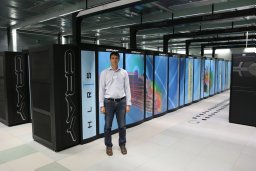 Johannes Hötzer合作论文数Institute of Applied Materials - Reliability of Components and Systems, Karlsruhe Institute of Technology6
 Felix K. Schwab合作论文数5Mathias Reichardt合作论文数5Lars Griem合作论文数5Yinghan Zhao合作论文数5
 Willfried Kunz合作论文数5
 Ramanathan Perumal合作论文数Tiruchirappalli - Theoretical Metallurgy Group, National Institute of Technology (NIT)5Benjamin Busch合作论文数5P.G. Kubendran Amos合作论文数5Yanchen Wu合作论文数5
 Berghoff Marco合作论文数Institute of Applied Materials, Karlsruhe Institute of Technology5Marcel Bremerich合作论文数4Leonie Wallat合作论文数4
 Arnab Mukherjee合作论文数4Frank Poehler合作论文数4Stefan Schmid合作论文数4
 Anastasia August合作论文数4
 Marouen Ben Said合作论文数Institute of Applied Materials, Karlsruhe Institute of Technology4
 Janos L. Urai合作论文数German University of Technology in Oman;RWTH Aachen University4
 Alexander Vondrous合作论文数Institute of Materials and Processes, Karlsruhe University of Applied Sciences4Manideep Jayavarapu合作论文数3Torsten Bronger合作论文数3Larissa Schmid合作论文数Karlsruhe Inst Technol, KASTEL Inst Informat Secur & Dependabil3Martin Reder合作论文数Institute for Applied Materials (IAM-MMS),, Karlsruhe Institute of Technology3
 Farshid Jamshidi合作论文数3Haodong Zhang合作论文数Institute of Applied Materials-Computational Materials Science; Karlsruhe Institute of Technology (KIT); Straße am Forum 7 76131 Karlsruhe Germany3
 Dennis Glaser合作论文数University of Stuttgart3
 Jay Santoki合作论文数Inst Appl Mat IAM CMS, Karlsruhe Inst Technol KIT3
 Franz Bamer合作论文数RWTH Aachen University3
 Liene Spruzeniece合作论文数Macquarie Univ, Dept Earth & Planetary Sci, Australian Res Council Ctr Excellence Core Crust, Sydney, NSW 2109, Australia3
 Christian Greiner合作论文数Inst Appl Mat IAM, Karlsruhe Inst Technol KIT3




