Autonomous robots operating in unstructured, safety-critical environments, from planetary exploration to warehouses and homes, must learn to safely navigate and interact with their surroundings despite limited prior knowledge. Current methods for safe control, such as Hamilton-Jacobi Reachability and Control Barrier Functions, assume known system dynamics. Meanwhile existing safe exploration techniques often fail to account for the unavoidable stochasticity inherent when operating in unknown real world environments, such as an exploratory rover skidding over an unseen surface or a household robot pushing around unmapped objects in a pantry. To address this critical gap, we propose Safe Stochastic Explorer (S.S.Explorer) a novel framework for safe, goal-driven exploration under stochastic dynamics. Our approach strategically balances safety and information gathering to reduce uncertainty about safety in the unknown environment. We employ Gaussian Processes to learn the unknown safety function online, leveraging their predictive uncertainty to guide information-gathering actions and provide probabilistic bounds on safety violations. We first present our method for discrete state space environments and then introduce a scalable relaxation to effectively extend this approach to continuous state spaces. Finally we demonstrate how this framework can be naturally applied to ensure safe physical interaction with multiple unknown objects. Extensive validation in simulation and demonstrative hardware experiments showcase the efficacy of our method, representing a step forward toward enabling reliable widespread robot autonomy in complex, uncertain environments.
Autonomous medical robots hold promise to improve patient outcomes, reduce provider workload, democratize access to care, and enable superhuman precision. However, autonomous medical robotics has been limited by a fundamental data problem: existing medical robotic datasets are small, single-embodiment, and rarely shared openly, restricting the development of foundation models that the field needs to advance. We introduce Open-H-Embodiment, the largest open dataset of medical robotic video with synchronized kinematics to date, spanning more than 49 institutions and multiple robotic platforms including the CMR Versius, Intuitive Surgical's da Vinci, da Vinci Research Kit (dVRK), Rob Surgical BiTrack, Virtual Incision's MIRA, Moon Surgical Maestro, and a variety of custom systems, spanning surgical manipulation, robotic ultrasound, and endoscopy procedures. We demonstrate the research enabled by this dataset through two foundation models. GR00T-H is the first open foundation vision-language-action model for medical robotics, which is the only evaluated model to achieve full end-to-end task completion on a structured suturing benchmark (25
Surgical automation holds immense potential to improve the outcome and accessibility of surgery. Recent studies use reinforcement learning to automate various surgical tasks. However, these policies are developed independently, and their reusability is limited when applied to other scenarios, making it more time-consuming for robots to incrementally solve tasks. Inspired by how human surgeons build their expertise, we propose Surgical Incremental Reinforcement Learning (SurgIRL). SurgIRL aims to (1) acquire new skills by referring to external policies (knowledge) and (2) build an expandable knowledge base and reuse it to solve multiple unseen tasks incrementally (incremental learning). Our SurgIRL framework includes three major components. We first define an expandable knowledge set containing heterogeneous policies that can be helpful for surgical tasks. Then, we propose Knowledge Inclusive Attention Network with mAximum Coverage Exploration (KIAN-ACE), which enhances learning performance through extensive navigation of the knowledge base. Finally, we develop incremental learning pipelines to expand and reuse a knowledge base and solve multiple surgical tasks sequentially. Our simulation experiments show that SurgIRL efficiently learns to automate ten surgical tasks separately or incrementally. We also demonstrate successful sim-to-real transfers of SurgIRL's policies on the da Vinci Research Kit (dVRK). The results represent an initial step towards lifelong robot learning for surgical automation.
Chronic wounds, such as diabetic, pressure, and venous ulcers, affect over 6.5 million patients in the United States alone and generate an annual cost exceeding 25 billion. Despite this burden, chronic wound care remains a routine yet manual process performed exclusively by trained clinicians due to its critical safety demands. We envision a future in which robotics and automation support wound care to lower costs and enhance patient outcomes. This paper introduces an autonomous framework for one of the most fundamental yet challenging subtasks in wound redressing: adhesive tape manipulation. Specifically, we address two critical capabilities: tape initial detachment (TID) and secure tape placement. To handle the complex adhesive dynamics of detachment, we propose a force-feedback imitation learning approach trained from human teleoperation demonstrations. For tape placement, we develop a numerical trajectory optimization method based to ensure smooth adhesion and wrinkle-free application across diverse anatomical surfaces. We validate these methods through extensive experiments, demonstrating reliable performance in both quantitative evaluations and integrated wound redressing pipelines. Our results establish tape manipulation as an essential step toward practical robotic wound care automation.
Autonomous surgical systems must adapt to highly dynamic environments where tissue properties and visual cues evolve rapidly. Central to such adaptability is feedback: the ability to sense, interpret, and respond to changes during execution. While feedback mechanisms have been explored in surgical robotics, ranging from tool and tissue tracking to error detection, existing methods remain limited in handling the topological and perceptual challenges of tissue dissection. In this work, we propose a feedback-enabled framework for autonomous tissue dissection that explicitly reasons about topological changes from endoscopic images after each dissection action. This structured feedback guides subsequent actions, enabling the system to localize dissection progress and adapt policies online. To improve the reliability of such feedback, we introduce visibility metrics that quantify tissue exposure and formulate optimal controller designs that actively manipulate tissue to maximize visibility. Finally, we integrate these feedback mechanisms with both control-based and learning-based dissection methods, and demonstrate experimentally that they significantly enhance autonomy, reduce errors, and improve robustness in complex surgical scenarios.
Dexterous grasping depends on contact regulation, not motion alone. Stable manipulation requires fingers to maintain appropriate object loading as contacts slip, deform, or become visually occluded. Existing cross-embodiment dexterous policies unify motion through retargeted hand poses or latent actions, but force feedback remains tied to each hand's sensing and actuation, limiting transfer. This work introduces a cross-embodiment force-position interface for contact-aware manipulation across heterogeneous dexterous hands. Motion intent is represented in a shared hand-pose latent, while each hand's effort signal is calibrated through system identification into physical joint torque in N.m. These torques are mapped to fingertip forces and compact per-finger load descriptors, giving the policy comparable observations of where the hand should move and how the object is loaded. Using this interface, a flow-matching visuomotor policy is trained on vision, proprioception, and calibrated contact, with structured visual masking that encourages reliance on force under grasp-relevant occlusion. The same calibrated signal drives a hybrid force-position controller for demonstration collection and execution, keeping force targets consistent across training and deployment. Experiments across structurally different hands show that calibrated contact feedback enables transferable compliant grasping, with learned primitives reusable in long-horizon manipulation pipelines.
Automation of suturing subtasks, such as needle handover, has the potential to reduce surgeons' fatigue and improve surgical efficiency. Needle handover is particularly challenging due to the combinatorial nature of grasping and handover strategies, uncertainties in needle pose estimation, and inaccuracies inherent in cable-driven surgical robots such as the da Vinci system. In this work, we present a reinforcement learning framework for needle handover, spanning the process from initial pickup to a desired grasping state. We formulate the task as a goal-oriented planning problem and design a stateaction representation that captures grasping and handover configurations. A DQN-based policy is trained with disturbances that reflect real-world kinematic errors to ensure robustness. The learned policy was validated on the da Vinci Research Kit (dVRK) and quantitatively compared with human teleoperation. Results demonstrate that our approach achieves human-level efficiency in terms of handover attempts (1.65 ± 0.50 vs. 1.62 ± 0.55), while improving consistency and joint-limit avoidance. The proposed framework demonstrates the potential of reinforcement learning for safe and reliable automation of surgical handover and points to opportunities for extending autonomy to more complex handover scenarios.
Autonomous robotic-assisted surgery (RAS) has emerged as a promising objective in biomedical technology, further enhanced by miniaturization toward microrobotic-assisted surgery (μ-RAS). This reduction in scale promises minimally invasive, partially or fully automated surgical procedures, with the potential to reduce patient recovery times, lower medical costs, and enable previously unavailable procedural options. This perspective highlights the specific advances in RAS that potentially map to the microscale (μ-RAS), organized across five surgical domains: endovascular, endoluminal, laparoscopic, ophthalmic, and orthopedic. We examine both clinical demands and technological advances in surgical robotics and identify the key innovations required for progress across these surgical fields. Our contribution is distinct in combining the perspectives of both surgical experts and bioengineering innovators, outlining a roadmap for the advancement and eventual integration of autonomous RAS and μ-RAS into mainstream surgical practice.
Mobile manipulators on construction sites offer considerable potential for increasing productivity, as the transport of materials and the execution of precise assembly work can be increasingly automated. However, the coordination of several such robots is a complex planning task, as task assignment, navigation, and reachability planning must be solved simultaneously and under dynamic environmental conditions. This work presents a multi-agent reinforcement learning (RL) approach that enables multiple mobile manipulators to complete a set of tasks in a structured environment. Each agent makes decentralized decisions about task selection and navigation, with kinematic reachability ensured by an integrated inverse kinematic solver. The policy is trained using proximal policy optimization (PPO), supported by a reward function that encourages both navigation progress and efficient task distribution. Simulation results show that the trained model is able to efficiently distribute tasks among multiple robots while taking kinematic constraints into account. The proposed method is superior to a greedy baseline that selects the nearest available task. With four robots and 35 tasks, the multi-agent RL approach achieves a success rate of 100%, while the baseline reaches only 55%.
Remote Center of Motion (RCM) robotic manipulators have revolutionized Minimally Invasive Surgery, enabling precise, dexterous surgical manipulation within the patient's body cavity without disturbing the insertion point on the patient. Accurate RCM tool control is vital for incorporating autonomous subtasks like suturing, blood suction, and tumor resection into robotic surgical procedures, reducing surgeon fatigue and improving patient outcomes. However, these cable-driven systems are subject to significant joint reading errors, corrupting the kinematics computation necessary to perform control. Although visual tracking with endoscopic cameras can correct errors on in-view joints, errors in the kinematic chain prior to the insertion point are irreparable because they remain out of view. No prior work has characterized the stability of control under these conditions. We fill this gap by designing a provably stable tracking-in-the-loop controller for the out-of-view portion of the RCM manipulator kinematic chain. We additionally incorporate this controller into a bilevel control scheme for the full kinematic chain. We rigorously benchmark our method in simulated and real world settings to verify our theoretical findings. Our work provides key insights into the next steps required for the transition from teleoperated to autonomous surgery.
Long horizon, contact-rich manipulation is inherently partially observable. This is as a single visual observation rarely captures a robot's full action context, including prior attempts, interactions, or progress. Consequently, standard visuomotor policies or vision-language-action models are prone to struggle in such tasks due to a lack of memory. To address this, we introduce Compressed Action Memory Policy (CAMP) based on the insight that a robot's own action history serves as a highly informative, self-supervised signal, enabling the policy to learn a robust, compact history representation. In our approach, we train a memory module to maintain a compressed representation of past actions, forcing it to encode a latent behavioral memory of all the robot's past interactions that can then be used to better contextualize future actions. This allows our approach to implicitly track generalized task progress and learn from failed attempts without any additional supervision, or external oversight. We evaluate CAMP across four real-robot setups and two novel simulation benchmarks: Memory-T-Bench and Memory-Manip-Bench. By demonstrating substantial gains over state-of-the-art baselines, CAMP is, to our knowledge, the first policy to demonstrate substantial success on contact-rich partially observable manipulation tasks purely through learned memory.
Robots operating in everyday environments must navigate and manipulate within densely cluttered spaces, where physical contact with surrounding objects is unavoidable. Traditional safety frameworks treat contact as unsafe, restricting robots to collision avoidance and limiting their ability to function in dense, everyday settings. As the number of objects grows, model-based approaches for safe manipulation become computationally intractable; meanwhile, learned methods typically tie safety to the task at hand, making them hard to transfer to new tasks without retraining. In this work we introduce Dense Contact Barrier Functions(DCBF). Our approach bypasses the computational complexity of explicitly modeling multi-object dynamics by instead learning a composable, object-centric function that implicitly captures the safety constraints arising from physical interactions. Trained offline on interactions with a few objects, the learned DCBFcomposes across arbitrary object sets at runtime, producing a single global safety filter that scales linearly and transfers across tasks without retraining. We validate our approach through simulated experiments in dense clutter, demonstrating its ability to enable collision-free navigation and safe, contact-rich interaction in suitable settings.
Humans rely on directional fingertip forces to probe and regulate contact during manipulation, yet most wearable haptic gloves render only vibration or single-axis force, leaving force direction ambiguous. Without directional cues, users must infer contact force from vision alone, often leading to over-pressing, inconsistent control, and reduced precision in robotic teleoperation. We present the N2D Haptic Glove, a multi-finger wearable device that renders planar flexion-extension fingertip forces using capstan-drive transmissions for high-transparency force feedback. Through benchtop validations and a user study involving haptic teleoperation of a robotic arm and hand, we demonstrate that compared to visual-only and single-axis haptic baselines, planar fingertip feedback significantly reduces contact force error during precise manipulation, improves trial-to-trial consistency, and enhances overall user experience in axial probing tasks. These findings establish the N2D Haptic Glove and directional finger-based haptics devices as a promising modality for contact-rich teleoperation, immersive virtual reality simulations, and robot learning from demonstrations. N2D Haptic Glove's hardware and software system will be fully open-sourced at \href{https://ucsdarclab.github.io/n2d-glove/}{this https URL}.
Suture-needle pickup is necessary for autonomous suturing, as a needle can be unexpectedly dropped or strategically released to adjust the grasping configuration. Current methods for autonomous needle pickup typically guide a robot to move straight toward the needle and grasp it, limited to conditions where the needle is observable and directly approachable. In addition, grasping the needle lying on tissue can lead to the robot pinching nearby tissue or the needle jumping around due to its slippery surface, posing potential safety issues. This work proposes an autonomous framework that uses a suture thread as an assistive tool for indirect needle pickup, avoiding unnecessary tool-tissue contact and enabling pickup even when the needle is occluded or inaccessible. The framework spans the entire workflow, including thread and tissue reconstruction, safe grasp-point selection, stable thread lifting, and bimanual thread-following until securing needle grasping. The robot policies account for visual uncertainty to maximize robustness in real-world environments. We evaluate the proposed framework on a da Vinci Research Kit under various real-world conditions. The results demonstrate robust performance even with a challenging thread configuration or a non-approachable needle, closing the gap in applying autonomous robot policies to unstructured suturing environments.
Accurate and efficient tracking of surgical instruments is fundamental for Robot-Assisted Minimally Invasive Surgery. Although vision-based robot pose estimation has enabled markerless calibration without tedious physical setups, reliable tool tracking for surgical robots still remains challenging due to partial visibility and specialized articulation design of surgical instruments. Previous works in the field are usually prone to unreliable feature detections under degraded visual quality and data scarcity, whereas rendering-based methods often struggle with computational costs and suboptimal convergence. In this work, we incorporate CMA-ES, an evolutionary optimization strategy, into a versatile tracking pipeline that jointly estimates surgical instrument pose and joint configurations. Using batch rendering to efficiently evaluate multiple pose candidates in parallel, the method significantly reduces inference time and improves convergence robustness. The proposed framework further generalizes to joint angle-free and bi-manual tracking settings, making it suitable for both vision feedback control and online surgery video calibration. Extensive experiments on synthetic and real-world datasets demonstrate that the proposed method significantly outperforms prior approaches in both accuracy and runtime.
Stabilizing unsecured payloads against the inherent oscillations of dynamic bipedal locomotion remains a critical engineering bottleneck for humanoids in unstructured environments. To solve this, we introduce ReST-RL, a hierarchical reinforcement learning architecture that explicitly decouples locomotion from payload stabilization, evaluated via the SteadyTray benchmark. Rather than relying on monolithic end-to-end learning, our framework integrates a robust base locomotion policy with a dynamic residual module engineered to actively cancel gait-induced perturbations at the end-effector. This architectural separation ensures steady tray transport without degrading the underlying bipedal stability. In simulation, the residual design significantly outperforms end-to-end baselines in gait smoothness and orientation accuracy, achieving a 96.9
Recent advances in actuation, control and learning have rapidly pushed humanoid robots from a distant vision towards near-term real-world deployment1-18. Healthcare is a particularly pressing domain, in which staffing shortages and increasing care demand are widening the gap between clinical workload and available skilled labour19-21. Although current automation has largely focused on digital and logistical tasks22, much hospital work remains embodied, requiring mobility, manipulation and safe interaction in human-designed environments. Humanoid form factors offer unique potential, particularly for assisting with surgical tasks. Traditionally, robotic systems for surgery are purpose-built platforms such as Intuitive Surgical's da Vinci Surgical System23,24, and it remains unclear how close current humanoid systems are to meeting the precision, control and safety requirements of minimally invasive surgery. Here we present a systematic evaluation of contemporary humanoid technology for laparoscopic surgical tasks. We develop a humanoid-based laparoscopic teleoperation framework using general-purpose instruments and assess its abilities through benchtop characterization, dry-laboratory user studies spanning diverse surgical experience levels and in vivo porcine studies. Across these evaluations, we quantify technical feasibility, task performance and clinical readiness relative to established surgical platforms. Together, our study provides an evidence-based assessment of current humanoid abilities and limitations for surgical applications, highlighting both their promise and key technical challenges that must be addressed before clinical deployment.
Robotic laparoscopic surgery has gained increasing attention in recent years for its potential to deliver more efficient and precise minimally invasive procedures. However, adoption of surgical robotic platforms remains largely confined to high-resource medical centers, exacerbating healthcare disparities in rural and low-resource regions. To close this gap, a range of solutions has been explored, from remote mentorship to fully remote telesurgery. Yet, the practical deployment of surgical robotic systems to underserved communities remains an unsolved challenge. Humanoid systems offer a promising path toward deployability, as they can directly operate in environments designed for humans without extensive infrastructure modifications -- including operating rooms. In this work, we introduce LapSurgie, the first humanoid-robot-based laparoscopic teleoperation framework. The system leverages an inverse-mapping strategy for manual-wristed laparoscopic instruments that abides to remote center-of-motion constraints, enabling precise hand-to-tool control of off-the-shelf surgical laparoscopic tools without additional setup requirements. A control console equipped with a stereo vision system provides real-time visual feedback. Finally, a comprehensive user study across platforms demonstrates the effectiveness of the proposed framework and provides initial evidence for the feasibility of deploying humanoid robots in laparoscopic procedures.
Surgical automation has the capability to improve the consistency of patient outcomes and broaden access to advanced surgical care in underprivileged communities. Shared autonomy, where the robot automates routine subtasks while the surgeon retains partial teleoperative control, offers great potential to make an impact. In this paper we focus on one important skill within surgical shared autonomy: Automating robotic assistance to maximize visual exposure and apply tissue tension for dissection and cautery. Ensuring consistent exposure to visualize the surgical site is crucial for both efficiency and patient safety. However, achieving this is highly challenging due to the complexities of manipulating deformable volumetric tissues that are prevalent in surgery. To address these challenges we propose MEDiC, a framework for autonomous surgical robotic assistance to Maximizing Exposure for Dissection and Cautery. We integrate a differentiable physics model with perceptual feedback to achieve our two key objectives: 1) Maximizing tissue exposure and applying tension for a specified dissection site through visual-servoing control and 2) Selecting optimal control positions for a dissection target based on deformable Jacobian analysis. We quantitatively assess our method through repeated real robot experiments on a tissue phantom. Our visual-servoing and optimal control position selection achieve success rate of 100% and 82% respectively in ablation study. We also showcase our framework's capabilities through dissection experiments using shared autonomy on real animal tissue.
Accurate camera-to-robot calibration is essential for any vision-based robotic control system and especially critical in minimally invasive surgical robots, where instruments conduct precise micro-manipulations. However, MIS robots have long kinematic chains and partial visibility of their degrees of freedom in the camera, which introduces challenges for conventional camera-to-robot calibration methods that assume stiff robots with good visibility. Previous works have investigated both keypoint-based and rendering-based approaches to address this challenge in real-world conditions; however, they often struggle with consistent feature detection or have long inference times, neither of which are ideal for online robot control. In this work, we propose a novel framework that unifies the detection of geometric primitives (keypoints and shaft edges) through a shared encoding, enabling efficient pose estimation via projection geometry. This architecture detects both keypoints and edges in a single inference and is trained on large-scale synthetic data with projective labeling. This method is evaluated across both feature detection and pose estimation, with qualitative and quantitative results demonstrating fast performance and state-of-the-art accuracy in challenging surgical environments.
 Florian Richter合作论文数University of California at San Diego;FloDri56
 Jingpei Lu合作论文数Intuitive23
 Fei Liu (刘飞)合作论文数江南大学自动化研究所20
 Shan Lin合作论文数Dept. of Electrical and Computer Engineering, University of California17
 Orosco Ryan K合作论文数Department of Surgery, University of California San Diego17
 Ahmed H. Qureshi合作论文数Cognitive Robot Autonomy and Learning Lab, Department of Computer Science, College of Science, Purdue University15
 Xiao Liang合作论文数Department of Electrical and Computer Engineering, University of California San Diego12
 Yuheng Zhi合作论文数Dept Elect Comp Engn La Jolla, Univ Calif San Diego12
 Nikhil Shinde合作论文数10Funk Emily K合作论文数10
 David B. Camarillo合作论文数Department of Neurosurgery, School of Medicine, Stanford University;Department of Bioengineering, Stanford University;Department of Mechanical Engineering, Stanford University10
 Nikhil Das合作论文数Catalysis and Chemical Reaction Engineering Laboratories, University of Saskatchewan10Zih-Yun Chiu合作论文数9
 Jacob J. Johnson合作论文数Electrical and Computer Engineering Department, University of California San Diego7
 Dimitri A Schreiber合作论文数Department of Electrical and Computer Engineering, University of California San Diego7
 Sylvia Herbert合作论文数Department of Electrical and Computer Engineering, Jacobs School of Engineering, University of California, San Diego6
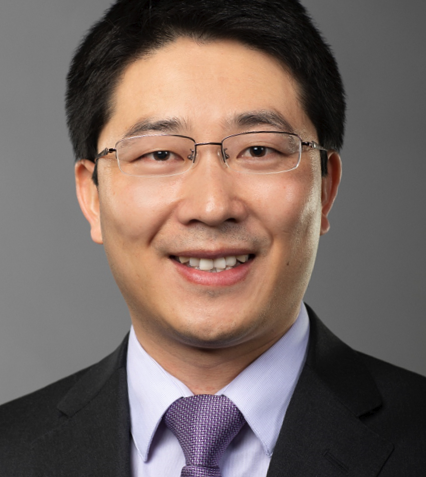 Jun Zhang合作论文数Department of Mechanical Engineering, College of Engineering, University of Nevada Reno6Jason Lim合作论文数5
 Anthony Simeonov合作论文数Massachusetts Institute of Technology5
 Taylor Henderson合作论文数University of California, San Diego5
 Lyndia Wu合作论文数Department of Mechanical Engineering, Faculty of Applied Science, The University of British Columbia5Hernandez Fidel合作论文数5
 Gerald Arthur Grant合作论文数Department of Neurosurgery, School of Medicine, Stanford University;Department of Neurosurgery, Duke University5
 Ken Goldberg合作论文数Industrial Engineering and Operations Research Department, College of Engineering, University of California, Berkeley;University of California, San Francisco5
 Tim Salcudean合作论文数Department of Electrical and Computer Engineering, Faculty of Applied Science, University of British Columbia5Kaiyuan Wang合作论文数4
 Hoi Man Lam合作论文数4
 Quan Vuong合作论文数University of California San Diego4
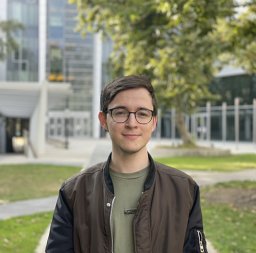 Peter V. Gavrilov合作论文数University of California‐San Diego Department of Mechanical and Aerospace Engineering La Jolla CA USA4Park Won Seo合作论文数4
 Chelsea Finn合作论文数Department of Computer Science and Electrical Engineering, Stanford University;Physical Intelligence4
 Andrew R. Hoffman合作论文数Department of Medicine, Stanford University;Division of Endocrinology, Stanford Medical Center;Stanford Cancer Center Neuro-Oncology Clinic4
 Jaime R. Lopez合作论文数Neurosurgery Department, Stanford University4
 Robert Rohling合作论文数Department of Electrical and Computer Engineering, Faculty of Applied Science, The University of British Columbia;School of Biomedical Engineering, Faculty of Applied Science and Faculty of Medicine, The University of British Columbia;Sonic Incytes4
 Chris Nguan合作论文数Faculty of Medicine, University of British Columbia;Vancouver Coastal Health4
 Alexander Norbash合作论文数School of Medicine, University of Missouri-Kansas City4Abdul Rehman合作论文数3Abhiram Maddukuri合作论文数3
 Soroush Nasiriany合作论文数Robot Perception and Learning Lab, The University of Texas at Austin3Arhan Jain合作论文数3Peter David Fagan合作论文数3Zehan Ma合作论文数3Minho Heo合作论文数3Charlotte Le合作论文数3
 Trinity J Chung合作论文数Robotics Institute, School of Computer Science, Carnegie Mellon University;Genesis AI3Kirsty Ellis合作论文数3Daniel Morton合作论文数3Sungjae Park合作论文数3Abraham Lee合作论文数3




