The considered transport systems, which possess an actuator with a spatial influence characteristic along the transport path, are used for the transport of material between different process stages and for the conditioning of the conveyed goods at the same time. The spatially acting input results in complex input/output behaviour of a Single-Input Single-Output (SISO) system with distributed delays. The feedforward control task under consideration is defined by a setpoint change of the subsequent process stage. For the feedforward controller design, an inversion-based approach in the frequency domain is investigated to steer the output of the transport system towards a predefined constant value. In order to compensate model uncertainties and reject unknown disturbances, the results of the inversion-based feedforward control are used to design a feedback controller.
Am 16. Mai 2015 feiert Professor Dr.-Ing. Dr. h.c.mult. Ernst Dieter Gilles seinen 80. Geburtstag. Ernst Dieter Gilles war von 1968 bis 2005 Direktor des Instituts für Systemdynamik und Regelungstechnik der Universität Stuttgart und von 1997 bis 2008 Direktor amMax-Planck-Institut für Dynamik komplexer technischer Systeme in Magdeburg. Nach dem Elektrotechnik-Studium an der Technischen Hochschule Darmstadt mit Promotion bei W. Oppelt und anschließender Habilitation wurde Ernst Dieter Gilles im Jahre 1968 als Ordentlicher Professor für Messund Regelungstechnik an die Universität Stuttgart berufen. 1997 wurde er zusätzlich Gründungsdirektor des Magdeburger Max-Planck-Instituts und ab 1999 Honorarprofessor an der Universität Magdeburg. Bis 2011 leitete er die Fachgruppe Systembiologie am Max-Planck-Institut Magdeburg. In seiner über 50-jährigen Tätigkeit als Wissenschaftler und Hochschullehrer hat E. D. Gilles sein Fachgebiet durch richtungsweisende Weichenstellungen entscheidend geprägt. Schon in seinen ersten Stuttgarter Jahren hat er den gänzlich neuen Studiengang der Technischen Kybernetik konzipiert und aufgebaut, um Ingenieure interdisziplinär und grundlagenorientiert auf hohemNiveau auszubilden. Seitdem sind Absolventen dieses Studiengangs für wissenschaftlich anspruchsvolle Tätigkeiten in Industrie und Hochschule besonders gefragt. Daher war es für E. D. Gilles konsequent, sich später an der Universität Magdeburg für die Einrichtung der Studiengänge Systemtechnik und Technische Kybernetik sowie Biosystemtechnik einzusetzen, und damit eine breite interdisziplinäre Basis für die Forschung an dem Max-Planck-Institut zu schaffen. Ein wesentliches Kennzeichen und Verdienst von Ernst Dieter Gilles war es, dass er schon früh das besondere Potenzial systemtheoretischer und regelungstechnischer Methoden für die Anwendung in unterschiedlichen Gebieten der Naturwissenschaft und Technik erkannt hat. Dabei waren ihm die experimentelle Absicherung seiner
Zusammenfassung Transportsysteme mit einem örtlich verteilt wirkenden Stelleingriff werden für den Stofftransport zwischen einzelnen Prozessstufen und gleichzeitig für die Konditionierung des Transportguts eingesetzt. Durch den verteilten Stelleingriff ergibt sich ein komplexes Eingangs-Ausgangs-Verhalten mit einer verteilten Totzeit. Die betrachtete Steuerungsaufgabe wird durch einen Arbeitspunktwechsel der nachfolgenden Prozessstufe definiert. Für den Steuerungsentwurf werden zwei Ansätze untersucht, um den Ausgang des Transportsystems auf einen vorgegebenen konstanten Wert einzustellen. Dies wird für diskret und für kontinuierlich verteilte Stelleingriffe erläutert.
Transport systems with spatially distributed control input are used simultaneously for material transport between different process stages and conditioning of the conveyed goods. The distributed control input induces complex input-output behavior with a spatially distributed delay. The considered control task is defined by a setpoint change of the subsequent process stage. For the feedforward controller design two different approaches are investigated to set the output of the transport system to a predefined constant value. This is illustrated for discretely as well as for continuously distributed control inputs.
A rising number of modern cranes are equipped with anti-sway control systems to facilitate crane operation, improve positioning accuracy, and increase turnover. Commonly, these industrial crane control systems require pendulum state information for feedback control. Therefore, a pendulum sway sensor (e.g., a rope-mounted gyroscope) and a signal processing algorithm are required. Such a signal processing algorithm needs to filter out disturbances from both the sensor and the crane, e.g., signal noise and string oscillations of a long rope. Typically, these signal processing algorithms require the knowledge of the acceleration of the rope suspension point. This acceleration signal is often estimated from drive models. When drive models are uncertain, the pendulum state estimation accuracy suffers from drive model inaccuracy. In this contribution, an improved estimation algorithm is presented which estimates the load position without relying on the rope suspension point acceleration. The developed Extended Kalman Filter is implemented on a Liebherr mobile harbor crane and its effectiveness is validated with multiple test rides and GPS load position reference measurements.
Zusammenfassung Ursprünglich wurde die Minimalphasigkeit von H. W. Bode eingeführt, um den eineindeutigen Zusammenhang zwischen Amplitude und Phase des Frequenzgangs zu definieren. Beim Entwurf von digitalen Filtern wird eine andere Definition der Minimalphasigkeit verwendet und ein asymptotisch stabiles Filter als minimalphasig bezeichnet, wenn auch das inverse Filter asymptotisch stabil ist. Schließlich werden von C. I. Byrnes und A. Isidori Systeme mit einer asymptotisch stabilen Nulldynamik als minimalphasig bezeichnet. Wegen der nicht konsistenten Definitionen wird dafür plädiert, den Minimalphasigkeits-Begriff in der Regelungstechnik zu vermeiden und die Stabilität von Filtern und der Nulldynamik mit den wohl definierten Kriterien von Hurwitz oder Ljapunow zu beschreiben.
Originally, the minimum phase property has been defined by H. W. Bode in order to characterize the unique relationship between gain and phase of the frequency response. With regard to the design of digital filters, another definition of minimum phase is used and a filter is said to be minimum phase if both the filter and its inverse are asymptotically stable. Finally, systems with asymptotically stable zero dynamics are named as minimum phase by C. I. Byrnes and A. Isidori. Due to the inconsistent definitions, avoiding the minimum phase property for control purposes is advocated and the well-established criteria of Hurwitz or Ljapunow to describe the stability of filters and zero dynamics are recommended.
In course of feedforward control design, it has to be distinguished whether the reference trajectories are planned in advance as for the transition between two stationary setpoints or are predefined in real time for instance by a joystick. In the first case, the feedforward control trajectories are designed offline and stored in a look-up table. The second case is characteristic for trajectory tracking in servo control systems and requires an online generation of the feedforward trajectories. In this survey, the feedforward control design is exemplified for linear time-invariant SISO systems in the frequency domain considering the offline and the online case.
Zusammenfassung Beim Vorsteuerungs-Entwurf muss unterschieden werden, ob die Solltrajektorien wie bei einem Arbeitspunktwechsel vorab geplant oder beispielsweise mit einem Joystick in Realzeit vorgegeben werden. Im ersten Fall werden die Trajektorien für die Vorsteuerung offline entworfen und in einer Look-up-Tabelle gespeichert. Der zweite Fall ist typisch für die Trajektorienfolge in Servosystemen und erfordert, dass die Generierung der Trajektorien für die Vorsteuerung online erfolgt. In dem Übersichtsbeitrag wird der Vorsteuerungs-Entwurf beispielhaft für lineare zeitinvariante SISO-Systeme im Frequenzbereich erläutert, wobei der Offline- und der Online-Fall betrachtet werden.
The automatic pouring of molten metal from a ladle into a mold by a robot requires an high-precision tracking control of the flow rate. Due to the hydrodynamics of the liquid metal, the model of the pouring process is highly nonlinear which has to be considered for the model-based design of the tracking control. The two design approaches studied in the paper combine a feedforward and a feedback control in order to obtain a precise and robust tracking performance. Thereby, the property of differential flatness is used for the design of the tracking control, and the unmeasured states are reconstructed for the feedback control by an unscented Kalman filter. Two proposed control schemes are compared by simulations of the automatic pouring robot together with the pouring process.
Zusammenfassung Für lineare Systeme ist die differenzielle Flachheit gleichbedeutend mit der Steuerbarkeit und damit einfacher als im nichtlinearen Fall festzustellen. In diesem Beitrag wird für lineare SISO-Systeme gezeigt, wie die differenzielle Flachheit bei der Trajektorienplanung, dem Vorsteuerungs-Entwurf und der Synthese von Folgeregelungen in den Koordinaten der Regelungs-Normalform angewendet wird. In Anbetracht der praktischen Relevanz einer Folgeregelung mit Vorsteuerung und der leichten Vermittelbarkeit der linearen Flachheits-Methodik sprechen viele Argumente für eine Behandlung in der regelungstechnischen Ausbildung.
Zusammenfassung Betrachtet werden verteiltparametrische Systeme mit dominantem Transportverhalten, welche durch lineare partielle Differentialgleichungen erster Ordnung beschrieben werden. Es wird angenommen, dass der Stelleingriff örtlich verteilt wirkt und nur zeitlich variiert werden kann. Für diese Systemklasse wird eine Methode zum modellbasierten Entwurf einer Vorsteuerung vorgeschlagen, um die Steuertrajektorie mit Hilfe der Referenztrajektorie für den Ausgang und deren erster Zeitableitung zu bestimmen. Zusätzlich kann eine messbare Randstörung kompensiert werden. Die experimentelle Anwendung des Vorsteuerungs-Entwurfs wird für den Arbeitspunktwechsel eines gasbeheizten Speisers in der Glasindustrie gezeigt.
It is shown for linear time-variant SISO systems that the differential flatness is connected with the coordinates of the controller and of the observer normal form. This enables the representation of the time-variant Ackermann's formulas used for the design of feedback control and observers by means of the flat output and input, respectively. The application of the presented results, which are valid also for the special case of time-invariant SISO systems, are illustrated for the linear time-variant model of a bridge crane.
In case of linear systems, differential flatness is equivalent to the property of controllability such that it can be checked more easily than for nonlinear systems. This contribution focusses on linear SISO systems and it is shown how the differential flatness can be applied for trajectory planning, feedforward design, and tracking control synthesis in the coordinates of the controller normal form. The practical relevance of tracking feedforward and feedback control and the simple and intuitive methodology of linear flatness are convincing arguments for including this topic in the education of automatic control
We extend the notion of flat inputs, which we previously introduced in the SISO case, towards non-linear MIMO systems. For MIMO systems, we have to distinguish two cases for differential flatness, corresponding to feedback-linearizability either by a static or a quasi-static feedback. For the first case, the construction of flat inputs can be solved easily by means of the observability codistribution and indices. The second case remains an open problem, and we illustrate with an example that flat inputs can even be constructed for non-observable systems. In addition, we also discuss the problem of realizing flat inputs as physical actuators in mechanical systems. Copyright © 2010 IFAC.
Zusammenfassung Für lineare zeitvariante SISO-Systeme wird gezeigt, dass die differenzielle Flachheit mit den Koordinaten der Regler- und der Beobachter-Normalform verknüpft ist. Dies ermöglicht die Darstellung der zeitvarianten Ackermann-Formeln für den Regler- und Beobachter-Entwurf mithilfe des flachen Ausgangs bzw. Eingangs. Die Anwendung der vorgestellten Ergebnisse, die auch für den Sonderfall zeitinvarianter SISO-Systeme gelten, wird für das lineare zeitvariante Modell einer Verladebrücke erläutert.
The transition between multiple stationary setpoints of a benchmark CSTR model with different minimum-phase characteristics is solved by an adaptive feedforward control scheme. The feedforward control design treats the transition problem as a two-point boundary value problem in the coordinates of the input–output normal form, which is numerically solved with a standard Matlab function. The feedforward trajectories are calculated offline over the specified range of the inlet concentration to account for its strong influence on the system dynamics. The nominal trajectories are stored in lookup tables and an extended Kalman filter is used to adapt the feedforward control to the current inlet concentration. It is shown that the adaptation of the feedforward control acts as an integral feedback and leads to a zero steady state offset. Simulation results for a changing inlet concentration and model uncertainties show the performance and robustness of the adaptive feedforward control scheme.
 Knut Graichen合作论文数Centre Automatique et Systemes;Ecole des Mines de Paris;Centre Automatique et Systemes, Ecole des Mines de Paris18
 Thomas Meurer合作论文数Institute of System;Dynamics and Control Engineering;University of Stuttgart;Institute of System, University of Stuttgart13
 Veit Hagenmeyer合作论文数Institute for Automation and Applied Informatics, Karlsruhe Institute of Technology8
 Joachim Rudolph合作论文数Lehrstuhl für Systemtheorie und Regelungstechnik, Universität des Saarlandes6
 Oliver Sawodny合作论文数Institute for System Dynamics, University of Stuttgart;Centre for Medical Technologies Stuttgart-Tübingen6
 J. Schaffner合作论文数5R. Rothfuss合作论文数4M. Bitzer合作论文数4K.D. Mohl合作论文数4
 Ernst Dieter Gilles合作论文数Max-Planck-Gesellschaft4F. Tränkle合作论文数4
 Jaime A. Moreno合作论文数Electrical and Computing Department, Institute of Engineering, National University of Mexico3
 Alejandro Vargas合作论文数3Simon Alt合作论文数3a spieker合作论文数2R. Rothfuβ合作论文数2dr ing steffen kehl合作论文数2Andreas Gerstlauer合作论文数2
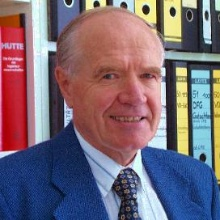 Karl Stephan合作论文数Institute of Technical Thermodynamics and Thermal Process Engineering, University of Stuttgart2
 Achim Kienle合作论文数Institut für Systemdynamik und Regelungstechnik, Universität Stuttgart2
 M. Mangold合作论文数Max-Planck-Institut für Dynamik komplexer technischer Systeme, Sandtorstraße 1, 39106 Magdeburg, Germany2Michael Hager合作论文数2
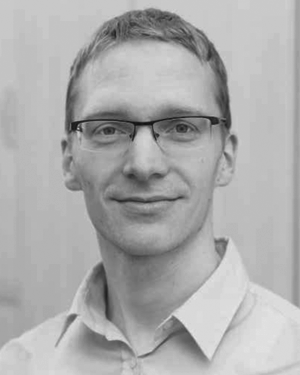 Steffen Waldherr合作论文数Institute for Systems Theory and Automatic Control, Universität Stuttgart2Marc Oliver Wagner合作论文数2Martin Ginkel合作论文数2Johanna Schaffner合作论文数2V. Maass合作论文数2Michael Treuer合作论文数2g juen合作论文数1H. Schramm合作论文数1e stein合作论文数1
 Markus Bär合作论文数Dept Math Modelling & Data Anal, Phys Tech Bundesanstalt Braunschweig & Berlin1Ulf Schaper合作论文数1
 Klaus Schneider 0001合作论文数1
 Andreas Kremling合作论文数Department of Mechanical Engineering, Technische Universität München1Andreas Kugi合作论文数1M. Bär合作论文数1
 Kazuhiko Terashima合作论文数Toyohashi University of Technology1
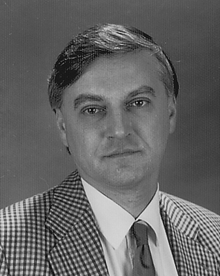 Kurt Schlacher合作论文数Department of Automatic Control and Control Systems Technology, Johannes Kepler University Linz1R. Bindel合作论文数1John R Birk合作论文数1Andreas Kr�Ner合作论文数1Yoshiyuki Noda合作论文数1
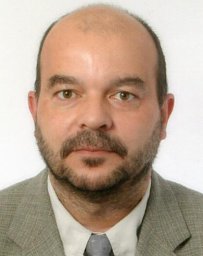 Eckhard Arnold合作论文数Institute for System Dynamics, Universität Stuttgart1Wolf-Dieter Pölsler合作论文数1
 Thomas Kiefer合作论文数AG der Dillinger Hüttenwerke1




