We model the problem of monolingual textual alignment as a Quadratic Assignment Problem (QAP) which simultaneously maximizes the global lexicosemantic and syntactic similarities of two sentence-level texts. Because QAP is an NP-complete problem, we propose a branch-and-bound approach to efficiently find an optimal solution. When compared with other methods and studies, our results are competitive.
Rajendra Banjade, Nobal Bikram Niraula, Nabin Maharjan, Vasile Rus, Dan Stefanescu, Mihai Lintean, Dipesh Gautam. Proceedings of the 9th International Workshop on Semantic Evaluation (SemEval 2015). 2015.
We analyze in this paper a number of data sets proposed over the last decade or so for the task of paraphrase identification. The goal of the analysis is to identify the advantages as well as shortcomings of the previously proposed data sets. Based on the analysis, we then make recommendations about how to improve the process of creating and using such data sets for evaluating in the future approaches to the task of paraphrase identification or the more general task of semantic similarity. The recommendations are meant to improve our understanding of what a paraphrase is, offer a more fair ground for comparing approaches, increase the diversity of actual linguistic phenomena that future data sets will cover, and offer ways to improve our understanding of the contributions of various modules or approaches proposed for solving the task of paraphrase identification or similar tasks. We also developed a data collection tool, called Data Collector, that proactively targets the collection of paraphrase instances covering linguistic phenomena important to paraphrasing.
We present in this paper SEMILAR, the SEMantic simILARity toolkit. SEMILAR implements a number of algorithms for assessing the semantic similarity between two texts. It is available as a Java library and as a Java standalone ap-plication offering GUI-based access to the implemented semantic similarity methods. Furthermore, it offers facilities for manual se-mantic similarity annotation by experts through its component SEMILAT (a SEMantic simILarity Annotation Tool).
The goal of this track is to inform researchers as to current project and studies that identify, investigate, and (begin to) resolve issues that relate to human/computer language inter- action.
Dialogue-based educational applications such as Intelligent Tutoring Systems interact with the student user mainly through conversational dialogue that mimics student-human tutor interactions. There are two majors tasks that such systems need to handle: dialogue processing and assessing the correctness of student utterances. We present in this chapter an overview of dialogue and semantic processing in dialogue-based Intelligent Tutoring Systems with an emphasis on two state-of-the-art systems, AutoTutor and
We present in this demo SEMILAR, a SEMantic similarity toolkit. SEMILAR includes offers in one software environment several broad categories of semantic similarity methods: vectorial methods including Latent Semantic Analysis, probabilistic methods such as Latent Dirichlet Allocation, greedy lexical matching methods, optimal lexico-syntactic matching methods based on word-to-word similarities and syntactic dependencies with negation handling, kernel based methods, and some others. We will demonstrate during this demo presentation the efficacy of using SEMILAR to investigate and tune assessment algorithms for evaluating students’ natural language input based on data from the DeepTutor computer tutor.
We present in this paper the design of DeepTutor, the first dialoguebased intelligent tutoring system based on Learning Progressions, and its implications for developing the Generalized Framework for Intelligent Tutoring. We also present the design of SEMILAR, a semantic similarity toolkit, that helps researchers investigate and author semantic similarity models for evaluating natural language student inputs in conversatioanl ITSs. DeepTutor has been developed as a web service while SEMILAR is a Java library. Based on our experience with developing DeepTutor and SEMILAR, we contrast three different models for developing a standardized architecture for intelligent tutoring systems: (1) a single-entry web service coupled with XML protocols for queries and data, (2) a bundle of web services, and (3) library-API. Based on the analysis of the three models, recommendations are
Assessing the semantic similarity between two texts is a central task in many applications, including summarization, intelligent tutoring systems, and software testing. Similarity of texts is typically explored at the level of word, sentence, paragraph, and document. The similarity can be defined quantitatively, e.g. in the form of a normalized value between 0 and 1, and qualitatively in the form of semantic relations such as elaboration, entailment, or paraphrase. In this chapter, we focus first on measuring quantitatively and then on detecting qualitatively sentence-level text-to-text semantic relations. A generic approach that relies on word-to-word similarity measures is presented as well as experiments and results obtained with various instantiations of the approach. In addition, we provide results of a study on the role of weighting in Latent Semantic Analysis, a statistical technique to assess similarity of texts. The results were obtained on two data sets: a standard data set on sentence-level paraphrase detection and a data set from an intelligent tutoring system.
We propose in this paper a greedy method to the problem of measuring semantic similarity between short texts. Our method is based on the principle of compositionality which states that the overall meaning of a sentence can be captured by summing up the meaning of its parts, i.e. the meanings of words in our case. Based on this principle, we extend word-to-word semantic similarity metrics to quantify the semantic similarity at sentence level. We report results using several word-to-word semantic similarity metrics, based on word knowledge or vectorial representations of meaning. Our approach performs better than similar approaches on the tasks of paraphrase identification and recognizing textual entailment, which are two illustrative semantic similarity tasks. We also report the role of word weighting and of function words on the performance of the proposed method.
The paper briefly describes the First Shared Task Evaluation Challenge on Question Generation that took place in Spring 2010. The campaign included two tasks: Task A - Question Generation from Paragraphs and Task B - Question Generation from Sentences. An overview of each of the tasks is provided.
We present in this paper a novel, optimal semantic similarity approach based on word-to-word similarity metrics to solve the important task of assessing natural language student input in dialogue-based intelligent tutoring systems. The optimal matching is guaranteed using the sailor assignment problem, also known as the job assignment problem, a well-known combinatorial optimization problem. We compare the optimal matching method with a greedy method as well as with a baseline method on data sets from two intelligent tutoring systems, AutoTutor and iSTART.
We describe in this paper the SIMILAR corpus which was developed to foster a deeper and qualitative understanding of word-to-word semantic similarity metrics and their role on the more general problem of text-to-text semantic similarity. The SIMILAR corpus fills a gap in existing resources that are meant to support the development of text-to-text similarity methods based on word-level similarities. The existing resources, such as data sets annotated with paraphrase information between two sentences, do not provide word-to-word semantic similarity annotations and quality judgments at word-level. We annotated 700 pairs of sentences from the Microsoft Research Paraphrase corpus with word-to-word semantic similarity information using both a greedy and optimal protocol. We proposed a set of qualitative word-to-word semantic similarity relations which were then used to annotate the corpus. We also present a detailed analysis of various quantitative word-to-word semantic similarity metrics and how they relate to our qualitative relations. A software tool has been developed to facilitate the annotation of texts using the proposed protocol.
The First Shared Task Evaluation Challenge on Question Generation took place in 2010 as part of the 3rd workshop on Question Generation. The campaign included two tasks: Question Generation from Sentences and Question Generation from Paragraphs. This status report briefly summarizes the motivation, tasks and results. Lessons learned relevant to future QG-STECs are also offered.
This dissertation investigates and proposes ways to quantify and measure semantic similarity between texts. The general approach is to rely on linguistic information at various levels, including lexical, lexico-semantic, and syntactic. The approach starts by mapping texts onto structured representations that include lexical, lexico-semantic, and syntactic information. The representation is then used as input to methods designed to measure the semantic similarity between texts based on the available linguistic information. While world knowledge is needed to properly assess semantic similarity of texts, in our approach world knowledge is not used, which is a weakness of it. We limit ourselves to answering the question of how successfully one can measure the semantic similarity of texts using just linguistic information. The lexical information in the original texts is retained by using the words in the corresponding representations of the texts. Syntactic information is encoded using dependency relations trees, which represent explicitly the syntactic relations between words. Word-level semantic information is relatively encoded through the use of semantic similarity measures like WordNet Similarity or explicitly encoded using vectorial representations such as Latent Semantic Analysis (LSA). Several methods are being studied to compare the representations, ranging from simple lexical overlap, to more complex methods such as comparing semantic representations in vector spaces as well as syntactic structures. Furthermore, a few powerful kernel models are proposed to use in combination with Support Vector Machine (SVM) classifiers for the case in which the semantic similarity problem is modeled as a classification task.
This dissertation investigates and proposes ways to quantify and measure semantic similarity between texts. The general approach is to rely on linguistic information at various levels, including lexical, lexico-semantic, and syntactic. The approach starts by mapping texts onto structured representations that include lexical, lexico-semantic, and syntactic information. The representation is then used as input to methods designed to measure the semantic similarity between texts based on the available linguistic information. While world knowledge is needed to properly assess semantic similarity of texts, in our approach world knowledge is not used, which is a weakness of it. We limit ourselves to answering the question of how successfully one can measure the semantic similarity of texts using just linguistic information. The lexical information in the original texts is retained by using the words in the corresponding representations of the texts. Syntactic information is encoded using dependency relations trees, which represent explicitly the syntactic relations between words. Word-level semantic information is relatively encoded through the use of semantic similarity measures like WordNet Similarity or explicitly encoded using vectorial representations such as Latent Semantic Analysis (LSA). Several methods are being studied to compare the representations, ranging from simple lexical overlap, to more complex methods such as comparing semantic representations in vector spaces as well as syntactic structures. Furthermore, a few powerful kernel models are proposed to use in combination with Support Vector Machine (SVM) classifiers for the case in which the semantic similarity problem is modeled as a classification task.
This article describes the problem of detecting the student mental models, i.e. students' knowledge states, during the self-regulatory activity of prior knowledge activation in MetaTutor, an intelligent tutoring system that teaches students self-regulation skills while learning complex science topics. The article presents several approaches to automatically detecting students' mental models in MetaTutor based on paragraphs generated by students during prior knowledge activation. Three major categories of methods (content-based overlap methods; cohesion analysis of text; and tf-idf based weighted representations) were developed and combined with machine learning algorithms in order to automatically infer the underlying parameters. A detailed comparison among the methods and across all machine learning algorithms is provided. The evaluation of the proposed methods is performed by eomparing the methods' predictions with human judgments on a set of 309 prior knowledge activation paragraphs collected from experiments with the MetaTutor system on college students. According to the experiments, a word-weighting method, which uses tf-idf values calculated from the corpus, combined with a Bayes Nets machine learning algorithm, offers the most accurate results. Second best performance is given by a Latent Semantic Analysis-based approach enhanced with lexical features and combined with the machine learning algorithm of Logistic Regression.
We present in this paper a novel solution to the problem of paraphrase identification based on lexical dissimilarity kernels. Lexical kernels in conjunction with Support Vector Machines are preferred over other learning methods, e.g. decision trees, due to their ability to handle a high number of features. Dissimilarity-based kernels emphasize dissimilarities among text fragments and therefore are appropriate for text similarity tasks characterized by high lexical overlap. We conducted experiments with our kernels on the Microsoft Research (MSR) Paraphrase Corpus, a standardized data set used for assessing approaches to paraphrase identification. Our reported accuracy results are competitive and robust when compared to state-of-the-art single-model approaches. The results were obtained using 10-fold cross-validation over the entire corpus. We also report competitive results on the test portion of the MSR Paraphrase Corpus, which is the standard way to report results on this corpus.
In this paper we propose a novel approach to the task of paraphrase identification. The proposed approach quantifies both the similarity and dissimilarity between two sentences. The similarity and dissimilarity is assessed based on lexico-semantic information, i.e., word semantics, and syntactic information in the form of dependencies, which are explicit syntactic relations between words in a sentence. Word semantics requires mapping words onto concepts in a taxonomy and then using word-to-word similarity metrics to compute their semantic relatedness. Dependencies are obtained using state-of-the-art dependency parsers. One important aspect of our approach is the weighting of missing dependencies, i.e., syntactic relations present in one sentence but not the other. We report experimental results on the Microsoft Paraphrase Corpus, a standard data set for evaluating approaches to paraphrase identification. The experiments showed that the proposed approach offers state-of-the-art results. In particular, our approach offers better precision when compared to other state-of-the-art systems.
In this paper, we investigate the impact of several local and global weighting schemes on Latent Semantic Analysis' (LSA) ability to capture semantic similarity between two texts. We worked with texts varying in size from sentences to paragraphs. We present a comparison of 3 local and 3 global weighting schemes across 3 different standardized data sets related to semantic similarity tasks. For local weighting, we used binary weighting, term-frequency, and log-type. For global weighting, we relied on binary, inverted document frequencies (IDF) collected from the English Wikipedia, and entropy, which is the standard weighting scheme used by most LSA-based applications. We studied all possible combinations of these weighting schemes on the following three tasks and corresponding data sets: paraphrase identification at sentence level using the Microsoft Research Paraphrase Corpus, paraphrase identification at sentence level using data from the intelligent tutoring system iSTART, and mental model detection based on student-articulated paragraphs in MetaTutor, another intelligent tutoring system. Our experiments revealed that for sentence-level texts a combination of type frequency local weighting in combination with either IDF or binary global weighting works best. For paragraph-level texts, a log-type local weighting in combination with binary global weighting works best. We also found that global weights have a greater impact for sententence-level similarity as the local weight is undermined by the small size of such texts.
 Vasile Rus合作论文数The University of Memphis34
 Art Graesser合作论文数Department of Psychology, The University of Memphis;Institute of Intelligent Systems, The University of Memphis9
 Roger Azevedo合作论文数Department of Computer Science, School of Modeling Simulation and Training, University of Central Florida7
 Nobal B. Niraula合作论文数Asian Institute of Technology6
 Danielle Mcnamara合作论文数Science of Learning and Educational Technology Lab, Department of Psychology, Arizona State University;Learning Sciences Institute, MLF Teachers College, Arizona State University6
 Cristian Moldovan合作论文数5
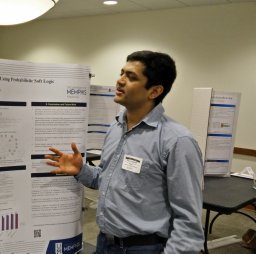 Rajendra Banjade合作论文数Department of Computer Science, The University of Memphis5
 Paul Piwek合作论文数University of Brighton3Amy Witherspoon合作论文数3
 Philip M. Mccarthy合作论文数University of Memphis3Amber Chauncey合作论文数3
 Svetlana Stoyanchev合作论文数Stony Brook University3Brendan Wyse合作论文数2William Baggett合作论文数2
 Chutima Boonthum-Denecke合作论文数Department of Computer Science, School of Science, Hampton University2
 Dan Ştefănescu合作论文数Audible Inc.2
 Amy Johnson合作论文数1
 Dipesh Gautam合作论文数1
 Nabin Maharjan合作论文数1
 Zhiqiang Cai合作论文数Center for Computational and Applied Math, Purdue University;Department of Mathematics, Purdue University;Center for Applied Scientific Computing, Lawrence Livermore National Lab1Sireesha Ravi合作论文数1
 Candice Burkett合作论文数Institute for Intelligent Systems, University of Memphis1Emily Siler合作论文数1




