Although providing exceptional results for many computer vision tasks, state-of-the-art deep learning algorithms catastrophically struggle in low data scenarios. However, if data in additional modalities exist (e.g. text) this can compensate for the lack of data and improve the classification results. To overcome this data scarcity, we design a cross-modal feature generation framework capable of enriching the low populated embedding space in few-shot scenarios, leveraging data from the auxiliary modality. Specifically, we train a generative model that maps text data into the visual feature space to obtain more reliable prototypes. This allows to exploit data from additional modalities (e.g. text) during training while the ultimate task at test time remains classification with exclusively visual data. We show that in such cases nearest neighbor classification is a viable approach and outperform state-of-the-art single-modal and multimodal few-shot learning methods on the CUB-200 and Oxford-102 datasets.
Models trained in the context of continual learning (CL) should be able to learn from a stream of data over an undefined period of time. The main challenges herein are: 1) maintaining old knowledge while simultaneously benefiting from it when learning new tasks, and 2) guaranteeing model scalability with a growing amount of data to learn from. In order to tackle these challenges, we introduce Dynamic Generative Memory (DGM) - synaptic plasticity driven framework for continual learning. DGM relies on conditional generative adversarial networks with learnable connection plasticity realized with neural masking. Specifically, we evaluate two variants of neural masking: applied to (i) layer activations and (ii) to connection weights directly. Furthermore, we propose a dynamic network expansion mechanism that ensures sufficient model capacity to accommodate for continually incoming tasks. The amount of added capacity is determined dynamically from the learned binary mask. We evaluate DGM in the continual class-incremental setup on visual classification tasks.
Recent deep monocular depth estimation approaches based on supervised regression have achieved remarkable performance. However, they require costly ground truth annotations during training. To cope with this issue, in this paper we present a novel unsupervised deep learning approach for predicting depth maps. We introduce a new network architecture, named Progressive Fusion Network (PFN), that is specifically designed for binocular stereo depth estimation. This network is based on a multi-scale refinement strategy that combines the information provided by both stereo views. In addition, we propose to stack twice this network in order to form a cycle. This cycle approach can be interpreted as a form of data-augmentation since, at training time, the network learns both from the training set images (in the forward half-cycle) but also from the synthesized images (in the backward half-cycle). The architecture is jointly trained with adversarial learning. Extensive experiments on the publicly available datasets KITTI, Cityscapes and ApolloScape demonstrate the effectiveness of the proposed model which is competitive with other unsupervised deep learning methods for depth prediction.
Continuously trainable models should be able to learn from a stream of data over an undefined period of time. This becomes even more difficult in a strictly incremental context, where data access to previously seen categories is not possible. To that end, we propose making use of a conditional generative adversarial model where the generator is used as a memory module through neural masking to emulate neural plasticity in the human brain. This memory module is further associated with a dynamic capacity expansion mechanism. Taken together, this method facilitates a resource efficient capacity adaption to accommodate new tasks, while retaining previously attained knowledge. The proposed approach outperforms state-of-the-art algorithms on publicly available datasets, overcoming catastrophic forgetting.
Since the advent of deep learning, neural networks have demonstrated remarkable results in many visual recognition tasks, constantly pushing the limits. However, the state-of-the-art approaches are largely unsuitable in scarce data regimes. To address this shortcoming, this paper proposes employing a 3D model, which is derived from training images. Such a model can then be used to hallucinate novel viewpoints and poses for the scarce samples of the few-shot learning scenario. A self-paced learning approach allows for the selection of a diverse set of high-quality images, which facilitates the training of a classifier. The performance of the proposed approach is showcased on the fine-grained CUB-200-2011 dataset in a few-shot setting and significantly improves our baseline accuracy.
Inspired by the success of adversarial learning, we propose a new end-to-end unsupervised deep learning framework for monocular depth estimation consisting of two Generative Adversarial Networks (GAN), deeply coupled with a structured Conditional Random Field (CRF) model. The two GANs aim at generating distinct and complementary disparity maps and at improving the generation quality via exploiting the adversarial learning strategy. The deep CRF coupling model is proposed to fuse the generative and discriminative outputs from the dual GAN nets. As such, the model implicitly constructs mutual constraints on the two network branches and between the generator and discriminator. This facilitates the optimization of the whole network for better disparity generation. Extensive experiments on the KITTI, Cityscapes, and Make3D datasets clearly demonstrate the effectiveness of the proposed approach and show superior performance compared to state of the art methods. The code and models are available at https://github.com/mihaipuscas/ 3dv—coupled-crf-disparity.
While recent deep monocular depth estimation approaches based on supervised regression have achieved remarkable performance, costly ground truth annotations are required during training. To cope with this issue, in this paper we present a novel unsupervised deep learning approach for predicting depth maps and show that the depth estimation task can be effectively tackled within an adversarial learning framework. Specifically, we propose a deep generative network that learns to predict the correspondence field (i.e. the disparity map) between two image views in a calibrated stereo camera setting. The proposed architecture consists of two generative sub-networks jointly trained with adversarial learning for reconstructing the disparity map and organized in a cycle such as to provide mutual constraints and supervision to each other. Extensive experiments on the publicly available datasets KITTI and Cityscapes demonstrate the effectiveness of the proposed model and competitive results with state of the art methods. The code is available at https://github.com/andrea-pilzer/unsup-stereo-depthGAN.
Video segmentation has become an important and active research area with a large diversity of proposed approaches. Graph-based methods, enabling top performance on recent benchmarks, usually focus on either obtaining a precise similarity graph or designing efficient graph cutting strategies. However, these two components are often conducted in two separated steps, and thus the obtained similarity graph may not be the optimal one for segmentation and this may lead to suboptimal results. In this paper, we propose a novel framework, joint graph learning and video segmentation (JGLVS)}, which learns the similarity graph and video segmentation simultaneously. JGLVS learns the similarity graph by assigning adaptive neighbors for each vertex based on multiple cues (appearance, motion, boundary and spatial information). Meanwhile, the new rank constraint is imposed to the Laplacian matrix of the similarity graph, such that the connected components in the resulted similarity graph are exactly equal to the number of segmentations. Furthermore, JGLVS can automatically weigh multiple cues and calibrate the pairwise distance of superpixels based on their topology structures. Most noticeably, empirical results on the challenging dataset VSB100 show that JGLVS achieves promising performance on the benchmark dataset which outperforms the state-of-the-art by up to 11% for the BPR metric.
We address the problem of automatic extraction of foreground objects from videos. The goal is to provide a method for unsupervised collection of samples which can be further used for object detection training without any human intervention. We use the well known Selective Search approach to produce an initial still-image based segmentation of the video frames. This initial set of proposals is pruned and temporally extended using optical flow and transductive learning. Specifically, we propose to use Dense Trajectories in order to robustly match and track candidate boxes over different frames. The obtained box tracks are used to collect samples for unsupervised training of track-specific detectors. Finally, the detectors are run on the videos to extract the final tubes. The combination of appearance-based static "objectness" (Selective Search), motion information (Dense Trajectories) and transductive learning (detectors are forced to "overfit" on the unsupervised data used for training) makes the proposed approach extremely robust. We outperform state-of-the-art systems by a large margin on common benchmarks used for tube proposal evaluation.
 Nicu Sebe合作论文数Department of Information Engineering and Computer Science, University of Trento6
 Tassilo Klein合作论文数SAP AI Research;MESASIGHT GmbH4
 Moin Nabi合作论文数University of Trento3
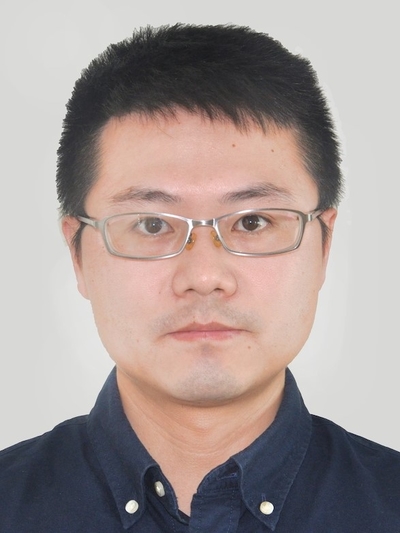 Dan Xu (徐旦)合作论文数Department of Computer Science and Engineering, The Hong Kong University of Science and Technology3
 Andrea Pilzer合作论文数NVIDIA3
 Frederik Pahde合作论文数Technische Universität Berlin;Fraunhofer Heinrich Hertz Institute2
 Oleksiy Ostapenko合作论文数Mila - Institut Québécois d'Intelligence Artificielle;Université de Montréal2
 Elisa Ricci合作论文数Deep Visual Learning Group, Fondazione Bruno Kessler;Department of Information Engineering and Computer Science, University of Trento2
 Jannik Wolff合作论文数TU Berlin1
 Stéphane Lathuilière合作论文数Telecom Paris1
 Fumin Shen (沈复民)合作论文数Center For Future Media, University of Electronic Science and Technology of China;School of Computer Science and Engineering, University of Electronic Science and Technology of China1
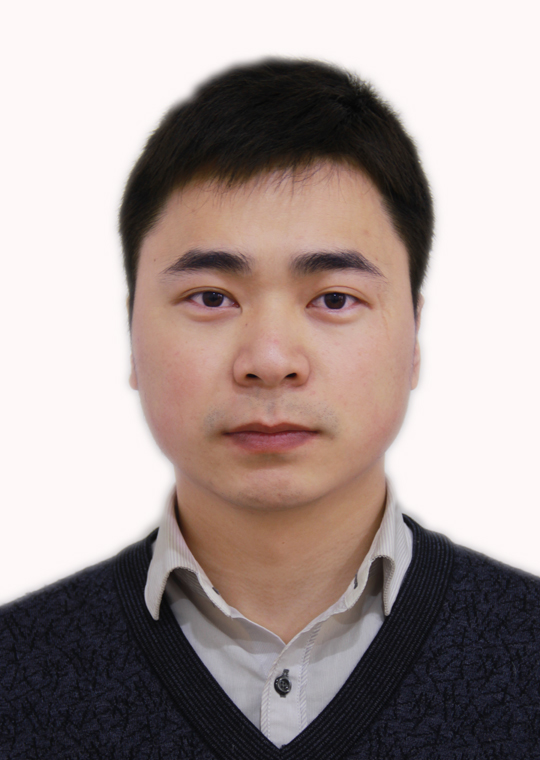 Jingkuan Song (宋井宽)合作论文数School of Computer Science and Technology, Tongji University1
 Feiping Nie (聂飞平)合作论文数Center for Optical Imagery Analysis and Learning, School of Artificial Intelligence, Optics and Electronics, Northwest Polytechnic University1
 Patrick Jähnichen合作论文数Reli Safety1
 Dubravko Culibrk合作论文数Department of Industrial Engineering and Management, Faculty of Technical Sciences, University of Novi Sad;TandemLaunch Inc.;Cinteraction;The Institute for Artificial Intelligence Research and Development of Serbia1
 Enver Sangineto合作论文数Department of Information Engineering and Computer Science, University of Trento1
 Lianli Gao (高联丽)合作论文数School of Computer Science and Engineering, University of Electronic Science and Technology of China1




