Diffusion language models (DLMs) have emerged as a promising alternative to autoregressive (AR) generation, yet their reliance on Transformer backbones limits inference efficiency due to quadratic attention or KV-cache overhead. We introduce DiffuMamba, a masked diffusion language model built on a bidirectional Mamba backbone that combines the diffusion objective with linear-time sequence modeling, and DiffuMamba-H, a hybrid variant with interleaved attention. Across scales up to 1.3B parameters, our models match Transformer-based diffusion in downstream performance while achieving up to 8.2× and 4.3× higher inference throughput, respectively, on long sequences. We further present a systematic analysis of inference efficiency across modern DLM variants, combining asymptotic complexity with empirical measurements. Notably, cache-efficient block diffusion with Mamba mixers emerges as the only strategy that scales linearly with sequence length and achieves the strongest performance across all baselines, suggesting a promising direction for future diffusion-based generation systems.
Merging parameter-efficient task experts has recently gained growing attention as a way to build modular architectures that can be rapidly adapted on the fly for specific downstream tasks, without requiring additional fine-tuning. Typically, LoRA serves as the foundational building block of such parameter-efficient modular architectures, leveraging low-rank weight structures to reduce the number of trainable parameters. In this paper, we study the properties of sparse adapters, which train only a subset of weights in the base neural network, as potential building blocks of modular architectures. First, we propose a simple method for training highly effective sparse adapters, which is conceptually simpler than existing methods in the literature and surprisingly outperforms both LoRA and full fine-tuning in our setting. Next, we investigate the merging properties of these sparse adapters by merging adapters for up to 20 natural language processing tasks, thus scaling beyond what is usually studied in the literature. Our findings demonstrate that sparse adapters yield superior in-distribution performance post-merging compared to LoRA or full model merging. Achieving strong held-out performance remains a challenge for all methods considered.
The growing number of parameter-efficient adaptations of a base large language model (LLM) calls for studying whether we can reuse such trained adapters to improve performance for new tasks. We study how to best build a library of adapters given multi-task data and devise techniques for both zero-shot and supervised task generalization through routing in such library. We benchmark existing approaches to build this library and introduce model-based clustering, MBC, a method that groups tasks based on the similarity of their adapter parameters, indirectly optimizing for transfer across the multi-task dataset. To re-use the library, we present a novel zero-shot routing mechanism, Arrow, which enables dynamic selection of the most relevant adapters for new inputs without the need for retraining. We experiment with several LLMs, such as Phi-2 and Mistral, on a wide array of held-out tasks, verifying that MBC-based adapters and Arrow routing lead to superior generalization to new tasks. We make steps towards creating modular, adaptable LLMs that can match or outperform traditional joint training.
Large language models (LLMs) have recently attracted considerable interest for their ability to perform complex reasoning tasks, such as chain-of-thought (CoT) reasoning. However, most of the existing approaches to enhance this ability rely heavily on data-driven methods, while neglecting the structural aspects of the model's reasoning capacity. To encourage a more structural generation of CoT steps, we propose a hierarchical generation scheme: we let the LM generate a planning token at the start of each reasoning step, intuitively serving as a high-level plan of the current step, and add their embeddings to the model parameters. Our approach requires a negligible increase in trainable parameters (0.001%) and can be applied through either full fine-tuning or a more parameter-efficient scheme. We demonstrate our method's effectiveness by applying it to three different LLMs, showing notable accuracy improvements across three math word problem datasets and one multihop QA dataset with respect to standard fine-tuning baselines.
Current machine learning algorithms are successful in learning clearly defined tasks from large i.i.d. data. Continual learning (CL) requires learning without iid-ness and developing algorithms capable of knowledge retention and transfer, the latter can be boosted through systematic generalization. Dropping the i.i.d. assumption requires replacing it with another hypothesis. While there are several candidates, here we advocate that the independent mechanism assumption (IM) (Sch¨olkopf et al., 2012) is a useful hypothesis for representing knowledge in a form, that makes it easy to adapt to new tasks in CL. Specifically, we review several types of distribution shifts that are common in CL and point out in which way a system that represents knowledge in the form of causal modules may outperform monolithic counterparts in CL. Intuitively, the efficacy of IM solution emerges since (i) causal modules learn mechanisms invariant across domains; (ii) if causal mechanisms must be updated, modularity can enable efficient and sparse updates.
Standard gradient descent algorithms applied to sequences of tasks are known to induce catastrophic forgetting in deep neural networks. When trained on a new task, the model's parameters are updated in a way that degrades performance on past tasks. This article explores continual learning (CL) on long sequences of tasks sampled from a finite environment. \textbf{We show that in this setting, learning with stochastic gradient descent (SGD) results in knowledge retention and accumulation without specific memorization mechanisms.} This is in contrast to the current notion of forgetting from the CL literature, which shows that training on new tasks with such an approach results in forgetting previous tasks, especially in class-incremental settings. To study this phenomenon, we propose an experimental framework, \Scole{} (Scaling Continual Learning), which allows to generate arbitrarily long task sequences. Our experiments show that the previous results obtained on relatively short task sequences may not reveal certain phenomena that emerge in longer ones.
Building learning agents that can progressively learn and accumulate knowledge is the core goal of the continual learning (CL) research field. Unfortunately, training a model on new data usually compromises the performance on past data. In the CL literature, this effect is referred to as catastrophic forgetting (CF). CF has been largely studied, and a plethora of methods have been proposed to address it on short sequences of non-overlapping tasks. In such setups, CF always leads to a quick and significant drop in performance in past tasks. Nevertheless, despite CF, recent work showed that SGD training on linear models accumulates knowledge in a CL regression setup. This phenomenon becomes especially visible when tasks reoccur. We might then wonder if DNNs trained with SGD or any standard gradient-based optimization accumulate knowledge in such a way. Such phenomena would have interesting consequences for applying DNNs to real continual scenarios. Indeed, standard gradient-based optimization methods are significantly less computationally expensive than existing CL algorithms. In this paper, we study the progressive knowledge accumulation (KA) in DNNs trained with gradient-based algorithms in long sequences of tasks with data re-occurrence. We propose a new framework, SCoLe (Scaling Continual Learning), to investigate KA and discover that catastrophic forgetting has a limited effect on DNNs trained with SGD. When trained on long sequences with data sparsely re-occurring, the overall accuracy improves, which might be counter-intuitive given the CF phenomenon. We empirically investigate KA in DNNs under various data occurrence frequencies and propose simple and scalable strategies to increase knowledge accumulation in DNNs.
Rapid development of large-scale pre-training has resulted in foundation models that can act as effective feature extractors on a variety of downstream tasks and domains. Motivated by this, we study the efficacy of pre-trained vision models as a foundation for downstream continual learning (CL) scenarios. Our goal is twofold. First, we want to understand the compute-accuracy trade-off between CL in the raw-data space and in the latent space of pre-trained encoders. Second, we investigate how the characteristics of the encoder, the pre-training algorithm and data, as well as of the resulting latent space affect CL performance. For this, we compare the efficacy of various pre-trained models in large-scale benchmarking scenarios with a vanilla replay setting applied in the latent and in the raw-data space. Notably, this study shows how transfer, forgetting, task similarity and learning are dependent on the input data characteristics and not necessarily on the CL algorithms. First, we show that under some circumstances reasonable CL performance can readily be achieved with a non-parametric classifier at negligible compute. We then show how models pre-trained on broader data result in better performance for various replay sizes. We explain this with representational similarity and transfer properties of these representations. Finally, we show the effectiveness of self-supervised pre-training for downstream domains that are out-of-distribution as compared to the pre-training domain. We point out and validate several research directions that can further increase the efficacy of latent CL including representation ensembling. The diverse set of datasets used in this study can serve as a compute-efficient playground for further CL research. The codebase is available under https://github.com/oleksost/latent_CL.
The field of Continual Learning (CL) seeks to develop algorithms that accumulate knowledge and skills over time through interaction with non-stationary environments. In practice, a plethora of evaluation procedures (settings) and algorithmic solutions (methods) exist, each with their own potentially disjoint set of assumptions. This variety makes measuring progress in CL difficult. We propose a taxonomy of settings, where each setting is described as a set of assumptions. A tree-shaped hierarchy emerges from this view, where more general settings become the parents of those with more restrictive assumptions. This makes it possible to use inheritance to share and reuse research, as developing a method for a given setting also makes it directly applicable onto any of its children. We instantiate this idea as a publicly available software framework called Sequoia, which features a wide variety of settings from both the Continual Supervised Learning (CSL) and Continual Reinforcement Learning (CRL) domains. Sequoia also includes a growing suite of methods which are easy to extend and customize, in addition to more specialized methods from external libraries. We hope that this new paradigm and its first implementation can help unify and accelerate research in CL. You can help us grow the tree by visiting www.github.com/lebrice/Sequoia.
The field of Continual Learning (CL) seeks to develop algorithms that accumulate knowledge and skills over time through interaction with non-stationary environments. In practice, a plethora of evaluation procedures (settings) and algorithmic solutions (methods) exist, each with their own potentially disjoint set of assumptions. This variety makes measuring progress in CL difficult. We propose a taxonomy of settings, where each setting is described as a set of assumptions. A treeshaped hierarchy emerges from this view, where more general settings become the parents of those with more restrictive assumptions. This makes it possible to use inheritance to share and reuse research, as developing a method for a given setting also makes it directly applicable onto any of its children. We instantiate this idea as a publicly available software framework called Sequoia, which features a wide variety of settings from both the Continual Supervised Learning (CSL) and Continual Reinforcement Learning (CRL) domains. Sequoia also includes a growing suite of methods which are easy to extend and customize, in addition to more specialized methods from external libraries. We hope that this new paradigm and its first implementation can help unify and accelerate research in CL. You can help us grow the tree by visiting github.com/lebrice/Sequoia.
Modularity is a compelling solution to continual learning (CL), the problem of modeling sequences of related tasks. Learning and then composing modules to solve different tasks provides an abstraction to address the principal challenges of CL including catastrophic forgetting, backward and forward transfer across tasks, and sub-linear model growth. We introduce local module composition (LMC), an approach to modular CL where each module is provided a local structural component that estimates a module's relevance to the input. Dynamic module composition is performed layer-wise based on local relevance scores. We demonstrate that agnosticity to task identities (IDs) arises from (local) structural learning that is module-specific as opposed to the task- and/or model-specific as in previous works, making LMC applicable to more CL settings compared to previous works. In addition, LMC also tracks statistics about the input distribution and adds new modules when outlier samples are detected. In the first set of experiments, LMC performs favorably compared to existing methods on the recent Continual Transfer-learning Benchmark without requiring task identities. In another study, we show that the locality of structural learning allows LMC to interpolate to related but unseen tasks (OOD), as well as to compose modular networks trained independently on different task sequences into a third modular network without any fine-tuning. Finally, in search for limitations of LMC we study it on more challenging sequences of 30 and 100 tasks, demonstrating that local module selection becomes much more challenging in presence of a large number of candidate modules. In this setting best performing LMC spawns much fewer modules compared to an oracle based baseline, however, it reaches a lower overall accuracy. The codebase is available under https://github.com/oleksost/LMC.
Continual learning studies agents that learn from streams of tasks without forgetting previous ones while adapting to new ones. Two recent continual-learning scenarios have opened new avenues of research. In meta-continual learning, the model is pre-trained to minimize catastrophic forgetting of previous tasks. In continual-meta learning, the aim is to train agents for faster remembering of previous tasks through adaptation. In their original formulations, both methods have limitations. We stand on their shoulders to propose a more general scenario, OSAKA, where an agent must quickly solve new (out-of-distribution) tasks, while also requiring fast remembering. We show that current continual learning, meta-learning, meta-continual learning, and continual-meta learning techniques fail in this new scenario. We propose Continual-MAML, an online extension of the popular MAML algorithm as a strong baseline for this scenario. We empirically show that Continual-MAML is better suited to the new scenario than the aforementioned methodologies, as well as standard continual learning and meta-learning approaches.
Deep Learning models have become the dominant approach in several areas due to their high performance. Unfortunately, the size and hence computational requirements of operating such models can be considerably high. Therefore, this constitutes a limitation for deployment on memory and battery constrained devices such as mobile phones or embedded systems. To address these limitations, we propose a novel and simple pruning method that compresses neural networks by removing entire filters and neurons according to a global threshold across the network without any pre-calculation of layer sensitivity. The resulting model is compact, non-sparse, with the same accuracy as the non-compressed model, and most importantly requires no special infrastructure for deployment. We prove the viability of our method by producing highly compressed models, namely VGG-16, ResNet-56, and ResNet-110 respectively on CIFAR10 without losing any performance compared to the baseline, as well as ResNet-34 and ResNet-50 on ImageNet without a significant loss of accuracy. We also provide a well-retrained 30% compressed ResNet-50 that slightly surpasses the base model accuracy. Additionally, compressing more than 56% and 97% of AlexNet and LeNet-5 respectively. Interestingly, the resulted models' pruning patterns are highly similar to the other methods using layer sensitivity pre-calculation step. Our method does not only exhibit good performance but what is more also easy to implement.
Models trained in the context of continual learning (CL) should be able to learn from a stream of data over an undefined period of time. The main challenges herein are: 1) maintaining old knowledge while simultaneously benefiting from it when learning new tasks, and 2) guaranteeing model scalability with a growing amount of data to learn from. In order to tackle these challenges, we introduce Dynamic Generative Memory (DGM) - synaptic plasticity driven framework for continual learning. DGM relies on conditional generative adversarial networks with learnable connection plasticity realized with neural masking. Specifically, we evaluate two variants of neural masking: applied to (i) layer activations and (ii) to connection weights directly. Furthermore, we propose a dynamic network expansion mechanism that ensures sufficient model capacity to accommodate for continually incoming tasks. The amount of added capacity is determined dynamically from the learned binary mask. We evaluate DGM in the continual class-incremental setup on visual classification tasks.
State-of-the-art deep learning algorithms yield remark-able results in many visual recognition tasks. However, they still fail to provide satisfactory results in scarce data regimes. To a certain extent this lack of data can be compensated by multimodal information. Missing information in one modality of a single data point (e.g. an image) can be made up for in another modality (e.g. a textual description). Therefore, we design a few-shot learning task that is multimodal during training (i.e. image and text) and single-modal during test time (i.e. image). In this regard, we pro-pose a self-paced class-discriminative generative adversarial network incorporating multimodality in the context off ew-shot learning. The proposed approach builds upon the idea of cross-modal data generation in order to alleviate the data sparsity problem. We improve few-shot learning accuracies on the fine grained CUB and Oxford-102 datasets.
Continuously trainable models should be able to learn from a stream of data over an undefined period of time. This becomes even more difficult in a strictly incremental context, where data access to previously seen categories is not possible. To that end, we propose making use of a conditional generative adversarial model where the generator is used as a memory module through neural masking to emulate neural plasticity in the human brain. This memory module is further associated with a dynamic capacity expansion mechanism. Taken together, this method facilitates a resource efficient capacity adaption to accommodate new tasks, while retaining previously attained knowledge. The proposed approach outperforms state-of-the-art algorithms on publicly available datasets, overcoming catastrophic forgetting.
High performance of deep learning models typically comes at cost of considerable model size and computation time. These factors limit applicability for deployment on memory and battery constrained devices such as mobile phones or embedded systems. In this work, we propose a novel pruning technique that eliminates entire filters and neurons according to their relative L1-norm as compared to the rest of the network, yielding more compression and decreased parameters' redundancy. The resulting network is non-sparse, however, much more compact and requires no special infrastructure for deployment. We prove the viability of our method by achieving 97.4%, 86.1%, 47.8% and 53% compression of LeNet-5, VGG-16, ResNet-56 and ResNet-110 respectively, exceeding state-of-the-art compression results reported on VGG-16 and ResNet without losing any performance compared to the baseline. Our approach does not only exhibit good performance but is also easy to implement.
 Laurent Charlin合作论文数Department of Decision Sciences, HEC Montreal;Business School, HEC Montreal10
 Pau Rodríguez合作论文数Apple Machine Learning Research9
 Irina Rish合作论文数Mila – Quebec Artificial Intelligence Institute;Department of Computer Science, Université de Montréal;Department of Operations Research, Université de Montréal7
 Timothée Lesort合作论文数Department of Computer Science and Operations Research, University of Montreal6
 Tassilo Klein合作论文数SAP AI Research;MESASIGHT GmbH6
 Moin Nabi合作论文数University of Trento5
 Lucas Caccia合作论文数McGill University;Microsoft5
 Massimo Caccia合作论文数Department of Computer Science, Université de Montréal5
 Md Rifat Arefin合作论文数Samsung Electronics;Mila - Quebec Artificial Intelligence Institute;University of Montreal4
 Abdullah Salama合作论文数SAP Machine Learning Res, Berlin, Germany3
 David Vázquez合作论文数ServiceNow Research;Element AI;Computer Vision Center3
 Alessandro Sordoni合作论文数Microsoft Research Lab – Montréal;Department of Computer Science and Operations Research, Université de Montréal;Maluuba3
 Fabrice Normandin合作论文数Mila - Quebec Artificial Intelligence Institute3
 Zhan Su合作论文数Department of Computer Science, University of Copenhagen2
 Ryan Lindeborg合作论文数2
 Diganta Misra合作论文数KIIT University2
 Matthew Riemer合作论文数AI Department, IBM T.J. Watson Research Center2
 Florian Golemo合作论文数Mila2
 Mihai Marian Puscas合作论文数Huawei Ireland Research Center2
 Arthur Douillard合作论文数Google DeepMind2
 Alexandre Lacoste合作论文数ServiceNow Research2
 Patrick Jähnichen合作论文数Reli Safety2
 Khimya Khetarpal合作论文数Google DeepMind;Mila - Quebec Artificial Intelligence Institute2
 Vaibhav Singh合作论文数Mila - Quebec Artificial Intelligence Institute;Concordia University1
 Xingdi (Eric) Yuan合作论文数Microsoft Research1
 Samin Yeasar Arnob合作论文数Reasoning and Learning Lab, McGill University;Microsoft1
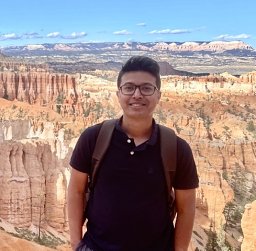 Riyasat Ohib合作论文数Dept Elect & Elect Engn, IUT1
 Frederik Pahde合作论文数Technische Universität Berlin;Fraunhofer Heinrich Hertz Institute1
 Eugene Belilovsky合作论文数Concordia University;Mila - Quebec Artificial Intelligence Institute;Université de Montréal1
 Issam Laradji合作论文数The University of British Columbia;ServiceNow Research1
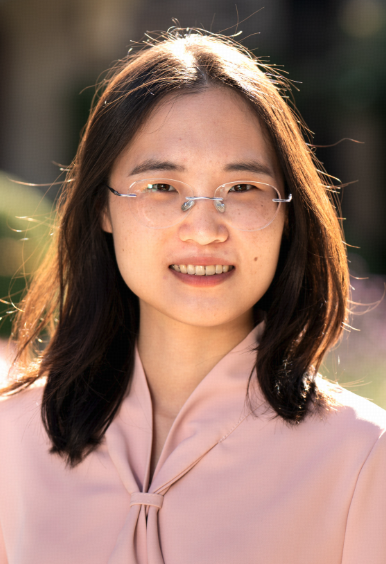 Xinyi Wang (王心怡)合作论文数Luma1
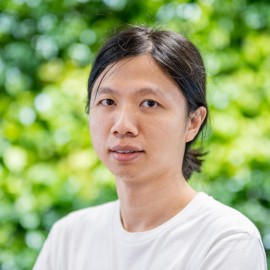 Min Lin合作论文数Sea AI Lab1
 Doina Precup合作论文数DeepMind;School of Computer Science, McGill University;Mila;Centre for Intelligent Machines, McGill University1
 Minseon Kim合作论文数MLAI Lab, Korea Advanced Institute of Science and Technology1
 William Wang (王威廉)合作论文数Department of Computer Science, University of California, Santa Barbara;ChipAgents1
 Torsten Scholak合作论文数Centre for Quantum Information and Quantum Control, University of Toronto1
 Edoardo M. Ponti合作论文数School of Informatics, The University of Edinburgh;Institute for Language, Cognition and Computation, The University of Edinburgh;University of Cambridge1Pierre-André Noël合作论文数University of California-Davis1
 Nicolas Le Roux合作论文数Université de Montréal;McGill University1




