Background Water undergoes structural change as it interfaces with hydrophilic surfaces, including the many hydrophilic surfaces within the cell. This interfacial water has become known as “Exclusion Zone (EZ) water” or “fourth-phase water” [1]. Methods We tested the hypothesis that anesthetics diminish the amount of EZ water, and that this change may correlate with functional changes in anesthesia. By using the local anesthetics Lidocaine and Bupivacaine as well as a general inhalational anesthetic, Isoflurane, we tracked the EZ size as these anesthetics were introduced. Results All three anesthetics diminished EZ size in a concentration-dependent manner at concentrations of 0.18 mM and greater for Bupivacaine, 0.85 mM and greater for Lidocaine, and 0.2% for Isoflurane. At extremely low (micromolar) concentrations, however, all three anesthetics increased EZ size. Conclusions The sharp increase of EZ size associated with micromolar anesthetic concentrations follows a similar pattern to induction of general anesthesia, from the excitation stage (Stage II) to the depression and overdose stages of surgical anesthesia (Stages III and IV). The results are consistent with the hypothesis that anesthetics may act on water, a fundamental organizational component common to all cells.
We present a linear regression method for predictions on a small data set making use of a second possibly biased data set that may be much larger. Our method fits linear regressions to the two data sets while penalizing the difference between predictions made by those two models. The resulting algorithm is a shrinkage method similar to those used in small area estimation. We find a Stein-type finding for Gaussian responses: when the model has 5 or more coefficients and 10 or more error degrees of freedom, it becomes inadmissible to use only the small data set, no matter how large the bias is. We also present both plug-in and AICc-based methods to tune our penalty parameter. Most of our results use an $L_2$ penalty, but we obtain formulas for $L_1$ penalized estimates when the model is specialized to the location setting. Ordinary Stein shrinkage provides an inadmissibility result for only 3 or more coefficients, but we find that our shrinkage method typically produces much lower squared errors in as few as 5 or 10 dimensions when the bias is small and essentially equivalent squared errors when the bias is large.
Multipath Transport Control Protocol (MPTCP) has been standardized by Internet Engineering Task Force (IETF) to support simultaneous delivery of transport control protocol (TCP) packets over multiple interfaces of multi-radio mobile devices. Although MPTCP provides an efficient solution to aggregate the available bandwidth of multiple paths, the goodput of MPTCP is usually far lower than the aggregate throughput due to out-of-order received packets. One key reason for the out-of-order issue is the large variation of end-to-end delay for multiple paths over wireless channels. In this paper, we propose a congestion window adaption algorithm for the MPTCP source (referred to as CWA-MPTCP), which dynamically adjusts the congestion window for each TCP subflow so as to mitigate the variation of end-to-end path delay. We consider typical multipath transmission scenarios over wireless links, as well as a cooperative multi-hop wireless network with multiple relays. For wired paths with stable end-to-end delay, we further develop a proactive scheduling algorithm to determine the packet sending sequence to each path. This algorithm effectively reduces the out-of-order packets by predicting the receiving sequence. Experiments are conducted to evaluate the goodput performance of the two enhancements to MPTCP. Significant performance gain is achieved in terms of goodput, while the receive buffer requirement is minimized.
Providing network functionality for military VHF tactical networks has been problematic for many years. Existing schemes have struggled to provide multi-hop transmission of combined voice and data traffic in this dynamic and very low bandwidth environment. Research has shown that the overhead introduced by existing MANET routing techniques can swamp tactical networks of non-trivial size and topological complexity. In this paper we propose the use of a cross-layered approach combined with opportunistic routing to provide enhanced opportunistic routing (EOR) in mobile tactical networks. This technique makes per-packet forwarding decisions based only on preset domain knowledge, information from lower layers, and information from each individual packet. Because this technique does not build or maintain any network topology state it can operate with no network layer overhead. EOR has been simulated in Qualnet and compared to both AODV and OLSRv2 in large and small tactical networks. EOR was found to be superior to both AODV and OLSRv2 in terms of packet delivery, delay, and network overhead.
This article describes a design approach adopted in developing networking capabilities for NATO's next generation narrowband waveform tactical radios. Providing improved link spectral efficiencies and maintaining long communication range, these new radios enable an opportunity to utilize mult-hop networking features that have been developed for mobile ad hoc networks during the past decade. The challenge, however, is to select and devise networking solutions of predictable and robust performance. For this purpose, a network-science- based approach is taken to first capture and understand the fundamental network properties exhibited when connecting tactical radios. This application of an empirical foundation has proven effective in discovering the dynamic network topological behavior and connectivity attributes. The results illustrate critical implications on the network protocol design and provide important guidance on selecting required networking solutions.
Providing integrated network functionality in VHF tactical networks has been problematic for many years. Modern MANET routing techniques can swamp the limited bandwidth of ground-based tactical networks while legacy techniques are inefficient. In this paper, we expand on our previous work using a cross-layered approach and propose a new technique for Multicast Enhanced Opportunistic Routing (MEOR). MEOR makes per-packet forwarding decisions based only on pre-set domain knowledge, information from lower layers, and information encoded in individual packets. Because this technique does not build or maintain any topology state, it has no network layer overhead. MEOR has been simulated in Qualnet and compared to Simplified Multicast Forwarding (SMF), classic flooding, and local broadcast in large and small tactical scenarios. MEOR was found superior in terms of packet delivery rates and overhead.
This work investigates an efficient and robust broadcast / multicast scheme for the bandwidth limited tactical environment. A local neighborhood based broadcast / multicast protocol is enhanced through managing dynamic link conditions to achieve required delivery ratio. Employing a realistic tactical radio model and practical tactical deployment scenarios, the proposed mechanism is evaluated using a network simulator. Compared with one of the most efficient standard protocols, the simplified multicast forwarding, the proposed scheme demonstrates improved efficiency and robustness.
Statistical Science) Bayesian Sparse Learning for High Dimensional Data by Minghui Shi Department of Statistical Science Duke University
We focus on Bayesian variable selection in regression models. One challenge is to search the huge model space adequately, while identifying high posterior probability regions. In the past decades, the main focus has been on the use of Markov chain Monte Carlo (MCMC) algorithms for these purposes. In this article, we propose a new computational approach based on sequential Monte Carlo (SMC), which we refer to as particle stochastic search (PSS). We illustrate PSS through applications to linear regression and probit models.
Bloch Surface Waves (BSWs) are propagation modes that exist at the interface between a homogeneous medium and a photonic crystal (PhC). The confinement at the interface of the media relies on total internal reflection in the homogeneous medium and on the photonic band gap in the PhC. The dispersion relation of BSWs can be easily tailored through the design of the PhC. This makes BSWs extremely flexible and suitable for applications in the field of optical sensors, light emitters, and photovoltaic devices, where the capability to confine and amplify the electromagnetic field in micro- and nano-structures allows for the enhancement of the light-matter interaction. In particular, we present two different configurations for the detection of Bloch surface waves in silicon nitride multilayers: attenuated total reflectance and photoluminescence measurements. In the first, we measured a 50-fold enhancement of the diffraction signal by a protein grating printed on the multilayer when the incident light beam is coupled to the surface waves. In the second, we observe a significant modification of the spontaneous emission by a monolayer of rhodamine molecules bonded to the photonic crystal surface. These results may found application in the field of optical sensors, particularly for biosensing.
The network coding based applications are vulnerable to possible malicious pollution attacks. Signature schemes have been well-recognized as the most effective approach to address this security issue. However, existing homomorphic signature schemes for network coding either incur high transmission/computation overhead, or are vulnerable to random forgery attacks. In this paper, we propose a novel dynamic-identity based signature scheme for network coding by signing linear vector subspaces. The scheme can rapidly detect/drop the packets that are generated from pollution attacks, and efficiently thwart random forgery attack. By employing fast packet-based and generation-based batch verification approaches, a forwarding node can verify multiple received packets synchronously with dramatically reduced total verification cost. In addition, the proposed scheme provides one-way identity authentication without requiring any extra secure channels or separate certificates, so that the transmission cost can be significantly reduced. Simulation results demonstrate the practicality and efficiency of the proposed schemes.
Wireless metropolitan area sharing networks (WMSNs) are wide-area wireless networks with nodes owned and managed by independent wireless Internet service providers (WISPs). To support seamless roaming in emerging WMSNs, in this paper, we propose a localized and distributed authentication and billing architecture that aims at enabling efficient and privacy-preserving mutual authentication between mobile users (MUs) and WISPs. User anonymity and identity privacy can be protected, even in the presence of collusion between WISPs and a roaming broker (RB), which is considered to be the strongest user privacy protection. An efficient billing architecture is introduced and performed in the same stage of roaming, where U-tokens are defined and can be purchased by MUs from an RB as authentication credentials for the MUs to access the wireless network. The WISPs, thus, can cash the collected U-tokens in the RB for payment. We show that the proposed authentication and billing architecture can support localized inter-WISP authentication through the divisible blind signature scheme and a local witness strategy. A detailed analysis on a number of performance metrics, such as computation time and power consumption, is given to validate the performance of the proposed architectures.
In this paper, we propose a robust and efficient signature scheme for vehicle-to-infrastructure communications, called binary authentication tree (BAT). The BAT scheme can effectively eliminate the performance bottleneck when verifying a mass of signatures within a rigorously required interval, even under adverse scenarios with bogus messages. Given any n received messages with k ges 1 bogus ones, the computation cost to verify all these messages only requires approximately (k + 1) ldr log(n/k) + 4k - 2 time-consuming pairing operations. The BAT scheme can also be gracefully transplanted to other similar batch signature schemes. In addition, it offers the other conventional security for vehicular networks, such as identity privacy and traceability. Theoretical analysis and simulation results demonstrate the validity and practicality of the BAT scheme.
In this chapter, a novel authentication protocol is proposed, which satisfies both security and reliability requirements for group communications in ad hoc networks. The security features include identity anonymity and intracability, one-way session key/identity refreshment, and data privacy. The reliability features include efficient denial-of-service (DoS) tolerance for forged refreshment messages and fault tolerance for lost messages recovery. The theoretical and the simulative results demonstrate that the proposed protocol is robust and efficient under severe DoS attack and poor wireless channel quality.
 Xuemin (Sherman) Shen (沈学民)合作论文数Department of Electrical and Computer Engineering, University of Waterloo30
 Yixin Jiang (蒋屹新)合作论文数17
 Chuang Lin (林闯)合作论文数Department of Computer Science and Technology, Tsinghua University17
 Jon Mark (麥偉棠)合作论文数Department of Electrical and Computer Engineering, University of Waterloo;Centre for Wireless Communications, University of Waterloo14
 Humphrey Rutagemwa合作论文数Department of Electrical and Computer Engineering, University of Waterloo6Kundacina Nenad合作论文数4
 Dongmei Zhao合作论文数Department of Electrical & Computer Engineering, Faculty of Engineering, McMaster University4
 Haojin Zhu (朱浩瑾)合作论文数Shanghai Jiao Tong University Global College;School of Computer Science, Shanghai Jiao Tong University4Aladdin Saleh合作论文数4
 Xiaodong Lin合作论文数School of Computer Science, College of Engineering and Physical Sciences, University of Guelph3
 Pin-Han Ho合作论文数Department of Electrical and Computer Engineering, University of Waterloo3Mc Goh合作论文数2
 Matteo Galli合作论文数2Loo Richard W合作论文数2
 Xuedong Wu (乌学东)合作论文数Ningbo Institute of Materials Technology & Engineering, Chinese Academy of Sciences;University of Chinese Academy of Sciences2
 Xiaowen Chu (褚晓文)合作论文数Data Science and Analytics Thrust and Artificial Intelligence Thrust, Information Hub of The Hong Kong University of Science and Technology (Guangzhou)2
 J.E. Sipe合作论文数Department of Physics, University of Toronto2
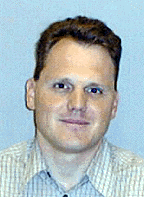 Thomas Kunz合作论文数Department of Systems and Computer Engineering, Carleton University2
 Giacomo Dacarro合作论文数Laboratorio di Nanochimica, Università di Pavia2Maddalena Patrini合作论文数INFM-Dipartimento di Fisica “A. Volta”,, Università degli Studi di Pavia2
 Marco Liscidini合作论文数Department of Physics, University of Pavia;Xanadu Quantum Technologies Inc2
 D. Kidston合作论文数2
 Daniele Bajoni合作论文数UNIPV2Yinxin Jiang合作论文数2martin odroma合作论文数1ZHU Yin (朱寅)合作论文数1Jun XI (奚骏)合作论文数1Yin ZHU (朱寅)合作论文数1
 Bruno R. Preiss合作论文数1
 Liang Xu合作论文数1
 Shengrong Yang (杨生荣)合作论文数Lanzhou Institute of Chemical Physics, Chinese Academy of Sciences1
 Li Li 0009合作论文数1
 Hui Wang (王辉)合作论文数School of Physics and Astronomy, Shanghai Jiao Tong University1
 Nana Wang合作论文数KTH Royal Institute of Technology1
 David Dunson合作论文数Department of Statistical Science, Trinity College of Arts & Sciences, Duke University1
 Susana Sargento合作论文数Universidade de Aveiro1
 Rongxing Lu合作论文数Privacy Enhancing Technologies Lab, School of Computing, Queen's University1
 Fabrizio Giorgis合作论文数INFM and Physics Department of Polytechnic, C.so Duca degli Abruzzi 24, 10129 Torino, Italy1
 Wei Song (宋伟)合作论文数Department of Computer Science, School of Computer Science, Wuhan University1
 Jianyong Yu (俞建勇)合作论文数College of Materials Science and Engineering, Donghua University1Matthew Bocci合作论文数Alcatel-Lucent1
 Art B. Owen合作论文数Department of Statistics, School of Humanities and Sciences, Stanford University1Colin Brown合作论文数1
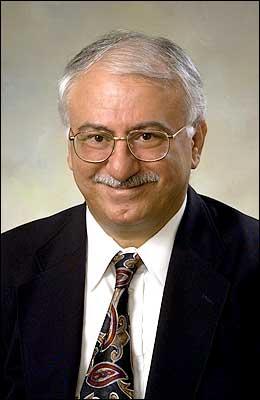 Mohsen Kavehrad合作论文数Center for Research in Knowledge Communications1Deborah Brungard合作论文数1
 Phil J. Vigneron合作论文数1
 Aiyou Chen合作论文数Bell Laboratories
Alcatel-Lucent1
Aiyou Chen合作论文数Bell Laboratories
Alcatel-Lucent1 Javier Aguiar合作论文数Univ Valladolid1




