Mixture-of-Experts (MoE) models enable sparse expert activation, meaning that only a subset of the model's parameters is used during each inference. However, to translate this sparsity into practical performance, an expert caching mechanism is required. Previous works have proposed hardware-centric caching policies, but how these various caching policies interact with each other and different hardware specification remains poorly understood. To address this gap, we develop SpecMD, a standardized framework for benchmarking ad-hoc cache policies on various hardware configurations. Using SpecMD, we perform an exhaustive benchmarking of several MoE caching strategies, reproducing and extending prior approaches in controlled settings with realistic constraints. Our experiments reveal that MoE expert access is not consistent with temporal locality assumptions (e.g LRU, LFU). Motivated by this observation, we propose Least-Stale, a novel eviction policy that exploits MoE's predictable expert access patterns to reduce collision misses by up to 85× over LRU. With such gains, we achieve over 88% hit rates with up to 34.7% Time-to-first-token (TTFT) reduction on OLMoE at only 5% or 0.6GB of VRAM cache capacity.
We revisit a universally accepted but under-examined design choice in every modern LLM: a token index is looked up once at the input embedding layer and then permanently discarded. This single-injection assumption induces two structural failures: (i) the Rare Token Problem, where a Zipf-type distribution of vocabulary causes rare-token embeddings are chronically under-trained due to receiving a fraction of the cumulative gradient signal compared to common tokens; and (ii) the Contextual Collapse Problem, where limited parameters models map distributionally similar tokens to indistinguishable hidden states. As an attempt to address both, we propose TIDE, which augments the standard transformer with EmbeddingMemory: an ensemble of K independent MemoryBlocks that map token indices to context-free semantic vectors, computed once and injected into every layer through a depth-conditioned softmax router with a learnable null bank. We theoretically and empirically establish the benefits of TIDE in addressing the issues associated with single-token identity injection as well as improve performance across multiple language modeling and downstream tasks.
Modern large language models (LLMs) extend context lengths to millions of tokens, enabling coherent, personalized responses grounded in long conversational history. However, the Key-Value (KV) cache grows linearly with the extended dialogue history, causing the model's memory footprint to quickly exceed device limits. While recent KV cache compression methods attempt to reduce memory usage, most apply cache eviction after processing the entire context, incurring unbounded peak memory usage. Additionally, query-dependent eviction narrows the cache semantics to a single query, leading to failure cases in multi-turn conversations. In this paper, we introduce EpiCache, a training-free KV cache management framework for long conversational question answering (LongConvQA) under fixed memory budgets. EpiCache bounds cache growth through block-wise prefill and preserves topic-relevant context via episodic KV compression, which clusters conversation history into coherent episodes and performs episode-specific KV cache eviction. Across three LongConvQA benchmarks (LongMemEval, Realtalk, and LoCoMo), EpiCache improves accuracy by up to 30
On-policy distillation offers dense, per-token supervision for training reasoning models; however, it remains unclear under which conditions this signal is beneficial and under which it is detrimental. Which teacher model should be used, and in the case of self-distillation, which specific context should serve as the supervisory signal? Does the optimal choice vary from one token to the next? At present, addressing these questions typically requires costly training runs whose aggregate performance metrics obscure the dynamics at the level of individual tokens. We introduce a training-free diagnostic framework that operates at the highest resolution: per token, per question, and per teacher. We derive an ideal per-node gradient defined as the parameter update that maximally increases the student's probability of success. We then develop a scalable targeted-rollout algorithm to estimate this gradient efficiently, even for long chains of intermediate thoughts. The gradient alignment score, defined as the cosine similarity between this ideal gradient and any given distillation gradient, quantifies the extent to which a particular configuration approximates the ideal signal. Across a range of self-distillation settings and external teacher models, we observe that distillation guidance exhibits substantially higher alignment with the ideal on incorrect rollouts than on correct ones, where the student already performs well and the teacher's signal tends to become noisy. Furthermore, we find that the optimal distillation context depends jointly on the student model's capacity and the target task, and that no single universally effective configuration emerges. These findings motivate the use of per-task, per-token diagnostic analyses for distillation.
Long-context handling remains a core challenge for language models: even with extended context windows, models often fail to reliably extract, reason over, and use the information across long contexts. Recent works like Recursive Language Models (RLM) have approached this challenge by agentic way of decomposing long contexts into recursive sub-calls through programmatic interaction at inference. While promising, the success of RLM critically depends on how these context-interaction programs are selected, which has remained largely unexplored. In this paper, we study this problem and introduce SRLM, a framework that augments programmatic context interaction with uncertainty-aware Self-Reflection. SRLM leverages three intrinsic signals: self consistency, reasoning length, and verbalized confidence. These serve as complementary indicators of a model's internal uncertainty, and the model uses them to evaluate and compare candidate context-interaction programs. Extensive experiments across diverse benchmark datasets, context lengths, and backbone models, show that SRLM consistently outperforms state-of-the-art baselines, yielding up to 22
Understanding how transformer components operate in LLMs is important, as it is at the core of recent technological advances in artificial intelligence. In this work, we revisit the challenges associated with interpretability of feed-forward modules (FFNs) and propose MemoryLLM, which aims to decouple FFNs from self-attention and enables us to study the decoupled FFNs as context-free token-wise neural retrieval memory. In detail, we investigate how input tokens access memory locations within FFN parameters and the importance of FFN memory across different downstream tasks. MemoryLLM achieves context-free FFNs by training them in isolation from self-attention directly using the token embeddings. This approach allows FFNs to be pre-computed as token-wise lookups (ToLs), enabling on-demand transfer between VRAM and storage, additionally enhancing inference efficiency. We also introduce Flex-MemoryLLM, positioning it between a conventional transformer design and MemoryLLM. This architecture bridges the performance gap caused by training FFNs with context-free token-wise embeddings.
Sparse Mixtures of Experts (MoEs) are typically trained to operate at a fixed sparsity level, e.g. k in a top-k gating function. This global sparsity level determines an operating point on the accuracy/latency curve; currently, meeting multiple efficiency targets means training and maintaining multiple models. This practice complicates serving, increases training and maintenance costs, and limits flexibility in meeting diverse latency, efficiency, and energy requirements. We show that pretrained MoEs are more robust to runtime sparsity shifts than commonly assumed, and introduce MoE-PHDS (Post Hoc Declared Sparsity), a lightweight SFT method that turns a single checkpoint into a global sparsity control surface. PHDS mixes training across sparsity levels and anchors with a short curriculum at high sparsity, requiring no architectural changes. The result is predictable accuracy/latency tradeoffs from one model: practitioners can “dial k” at inference time without swapping checkpoints, changing architecture, or relying on token-level heuristics. Experiments on OLMoE-1B-7B-0125, Qwen1.5-MoE-A2.7B, and proprietary models fit on multiple operating points show that PHDS matches or exceeds well-specified oracle models, improves cross-sparsity agreement by up to 22% vs. well-specified oracle models, and enables simplified, flexible runtime MoE deployment by making global sparsity a first-class serving primitive.
Speculative decoding accelerates LLM inference by using a draft model to look ahead, but gains are capped by the cost of autoregressive draft generation: increasing draft size elevates acceptance rates but introduces additional latency overhead exacerbating the speed-accuracy tradeoff. Prior methods (Medusa, Hydra, EAGLE) partially reduce draft cost but either degrade acceptance or introduce overheads that limit scaling. We present Mirror Speculative Decoding (Mirror-SD), an inference algorithm that breaks the latency-acceptance tradeoff. Mirror-SD launches branch-complete rollouts from early-exit signals in parallel with the target model's suffix and explicitly maps computation across heterogeneous accelerators (GPU and NPU) to exploit cross-device parallelism. The draft speculates forward continuations for the target to verify, while the target simultaneously speculates correction paths for the draft, converting speculation into two complementary execution pipelines. To further cut draft latency without weakening acceptance semantics, we add speculative streaming so the draft emits multiple tokens per step. This dual strategy of parallel heterogeneous execution plus multi-token speculative streaming pushes speculative decoding toward its ideal regime of high acceptance with low overhead. On SpecBench with server-scale models from 14B to 66B parameters, Mirror-SD delivers consistent end-to-end gains, achieving 2.8x-5.8x wall-time speedups across diverse tasks and a 30
The generation quality of large language models (LLMs) is often improved by utilizing inference-time sequence-level scaling methods (e.g., Chain-of-Thought). We introduce hyper-parallel scaling, a complementary framework that improves prediction quality at the token level. Hyper-parallel scaling computes and aggregates multiple output proposals for a single token from the model. We implement this concept in Mixture-of-Experts (MoE) models, which we refer to as Roster of Experts (RoE). RoE is a training-free inference algorithm that turns a single MoE into a dynamic ensemble of MoEs. RoE injects controlled stochasticity into the expert routing mechanism, enabling it to sample multiple diverse experts for each token and aggregate their outputs for a more accurate final prediction. To overcome the computational cost, we introduce an efficient batching strategy and a specialized KV-caching mechanism that minimizes compute and memory overhead. For example, RoE enables a 7B MoE model to match the performance of a 10.5B MoE model while using 30
We introduce two multilingual, multimodal foundation language models that power Apple Intelligence features across Apple devices and services: i a 3B-parameter on-device model optimized for Apple silicon through architectural innovations such as KV-cache sharing and 2-bit quantization-aware training; and ii a scalable server model built on a novel Parallel-Track Mixture-of-Experts PT-MoE transformer that combines track parallelism, mixture-of-experts sparse computation, and interleaved global-local attention to deliver high quality with competitive cost on Apple's Private Cloud Compute platform. Both models are trained on large-scale multilingual and multimodal datasets sourced via responsible web crawling, licensed corpora, and high-quality synthetic data, then further refined with supervised fine-tuning and reinforcement learning on a new asynchronous platform. The resulting models support several additional languages while understanding images and executing tool calls. In public benchmarks and human evaluations, both the server model and the on-device model match or surpass comparably sized open baselines. A new Swift-centric Foundation Models framework exposes guided generation, constrained tool calling, and LoRA adapter fine-tuning, allowing developers to integrate these capabilities with a few lines of code. The latest advancements in Apple Intelligence models are grounded in our Responsible AI approach with safeguards like content filtering and locale-specific evaluation, as well as our commitment to protecting our users' privacy with innovations like Private Cloud Compute.
Since Large Language Models or LLMs have demonstrated high-quality performance on many complex language tasks, there is a great interest in bringing these LLMs to mobile devices for faster responses and better privacy protection. However, the size of LLMs (i.e., billions of parameters) requires highly effective compression to fit into storage-limited devices. Among many compression techniques, weight-clustering, a form of non-linear quantization, is one of the leading candidates for LLM compression, and supported by modern smartphones. Yet, its training overhead is prohibitively significant for LLM fine-tuning. Especially, Differentiable KMeans Clustering, or DKM, has shown the state-of-the-art trade-off between compression ratio and accuracy regression, but its large memory complexity makes it nearly impossible to apply to train-time LLM compression. In this paper, we propose a memory-efficient DKM implementation, eDKM powered by novel techniques to reduce the memory footprint of DKM by orders of magnitudes. For a given tensor to be saved on CPU for the backward pass of DKM, we compressed the tensor by applying uniquification and sharding after checking if there is no duplicated tensor previously copied to CPU. Our experimental results demonstrate that \prjname can fine-tune and compress a pretrained LLaMA 7B model from 12.6 GB to 2.5 GB (3bit/weight) with the Alpaca dataset by reducing the train-time memory footprint of a decoder layer by 130$\times$, while delivering good accuracy on broader LLM benchmarks (i.e., 77.7% for PIQA, 66.1% for Winograde, and so on).
User-defined keyword spotting on a resource-constrained edge device is challenging. However, keywords are often bounded by a maximum keyword length, which has been largely under-leveraged in prior works. Our analysis of keyword-length distribution shows that user-defined keyword spotting can be treated as a length-constrained problem, eliminating the need for aggregation over variable text length. This leads to our proposed method for efficient keyword spotting, SLiCK (exploiting Subsequences for Length-Constrained Keyword spotting). We further introduce a subsequence-level matching scheme to learn audio-text relations at a finer granularity, thus distinguishing similar-sounding keywords more effectively through enhanced context. In SLiCK, the model is trained with a multi-task learning approach using two modules: Matcher (utterance-level matching task, novel subsequence-level matching task) and Encoder (phoneme recognition task). The proposed method improves the baseline results on Libriphrase hard dataset, increasing AUC from $88.52$ to $94.9$ and reducing EER from $18.82$ to $11.1$.
Autoregressive language models are constrained by their inherently sequential nature, generating one token at a time. This paradigm limits inference speed and parallelism, especially during later stages of generation when the direction and semantics of text are relatively certain. In this work, we propose a novel framework that leverages the inherent knowledge of vanilla autoregressive language models about future tokens, combining techniques to realize this potential and enable simultaneous prediction of multiple subsequent tokens. Our approach introduces several key innovations: (1) a masked-input formulation where multiple future tokens are jointly predicted from a common prefix; (2) a gated LoRA formulation that preserves the original LLM's functionality, while equipping it for multi-token prediction; (3) a lightweight, learnable sampler module that generates coherent sequences from the predicted future tokens; (4) a set of auxiliary training losses, including a consistency loss, to enhance the coherence and accuracy of jointly generated tokens; and (5) a speculative generation strategy that expands tokens quadratically in the future while maintaining high fidelity. Our method achieves significant speedups through supervised fine-tuning on pretrained models. For example, it generates code and math nearly 5x faster, and improves general chat and knowledge tasks by almost 2.5x. These gains come without any loss in quality.
Training large language models (LLMs) for different inference constraints is computationally expensive, limiting control over efficiency-accuracy trade-offs. Moreover, once trained, these models typically process tokens uniformly, regardless of their complexity, leading to static and inflexible behavior. In this paper, we introduce a post-training optimization framework, DynaMoE, that adapts a pre-trained dense LLM to a token-difficulty-driven Mixture-of-Experts model with minimal fine-tuning cost. This adaptation makes the model dynamic, with sensitivity control to customize the balance between efficiency and accuracy. DynaMoE features a token-difficulty-aware router that predicts the difficulty of tokens and directs them to the appropriate sub-networks or experts, enabling larger experts to handle more complex tokens and smaller experts to process simpler ones. Our experiments demonstrate that DynaMoE can generate a range of adaptive model variants of the existing trained LLM with a single fine-tuning step, utilizing only 10B tokens, a minimal cost compared to the base model's training. Each variant offers distinct trade-offs between accuracy and performance. Compared to the baseline post-training optimization framework, Flextron, our method achieves similar aggregated accuracy across downstream tasks, despite using only 1/9th of their fine-tuning cost.
With the rapid expansion in the scale of large language models (LLMs), enabling efficient distributed inference across multiple computing units has become increasingly critical. However, communication overheads from popular distributed inference techniques such as Tensor Parallelism pose a significant challenge to achieve scalability and low latency. Therefore, we introduce a novel optimization technique, Sync-Point Drop (SPD), to reduce communication overheads in tensor parallelism by selectively dropping synchronization on attention outputs. In detail, we first propose a block design that allows execution to proceed without communication through SPD. Second, we apply different SPD strategies to attention blocks based on their sensitivity to the model accuracy. The proposed methods effectively alleviate communication bottlenecks while minimizing accuracy degradation during LLM inference, offering a scalable solution for diverse distributed environments: SPD offered about 20\% overall inference latency reduction with < 1\% accuracy regression for LLaMA2-70B inference over 8 GPUs.
The inference of transformer-based large language models consists of two sequential stages: 1) a prefilling stage to compute the KV cache of prompts and generate the first token, and 2) a decoding stage to generate subsequent tokens. For long prompts, the KV cache must be computed for all tokens during the prefilling stage, which can significantly increase the time needed to generate the first token. Consequently, the prefilling stage may become a bottleneck in the generation process. An open question remains whether all prompt tokens are essential for generating the first token. To answer this, we introduce a novel method, LazyLLM, that selectively computes the KV for tokens important for the next token prediction in both the prefilling and decoding stages. Contrary to static pruning approaches that prune the prompt at once, LazyLLM allows language models to dynamically select different subsets of tokens from the context in different generation steps, even though they might be pruned in previous steps. Extensive experiments on standard datasets across various tasks demonstrate that LazyLLM is a generic method that can be seamlessly integrated with existing language models to significantly accelerate the generation without fine-tuning. For instance, in the multi-document question-answering task, LazyLLM accelerates the prefilling stage of the LLama 2 7B model by 2.34x while maintaining accuracy.
Large language models (LLMs), while transformative for NLP, come with significant computational demands, underlining the need for efficient, training-free compression. Notably, the reliability of perplexity as a benchmark for compressed model efficacy is in question, as our tests using LLaMA-7B and OPT-6.7b reveal a significant performance drop in several realistic downstream tasks, underscoring the disparity between perplexity as a performance indicator and real-world performance. Investigation into the trade-off between resource-intensive post-compression re-training highlights the prospect of prompt-driven recovery as a lightweight adaption tool. However, existing studies, confined mainly to perplexity evaluations and simple tasks, fail to offer unequivocal confidence in the scalability and generalizability of prompting.We tackle this uncertainty in two key ways. First, we uncover the vulnerability of naive prompts in LLM compression as an over-reliance on a singular prompt per input. In response, we propose \textit{inference-time dynamic prompting} (IDP), a mechanism that autonomously chooses from a set of curated prompts based on the context of each individual input. Second, we delve into a scientific understanding of why ``prompting might be all you need post-LLM compression". Our findings suggest that compression doesn't irretrievably erase LLM model knowledge but displace it, necessitating a new inference path. IDP effectively redirects this path, enabling the model to tap into its inherent yet displaced knowledge and thereby recover performance. Empirical tests affirm the value of IDP, demonstrating an average performance improvement of 1.24\% across nine varied tasks spanning multiple knowledge domains.
Large language models (LLMs) are central to modern natural language processing, delivering exceptional performance in various tasks. However, their substantial computational and memory requirements present challenges, especially for devices with limited DRAM capacity. This paper tackles the challenge of efficiently running LLMs that exceed the available DRAM capacity by storing the model parameters in flash memory, but bringing them on demand to DRAM. Our method involves constructing an inference cost model that takes into account the characteristics of flash memory, guiding us to optimize in two critical areas: reducing the volume of data transferred from flash and reading data in larger, more contiguous chunks. Within this hardware-informed framework, we introduce two principal techniques. First, "windowing" strategically reduces data transfer by reusing previously activated neurons, and second, "row-column bundling", tailored to the sequential data access strengths of flash memory, increases the size of data chunks read from flash memory. These methods collectively enable running models up to twice the size of the available DRAM, with a 4-5x and 20-25x increase in inference speed compared to naive loading approaches in CPU and GPU, respectively. Our integration of sparsity awareness, context-adaptive loading, and a hardware-oriented design paves the way for effective inference of LLMs on devices with limited memory.
Tensor parallelism provides an effective way to increase server large language model (LLM) inference efficiency despite adding an additional communication cost. However, as server LLMs continue to scale in size, they will need to be distributed across more devices, magnifying the communication cost. One way to approach this problem is with quantization, but current methods for LLMs tend to avoid quantizing the features that tensor parallelism needs to communicate. Taking advantage of consistent outliers in communicated features, we introduce a quantization method that reduces communicated values on average from 16 bits to 4.2 bits while preserving nearly all of the original performance. For instance, our method maintains around 98.0 2 27B's and Llama 2 13B's original performance, respectively, averaged across all tasks we evaluated on.
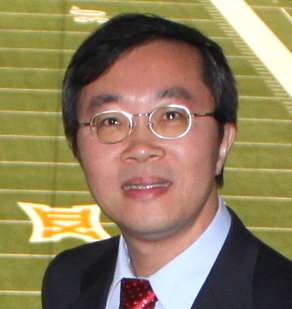 David Z. Pan合作论文数Department of Electrical and Computer Engineering, Cockrell School of Engineering, University of Texas at Austin;Computer Science Department, The University of Texas at Austin27
 Ruchir Puri合作论文数IBM Research18
 devang k naik合作论文数Apple Inc12
 Hua Xiang合作论文数12
 Arnav Kundu合作论文数Apple11
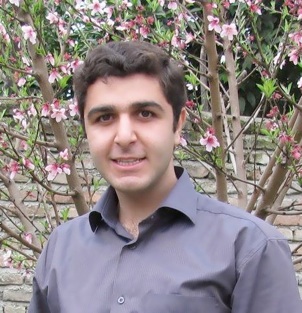 Mehrdad Farajtabar合作论文数DeepMind11
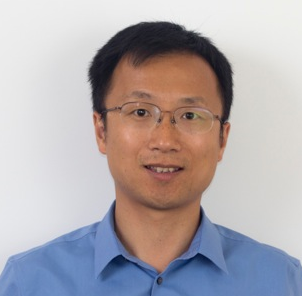 Mark Ren合作论文数Agentrys9
 Kun Yuan合作论文数Univ. of Texas at Austin9
 Saurabh N. Adya合作论文数Intel Corp, Santa Clara, CA 95051 USA7
 Mohammad Rastegari合作论文数Elastix.AI7
 Duc Hoang合作论文数Apple6
 Mohammad Samragh合作论文数University of California San Diego6
 Bumsoo Kang合作论文数KAIST6
 Ulrich Finkler合作论文数T.J. Watson Center, International Business Machines6
 Matthew M. Ziegler合作论文数IBM T. J. Watson Research Center6
 Keivan Alizadeh-Vahid合作论文数Apple5
 David Kung合作论文数IBM Thomas J. Watson Research Center;IBM Research AI5
 Chungkuk Yoo合作论文数Apple5
 Daniel Brand合作论文数IBM5Kumari Nishu合作论文数4Thomas Merth合作论文数Apple4Mayoore S Jaiswal合作论文数IBM4
 Roland Haas合作论文数3
 Aaron Saxton合作论文数3Anushri Gupta合作论文数3
 Asad Khan合作论文数3
 Lunan Sun合作论文数Dept Phys, Univ Illinois3
 Shawn Rosofsky合作论文数3
 Tom Gibbs合作论文数3Nikhil Bhendawade合作论文数Microsoft3
 Daniel George合作论文数Univ Illinois, NCSA, Urbana, IL 61801 USA3
 Igor Andreoni合作论文数Joint Space-Science Institute, University of Maryland;Department of Astronomy, University of Maryland;Astrophysics Science Division, NASA Goddard Space Flight Center;University of Maryland, University of Maryland3
 Philip S. Cowperthwaite合作论文数3
 b sipőcz合作论文数IPAC, CALTECH3
 j c wells合作论文数NVIDIA Corp3
 John Towns合作论文数National Center for Supercomputing Applications, University of Illinois at Urbana-Champaign3
 William D. Gropp合作论文数Siebel School of Computing and Data Science, The Grainger College of Engineering, University of Illinois, Urbana-Champaign;National Center for Supercomputing Applications, University of Illinois, Urbana-Champaign3
 Moin Nabi合作论文数University of Trento3
 Zhizhen Jane Zhao合作论文数Department of Electrical & Computer Engineering, The Grainger College of Engineering, University of Illinois at Urbana-Champaign;Department of Mathematics, University of Illinois at Urbana-Champaign;Department of Statistics, University of Illinois at Urbana-Champaign3
 Xin Liu合作论文数Department of Astronomy, College of Liberal Arts & Sciences, University of Illinois at Urbana-Champaign3
 Qichen Fu合作论文数Apple Inc.3
 Matias Carrasco Kind合作论文数Department of Finance, Gies College of Business, University of Illinois at Urbana-Champaign3
 Yue Shen合作论文数Department of Astronomy, College of Liberal Arts & Sciences, University of Illinois at Urbana-Champaign3
 Mark Neubauer合作论文数Department of Physics, The Grainger College of Engineering, University of Illinois at Urbana-Champaign;National Center for Supercomputing Applications, University of Illinois at Urbana-Champaign3
 Xiaoping Tang合作论文数3
 Jinjun Xiong合作论文数College of AI, Cyber and Computing, The University of Texas at San Antonio3
 Gabrielle Allen合作论文数School of Computing, University of Wyoming;Department of Mathematics & Statistics, University of Wyoming;Department of Physics & Astronomy, University of Wyoming3
 Iman Mirzadeh合作论文数Apple3
 Alexander Schwing合作论文数Coordinated Science Laboratory, Computer Science Department, University of Illinois in Urbana-Champaign;Department of Electrical and Computer Engineering, The Grainger College of Engineering, University of Illinois in Urbana-Champaign3




