Unstructured sparsity is now natively accelerated by recent GPU kernels and dataflow hardware, shifting the bottleneck from inference execution to the pruning algorithm. State-of-the-art methods for unstructured LLM pruning are layer-wise surrogates derived from the Optimal Brain Surgeon principle, and they sacrifice end-to-end accuracy, especially under aggressive sparsity. End-to-end alternatives such as MaskLLM and PATCH show that learnable masks can close this gap, but their categorical-over-patterns parameterization scales with the number of valid masks per row and does not port to the unstructured setting. We introduce LEAP, which replaces this intractable parameterization with a per-weight Bernoulli-via-Gumbel- sigmoid relaxation that makes end-to-end unstructured mask learning tractable. Across five LLM families from 0.5B to 8B parameters at 50
Since Large Language Models or LLMs have demonstrated high-quality performance on many complex language tasks, there is a great interest in bringing these LLMs to mobile devices for faster responses and better privacy protection. However, the size of LLMs (i.e., billions of parameters) requires highly effective compression to fit into storage-limited devices. Among many compression techniques, weight-clustering, a form of non-linear quantization, is one of the leading candidates for LLM compression, and supported by modern smartphones. Yet, its training overhead is prohibitively significant for LLM fine-tuning. Especially, Differentiable KMeans Clustering, or DKM, has shown the state-of-the-art trade-off between compression ratio and accuracy regression, but its large memory complexity makes it nearly impossible to apply to train-time LLM compression. In this paper, we propose a memory-efficient DKM implementation, eDKM powered by novel techniques to reduce the memory footprint of DKM by orders of magnitudes. For a given tensor to be saved on CPU for the backward pass of DKM, we compressed the tensor by applying uniquification and sharding after checking if there is no duplicated tensor previously copied to CPU. Our experimental results demonstrate that \prjname can fine-tune and compress a pretrained LLaMA 7B model from 12.6 GB to 2.5 GB (3bit/weight) with the Alpaca dataset by reducing the train-time memory footprint of a decoder layer by 130$\times$, while delivering good accuracy on broader LLM benchmarks (i.e., 77.7% for PIQA, 66.1% for Winograde, and so on).
Large Language Models (LLMs) have transformed natural language processing, but face significant challenges in widespread deployment due to their high runtime cost. In this paper, we introduce SeedLM, a novel post-training compression method that uses seeds of pseudo-random generators to encode and compress model weights. Specifically, for each block of weights, we find a seed that is fed into a Linear Feedback Shift Register (LFSR) during inference to efficiently generate a random matrix. This matrix is then linearly combined with compressed coefficients to reconstruct the weight block. SeedLM reduces memory access and leverages idle compute cycles during inference, effectively speeding up memory-bound tasks by trading compute for fewer memory accesses. Unlike state-of-the-art compression methods that rely on calibration data, our approach is data-free and generalizes well across diverse tasks. Our experiments with Llama 3 70B, which is particularly challenging to compress, show that SeedLM achieves significantly better zero-shot accuracy retention at 4- and 3-bit than state-of-the-art techniques, while maintaining performance comparable to FP16 baselines. Additionally, FPGA-based tests demonstrate that 4-bit SeedLM, as model size increases to 70B, approaches a 4x speed-up over an FP16 Llama 2/3 baseline.
Speculative decoding is a prominent technique for accelerating LLM inference by leveraging an auxiliary draft model, but its effectiveness is limited by the autoregressive nature of draft generation, where acceptance rates depend on the draft model’s size. Scaling the draft model improves acceptance but also increases speculation latency, limiting overall speedup. Furthermore, fine-tuning both the draft and target models is often necessary to achieve high acceptance rates, adding complexity to inference systems as the number of downstream tasks grows. Single-model approaches like Medusa generate speculative tokens non-autoregressively but lack token dependencies, limiting effectiveness. Alternatives like Hydra and Eagle incorporate token dependencies but rely on dedicated heads, making speculation independent of the base model and limiting the extent to which stronger base models can improve speculation.We introduce a novel speculative decoding method that integrates speculative draft generation directly within the target model using multi-stream attention. This improves acceptance rates by introducing interdependencies between speculative tokens while ensuring non-autoregressive draft generation with minimal overhead. As target models scale in size and quality, speculative generation improves naturally with our method, unlike prior approaches. Furthermore, our approach is both parameter- and FLOP-efficient, requiring over 1000X fewer additional parameters than Medusa, making it highly suitable for resource-constrained devices. We design our method to operate in two modes: (1) Lossless mode, a plug-and-play method that preserves the output of any pre-trained model; and (2) Shared mode, optimizing both speedup and downstream performance. We demonstrate a 2–3.5X speedup across diverse tasks, including summarization, translation, question answering, mathematical reasoning, SQL generation, and retrieval-augmented generation (RAG).
The inference of transformer-based large language models consists of two sequential stages: 1) a prefilling stage to compute the KV cache of prompts and generate the first token, and 2) a decoding stage to generate subsequent tokens. For long prompts, the KV cache must be computed for all tokens during the prefilling stage, which can significantly increase the time needed to generate the first token. Consequently, the prefilling stage may become a bottleneck in the generation process. An open question remains whether all prompt tokens are essential for generating the first token. To answer this, we introduce a novel method, LazyLLM, that selectively computes the KV for tokens important for the next token prediction in both the prefilling and decoding stages. Contrary to static pruning approaches that prune the prompt at once, LazyLLM allows language models to dynamically select different subsets of tokens from the context in different generation steps, even though they might be pruned in previous steps. Extensive experiments on standard datasets across various tasks demonstrate that LazyLLM is a generic method that can be seamlessly integrated with existing language models to significantly accelerate the generation without fine-tuning. For instance, in the multi-document question-answering task, LazyLLM accelerates the prefilling stage of the LLama 2 7B model by 2.34x while maintaining accuracy.
Inference with transformer-based language models begins with a prompt processing step. In this step, the model generates the first output token and stores the KV cache needed for future generation steps. This prompt processing step can be computationally expensive, taking 10s of seconds or more for billion-parameter models on edge devices when prompt lengths or batch sizes rise. This degrades user experience by introducing significant latency into the model's outputs. To reduce the time spent producing the first output (known as the “time to first token”, or TTFT) of a pretrained model, we introduce a novel method called KV Prediction. In our method, a small auxiliary model is used to process the prompt and produce an approximation of the KV cache used by a base model. This approximated KV cache is then used with the base model for autoregressive generation without the need to query the auxiliary model again. We demonstrate that our method produces a pareto-optimal efficiency-accuracy trade-off when compared to baselines. On TriviaQA, we demonstrate relative accuracy improvements in the range of 15%-50% across a range of TTFT FLOPs budgets. We also demonstrate accuracy improvements of up to 30% on HumanEval python code completion at fixed TTFT FLOPs budgets. Additionally, we benchmark models on an Apple M2 Pro CPU and demonstrate that our improvement in FLOPs translates to a TTFT speedup on hardware. We release our code at https://github.com/apple/corenet/tree/main/projects/kv-prediction .
Large language models (LLMs), while transformative for NLP, come with significant computational demands, underlining the need for efficient, training-free compression. Notably, the reliability of perplexity as a benchmark for compressed model efficacy is in question, as our tests using LLaMA-7B and OPT-6.7b reveal a significant performance drop in several realistic downstream tasks, underscoring the disparity between perplexity as a performance indicator and real-world performance. Investigation into the trade-off between resource-intensive post-compression re-training highlights the prospect of prompt-driven recovery as a lightweight adaption tool. However, existing studies, confined mainly to perplexity evaluations and simple tasks, fail to offer unequivocal confidence in the scalability and generalizability of prompting.We tackle this uncertainty in two key ways. First, we uncover the vulnerability of naive prompts in LLM compression as an over-reliance on a singular prompt per input. In response, we propose \textit{inference-time dynamic prompting} (IDP), a mechanism that autonomously chooses from a set of curated prompts based on the context of each individual input. Second, we delve into a scientific understanding of why ``prompting might be all you need post-LLM compression". Our findings suggest that compression doesn't irretrievably erase LLM model knowledge but displace it, necessitating a new inference path. IDP effectively redirects this path, enabling the model to tap into its inherent yet displaced knowledge and thereby recover performance. Empirical tests affirm the value of IDP, demonstrating an average performance improvement of 1.24\% across nine varied tasks spanning multiple knowledge domains.
Contrastive language image pretraining (CLIP) is a standard method for training vision-language models. While CLIP is scalable, promptable, and robust to distribution shifts on image classification tasks, it lacks object localization capabilities. This paper studies the following question: Can we augment CLIP training with task-specific vision models from model zoos to improve its visual representations? Towards this end, we leverage open-source task-specific vision models to generate pseudo-labels for an uncurated and noisy image-text dataset. Subsequently, we train CLIP models on these pseudo-labels in addition to the contrastive training on image and text pairs. This simple setup shows substantial improvements of up to 16.3% across different vision tasks, including segmentation, detection, depth estimation, and surface normal estimation. Importantly, these enhancements are achieved without compromising CLIP's existing capabilities, including its proficiency in promptable zero-shot classification.
Speculative decoding is a prominent technique to speed up the inference of a large target language model based on predictions of an auxiliary draft model. While effective, in application-specific settings, it often involves fine-tuning both draft and target models to achieve high acceptance rates. As the number of downstream tasks grows, these draft models add significant complexity to inference systems. We propose Speculative Streaming, a single-model speculative decoding method that fuses drafting into the target model by changing the fine-tuning objective from next token prediction to future n-gram prediction. Speculative Streaming speeds up decoding by 1.8 - 3.1X in a diverse set of tasks, such as Summarization, Structured Queries, and Meaning Representation, without sacrificing generation quality. Additionally, Speculative Streaming is parameter-efficient. It achieves on-par/higher speed-ups than Medusa-style architectures while using ~10000X fewer extra parameters, making it well-suited for resource-constrained devices.
Large language models (LLMs) are central to modern natural language processing, delivering exceptional performance in various tasks. However, their substantial computational and memory requirements present challenges, especially for devices with limited DRAM capacity. This paper tackles the challenge of efficiently running LLMs that exceed the available DRAM capacity by storing the model parameters in flash memory, but bringing them on demand to DRAM. Our method involves constructing an inference cost model that takes into account the characteristics of flash memory, guiding us to optimize in two critical areas: reducing the volume of data transferred from flash and reading data in larger, more contiguous chunks. Within this hardware-informed framework, we introduce two principal techniques. First, "windowing" strategically reduces data transfer by reusing previously activated neurons, and second, "row-column bundling", tailored to the sequential data access strengths of flash memory, increases the size of data chunks read from flash memory. These methods collectively enable running models up to twice the size of the available DRAM, with a 4-5x and 20-25x increase in inference speed compared to naive loading approaches in CPU and GPU, respectively. Our integration of sparsity awareness, context-adaptive loading, and a hardware-oriented design paves the way for effective inference of LLMs on devices with limited memory.
Modern deep learning approaches usually utilize modality-specific processing. For example, the most common deep learning approach to image classification involves decoding image file bytes into an RGB tensor which is passed into a neural network. Instead, we investigate modality-independent representation learning by performing classification directly on file bytes, without the need for decoding files at inference time. This enables models to operate on various modalities without any hand-designed, modality-specific processing. Our model, ByteFormer, improves ImageNet Top-1 classification accuracy by $5\%$ (from $72.2\%$ to $77.33\%$) relative to DeIT models of similar size. Compared to Perceiver IO, our model requires absolutely no modality-specific processing at inference time, and uses an order of magnitude fewer parameters at equivalent accuracy on ImageNet. We demonstrate that the same ByteFormer architecture can perform audio classification without modifications or modality-specific preprocessing. We achieve $95.42\%$ classification accuracy on the Speech Commands V2 dataset (comparable to the state-of-the-art accuracy of $98.7\%$). Additionally, we demonstrate that ByteFormer can operate jointly on images and audio, handling joint classification without explicit knowledge of the input modality. We release our code at https://github.com/apple/corenet/tree/main/projects/byteformer.
The reproducibility and transparency of large language models are crucial for advancing open research, ensuring the trustworthiness of results, and enabling investigations into data and model biases, as well as potential risks. To this end, we release OpenELM, a state-of-the-art open language model. OpenELM uses a layer-wise scaling strategy to efficiently allocate parameters within each layer of the transformer model, leading to enhanced accuracy. For example, with a parameter budget of approximately one billion parameters, OpenELM exhibits a 2.36 pre-training tokens. Diverging from prior practices that only provide model weights and inference code, and pre-train on private datasets, our release includes the complete framework for training and evaluation of the language model on publicly available datasets, including training logs, multiple checkpoints, and pre-training configurations. We also release code to convert models to MLX library for inference and fine-tuning on Apple devices. This comprehensive release aims to empower and strengthen the open research community, paving the way for future open research endeavors. Our source code along with pre-trained model weights and training recipes is available at . Additionally, models can be found on HuggingFace at: .
The landscape of publicly available vision foundation models (VFMs), such as CLIP and Segment Anything Model (SAM), is expanding rapidly. VFMs are endowed with distinct capabilities stemming from their pre-training objectives. For instance, CLIP excels in semantic understanding, while SAM specializes in spatial understanding for segmentation. In this work, we introduce a simple recipe to efficiently merge VFMs into a unified model that absorbs their expertise. Our method integrates techniques of multi-task learning, continual learning, and distillation. Further, it demands significantly less computational cost compared to traditional multi-task training from scratch, and it only needs a small fraction of the pre-training datasets that were initially used to train individual models. By applying our method to SAM and CLIP, we obtain SAM-CLIP: a unified model that combines the capabilities of SAM and CLIP into a single vision transformer. Compared with deploying SAM and CLIP independently, our merged model, SAM-CLIP, reduces storage and compute costs for inference, making it well-suited for edge device applications. We show that SAM-CLIP not only retains the foundational strengths of SAM and CLIP, but also introduces synergistic functionalities, notably in zero-shot semantic segmentation, where SAM-CLIP establishes new state-of-the-art results on 5 benchmarks. It outperforms previous models that are specifically designed for this task by a large margin, including +6.8% and +5.9% mean IoU improvement on Pascal-VOC and COCO-Stuff datasets, respectively.
Contrastive learning has emerged as a transformative method for learning effective visual representations through the alignment of image and text embeddings. However, pairwise similarity computation in contrastive loss between image and text pairs poses computational challenges. This paper presents a novel weakly supervised pre-training of vision models on web-scale image-text data. The proposed method reframes pre-training on image-text data as a classification task. Consequently, it eliminates the need for pairwise similarity computations in contrastive loss, achieving a remarkable 2.7× acceleration in training speed compared to contrastive learning on web-scale data. Through extensive experiments spanning diverse vision tasks, including detection and segmentation, we demonstrate that the proposed method maintains high representation quality. Our source code along with pre-trained model weights and training recipes is available at .
Modern artificial intelligence (AI) systems are powered by foundation models. This paper presents a new set of foundation models, called Llama 3. It is a herd of language models that natively support multilinguality, coding, reasoning, and tool usage. Our largest model is a dense Transformer with 405B parameters and a context window of up to 128K tokens. This paper presents an extensive empirical evaluation of Llama 3. We find that Llama 3 delivers comparable quality to leading language models such as GPT-4 on a plethora of tasks. We publicly release Llama 3, including pre-trained and post-trained versions of the 405B parameter language model and our Llama Guard 3 model for input and output safety. The paper also presents the results of experiments in which we integrate image, video, and speech capabilities into Llama 3 via a compositional approach. We observe this approach performs competitively with the state-of-the-art on image, video, and speech recognition tasks. The resulting models are not yet being broadly released as they are still under development.
Mobile vision transformers (MobileViT) can achieve state-of-the-art performance across several mobile vision tasks, including classification and detection. Though these models have fewer parameters, they have high latency as compared to convolutional neural network-based models. The main efficiency bottleneck in MobileViT is the multi-headed self-attention (MHA) in transformers, which requires $O(k^2)$ time complexity with respect to the number of tokens (or patches) $k$. Moreover, MHA requires costly operations (e.g., batch-wise matrix multiplication) for computing self-attention, impacting latency on resource-constrained devices. This paper introduces a separable self-attention method with linear complexity, i.e. $O(k)$. A simple yet effective characteristic of the proposed method is that it uses element-wise operations for computing self-attention, making it a good choice for resource-constrained devices. The improved model, MobileViTv2, is state-of-the-art on several mobile vision tasks, including ImageNet object classification and MS-COCO object detection. With about three million parameters, MobileViTv2 achieves a top-1 accuracy of 75.6% on the ImageNet dataset, outperforming MobileViT by about 1% while running $3.2\times$ faster on a mobile device. Our source code is available at: \url{https://github.com/apple/ml-cvnets}
Vision Foundation Models (VFMs) pretrained on massive datasets exhibit impressive performance on various downstream tasks, especially with limited labeled target data. However, due to their high inference compute cost, these models cannot be deployed for many real-world applications. Motivated by this, we ask the following important question, "How can we leverage the knowledge from a large VFM to train a small task-specific model for a new target task with limited labeled training data?", and propose a simple task-oriented knowledge transfer approach as a highly effective solution to this problem. Our experimental results on five target tasks show that the proposed approach outperforms task-agnostic VFM distillation, web-scale CLIP pretraining, supervised ImageNet pretraining, and self-supervised DINO pretraining by up to 11.6%, 22.1%, 13.7%, and 29.8%, respectively. Furthermore, the proposed approach also demonstrates up to 9x, 4x and 15x reduction in pretraining compute cost when compared to task-agnostic VFM distillation, ImageNet pretraining and DINO pretraining, respectively, while outperforming them. We also show that the dataset used for transferring knowledge has a significant effect on the final target task performance, and introduce a retrieval-augmented knowledge transfer strategy that uses web-scale image retrieval to curate effective transfer sets.
Large Language Models (LLMs) with billions of parameters have drastically transformed AI applications. However, their demanding computation during inference has raised significant challenges for deployment on resource-constrained devices. Despite recent trends favoring alternative activation functions such as GELU or SiLU, known for increased computation, this study strongly advocates for reinstating ReLU activation in LLMs. We demonstrate that using the ReLU activation function has a negligible impact on convergence and performance while significantly reducing computation and weight transfer. This reduction is particularly valuable during the memory-bound inference step, where efficiency is paramount. Exploring sparsity patterns in ReLU-based LLMs, we unveil the reutilization of activated neurons for generating new tokens and leveraging these insights, we propose practical strategies to substantially reduce LLM inference computation up to three times, using ReLU activations with minimal performance trade-offs.
Large Language Model or LLM inference has two phases, the prompt (or prefill) phase to output the first token and the extension (or decoding) phase to the generate subsequent tokens. In this work, we propose an efficient parallelization scheme, KV-Runahead to accelerate the prompt phase. The key observation is that the extension phase generates tokens faster than the prompt phase because of key-value cache (KV-cache). Hence, KV-Runahead parallelizes the prompt phase by orchestrating multiple processes to populate the KV-cache and minimizes the time-to-first-token (TTFT). Dual-purposing the KV-cache scheme has two main benefits. First, since KV-cache is designed to leverage the causal attention map, we minimize computation and computation automatically. Second, since it already exists for the extension phase, KV-Runahead is easy to implement. We further propose context-level load-balancing to handle uneven KV-cache generation (due to the causal attention) and to optimize TTFT. Compared with an existing parallelization scheme such as tensor or sequential parallelization where keys and values are locally generated and exchanged via all-gather collectives, our experimental results demonstrate that KV-Runahead can offer over 1.4× and 1.6× speedups for Llama 7B and Falcon 7B respectively.
Compressing Large Language Models (LLMs) often leads to reduced performance, especially for knowledge-intensive tasks. In this work, we dive into how compression damages LLMs' inherent knowledge and the possible remedies. We start by proposing two conjectures on the nature of the damage: one is certain knowledge being forgotten (or erased) after LLM compression, hence necessitating the compressed model to (re)learn from data with additional parameters; the other presumes that knowledge is internally displaced and hence one requires merely "inference re-direction" with input-side augmentation such as prompting, to recover the knowledge-related performance. Extensive experiments are then designed to (in)validate the two conjectures. We observe the promise of prompting in comparison to model tuning; we further unlock prompting's potential by introducing a variant called Inference-time Dynamic Prompting (IDP), that can effectively increase prompt diversity without incurring any inference overhead. Our experiments consistently suggest that compared to the classical re-training alternatives such as LoRA, prompting with IDP leads to better or comparable post-compression performance recovery, while saving the extra parameter size by 21x and reducing inference latency by 60%. Our experiments hence strongly endorse the conjecture of "knowledge displaced" over "knowledge forgotten", and shed light on a new efficient mechanism to restore compressed LLM performance. We additionally visualize and analyze the different attention and activation patterns between prompted and re-trained models, demonstrating they achieve performance recovery in two different regimes.
 Ali Farhadi合作论文数Reasoning, AI, and Vision Lab, Paul G. Allen School of Computer Science & Engineering, University of Washington;Microsoft32
 Sachin Mehta (萨钦)合作论文数Meta;University of Washington27
 Maxwell Horton合作论文数Apple Inc.16
 Oncel Tuzel合作论文数AI Research Group, Apple10
 Mahyar Najibi合作论文数Waymo LLC10
 Mehrdad Farajtabar合作论文数DeepMind9
 Larry Davis合作论文数Department of Computer Science, University of Maryland;Center for Automation Research, University of Maryland;Amazon8
 Hanna Hajishirzi合作论文数Paul G. Allen School of Computer Science & Engineering, University of Washington8
 Minsik Cho合作论文数Apple7
 Fartash Faghri合作论文数Apple ML Research7
 Thomas Merth合作论文数Apple6Anish Prabhu合作论文数6
 Ani Kembhavi合作论文数Wayve6
 Anurag Ranjan合作论文数5
 Qichen Fu合作论文数Apple Inc.5
 Mitchell Wortsman合作论文数Anthropic5
 Hadi Pouransari合作论文数Apple4Elvis Nunez合作论文数Department of Applied Mathematics, Johns Hopkins University4
 Raviteja Vemulapalli合作论文数Apple4
 Keivan Alizadeh-Vahid合作论文数Apple4
 Roozbeh Mottaghi合作论文数Paul G. Allen School of Computer Science & Engineering, University of Washington;Skild AI4
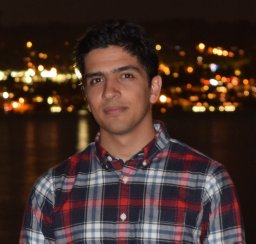 Hessam Bagherinezhad合作论文数Persian Gulf University of Bushehr, Sharif University of Technology4
 devang k naik合作论文数Apple Inc3
 Chen Fang合作论文数Dzine3
 Carlo del Mundo合作论文数NVIDIA3
 Joseph Chet Redmon合作论文数Allen Institute for AI;School of Computer Science & Engineering, University of Washington3
 Iman Mirzadeh合作论文数Apple3
 Linda Shapiro合作论文数Department of Computer Science and Engineering, Paul G. Allen School of Computer Science and Engineering, University of Washington;Department of Electrical and Computer Engineering, Paul G. Allen School of Computer Science and Engineering, University of Washington3Dmitry Belenko合作论文数2Mohammad Hossein Sekhavat合作论文数2
 Huiyu Wang合作论文数FAIR, Meta2
 Duc Hoang合作论文数Apple2Lailin Chen合作论文数2
 peter zatloukal合作论文数2
 Saurabh N. Adya合作论文数Intel Corp, Santa Clara, CA 95051 USA2
 Hossein Mousavi合作论文数Singapore Univ Technol & Design2
 Mahdyar Ravanbakhsh合作论文数Univ Genoa, DITEN, Genoa, Italy2
 Alan L. Yuille合作论文数Department of Cognitive Science, Krieger School of Arts & Sciences, Johns Hopkins University2
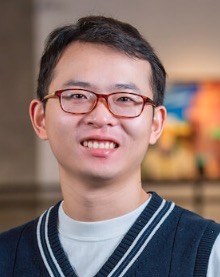 Qingqing Cao合作论文数Apple2
 Moin Nabi合作论文数University of Trento2
 Vivek Ramanujan合作论文数Bill & Melinda Gates Center for Computer Science & Engineering, University of Washington2
 Rik Koncel-Kedziorski合作论文数Apple2
 Zhangyang “Atlas” Wang (汪张扬)合作论文数XTX Markets2
 Dmitrii Marin合作论文数Intrinsic2
 Anat Caspi合作论文数University of California, University of California2
 Devi Parikh合作论文数Yutori2
 Lorenzo Torresani合作论文数Northeastern University;Meta2Jong Hyun Choi合作论文数2
 Shobeir Fakhraei合作论文数Amazon2