Skillful representation of tropical variability and diurnal cycle of precipitation has remained a challenge in global atmosphere models, and often improvements in the variability lead to degradation in the mean-state. Here, we introduce a configuration of the E3SM Atmosphere Model with a new large-scale microphysics scheme and several enhancements to the deep convective scheme that improves the variability. The new configuration improves various modes of convectively-coupled equatorial waves, with increased strength of Kelvin waves and more coherent eastward propagation of the Madden-Julian Oscillation from the Indian Ocean to the central Pacific Ocean. The same configuration also improves the phase of the diurnal cycle of precipitation, particularly over the continental United States in the boreal summer and over Tropical land regions. Previous studies have shown that, individually taken, some of the deep convective enhancements can improve certain aspects of the variability, and here we show that combining their effects can lead to robust improvements in the variability. This model configuration can form the basis for future studies to examine the response of tropical and diurnal variability under various climate states and their relationships with other modes of variability.
To address the effect of stratiform latent heating on meso- to large-scale circulations, an enhanced implementation of the Multiscale Coherent Structure Parameterization (MCSP) is developed for the Met Office Unified Model. MCSP represents the top-heavy stratiform latent heating from under-resolved organized convection in general circulation models. We couple the MCSP with a mass-flux convection scheme (CoMorph-A) to improve storm lifecycle continuity. The improved MCSP trigger is specifically designed for mixed-phase deep convective cloud, combined with a background vertical wind shear, both known to be crucial for stratiform development. We also test a cloud top temperature dependent convective-stratiform heating partitioning, in contrast to the earlier fixed partitioning. Assessments from ensemble weather forecasts and decadal simulations demonstrate that MCSP directly reduces cloud deepening and precipitation areas by moderating mesoscale circulations. Indirectly, it amends tropical precipitation biases, notably correcting dry and wet biases over India and the Indian Ocean, respectively. Remarkably, the scheme outperforms a climate model ensemble by improving seasonal precipitation cycle predictions in these regions. The scheme also improves Madden-Julian Oscillation (MJO) spectra, achieving better alignment with observational and reanalysis data by intensifying the simulated MJO over the Indian Ocean during phases 4 to 5. However, the scheme increases precipitation overestimation over the Western Pacific. Shifting from fixed to temperature-dependent convective-stratiform partitioning reduces the Pacific precipitation overestimation and further improves the seasonal cycle in India. Spatially correlated biases highlight the necessity for advances beyond deterministic approaches to align MCSP with environmental conditions.
Improving weather and climate prediction cannot avoid accurately representing organized convection, as its convective and stratiform components distinctly reshape large-scale circulations via redistributing momentum and heat. For latent heating, the stratiform heating in organized convection shifts to higher altitudes compared to convective regions, presenting a significant challenge for representation in models across scales. The Multiscale Coherent Structural Parameterization (MCSP), introduced by Moncrieff et al. (2017), offers a promising solution by generating the top-heavy profile from convective heating in slantwise layer overturning scenarios. As part of the MCS: PRIME project, the PRIME-MCSP implementation by Zhang et al. (submitted, 2024) couples MCSP with the CoMorph-A convection scheme in the UK Met Office Unified Model with the following improvements: 1) CoMorph permits unstable air to rise from any height, diverging from the conventional CAPE trigger for deep convection, thereby enhancing continuity and facilitating storm tracking. 2) We activate MCSP selectively for deep mixed-phase clouds, recognizing the limited ability of shallow clouds to produce a stratiform component. 3) We configure the global model runs to include both a fixed convective-stratiform heating fraction and a fraction proportional to cloud top temperature. MCS tracks in ensembles of weather runs show that PRIME-MCSP suppresses cloud deepening and reduces precipitation areas by dampening low-level updrafts. 20-year climate simulations show that PRIME-MCSP improves the precipitation seasonal cycle over the Indian Ocean, while increasing the warm-season wet bias over the Western Pacific. Additionally, PRIME-MCSP intensifies the Madden Julian Oscillation (MJO). The model run using a variable convective-stratiform fraction more accurately represents the MJO frequency and aligns better with reanalysis. Future plans focus on the stochastic representation of stratiform effects, steered by insights from data assimilation increments.
The role of topography in the diurnal cycle of precipitation is analyzed during the propagation of a Madden–Julian Oscillation (MJO) event over the Islands of the Maritime Continent using cloud-permitting simulations. The control simulation (CTL) using realistic topography captures the timing, magnitude, and location of the observed diurnal cycle of precipitation. The idealized simulation (FLAT) without topography delays the arrival of peak precipitation by about an hour compared to CTL. The magnitude of area-averaged precipitation remains unchanged in both simulations over areas with altitude < 500 m. The largest difference is found over areas with relatively high topography (> 1000 m), where diurnal rainfall was significantly reduced in FLAT. The comparison between both simulations from a moisture budget analysis shows that 62% of the reduction in precipitation in FLAT is associated with a reduction in vertical advection (VADV), and 31% with a reduction in horizontal advection (HADV) of moisture. Furthermore, the reduction in VADV was equally contributed by the planetary boundary layer (PBL) and the free troposphere, whereas the reduction in HADV was mostly (~ 80%) confined within the PBL. The moisture budget analysis of the MJO event shows that the changes in background winds significantly impact precipitation over lower topography areas. These results also indicate that the changes in moisture advection above PBL are important to better understand and monitor the moisture budget in the troposphere over land in the MC.
Abstract Mesoscale organization of convection is typically not represented in global circulation models, and hence its influence on the global circulation is not accounted for. The heating component of a parameterization that represents the dynamical and physical effects of circulations associated with organized convection, referred to as the multiscale coherent structure parameterization (MCSP), is implemented in the Energy Exascale Earth System Model version 1 (E3SMv1). Numerical simulations are conducted to assess its impact on the simulated climate. Besides E3SMv1 simulations, we performed high‐resolution (2 km) simulations using the Weather Research and Forecasting (WRF) Model to determine the temperature tendencies induced by mesoscale convective systems embedded in deep convection. We tuned the free parameters of the MCSP based on the WRF simulations. MCSP heating enhances Kevin wave spectra in E3SMv1, improves the representation of the Madden‐Julian Oscillation, and reduces precipitation biases over the tropical Pacific.
A midlatitude channel model (MCM), zonally global but meridionally bounded, is constructed for the Northern Hemisphere (0°–360°, 26°N–60°N), based on the Weather Research and Forecasting model. The MCM simulates the midlatitude at a higher resolution than typically possible in a global climate model (GCM). On the other hand, compared to four lateral boundaries in a standard regional or limited‐area model, MCM is bounded on two meridional sides only allowing the simulated atmosphere to develop more freely. Based on a 4‐year simulation at ∼0.33° horizontal grid‐spacing, the MCM realistically captures the annual mean and seasonal cycle of the midlatitude atmosphere and the meridional heat transport by the stationary and transient eddies that dominate the winter weather. Moreover, a comparison of MCM with the ensemble mean of 20 contemporary atmospheric GCMs reveals that the MCM performs better than the GCM ensemble mean. Possible applications of this new modeling configuration are discussed.
The land‐sea contrast in the Maritime Continent (MC) has been found to influence the Madden–Julian Oscillation (MJO). However, the specific contribution from individual islands to the precipitation over the surrounding islands during MJO propagation is not well known. We found that when an island is removed in the presence of lower‐tropospheric westerlies, precipitation increases over islands that are located to its east due to the strengthening of the westerlies. Frictional convergence of the stronger westerlies, aided by Coriolis, leads to an increase in vertical advection of moisture and precipitation over an island located to the east. On the other hand, the reduced heating over the removed island reduces the westerlies and precipitation to the west of the removed island and is consistent with the response of large‐scale circulation to tropical heating. During background easterlies prior to MJO arrival, a systematic decrease in precipitation was found in the surrounding islands to the west side of the removed island. But, on the eastern side of the removed island, no systematic change in precipitation was found. The results imply that changes in large‐scale circulation in response to convection (or a lack thereof) over a removed island may significantly influence precipitation in the neighboring islands. Therefore, biases in model precipitation over an island in the MC may arise from bias in precipitation over a neighboring island. Moreover, the presence of different island chains in the MC has led to a more conducive environment for more overall precipitation over the islands in the MC.
The impact of cold pools on line‐orientated convective systems is assessed using idealized simulations of tropical oceanic convection under weak, moderate, and strong wind shear regimes. Cold pools are weakened by suppressing evaporation in the shallow subcloud layer. Analysis of objectively identified convective systems reveals that the convection with weaker cold pools is more often oriented parallel, rather than perpendicular, to the wind shear. The cold pool‐induced orientation changes are most pronounced in the strong shear environment. Interactions between convective orientation and the tropical atmosphere are assessed. Simulations with shear‐parallel convection demonstrate more top‐of‐atmosphere upwelling longwave radiation and less reflected shortwave radiation due to changes in convective anvils, faster‐propagating larger‐scale gravity waves, narrower cross‐shear moisture distributions, and differences in convective momentum fluxes. The results highlight critical interactions across convective scales, mesoscales, and climate scales, as well as avenues for parameterizing structural modes of mesoscale‐organized convection in global models.
A mesoscale convective system (MCS) occurred on the Mei-Yu front in the Jiang-Huai River Basin of China on 7–8 July 2007, which caused extreme rainfall. The MCS formed in an environment of moderate convective available potential energy, high precipitable water, and an almost unidirectional southwesterly low-level jet. The favorable environment for MCS initiation and development featured a low-level convergence between northeasterly wind north of the Mei-Yu front and warm-moist southwesterly airflow. The evaporative cooling generated cold outflow which continuously promoted new convection at the leading edge of the MCS. WRF model simulations reproduced the observed back-building initiation and upscale organization. The flow-parallel MCS was affected by the low-level jet, vertical wind shear, and near-surface cold outflow in a stable nocturnal planetary boundary layer. Stratiform precipitation was reinforced by the downstream propagation of cumulonimbus and advection of ice-phase hydrometeors by the mid-upper level wind. The quasi-stationarity was a product of subtle dynamical balance between the near-surface cold outflow and the background low-level southerly flow. Sensitivity experiments addressed the role of near-surface outflow and diurnal forcing in MCS organization.
 Changhai Liu合作论文数36
 Wojciech Grabowski合作论文数Mesoscale and Microscale Meteorology Laboratory, National Center for Atmospheric Research25
 Jimy Dudhia合作论文数Mesoscale and Microscale Meteorology Laboratory, National Center for Atmospheric Research23
 Xiaoqing Wu合作论文数Department of Geological & Atmospheric Sciences, Iowa State University15
 Duane Waliser合作论文数Department of Atmospheric and Oceanic Sciences, University of California, Los Angeles;Joint Institute for Regional Earth System Science and Engineering, University of California, Los Angeles;Earth Science and Technology Directorate, Jet Propulsion Laboratory, California Institute of Technology;Science Division, Jet Propulsion Laboratory, California Institute of Technology14Ji Yano合作论文数9
 Haochen Tan合作论文数Argonne Natl Lab8Wei-Kuo Tao合作论文数Mesoscale Atmospheric Processes Laboratory, Goddard Space Flight Center, National Aeronautics and Space Administration;Department of Atmospheric Physics, National Central University;Department of Atmospheric & Oceanic Science Physics, University of Maryland8
 Todd Lane合作论文数ARC Centre of Excellence for Climate Extremes, School of Earth Sciences, University of Melbourne8
 Pallav Ray合作论文数RSMAS/MPO, University of Miami8
 Richard H. Johnson合作论文数Department of Atmospheric Science, Colorado State University6
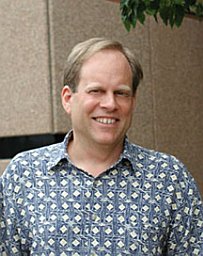 David B. Parsons合作论文数School of Meteorology, University of Oklahoma, Norman, Oklahoma6Na Crook合作论文数5MJ MILLER合作论文数5Martin Miller合作论文数5
 James Hack合作论文数Oak Ridge National Laboratory5
 Franco Molteni合作论文数European Center For Medium Range Weather Forecasts;Earth System Physics Section, Abdus Salam International Centre for Theoretical Physics5Melvyn a Shapiro合作论文数5
 Bradford S. Barrett合作论文数University of Oklahoma;University of Graz;University of Oklahoma, University of Graz5
 Someshwar Das合作论文数Center for Medium Range Weather Forecasting, National5
 Jun-Ichi Yano合作论文数Center National de Recherches Météorologiques, Météo-France, French National Centre for Scientific Research5
 Richard E. Carbone合作论文数National Center for Atmospheric Research5X. Wu合作论文数4
 James C. McWilliams合作论文数Institute of the Environment & Sustainability, University of California, Los Angeles;Department of Atmospheric and Oceanic Sciences, University of California, Los Angeles;Nanjing University of Information Science & Technology4
 Andrew J. Majda合作论文数Courant Institute of Mathematical Sciences, New York University4
 Alan J Thorpe (Alan Thorpe)合作论文数European Centre for Medium-Range Weather Forecasts4Arlene G. Laing合作论文数4
 Cindy L. Bruyere合作论文数4Joseph Tribbia合作论文数4
 Steven K Krueger合作论文数Department of Atmospheric Sciences, University of Utah4
 Wen-Wen Tung合作论文数National Center for Atmospheric Research4
 Wojciech W. Grabowski合作论文数National Center for Atmospheric Research4
 Boualem Khouider合作论文数Dept Math & Stat, Univ Victoria4T. Kiehl合作论文数3benjamin l lamptey合作论文数3jim caughey合作论文数3Hsiaoming Hsu合作论文数3
 Leah Grant合作论文数Department of Atmospheric Science, Colorado State University3
 Michael S. Pritchard合作论文数Department of Earth System Science, School of Physical Sciences, University of California Irvine3
 L. Ruby Leung合作论文数Pacific Northwest National Laboratory3
 Judith A. Curry合作论文数School of Earth & Atmospheric Sciences, College of Sciences, Georgia Institute of Technology3
 Christian Jakob合作论文数ARC Centre of Excellence for Climate Extremes, Monash University;School of Earth, Atmosphere and Environment, Monash University3
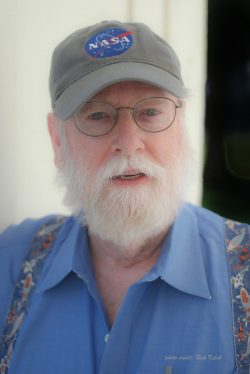 William B Rossow合作论文数Department of Electrical Engineering, City College of New York3M. Konaté合作论文数3
 Julia Mary Slingo (Julia Slingo)合作论文数Department of Meteorology, University of Reading;Met Office3
 James W. Hurrell合作论文数Department of Atmospheric Science, Colorado State University;National Center for Atmospheric Research3
 Van Den Heever合作论文数Department of Atmospheric Science, Colorado State University3
 Jiwen Fan合作论文数Environmental Science Division, Argonne National Laboratory3
 Chris Bretherton合作论文数Department of Atmospheric Sciences, College of the Environment, University of Washington;Department of Applied Mathematics, College of Arts and Sciences, University of Washington;Vulcan Inc3




