Mesh generation lies at the interface of geological modeling and reservoir simulation. Highly skewed or very small grid cells may be necessary to accurately capture the geometry of geological features, but the resulting poorly scaled or small grid cells can have a substantial negative impact on simulator accuracy and speed. One way to minimize numerical errors caused by gridding complex structures is to simulate on high-quality Voronoi meshes, which reduce grid orientation effects in fluid flow. This work presents a complete methodology to create Voronoi simulation grids, model fluid flow in complex geological systems, and visualize the results. A recently developed Voronoi meshing method that can automatically generate provably good unstructured meshes that conform to input surfaces creating closed volumes is used. Initially an analytical benchmark simulation is presented to validate the quality of the meshes and simulation results and demonstrate the superiority of simulation results using Voronoi meshes over flexed-hexahedral meshes on a domain with internal features. Next, meshes are created for test structures representing four of the most common geological features in the subsurface: layering, pinch-out, an interior lens that tapers to zero thickness on all sides and a fault with offset. Two benchmark flow simulations are run for each test structure. Finally, a realistic geological example for CO2 injection into an anticline is simulated. Three realizations of the Voronoi mesh at the same resolution are generated for the simulations. Each mesh is highly refined near the injection wells and coarse in areas of less interest. These three meshes are used to model the CO2 plume in the subsurface as it migrates to the top of the structure and then fills downward. Simulations on the meshes with randomly generated elements inside the input volumes each give slightly different fingering patterns for the viscous-unstable buoyant gas flow. The results presented in this work show a promising step towards utilizing fully automated Voronoi meshing for subsurface flow simulations in complex geology.
problem. Given an ϵ-sample on the bounding surface, with a weak σ-sparsity condition, we work with the balls of radius δ times the local feature size centered at each sample. The corners of this union of balls are the Voronoi sites, on both sides of the surface. The facets common to cells on opposite sides reconstruct the surface. For appropriate values of ϵ, σ and δ, we prove that the surface reconstruction is isotopic to the bounding surface. With the surface protected, the enclosed volume can be further decomposed into an isotopic volume mesh of fat Voronoi cells by generating a bounded number of sites in its interior. Compared to state-of-the-art methods based on clipping, VoroCrust cells are full Voronoi cells, with convexity and fatness guarantees. Compared to the power crust algorithm, VoroCrust cells are not filtered, are unweighted, and offer greater flexibility in meshing the enclosed volume by either structured grids or random samples.
The embedded ensemble propagation approach introduced in [49] has been demonstrated to be a powerful means of reducing the computational cost of sampling-based uncertainty quantification methods, particularly on emerging computational architectures. A substantial challenge with this method however is ensemble-divergence, whereby different samples within an ensemble choose different code paths. This can reduce the effectiveness of the method and increase computational cost. Therefore grouping samples together to minimize this divergence is paramount in making the method effective for challenging computational simulations. In this work, a new grouping approach based on a surrogate for computational cost built up during the uncertainty propagation is developed and applied to model diffusion problems where computational cost is driven by the number of (preconditioned) linear solver iterations. The approach is developed within the context of locally adaptive stochastic collocation methods, where a surrogate for the number of linear solver iterations, generated from previous levels of the adaptive grid generation, is used to predict iterations for subsequent samples, and group them based on similar numbers of iterations. The effectiveness of the method is demonstrated by applying it to highly anisotropic diffusion problems with a wide variation in solver iterations from sample to sample. It extends the parameter-based grouping approach developed in [17] to more general problems without requiring detailed knowledge of how the uncertain parameters affect the simulation's cost, and is also less intrusive to the simulation code.
Polyhedral meshes are increasingly becoming an attractive option with particular advantages over traditional meshes for certain applications. What has been missing is a robust polyhedral meshing algorithm that can handle broad classes of domains exhibiting arbitrarily curved boundaries and sharp features. In addition, the power of primal-dual mesh pairs, exemplified by Voronoi-Delaunay meshes, has been recognized as an important ingredient in numerous formulations. The VoroCrust algorithm is the first provably-correct algorithm for conforming polyhedral Voronoi meshing for non-convex and non-manifold domains with guarantees on the quality of both surface and volume elements. A robust refinement process estimates a suitable sizing field that enables the careful placement of Voronoi seeds across the surface circumventing the need for clipping and avoiding its many drawbacks. The algorithm has the flexibility of filling the interior by either structured or random samples, while preserving all sharp features in the output mesh. We demonstrate the capabilities of the algorithm on a variety of models and compare against state-of-the-art polyhedral meshing methods based on clipped Voronoi cells establishing the clear advantage of VoroCrust output.
This report summarizes the work performed under the project "Linear Programming in Strongly Polynomial Time." Linear programming (LP) is a classic combinatorial optimization problem heavily used directly and as an enabling subroutine in integer programming (IP). Specifically IP is the same as LP except that some solution variables must take integer values (e.g. to represent yes/no decisions). Together LP and IP have many applications in resource allocation including general logistics, and infrastructure design and vulnerability analysis. The project was motivated by the PI's recent success developing methods to efficiently sample Voronoi vertices (essentially finding nearest neighbors in high-dimensional point sets) in arbitrary dimension. His method seems applicable to exploring the high-dimensional convex feasible space of an LP problem. Although the project did not provably find a strongly-polynomial algorithm, it explored multiple algorithm classes. The new medial simplex algorithms may still lead to solvers with improved provable complexity. We describe medial simplex algorithms and some relevant structural/complexity results. We also designed a novel parallel LP algorithm based on our geometric insights and implemented it in the Spoke-LP code. A major part of the computational step is many independent vector dot products. Our parallel algorithm distributes the problem constraints across processors. Current commercial and high-quality free LP solvers require all problem details to fit onto a single processor or multicore. Our new algorithm might enable the solution of problems too large for any current LP solvers. We describe our new algorithm, give preliminary proof-of-concept experiments, and describe a new generator for arbitrarily large LP instances.
Polyhedral meshes are increasingly becoming an attractive option with particular advantages over traditional meshes for certain applications. What has been missing is a robust polyhedral meshing algorithm that can handle broad classes of domains exhibiting arbitrarily curved boundaries and sharp features. In addition, the power of primal-dual mesh pairs, exemplified by Voronoi-Delaunay meshes, has been recognized as an important ingredient in numerous formulations. The VoroCrust algorithm is the first provably-correct algorithm for conforming polyhedral Voronoi meshing for non-convex and non-manifold domains with guarantees on the quality of both surface and volume elements. A robust refinement process estimates a suitable sizing field that enables the careful placement of Voronoi seeds across the surface circumventing the need for clipping and avoiding its many drawbacks. The algorithm has the flexibility of filling the interior by either structured or random samples, while preserving all sharp features in the output mesh. We demonstrate the capabilities of the algorithm on a variety of models and compare against state-of-the-art polyhedral meshing methods based on clipped Voronoi cells establishing the clear advantage of VoroCrust output.
The Spent Fuel and Waste Science and Technology (SFWST) Campaign of the U.S. Department of Energy (DOE) Office of Nuclear Energy (NE), Office of Spent Fuel & Waste Disposition (SFWD) is conducting research and development (R&D) on geologic disposal of spent nuclear fuel (SNF) and highlevel nuclear waste (HLW). A high priority for SFWST disposal R&D is to develop a disposal system modeling and analysis capability for evaluating disposal system performance for nuclear waste in geologic media. This report describes fiscal year (FY) 2020 advances of the Geologic Disposal Safety Assessment (GDSA) Framework and PFLOTRAN development groups of the SFWST Campaign. The common mission of these groups is to develop a geologic disposal system modeling capability for nuclear waste that can be used to probabilistically assess the performance of disposal options and generic sites. The capability is a framework called GDSA Framework that employs high-performance computing (HPC) capable codes PFLOTRAN and Dakota.
This manuscript comprises the final report for the 1-year, FY19 LDRD project "Rigorous Data Fusion for Computationally Expensive Simulations," wherein an alternative approach to Bayesian calibration was developed based a new sampling technique called VoroSpokes. Vorospokes is a novel quadrature and sampling framework defined with respect to Voronoi tessellations of bounded domains in R d developed within this project. In this work, we first establish local quadrature and sampling results on convex polytopes using randomly directed rays, or spokes, to approximate the quantities of interest for a specified target function. A theoretical justification for both procedures is provided along with empirical results demonstrating the unbiased convergence in the resulting estimates/samples. The local quadrature and sampling procedures are then extended to global procedures defined on more general domains by applying the local results to the cells of a Voronoi tessellation covering the domain in consideration. We then demonstrate how the proposed global sampling procedure can be used to define a natural framework for adaptively constructing Voronoi Piecewise Surrogate (VPS) approximations based on local error estimates. Finally, we show that the adaptive VPS procedure can be used to form a surrogate model approximation to a specified, potentially unnormalized, density function, and that the global sampling procedure can be used to efficiently draw independent samples from the surrogate density in parallel. The performance of the resulting VoroSpokes sampling framework is assessed on a collection of Bayesian inference problems and is shown to provide highly accurate posterior predictions which align with the results obtained using traditional methods such as Gibbs sampling and random-walk Markov Chain Monte Carlo (MCMC). Importantly, the proposed framework provides a foundation for performing Bayesian inference tasks which is entirely independent from the theory of Markov chains.
Blue noise sampling has proved useful for many graphics applications, but remains underexplored in high-dimensional spaces due to the difficulty of generating distributions and proving properties about them. We present a blue noise sampling method with good quality and performance across different dimensions. The method, spoke-dart sampling, shoots rays from prior samples and selects samples from these rays. It combines the advantages of two major high-dimensional sampling methods: the locality of advancing front with the dimensionality-reduction of hyperplanes, specifically line sampling. We prove that the output sampling is saturated with high probability, with bounds on distances between pairs of samples and between any domain point and its nearest sample. We demonstrate spoke-dart applications for approximate Delaunay graph construction, global optimization, and robotic motion planning. Both the blue-noise quality of the output distribution and the adaptability of the intermediate processes of our method are useful in these applications.
We study the problem of decomposing a volume bounded by a smooth surface into a collection of Voronoi cells. Unlike the dual problem of conforming Delaunay meshing, a principled solution to this problem for generic smooth surfaces remained elusive. VoroCrust leverages ideas from α-shapes and the power crust algorithm to produce unweighted Voronoi cells conforming to the surface, yielding the first provably-correct algorithm for this problem. Given an ϵ-sample on the bounding surface, with a weak σ-sparsity condition, we work with the balls of radius δ times the local feature size centered at each sample. The corners of this union of balls are the Voronoi sites, on both sides of the surface. The facets common to cells on opposite sides reconstruct the surface. For appropriate values of ϵ, σ and δ, we prove that the surface reconstruction is isotopic to the bounding surface. With the surface protected, the enclosed volume can be further decomposed into an isotopic volume mesh of fat Voronoi cells by generating a bounded number of sites in its interior. Compared to state-of-the-art methods based on clipping, VoroCrust cells are full Voronoi cells, with convexity and fatness guarantees. Compared to the power crust algorithm, VoroCrust cells are not filtered, are unweighted, and offer greater flexibility in meshing the enclosed volume by either structured grids or random samples.
Over the past decade, polyhedral meshing has been gaining popularity as a better alternative to tetrahedral meshing in certain applications. Within the class of polyhedral elements, Voronoi cells are particularly attractive thanks to their special geometric structure. What has been missing so far is a Voronoi mesher that is sufficiently robust to run automatically on complex models. In this video, we illustrate the main ideas behind the VoroCrust algorithm, highlighting both the theoretical guarantees and the practical challenges imposed by realistic inputs.
The classical problem of calculating the volume of the union of d-dimensional balls is known as "Union Volume." We present line-sampling approximation algorithms for Union Volume. Our methods may be extended to other Boolean operations, such as setminus; or to other shapes, such as hyper-rectangles. The deterministic, exact approaches for Union Volume do not scale well to high dimensions. However, we adapt several of these exact approaches to approximation algorithms based on sampling. We perform local sampling within each ball using lines. We have several variations, depending on how the overlapping volume is partitioned, and depending on whether radial, axis-aligned, or other line patterns are used. Our variations fall within the family of Monte Carlo sampling, and hence have about the same theoretical convergence rate, 1 /$\sqrt{M}$, where M is the number of samples. In our limited experiments, line-sampling proved more accurate per unit work than point samples, because a line sample provides more information, and the analytic equation for a sphere makes the calculation almost as fast. We performed a limited empirical study of the efficiency of these variations. We suggest a more extensive study for future work. We speculate that different ball arrangements, differentiated by the distribution of overlaps in terms of volume and degree, will benefit the most from patterns of line samples that preferentially capture those overlaps. Acknowledgement We thank Karl Bringman for explaining his BF-ApproxUnion (ApproxUnion) algorithm [3] to us. We thank Josiah Manson for pointing out that spoke darts oversample the center and we might get a better answer by uniform sampling. We thank Vijay Natarajan for suggesting random chord sampling. The authors are grateful to Brian Adams, Keith Dalbey, and Vicente Romero for useful technical discussions. This work was sponsored by the Laboratory Directed Research and Development (LDRD) Program at Sandia National Laboratories. This material is based upon work supported by the U.S. Department of Energy, Office of Science, Office of Advanced Scientific Computing Research (ASCR), Applied Mathematics Program. Sandia National Laboratories is a multi-mission laboratory managed and operated by National Technology and Engineering Solutions of Sandia, LLC., a wholly owned subsidiary of Honeywell International, Inc., for the U.S. Department of Energy's National Nuclear Security Administration under contract DE-NA0003525.
Over the past decade, polyhedral meshing has been gaining popularity as a better alternative to tetrahedral meshing in certain applications. Within the class of polyhedral elements, Voronoi cells are particularly attractive thanks to their special geometric structure. What has been missing so far is a Voronoi mesher that is sufficiently robust to run automatically on complex models. In this video, we illustrate the main ideas behind the VoroCrust algorithm, highlighting both the theoretical guarantees and the practical challenges imposed by realistic inputs.
Surrogate models (metamodels) are indispensable for numerical simulations over high-dimensional spaces. They typically use well-selected samples of the expensive code runs to produce a cheap-to-evaluate model. We introduce a new method to construct credible global surrogates with local accuracy without dictating where to sample: Voronoi piecewise surrogate (VPS) models. The key component in our method is to implicitly decompose the parameter space into cells using the Voronoi tessellation around the sample points as seeds, via an approximate dual Delaunay graph. While explicit domain decompositions have storage and processing requirements that exponentially grow with dimension, VPS construction counts on the implicitness of Voronoi cells and the one-to-one mapping between seeds and cells, regardless of dimension, to avoid this curse of dimensionality. Each implicit cell can then use information provided by its neighbors to build its own local piece of the global surrogate. The piecewise locality breaks down the high-order approximation problem into a set of low-order problems, with better immunity against numerical oscillations. Domain points can be assigned to cells using a simple nearest seed search. Furthermore, a VPS model is naturally updated with the addition of new samples, can handle smooth and discontinuous functions, and can adopt a parallel implementation. We demonstrate the application of VPS models to numerical integration and probability of failure estimation problems.
 Scott A. Mitchell合作论文数Sandia National Laboratories34
 John Owens合作论文数Department of Electrical and Computer Engineering, University of California, Davis22
 Ahmad Rushdi合作论文数20
 Ahmed H. Mahmoud合作论文数Dept. of Electrical and Computer Engineering, University of California, Davis19
 Anjul Patney合作论文数NVIDIA16
 Muhammad A. Awad合作论文数Alexandria University11
 Laura Painton Swiler合作论文数Center for Computing Research, Sandia National Laboratories10
 Chandrajit Bajaj合作论文数Department of Computer Science, College of Natural Sciences, The University of Texas at Austin;Center for Computational Visualization, The Oden Institute of Computational Engineering and Sciences, The University of Texas at Austin;NuTechnix Consultants Inc.10
 Robert Andrew Davidson合作论文数9
 Ahmed Abdelkader合作论文数Google Research8P. Knupp合作论文数6
 Tara C. Laforce合作论文数Department of Earth Science and Engineering, Imperial College London6Patrick M. Knupp合作论文数in Albuquerque, New Mexico5Rosemary Leone合作论文数4Eduardo Basurto合作论文数4
 Li-Yi Wei (魏立一)合作论文数Adobe Research4Vicente J. Romero合作论文数4
 Zeyad Mohammed Abdulrazzaq合作论文数Department of Public Health and Epidemiology;University of Birmingham;Department of Public Health and Epidemiology, University of Birmingham4Paul E. Mariner合作论文数4Roger L. Davis合作论文数4Keith Dalbey合作论文数3
 Richard Jayne合作论文数Virginia Polytech Inst & State Univ, Dept Geosci, Blacksburg, VA 24061 USA3
 Dinesh Manocha合作论文数Department of Computer Science, University of Maryland3Eric Mestreau合作论文数Science Applications International Corporation3
 Chonhyon Park合作论文数Brooks Comp Sci Bldg, Univ N Carolina3
 Alexander Rand合作论文数University of Texas-Austin3Eric T. Phipps合作论文数Sandia National Laboratories, Albuquerque, NM3SA Mitchell合作论文数2Yongjie Zhang合作论文数2Spencer Jordan合作论文数2Heeho D. Park合作论文数2
 Marta D'Elia合作论文数Computational Science and Analysis, Sandia National Laboratories2Frank V. Perry合作论文数Earth and Environmental Sciences Division;Los Alamos National Laboratory;Earth and Environmental Sciences Division, Los Alamos National Laboratory2
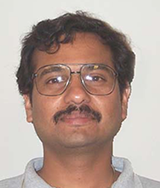 Jaideep Ray合作论文数Sandia National Laboratories2
 Roland W. Freund合作论文数Department of Mathematics, University of California, Davis2Saikat Dey合作论文数2
 Kyung Won Chang合作论文数2
 Stanley Tzeng合作论文数Google2
 Saman Ashkiani合作论文数University of California, Davis2
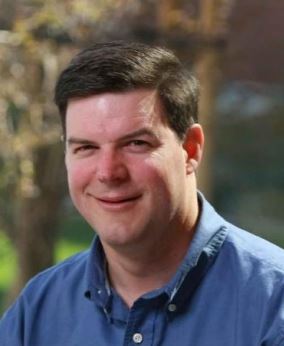 Glenn E. Hammond合作论文数Hydrology Group, Environmental Technology Division, Pacific Northwest National Laboratory2Vitus J. Leung合作论文数2Shawn English合作论文数1Simon X. Zou合作论文数1Daniel Seidl合作论文数1Jacob Harvey合作论文数1Rosie Leone合作论文数1William Bohnhoff合作论文数1
 Misarah Abdelaziz合作论文数Sch Elect & Mech Engn, Univ Adelaide1Alex Salazar合作论文数1




