Introduction and Objective: FIB-4 followed by VCTE is recommended to detect advanced fibrosis (≥F3). LIVERFASt (Fibronostics U.S, Inc.) is a novel blood-based test reimbursed to identify liver fibrosis in US.The study aimed to compare the performance of LIVERFASt and FIB-4, sequentially with VCTE, for the identification of ≥F3 fibrosis including analyses in patients with type 2 diabetes (T2DM). Methods: This retrospective study included MASLD patients from a tertiary hepatology center with LIVERFASt, FIB-4, VCTE, and liver biopsy within 6-month. Performances were assessed using sensitivity, specificity, PPV, NPV, and number needed to diagnose (NND). Results: LIVERFASt outperformed FIB-4 for identifying ≥F3 fibrosis, showing almost twice higher sensitivity and higher NPV at the high FIB-4 cut-off (>2.67) and higher specificity and PPV at the recommended cut-off (≥1.3 [2.0]). The combination LIVERFASt and VCTE achieved higher PPV (90.4%) than FIB-4 and VCTE (76%) with similar NPV. In discordant cases with VCTE, biopsy confirmed LIVERFASt more often than FIB-4. In the T2DM subgroup, LIVERFASt identified a similar number of ≥F3 cases as FIB-4 but required significantly fewer VCTE referrals. Conclusion: LIVERFASt outperformed FIB-4 and its integration into MASLD pathways may enhance screening efficiency, including in high-risk T2DM patients. Disclosure M. Decraecker: None. J. Hiriart: None. M. Irles-Depe: None. J. Foucher: None. J. Hu: Employee; Current; Fibronostics. R. Quiambao: Employee; Current; Fibronostics. A. Asgharpour: None. M. Munteanu: Employee; Current; FIBRONOSTICS. V. DeLedinghen: Employee; Current; Echosens. Research Support; Ended; Fibronostics.
AIM:This study evaluates the diagnostic performance of the novel blood-based device, LIVERFASt to detect fibrosis stages in patients with metabolic dysfunction-associated steatotic liver disease (MASLD), including those with type 2 diabetes (T2DM), compared to FIB-4 in a subgroup analysis. METHODS:LIVERFASt is computed with 10 blood biomarkers and four anthropometric measures and provides a quantitative score (0.00-1.00) to stage cirrhosis (F4), advanced fibrosis (≥F3), and clinically significant fibrosis (≥F2). Three cohorts of patients (two retrospective and one prospective) from tertiary centers in Europe and the U.S. with histological-proven biopsy were used to assess LIVERFASt and FIB-4 diagnostic performance using area under the receiver operating curve (AUROC), sensitivity (Sn), specificity, and predictive values (PV) for varying fibrosis prevalence levels. RESULTS:497 MASLD adult patients were included (median age 56 years, 56.7% female, 50.3% T2DM, 44.1% advanced fibrosis, and 20.1% cirrhosis). In the pooled analysis, the AUROCs for fibrosis stages F4, ≥F3, and ≥F2 were: 0.868, 0.846, 0.748, as well as for the T2DM subgroup (n=250): 0.846, 0.798, 0.736, respectively. For 35% advanced fibrosis prevalence, the positive/negative PVs were 77.2%/81.3% for the overall cohort and 65.52%/79.81% for the subgroup with tT2DM, respectively. At high (90%) to low (1%) advanced fibrosis prevalences, the positive and negative PVs ranged from 93% to 4.28% and from 43.06% to 99.73%, respectively. For F4 and ≥F3 fibrosis stages, LIVERFASt outperformed FIB-4: AUROC 0.870 vs 0.851 and 0.874 vs 0.821 (p<0.01), with Sn 74.07 vs 48.15 and 65.54 vs 37.29, respectively. CONCLUSIONS:LIVERFASt is a highly sensitive and clinically useful diagnostic test for staging fibrosis in MASLD patients, including those with T2DM and has a higher Sn for detecting advanced fibrosis when compared with FIB-4.
BACKGROUND AND AIM:LIVERSTAT is an artificial intelligence-based noninvasive test devised to screen for and provide risk stratification for metabolic dysfunction-associated fatty liver disease (MAFLD) by using simple blood biomarkers and anthropometric measurements. We aimed to study LIVERSTAT in patients with MAFLD and to explore its role for the diagnosis of advanced fibrosis. METHODS:This is a retrospective study of data from MAFLD patients who underwent a liver biopsy. Patients with type 2 diabetes who underwent transient elastography and had liver stiffness measurement (LSM) < 5 kPa were included as patients with no fibrosis. Among these patients, controlled attenuation parameter <248 dB/m was considered as no steatosis. The LIVERSTAT results were generated based on a proprietary algorithm, blinded to the histological and LSM data. RESULTS:The data for 350 patients were analyzed (mean age 53 years, 45% male, advanced fibrosis 22%). The sensitivity, specificity, positive predictive value, negative predictive value, and misclassification rate of LIVERSTAT to diagnose advanced fibrosis were 90%, 50%, 30%, 95%, and 42%, respectively. The corresponding rates for Fibrosis-4 score (FIB4) were 56%, 83%, 44%, 89%, and 22%, respectively. When LSM was used as a second test, the corresponding rates for LIVERSTAT were 60%, 97%, 76%, 94%, and 8%, respectively, while the corresponding rates for FIB4 were 38%, 99%, 83%, 89%, and 11%, respectively. CONCLUSION:LIVERSTAT had a higher negative predictive value compared with FIB4 and a lower misclassification rate compared with FIB4 when used in a two-step approach in combination with LSM for the diagnosis of advanced fibrosis.
Background: LiverSTAT (LST) is a new blood test for MASLD stratification. Aims: To retrospectively compare the efficacy of two combinations in one-step approach with two combinations: LST&LSM versus FIB-4&LSM, for the identification of advanced fibrosis (F3F4) in a multicenter multiethnic meta-dataset of MASLD patients. Methods: Retrospective data from 5 hepatology centers from MASLD patients that underwent liver biopsy (LB) along with LSM, FIB-4 and LST. Efficiency has been assessed using concordance rates, number needed to screen (NNS) on subject with LB F3F4. Results: Data from 786 patients (22%US, 39%Asia, 39%EU) was analyzed [age 57.1years, female 54.5%, BMI 31.4, ALT 52U/L]. LB prevalence of F3F4 was 32.8%.In the overall cohort, LB confirmed F3F4 among concordant LST&LSM and FIB-4&LSM, respectively, in 107/142(75%) vs 54/64(84.4%) with a screening efficiency (NNS) of 1.8 vs 2.2; the combination LST&LSM correctly identified twice more F3F4 patients than FIB-4&LSM.In the subgroup with LB≥20mm, LB confirmed F3F4 among concordant LST&LSM and FIB-4&LSM in 43/50(86%) vs 30/33(90%), NNS 1.6 and 1.8, respectively; the combination LST&LSM correctly identified 43% more F3F4 patients than FIB-4&LSM.DFP rate was higher with FIB4-&LSM than with LST&LSM (11.3% vs. 7%). Conclusion: The combination LST&LSM outperforms FIB-4&LSM for the identification of MASH advanced fibrosis F3F4. Disclosure N. Alkhouri: Advisory Panel; Madrigal Pharmaceuticals, Inc., 89bio, Inc. Speaker's Bureau; Alexion Pharmaceuticals, Inc., Gilead Sciences, Inc. Advisory Panel; Altimmune Inc. Consultant; Boehringer-Ingelheim. Advisory Panel; Novo Nordisk. R. Nadeem: None. P. Leff: None. P. Mantry: None. R. Quiambao: Other Relationship; Fibronostics US Inc. J. Dupuy: None. M. Munteanu: Employee; Fibronostics. V. De Ledinghen: Advisory Panel; Fibronostics.
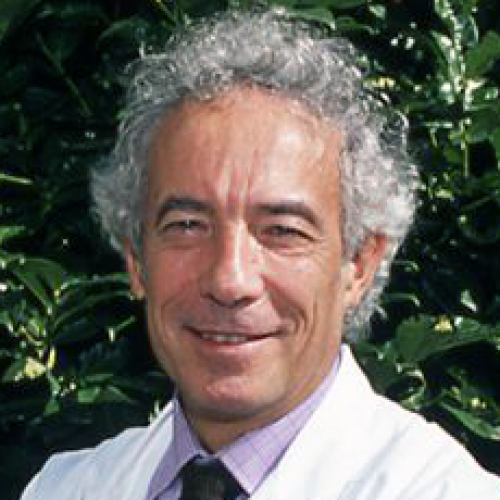 Thierry Poynard合作论文数Centre de Recherche Saint-Antoine - Paris, Hospital Saint-Antoine;Sorbonne University, INSERM;Pitié-Salpêtrière Hospital216
 Vlad Ratziu合作论文数Sorbonne University159
 Yen Ngo合作论文数114
 Dominique Damais-Thabut合作论文数Hôpital Pitié-Salpêtrière;Hôpital Saint-Antoine;Sorbonne-Université95Djamila Messous合作论文数74Françoise Imbert-Bismut合作论文数68Frédéric Charlotte合作论文数Department of Pathology, Sorbonne University55Pascal Lebray合作论文数42Vincent Thibault合作论文数38Francoise Imbert-Bismut合作论文数38Yves M. Benhamou合作论文数Clinique Victor Hugo36Joseph Moussalli合作论文数36Olivier Deckmyn合作论文数36
 Hugo Perazzo合作论文数35Victor De Ledinghen合作论文数29Julien Massard合作论文数28Rudler Marika合作论文数23
 Rachel Morra合作论文数21Chantal Housset合作论文数20Ronald Quiambao合作论文数18
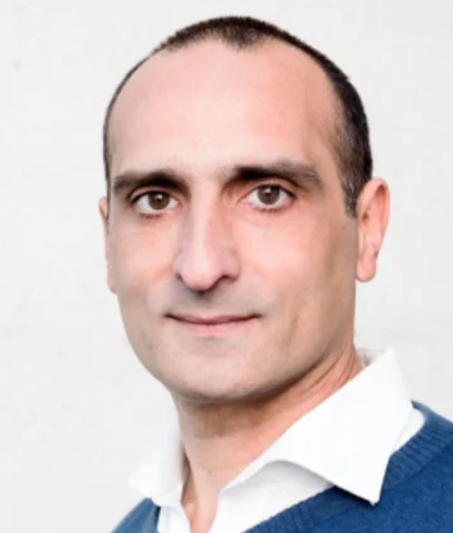 Patrick Ingiliz合作论文数Zentrum für Infektiologie Berlin-Prenzlauer Berg;Service d'Hépato-Gastro-Entérologie, Hôpitaux Universitaires Henri Mondor17Sylvie Naveau合作论文数17Y. Benhamou合作论文数15philippe halfon合作论文数13
 Marc Bourlière合作论文数Hepato-Gastroenterology Department, Hospital Saint Joseph13
 Dominique Bonnefont-Rousselot合作论文数Hôpitaux universitaires Pitié-Salpêtrière;Faculté de Pharmacie de Paris, Université de Paris13Juliette Foucher合作论文数12
 Valentina Peta合作论文数11An Ngo合作论文数10
 Didier Lebrec合作论文数Inserm10
 Imtiaz Alam合作论文数10Jean Marie Castille合作论文数10Raluca Pais合作论文数10
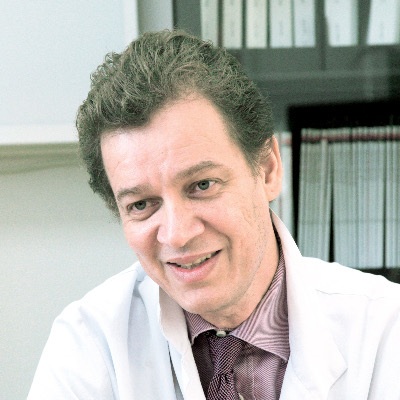 Philippe Mathurin合作论文数Faculté de Médecine, Institute for Translational Research in Inflammation;Department of Hepatology and Gastroenterology, University Hospital of Lille10M. Rudler合作论文数9Monneret Denis合作论文数Department of Metabolic Biochemistry, La Pitié Salpêtrière-Charles Foix University Hospital (AP-HP),9
 Fabien Zoulim合作论文数Universite Claude Bernard Lyon 19Laurent Castera合作论文数9Fabienne Drane合作论文数8
 Pierre Bedossa合作论文数Liverpat8Fedchuk Larysa合作论文数8Pais Raluka合作论文数8
 Julien Vergniol合作论文数8J. K. Albrecht合作论文数7Merrouche Wassil合作论文数7Hiriart Jean-Baptiste合作论文数7Olivier Lucidarme合作论文数7




