This study builds upon and extends previous research into the phenomenon of copyright anxiety, initially measured through the Copyright Anxiety Scale (CAS) developed by Wakaruk et al. (2021). The primary aims are to explore levels of copyright anxiety within the higher education sectors of the UK and Canada, and to examine whether copyright law and the way it is perceived in these sectors inhibits innovative research and teaching practices. Using an adapted version of the copyright anxiety scale survey, we collected responses from over 500 participants in the UK and Canada during the summer of 2023. Additionally, we conducted seven focus groups with 32 individuals to gain deeper insights into the phenomenon and explore potential interventions. Our findings indicate that those working in higher education are more worried about copyright than those outside the sector. Copyright concerns can cause significant anxiety and emotional labor, which may lead to legal chill that hampers teaching, research, and the provision of library programs and services. For example, academics may use less appropriate materials due to copyright concerns, negatively affecting pedagogical impact. Librarians, often acting as copyright advisors, may experience heightened anxiety, leading them to provide more risk-averse guidance to users and decision-makers. Future publications from this research will further develop a coding frame and explore options for mitigating copyright anxiety and chill in this sector.
Podcasting by practitioners in Higher Education to support the development of peers is becoming more popular and yet, unlike its use in learning and assessment, remains little researched. This paper identifies some of the reasons that bring HE practitioners to podcast for professional development, some techniques and suggestions for making successful podcasts, and what the essential characteristics are of the medium that leads to podcasting being an effective tool for professional development. The discussion cites extensive quotes from interviews with creators of four podcasts aimed at HE practitioners, in order to give a rich account of the experiences of podcasting.
In this work, we present the recursive camera-painting approach to obtain painterly smudging in real-time rendering applications. We have implemented recursive camera painting as both a GPU-based ray-tracing and in a Virtual Reality game environment. Using this approach, we can obtain dynamic 3D Paintings in real-time. In a camera painting, each pixel has a separate associated camera whose parameters are computed from a corresponding image of the same size. In recursive camera painting, we use the rendered images to compute new camera parameters. When we apply this process a few times, it creates painterly images that can be viewed as real-time 3D dynamic paintings. These visual results are not surprising since multi-view techniques help to obtain painterly effects.
Discover the world’s best science and medicine | Nature.com
Discover the world’s best science and medicine | Nature.com
Internet-based research is increasingly important for conservation science and has wide-ranging applications and contexts, including culturomics, illegal wildlife trade, and citizen science. However, online research methods pose a range of ethical and legal challenges. Online data may be protected by copyright, database rights, or contract law. Privacy rights may also restrict the use and access of data, as well as ethical requirements from institutions. Online data have real-world meaning, and the ethical treatment of individuals and communities must not be marginalized when conducting internet-based research. As ethics frameworks originally developed for biomedical applications are inadequate for these methods, we propose that research activities involving the analysis of preexisting online data be treated analogous to offline social science methods, in particular, nondeceptive covert observation. By treating internet users and their data with respect and due consideration, conservationists can uphold the public trust needed to effectively address real-world issues.
This presentation reports on the University of Kent’s Copyright Literacy Strategy. The strategy was published in July 2020to raise awareness of copyright amongst staff and students. Thishelps minimise the risk of copyright infringement, as well aspreventingcopyright being a barrierto innovative teaching and research.This work builds on a multinational research project to assess the copyright literacy of information professionals (Todorova et al, 2017) and further research in the UK to understand copyright literacy within higher education institutions (Morrison & Secker, 2015; Morrison & Secker 2017; Morrison, 2018). The research has found that copyright isa source of anxiety for library staff who are often expected to have a high level of knowledge of copyright issues. This proves challenging when addressing university staff and student activity,and there is a need for nuanced conversations about application of copyright exceptions and risk managed approaches(IFLA, 2018).Copyright has also been identified as a key issue at the intersection between information literacy and scholarly communication (ACRL, 2013). This is particularly relevant when advocating for open science and open scholarshipsuch as identifying and using Creative Commons licensed content.The University of Kent copyright literacy strategysetsout a vision for raising awareness of copyright issues(University of Kent, 2020). It was developed in collaboration between academic, library and other professional services staffand is intended to encourage its staff and students to take a critical yet responsible approach to managing use of copyright material. This presentation will explain the methodology used to consult with relevant stakeholders and address the tensions between differentelements of the University. It will outline the key principles and values behind the strategy and report on practical benefits of adopting a strategic approach to copyright literacy.
Drafting Copyright Exceptions: From the Law in Books to the Law in Action by Emily Hudson is essential reading for anyone responsible for managing copyright in libraries and educational and research institutions. Hudson’s monograph presents insights from thousands of hours of empirical research with hundreds of copyright practitioners in the cultural heritage sector. It reveals important findings about the way that copyright exceptions are interpreted in practice and the implications this has for the formation of norms and the drafting of copyright exceptions.
In this paper, we present the concept of Remote Empathetic Viewpoints, an approach which allows the viewer to simultaneously access multiple remote viewpoints, granting us the ability to explore and extend the concepts of Cubism in 3D and in animation. In Remote Empathetic Viewpoints, we utilize a single Primary View Camera, a small set of Control lights, and a significantly large number of secondary cameras, whose positions and directions are referenced by Control Lights. By using such a multi camera system, we overcome the “shower door” affect that comes from using multiple cameras, which are used to obtain cubist rendering. By animating camera movement, we obtain temporal cubist art.
This presentation reports on the University of Kent’s development of a copyright literacy strategy. This has been developed to raise awareness of copyright amongst staff and students in order to minimise the risk of copyright infringement, as well as prevent copyright being a barrier to innovative teaching and research. This work builds on a multinational research project to assess the copyright literacy of information professionals (Todorova et al, 2017) and further research in the UK to understand copyright literacy within higher education institutions (Morrison & Secker, 2015; Morrison & Secker 2017; Morrison, 2018). The research has found that copyright is a source of anxiety for library staff who are often expected to have a high level of knowledge of copyright issues. This proves challenging when copyright presents a barrier to teaching and research, and there is a need for nuanced conversations about application of copyright exceptions and risk managed approaches (IFLA, 2018). Copyright has also been identified as a key issue at the intersection between information literacy and scholarly communication (ACRL, 2013). This is particularly relevant when advocating for open science and open scholarship such as identifying and using Creative Commons licensed content. The University of Kent copyright literacy strategy will set out a vision for raising awareness of copyright issues (University of Kent, 2019). It is being developed in collaboration between academic, library and other professional services staff and is intended to encourage its staff and students to take a critical yet responsible approach to managing use of copyright material. This presentation will explain the methodology used to consult with relevant stakeholders and address the tensions between different elements of the University. It will outline the key principles and values behind the strategy and report on practical benefits of adopting a strategic approach to copyright literacy.
The biopharmaceutical industry’s positive regulatory momentum carried on through 2019, despite an early-year government shutdown, a data manipulation scandal around a high-profile approval, and many months without permanent leadership at the FDA.
Macrophage-focused immuno-oncology programmes were in the doldrums just a year ago, but are now back on the move in the wake of Gilead Sciences’ US$4.9 billion acquisition of Forty Seven. Macrophage-focused immuno-oncology programmes were in the doldrums just a year ago, but are now back on the move in the wake of Gilead Sciences’ US$4.9 billion acquisition of Forty Seven.
The paper is inspired by the opening panel of the International Federation of Library Associations’ (IFLA) World Library and Information Congress off-site meeting held in Poland in August 2017 on models for copyright education. The panel was made up of researchers from the United Kingdom, Sweden, Turkey, Romania, and Norway and reflected on findings from a multinational study on levels of copyright literacy of librarians and those in the cultural heritage sector (Todorova et al., 2017). The members of the panel considered the rationale for copyright education, why it might be viewed as part of wider information literacy initiatives, and the specific challenges and opportunities that it presents. The paper recognizes the value in national library associations and international organizations such as IFLA and Electronic Information for Libraries (EIFL) taking a lead in promoting copyright education initiatives to strengthen their advocacy role. The paper also argues for a more critical and universal approach to copyright education so that this work is extended beyond the library sector.
This article seeks to understand how far the United Kingdom higher education (UK HE) sector has progressed towards open access (OA) availability of the scholarly literature it requires to support courses of study. It uses Google Scholar, Unpaywall and Open Access Button to identify OA copies of a random sample of articles copied under the Copyright Licensing Agency (CLA) HE Licence to support teaching. The quantitative data analysis is combined with interviews of, and a workshop with, HE practitioners to investigate four research questions. Firstly, what is the nature of the content being used to support courses of study? Secondly, do UK HE establishments regularly incorporate searches for open access availability into their acquisition processes to support teaching? Thirdly, what proportion of content used under the CLA Licence is also available on open access and appropriately licenced? Finally, what percentage of content used by UK HEIs under the CLA Licence is written by academics and thus has the potential for being made open access had there been support in place to enable this? Key findings include the fact that no interviewees incorporated OA searches into their acquisitions processes. Overall, 38% of articles required to support teaching were available as OA in some form but only 7% had a findable re-use licence; just 3% had licences that specifically permitted inclusion in an ‘electronic course-pack’. Eighty-nine percent of journal content was written by academics (34% by UK-based academics). Of these, 58% were written since 2000 and thus could arguably have been made available openly had academics been supported to do so.
The FDA has approved a first nanobody, lifting hopes for companies that are exploring innovative uses for domain antibodies. The FDA has approved a first nanobody, lifting hopes for companies that are exploring innovative uses for domain antibodies.
The FDA approved record numbers of new molecular entities, orphan drugs, small-molecule generics and biosimilars in 2018. Could industry’s regulatory success of the past two years become the new normal?
Copyright is now an inescapable aspect of learning and research when using digital technologies, and therefore awareness of it is a fundamental part of digital literacy. Rather than being a separate concept that can be considered in isolation, copyright implications arise whenever anyone creates, interacts with or shares content with others. It is therefore woven through all the key aspects of digital literacies and capabilities, with particular relevance for the ethics of sharing.
 Jane Secker合作论文数Learning Technology Librarian;Centre for Learning Technology;School of Economics, London;Learning Technology Librarian|Centre for Learning Technology|London School of Economics14
 Ergun Akleman合作论文数Departments of Visualization and Architecture, Texas A&M University;Department of Computer Science and Engineering, College of Engineering, Texas A&M University;School of Performance, Visualization, and Fine Arts, Texas A&M University2
 Silvia Ghinculov合作论文数1Nicole Palmer合作论文数1
 Guleda Dogan合作论文数1maleeha mohiuddin合作论文数1Cassie Mullins合作论文数1Alicia Salaz合作论文数1
 Inga-Lill A Nilsson合作论文数Karlstad University1Stephane Goldstein合作论文数1
 Tania Todorova合作论文数Univ Lib Studies & Informat Technol, Sofia, Bulgaria1
 ane landoy合作论文数Library, University of Bergen1
 Elizabeth Gadd合作论文数Loughborough University1
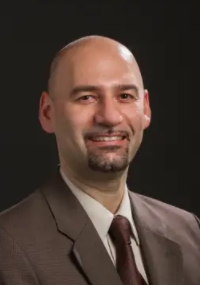 Hamada Altalib合作论文数Department of Neurology, Yale School of Medicine, Yale University1Di Rocco Alessandro合作论文数1Menitove Jay E合作论文数1Edwards Jason合作论文数1
 Erin L Moshier合作论文数Icahn School of Medicine at Mount Sinai1
 David Roberts合作论文数Oxford Martin School, University of Oxford1
 Darija Pesut合作论文数1
 Geoff Walton合作论文数1Tchatalbachev Vladislav V合作论文数1Thompson Ruth合作论文数1Singh Gurmukh合作论文数1Nicole Johnston合作论文数1Howard Jonathan合作论文数1Patel Charmi合作论文数1James G. Wetmur合作论文数1
 David Bawden合作论文数Department of Library and Information Science, School of Mathematics, Computer Science and Engineering, City University of London/University of Ljubljana1
 Teodoro Bottiglieri合作论文数Baylor Scott & White Research Institute1
 Aharony Noa合作论文数Department of Information Science, Bar-Ilan University1
 Serap Kurbanoglu合作论文数1
 Polona Vilar合作论文数1
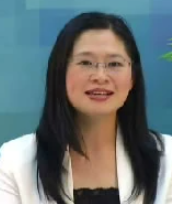 Yantao Pan (潘燕桃)合作论文数School of Information Management, Sun Yat-sen University;Sun Yat-sen University Library1
 Almuth Gastinger合作论文数1
 Diane Mizrachi合作论文数Department of Information Science, Bar-Ilan University1
 Joumana Boustany合作论文数1Aurora De La Vega合作论文数1Terttu Kortelainen合作论文数1
 Daniela Zivkovic合作论文数Faculty of Humanities and Social Sciences, University of Zagreb1
 Angela Repanovici合作论文数Transilvania University of Brasov1
 Ana Lúcia Terra合作论文数1
 Rene Schneider合作论文数University of Hildesheim1
 Elena Collina合作论文数Dipartimento di Chimica;Fisica ed Elettrochimica;Dipartimento di Chimica|Fisica ed Elettrochimica1
 Judit Bar-Ilan合作论文数Department of Information Science, Faculty of Humanities, Bar-Ilan University1Vicki Schwickerath合作论文数1S. Varanese合作论文数1




