Learning classifier systems (LCSs) are a state-of-the-art methodology for developing rule-based machine learning by applying discovery algorithms and learning components. LCSs have become proficient at linking environmental features to describe simple patterns in data. They have a natural ability to split a solution into niches. The decision-making process of an LCS-based system is interpretable, which is a step toward explainable AI. A broad range of LCS-based applications have been developed to solve real-world problems. The International Workshop on Learning Classifier Systems (IWLCS) is one of the pioneer and successful workshops at GECCO. It serves as a beacon for the next generation of researchers, inspiring them to delve deep into evolutionary rule-based machine learning, with a particular focus on LCSs. This work follows the tradition of previous surveys at the workshop and provides an overview of the LCS-related publications from March 2022 to March 2024. Based on the nature of contributions, the publications selected for review are divided into the following five groups: (i) Theoretical and Architectural Enhancements, (ii) Explainability, (iii) Applications, (iv) Role of Metaheuristics in LCSs, and (v) Miscellaneous Contributions. This survey provides an easy entry point to the most recent progress and achievements in the field of LCSs.
Deep learning is a cutting-edge methodology that has been extensively applied in real-world applications to solve computer vision tasks. Nonetheless, the inherent challenges of deep learning models lie in their black-box nature, rendering them opaque and hard to interpret. Recently, attention-based vision transformers have been introduced to overcome the black-box behaviour of deep learning models. Despite these advances, the decision-making process of the vision transformer is still challenging to interpret. Learning classifier systems is a state-of-the-art rule-based evolutionary machine learning technique that stands out for its ability to provide interpretable decisions. These systems generate niche-based solutions, require less memory, and can be trained using small data sets. We hypothesize integrating attention mechanisms into learning classifier systems, aiming to identify critical components in problem instances, link features to create simple patterns, and model hierarchical relationships in the data. The experimental results for binary-class image classification (cat and dog) tasks demonstrate that the novel system successfully ignores the irrelevant parts and pays attention to the salient features of cats and dogs. Crucially, the proposed system exhibits comparable performance accuracy to that of the state-of-the-art learning classifier systems.
Deep learning is a cutting-edge methodology that has been widely used in real-world applications to solve computer vision tasks. Deep learning models are typically seen as black boxes, opaque, and difficult to interpret. Recently, attention-based vision transformers have been introduced to overcome the black-box behavior of deep networks. However, the decision-making process of the vision transformer is still not interpretable. Moreover, these models require a large amount of memory, huge computational resources, and enormous training data. Learning classifier systems is a state-of-the-art rule-based evolutionary machine learning technique that stands out for its ability to provide interpretable decisions. These systems generate niche-based solutions, require less memory, and can be trained using small data sets. We hypothesize to wangle attention in learning classifier systems to identify critical components of the problem instance, link features to create simple patterns, and model hierarchical relationships in the data. The experimental results for binary-class image classification (cat and dog) tasks demonstrate that the novel system successfully ignores the irrelevant parts and pays attention to the salient features of cats and dogs. Crucially, the novel system exhibits almost the same performance accuracy as that of the state-of-the-art learning classifier systems.
An ideal artificial intelligence-based autonomous system, interacting with a dynamic environment, is required to learn continuously as human do. Human beings retain the learned knowledge, accumulate, and utilize it to solve related problems. Currently, most artificial intelligence-based systems lack this capability and work in an isolated learning paradigm. In this paper, we present a novel continual learning model to solve the challenging problem of real-world images classification. The proposed model is capable of learning continuously by utilizing the previously learned knowledge. It can handle both multi-task and single incremental task scenarios as opposed to various existing models that cover only the multi-task scenarios. In the proposed model, a deep convolutional autoencoder is presented to extract features from images. In addition, a learning classifier system with an effective knowledge encoding scheme is proposed for mapping real-world images to code fragment-based compact knowledge representation. Experiments are conducted on three benchmark image datasets to validate the model: (i) CORe50, (ii) iCubWorld28, and (iii) STL-10. Experiments results demonstrate that the proposed model outperforms the baseline method as well as various state-of-the-art methods for both continual learning scenarios.
Underwater image classification is a challenging task because of challenging underwater environment and lighting conditions. We propose a novel learning classifier system (LCS), which can classify large-size underwater images with promising accuracy, and acquire knowledge in interpretable format, by using a novel classification convolution autoencoder (CCAE). In proposed system, CCAE is designed as a hybrid network, which combines benefits of classification and autoencoder, to extract compressed non-trivial features. It is also used to decompress LCS generated rules to original input space. In order to evaluate effectiveness of proposed solution, experiments are conducted on selected underwater synsets of benchmark ImageNet dataset. Results are compared with famous CNN methods based on parameters such as accuracy, precision, recall and F-measure. Experiments show that proposed system can accurately classify large-size underwater images with promising accuracy and outperforms well-known deep CNN methods. It has also been observed that LCS generated rules are well generalized, accurate and interpretable.
The general benchmark for success of an artificial intelligence system is its ability to imitate learning of the human brain. The human brain is capable of continuous learning over a lifespan. The learned knowledge is retained, augmented, fine-tuned and reused to perform new future tasks. At present, machine learning models perform well when carefully arranged, balanced and homogenized data is presented. However, most of these models undergo performance degradation when multiple tasks with incremental data are presented. Inspired by learning of the brain, in this study, we propose a lifelong learning model which extracts knowledge and utilizes the previously learned knowledge to solve the current problem. In the proposed model, firstly, we exploit various deep convolution blocks to extract non-trivial features from images, then a code fragment based learning classifier system with a rich knowledge encoding scheme is devised for knowledge extraction, transfer and reuse. We validate the proposed model with 2 incremental learning scenarios: (i) new instances (ii) new classes, on underwater synsets of the benchmark ImageNet dataset. Experiments results which are analyzed by using paired sampled statistical t-test, show that the proposed model outperforms baseline methods as well as deep convolution neural network based methods, with respect to classification accuracy.
Underwater acoustic classification is a challenging problem because of presence of high background noise and complex sound propagation patterns in the sea environment. Various algorithms proposed in last few years used own privately collected datasets for design and validation. Such data is not publicly available. To conduct research in this field, there is a dire need of publicly available dataset. To bridge this gap, we construct and present an underwater acoustic dataset, named DeepShip, which consists of 47 h and 4 min of real world un-derwater recordings of 265 different ships belong to four classes. The proposed dataset includes recording from throughout the year with different sea states and noise levels. The presented dataset will not only help to evaluate the performance of existing algorithms but it shall also benefit the research community in future. Using the proposed dataset, we also conducted a comprehensive study of various machine learning and deep learning algorithms on six time-frequency based extracted features. In addition, we propose a novel separable convo-lution based autoencoder network for better classification accuracy. Experiments results, which are compared based on classification accuracy, precision, recall, f1-score, and analyzed by using paired sampled statistical t -test, show that the proposed network achieves classification accuracy of 77.53% using CQT feature, which is better than as achieved by other methods.
Underwater images often suffer from scattering and color distortion because of underwater light transportation characteristics and water impurities. Presence of such factors make underwater image classification task very challenging. We propose a novel classification convolution autoencoder (CCAE), which can classify large size underwater images with promising accuracy. CCAE is designed as a hybrid network, which combines benefits of unsupervised convolution autoencoder to extract non-trivial features and a classifier, for better classification accuracy. In order to evaluate classification accuracy of proposed network, experiments are conducted on Fish4Knowledge dataset and underwater synsets of benchmark ImageNet dataset. Classification accuracy, precision, recall and f1-score results are compared with state-of-the-art deep convolutional neural network (CNN) methods. Results show that proposed system can accurately classify large-size underwater images with promising accuracy and outperforms state-of-the-art deep CNN methods. With the proposed network, we expect to advance underwater image classification research and its applications in many areas like ocean biology, sea exploration and aquatic robotics.
Evolutionary machine learning research aims to develop classifier systems that can solve complex and hard tasks. This paper addresses the problem of inferring a regular expression from a given set of strings for automating the task of information extraction. To the best of our knowledge, this paper is the first to propose the extension of accuracy-based classifier system XCS to learn the regular expressions for text extraction. This new system named as XCSREA includes tree-like code fragments to learn regular expressions. The genetic algorithm in action sets uses two-point crossover with uniform mutation and Roulette wheel parent selection method. Seven different datasets, each with three different lengths, are used to compare the performance of the proposed model with standard genetic programming (GP) approach. The experimental results demonstrate that XCSREA outperforms standard GP approach when sufficiently large numbers of classifiers are used.
Recently, attention-based neural networks (NNs) have been widely used for aspect-level sentiment classification (ASC). Most neural models focus on incorporating the aspect representation into attention, however, the position information of each aspect is not studied well. Furthermore, the existing ASC datasets are relatively small owing to the labor-intensive labeling that largely limits the performance of NNs. In this paper, we propose a position-aware hierarchical transfer (PAHT) model that models the position information from multiple levels and enhances the ASC performance by transferring hierarchical knowledge from the resource-rich sentence-level sentiment classification (SSC) dataset. We first present aspect-based positional attention in the word and the segment levels to capture more salient information toward a given aspect. To make up for the limited data for ASC, we devise three sampling strategies to select related instances from the large-scale SSC dataset for pre-training and transfer the learned knowledge into ASC from four levels: embedding, word, segment and classifier. Extensive experiments on four benchmark datasets demonstrate that the proposed model is effective in improving the performance of ASC. Particularly, our model outperforms the state-of-the-art approaches in terms of accuracy over all the datasets considered.
Human beings follow a continuous learning paradigm, i.e., they learn to solve smaller and relatively easy problems, retain the learnt knowledge and apply that knowledge to learn and solve more complex and large-scale problems of the domain. Currently, most machine learning and evolutionary computing systems lack this ability to reuse the previous learnt knowledge. This paper presents a lifelong machine learning model for text classification that extracts the useful knowledge from simple problems of a domain and reuses the learnt knowledge to learn complex problems of the domain. The proposed approach adopts a rule-based learning classifier system, and a rich encoding scheme is used to extract and reuse building units of knowledge. The experimental results show that the continuous learning approach outperformed the baseline classifier system.
Genetic programming (GP) represents a well-known and widely used evolutionary computation technique that has shown promising results in optimisation, classification, and symbolic regression problems. However, similar to many other techniques, the performance of GP deteriorates for solving highly complex tasks. Transfer learning can improve the learning ability of GP, which can be seen from previous research on including, but not limited to, symbolic regression and Boolean problems. However, utilising transfer learning to tackle image-related, specifically, image classification, problems in GP is limited. This paper aims at proposing a new method for employing transfer learning in GP to extract and transfer knowledge in order to tackle complex texture image classification problems. To assess the improvement gained from using the extracted knowledge, the proposed method is examined and compared against the baseline GP method and a state-of-the-art method on three publicly available and commonly used texture image classification datasets. The obtained results indicate that the reuse of the extracted knowledge from an image dataset has significant impact on improving the performance in learning different rotated versions of the same dataset, as well as other related image datasets. Further, it is found that the proposed approach in the very first generation of the evolutionary process produces better classification accuracy than the final classification accuracy obtained by the baseline method after 50 generations.
Sentiment analysis of public views and spam detection from social media text messages are two challenging data analysis tasks due to short informal text. This paper investigates the performance of learning classifier systems (LCS), which are rule-based machine learning techniques, in sentiment analysis of twitter messages and movie reviews, and spam detection from SMS and email data sets. In this study, an existing LCS technique is extended by introducing a novel encoding scheme to represent classifier rules in order to handle the sparseness in feature vectors, which are generated using the term frequency inverse document frequency of word n-grams and sentiment lexicons. The obtained results show that the proposed encoding scheme smoothed the learning process and generated consistently good results in all experiments conducted in this study.
Abstract — Manual writing of test cases from functional requirements is a time-consuming task. Such test cases are not only difficult to write but are also challenging to maintain. Test cases can be drawn from the functional requirements that are expressed in natural language. However, manual test case generation is inefficient and subject to errors. In this paper, we have presented a systematic procedure that could automatically derive test cases from user stories. The user stories are specified in a restricted natural language using a well-defined template. We have also presented a detailed methodology for writing our test ready user stories. Our tool “Test-o-Matic” automatically generates the test cases by processing the restricted user stories. The generated test cases are executed by using open source Selenium IDE. We evaluate our approach on a case study, which is an open source web based application. Effectiveness of our approach is evaluated by seeding faults in the open source case study using known mutation operators. Results show that the test case generation from restricted user stories is a viable approach for automated testing of web applications
© 2017 IEEE. Genetic programming (GP) is a well-known evolutionary computation technique, which has been successfully used to solve various problems, such as optimization, image analysis, and classification. Transfer learning is a type of machine learning approach that can be used to solve complex tasks. Transfer learning has been introduced to GP to solve complex Boolean and symbolic regression problems with some promise. However, the use of transfer learning with GP has not been investigated to address complex image classification tasks with noise and rotations, where GP cannot achieve satisfactory performance, but GP with transfer learning may improve the performance. In this paper, we propose a novel approach based on transfer learning and GP to solve complex image classification problems by extracting and reusing blocks of knowledge/information, which are automatically discovered from similar as well as different image classification tasks during the evolutionary process. The proposed approach is evaluated on three texture data sets and three office data sets of image classification benchmarks, and achieves better classification performance than the state-of-the-art image classification algorithm. Further analysis on the evolved solutions/trees shows that the proposed approach with transfer learning can successfully discover and reuse knowledge/information extracted from similar or different problems to improve its performance on complex image classification problems.
Sentiment analysis and spam detection of social media text messages are two challenging data analysis tasks due to sparse and high-dimensional feature vectors. Learning classifier systems (LCS) are rule-based evolutionary computing systems and have limited capabilities to handle real valued sparse high-dimensional big data sets. LCS techniques use interval based representations to handle real valued feature vectors. In the work presented here, interval based representation is replaced by genetic programming based tree like structures to classify high-dimensional real valued text feature vectors. Multiple experiments are conducted on different social media text data sets, i.e. tweets, movie reviews, amazon and yelp reviews, SMS and Email spam message to evaluate the proposed scheme. Real valued feature vectors are generated from these data sets using term frequency inverse document frequency and/or sentiment lexicons-based features. Results depicts the supremacy of the new encoding scheme over interval based representations in both small and large social media text data sets.
This paper proposes a novel lifelong machine learning model for text classification. The proposed model tries to solve problems as humans do i.e. it learns small and simple problems, retains the knowledge learnt from those problems, mines the useful information from the stored knowledge and reuses the extracted knowledge to learn future problems. The proposed approach adopts rule based learning classifier systems and a new encoding scheme is proposed to identify building units of knowledge which can be reused for future learning. The fitter building units from the learning system trained against small problems of text classification domain are extracted and utilized in high dimensional social media text classification problems to achieve scalable learning. The experimental results show that proposed continuous learning approach successfully solves complex high dimensional problems by reusing the previously learned fitter building blocks of knowledge.
Sistem navigasi pada Smartphone adalah perangkat lunak yang memiliki peran penting bagi para pengguna Smartphone maka dari itu seiring dengan peningkatan pengguna Smartphone, maka permintaan akan kualitas sistem navigasi yang baik juga meningkat. Sistem Navigasi Geolocation merupakan perwujudan dari kebutuhan akan kualitas sistem navigasi yang baik yang bertujuan memberikan layanan navigasi yang akurat dengan menggunakan bantuan GPS, sinyal telepon, dan sinyal jaringan nirkabel. Metode Navigasi Indoor Geolocation mengacu pada sistem navigasi Geolocation yang dikhususkan penggunaannya di dalam ruangan. Pada penelitian ini dilakukan pembuatan aplikasi navigasi dalam gedung D PPBS Universitas Padjadjaran berbasis Android dengan menggunakan Android Studio, bahasa pemrograman Java, dan alat bantu pemetaan IndoorAtlas. Aplikasi dapat melakukan navigasi dalam gedung D PPBS Universitas Padjadjaran berdasarkan denah gedung dan memberikan marker sebagai penanda posisi pengguna pada gedung. Berdasarkan hasil pengujian akurasi menggunakan rumus Haversine, didapat hasil dari 30 data koordinat marker posisi pengguna yang muncul pada setiap ruangan, ada 25 data koordinat marker posisi pengguna pada ruangan atau 83% data koordinat yang sesuai dengan koordinat ruangan sebenarnyadata marker posisi pengguna yang benar dapat ditarik kesimpulan bahwa aplikasi navigasi dalam gedung D PPBS Universitas Padjadjaran dinilai akurat.
XCS, an evolutionary computing technique, can classify data using both bit strings and real valued representations. "Real valued XCS" (XCSR) commonly uses the min max interval based representation (MMR) for continuous valued data sets. Text data sets can be represented using bag of words based real valued representation, e.g. term frequency inverse document frequency of features. In this work we classify social media short informal text messages using XCSR, for the first time, from two major domains, i.e. spam detection and sentiment analysis. We perform spam detection of SMS and Email messages, and sentiment analysis of reviews and tweets. Feature vectors extracted from short text messages are very sparse and XCSR with MMR representation can not handle sparse data sets very well. We proposed XCSR# that uses MMR representation with explicit "don't care" intervals to handle sparse social media data sets. The experimental results indicate that introduction of the explicit "don't care" intervals improved the performance and created a statistically significant impact, specifically in the spam detection data sets. Further, it is observed that XCSR# produced more accurate and general rules than XCSR.
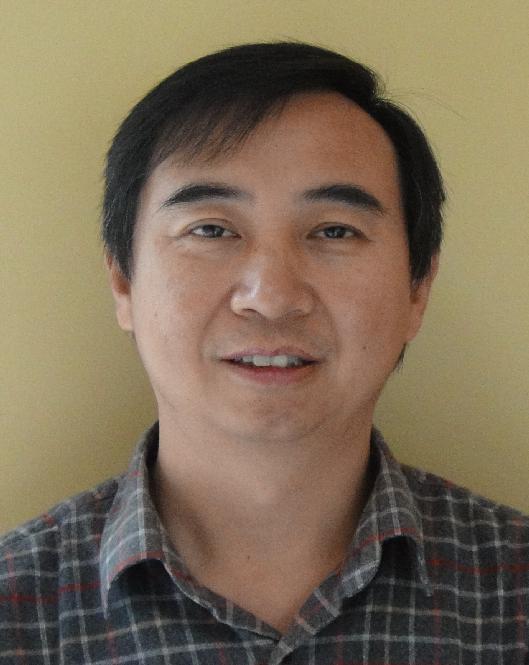 Mengjie Zhang (Meng)合作论文数School of Engineering and Computer Science, Victoria University of Wellington;Centre for Data Science and Artificial Intelligence, Victoria University of Wellington16
 Will Neil Browne合作论文数Victoria University of Wellington14
 Muhammad Hassan Arif合作论文数CESAT, Islamabad, Pakistan10Muhammad Irfan合作论文数6
 Jiangbin Zheng (郑江滨)合作论文数School of Software, Northwestern Polytechnical University6
 Jianxin Li (李建欣)合作论文数School of Computer Science & Engineering, Beihang University;Beijing Advanced Innovation Center of Big data and Brain Computing, Beihang University5
 Abubakar Siddique合作论文数School of Engineering and Computer Science, Victoria University of Wellington4
 Bing Xue合作论文数School of Engineering and Computer Science, Victoria University of Wellington;Center for Data Science and Artificial Intelligence, Victoria University of Wellington4Zafar Masood合作论文数3
 Syed S. Naqvi合作论文数2
 Christopher Hollitt合作论文数2
 Harith Al-Sahaf合作论文数School of Engineering and Computer Science, Victoria University of Wellington2
 Kamran Shafi合作论文数Australian Defence Force Academy, Universityof New South Wales2
 Ryan J. Urbanowicz合作论文数Unbounded Research in Biomedical Systems Lab, Department of Computational Biomedicine, Cedars-Sinai Medical Center2Francine Burling-Claridge合作论文数1Mahawish Masud合作论文数1
 Farooque Azam合作论文数1
 Hafiz Asadul Rehman合作论文数Dept Comp Sci, Natl Univ Comp & Emerging Sci Lahore1Michael Heider合作论文数Organic Computing Group, University of Augsburg1
 Irfan Younas合作论文数Natl Univ Comp & Emerging Sci, Dept Comp Sci, Lahore, Pakistan1
 Maryam Diallo Bashir合作论文数FAST School of Computing, National University of Computer and Emerging Sciences1
 Shahid Ali合作论文数School of Economics and Management, North China Electric Power University1
 Hiroki Shiraishi合作论文数Univ Electrocommun1Umar Hamid合作论文数Centres of Excellence in Sci. & Appl. Technol., Islamabad, Pakistan;c;Centres of Excellence in Sci. & Appl. Technol., Islamabad, Pakistan|c|1
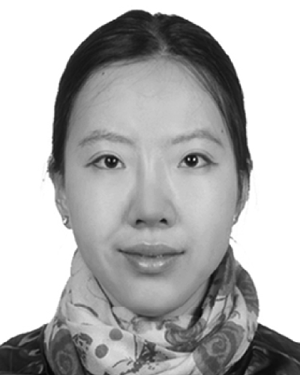 Kaixu Liu合作论文数1
 Hao Peng (彭浩)合作论文数School of Cyber Science and Technology, Beihang University;Beijing Advanced Innovation Center for Big Data and Brain Computing1
 Xin Jin (金鑫)合作论文数School of Mechanical Engineering, Beijing Institute of Technology1
 Tim Kovacs合作论文数University of Bristol1
 Shahab Ud Din合作论文数1




